Artwork
Acacia
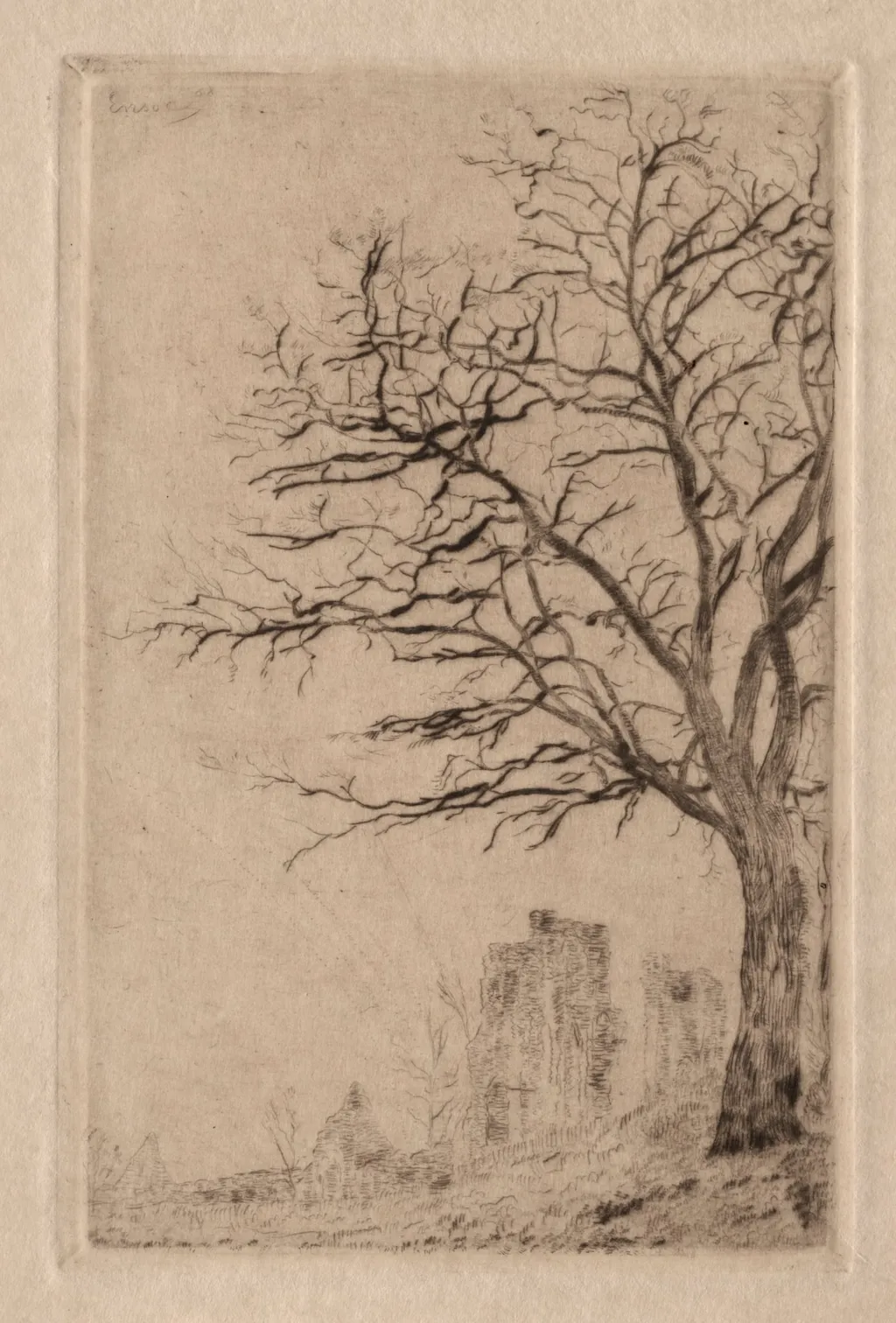
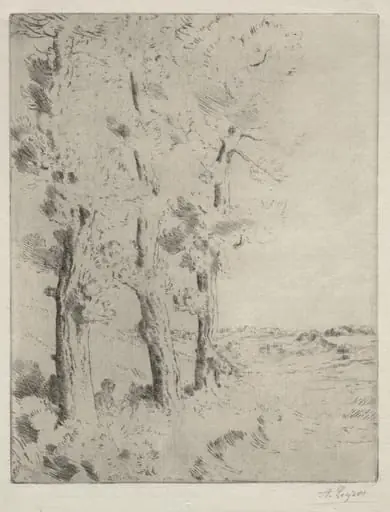
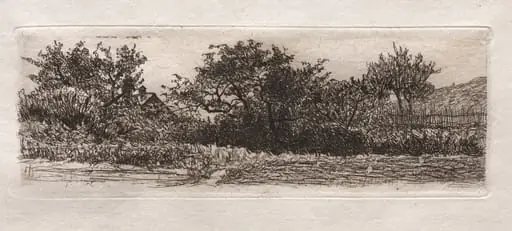
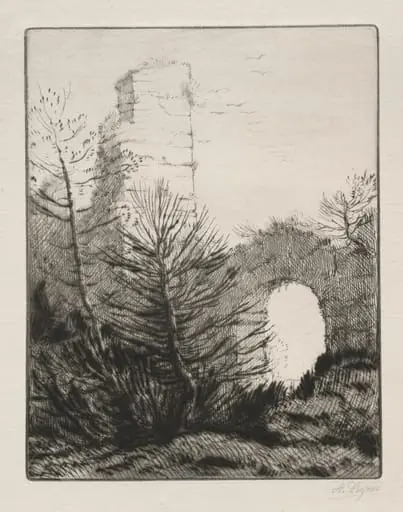
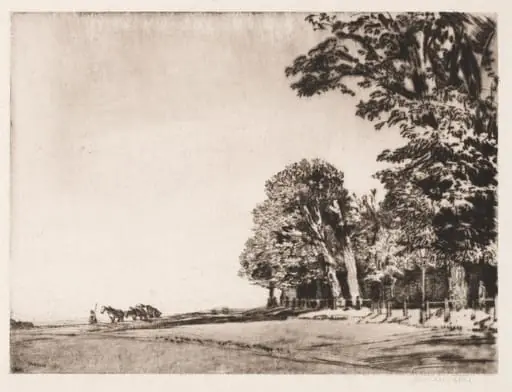
Acacia is a print by the Impressionist artist James Ensor. It dates from 1888 and is held in the collection of the Cleveland Museum of Art.
About this work
Overview
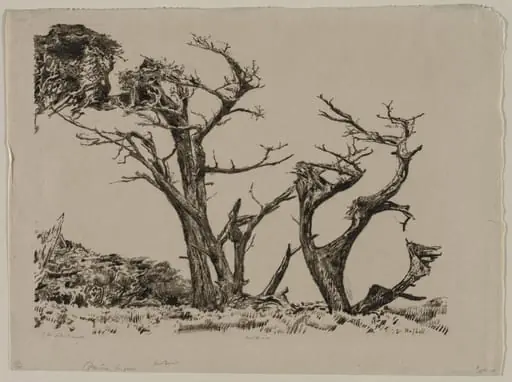
Created in 1888, *Acacia* is a print by Belgian artist James Ensor. The work presents a solitary acacia branch arranged as a still life, rendered in a stark, monochrome palette that emphasizes line and form over color.
Subject & Meaning
The composition focuses on the twisted, leafless limbs of an acacia, suggesting themes of dormancy and resilience. The starkness of the branch against an empty background invites contemplation of nature’s quiet endurance.
Technique & Style
Ensor employs a rough, scratch‑like line quality, using shades of gray and white to model the branch. The minimalist approach and exaggerated forms anticipate later developments in expressionist and surrealist aesthetics.
History & Provenance
A prominent figure in Belgium’s avant‑garde, Ensor spent most of his life in Ostend and was closely associated with the group Les XX. *Acacia* reflects his early experimentation that would later inform his more celebrated works.
Context
During the late 19th century, Belgian artists were exploring new visual languages beyond academic tradition. Ensor’s work, including this print, contributed to the shift toward more personal, symbolic representations in art.
Artist & collection
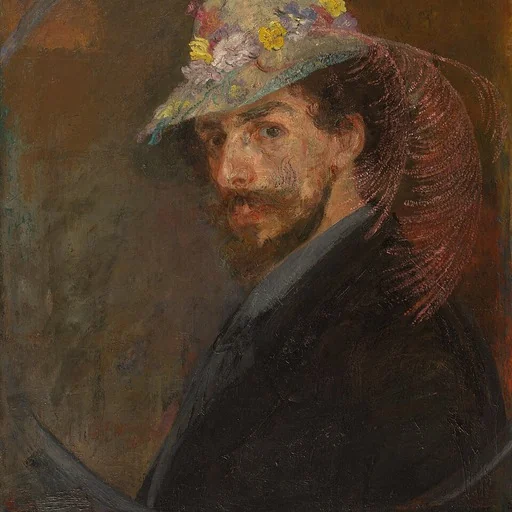
Artist
James Sidney Edouard, Baron Ensor (13 April 1860 – 19 November 1949) was a Belgian painter and printmaker, an important influence on expressionism and surrealism who lived in Ostend for most of his life.