Artwork
The Sleeping Beggar
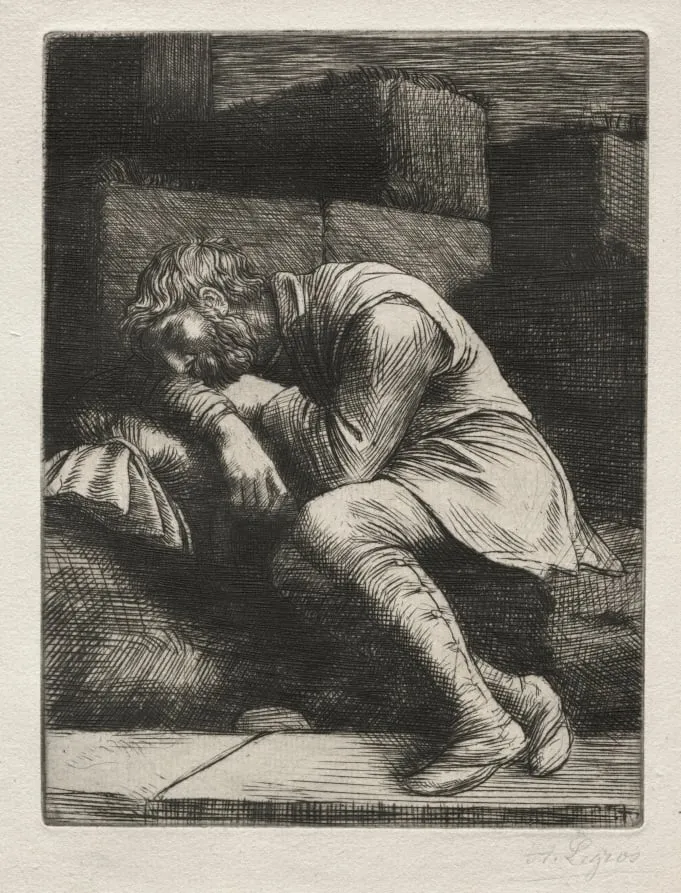
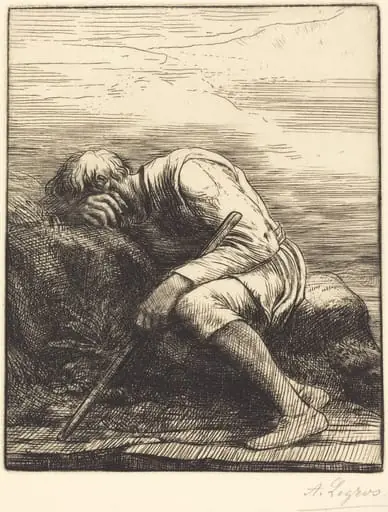
The Sleeping Beggar is a print by the Impressionist artist Alphonse Legros. It dates from 1884 and is held in the collection of the Cleveland Museum of Art.
About this work
Overview
Created in 1884 by Alphonse Legros, The Sleeping Beggar is a print that captures a solitary figure in repose on the ground.
Created in 1884 by Alphonse Legros, The Sleeping Beggar is a print that captures a solitary figure in repose on the ground. The work is part of the collection at The Cleveland Museum of Art. Rendered in a restrained tonal palette, it emphasizes the quiet dignity of its subject through careful modeling of light and shadow, avoiding overt sentimentality while preserving a sense of stillness and solitude.
Subject & Meaning
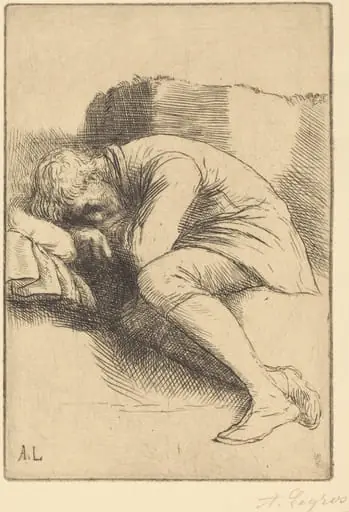
The figure is a man, dressed in simple, worn clothing, curled on his side with his head resting on his arm. His posture suggests exhaustion or deep rest, not mere laziness. The anonymity of the figure invites contemplation of urban poverty and the invisibility of marginalized individuals. The absence of narrative detail shifts focus to the human condition itself, emphasizing endurance over circumstance.
Technique & Style
Legros employs chiaroscuro to model the figure with subtle gradations of tone, giving form to the body and clothing without sharp outlines. The background is rendered in muted, indistinct shadows, possibly suggesting architectural elements, which isolates the figure in space. The print’s texture and line work reflect a commitment to realism, with attention to the folds of fabric and the weight of the body against the ground.
History & Provenance
The print was made in 1884 and entered the collection of The Cleveland Museum of Art through established acquisition channels. Legros, a French artist active in both painting and printmaking, was known for his socially conscious subjects during the late 19th century. This work reflects his engagement with everyday life, particularly among the urban poor, a theme consistent with his broader oeuvre.
Context
In the 1880s, European artists increasingly turned to scenes of working-class life, influenced by realism and early social reform movements. Legros, though trained in academic traditions, aligned with this shift, portraying figures often overlooked in public art. The Sleeping Beggar emerges from this cultural moment, offering a quiet counterpoint to grand historical or mythological subjects.
Legacy
The work remains a quiet example of 19th-century printmaking’s capacity for empathy and observation. It does not seek to shock or moralize but to present a moment of human stillness with unadorned clarity. Its endurance in museum collections reflects its role as a thoughtful document of social visibility through artistic restraint.
Artist & collection

Artist
Alphonse Legros (French pronunciation: ; 8 May 1837 – 8 December 1911) was a French, later British, painter, etcher, sculptor, and medallist.