Artwork
La Mort et le Bûcheron (5th Plate)
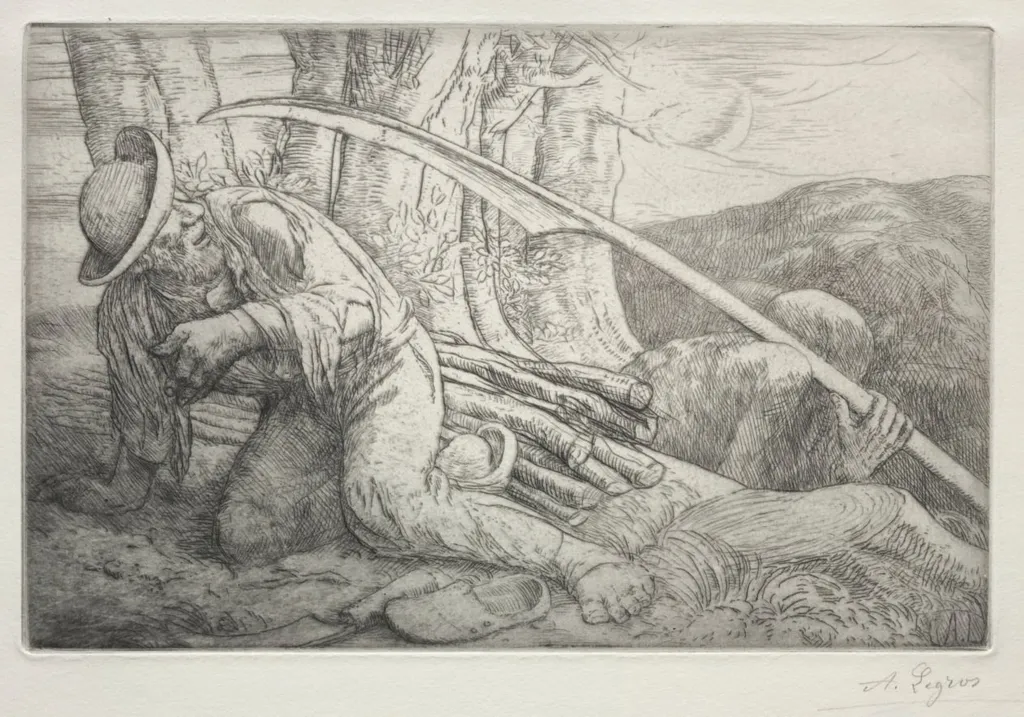
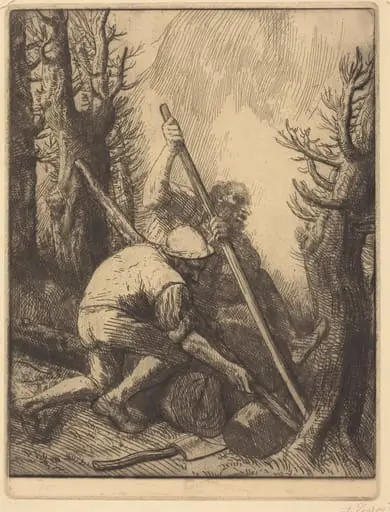
La Mort et le Bûcheron (5th Plate) is a print by the Impressionist artist Alphonse Legros. It dates from 1884 and is held in the collection of the Cleveland Museum of Art.
About this work
Overview
La Mort et le Bûcheron, the fifth plate in a series by Alphonse Legros, dates to 1884 and is an etching held in the collection of The Cleveland Museum of Art.
La Mort et le Bûcheron, the fifth plate in a series by Alphonse Legros, dates to 1884 and is an etching held in the collection of The Cleveland Museum of Art. It depicts a solitary woodcutter engaged in labor within a wooded setting. The work belongs to a group of prints exploring themes of mortality and toil, rendered with minimal detail but intense emotional weight. Legros favors the medium’s capacity for tonal contrast over elaborate composition.
Subject & Meaning
The figure, a laborer in simple attire, kneels beside a felled tree, sawing through its trunk. His posture suggests exhaustion, and the act of cutting wood becomes a metaphor for the inevitability of death. The title, translating to 'Death and the Woodcutter,' implies a silent presence looming in the scene. There is no literal depiction of death, yet its influence is felt through the quiet, unrelenting nature of the task.
Technique & Style
Legros employs deep chiaroscuro to model form and mood, using sharp contrasts between inked shadows and untouched paper to define the woodcutter’s body and the tree’s texture. The etching’s lines are deliberate and sparse, avoiding ornamentation. Rough bark and tangled roots are suggested rather than detailed, reinforcing the raw, unidealized atmosphere. The technique emphasizes physical effort through weighty darkness and compressed space.
History & Provenance
Created in 1884, this print was part of a small series by Legros reflecting his interest in rural labor and existential themes. It entered The Cleveland Museum of Art’s collection through established acquisition channels in the 20th century. The work has been consistently exhibited as an example of late 19th-century European printmaking, valued for its emotional restraint and technical precision.
Context
Legros worked during a period when artists in France and England turned away from academic idealism toward depictions of everyday toil. Influenced by Realism and the social concerns of the time, he focused on figures engaged in manual labor, often with spiritual undertones. This print aligns with broader movements that sought dignity in the lives of the working class, avoiding sentimentality in favor of stark truth.
Legacy
La Mort et le Bûcheron remains a quiet but enduring example of how printmaking could convey profound themes with minimal means. Legros’s approach influenced later generations of artists who valued economy of line and psychological depth over narrative spectacle. The work continues to be studied for its fusion of physical realism and existential symbolism in the context of modern print culture.
Artist & collection

Artist
Alphonse Legros (French pronunciation: ; 8 May 1837 – 8 December 1911) was a French, later British, painter, etcher, sculptor, and medallist.

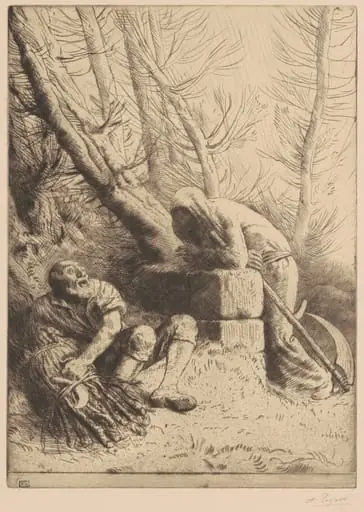 Death and the Woodcutter, 4th plate (La Mort et le bûcheron)
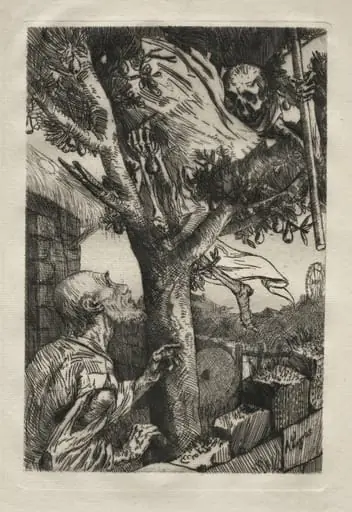 La mort dans le piorier
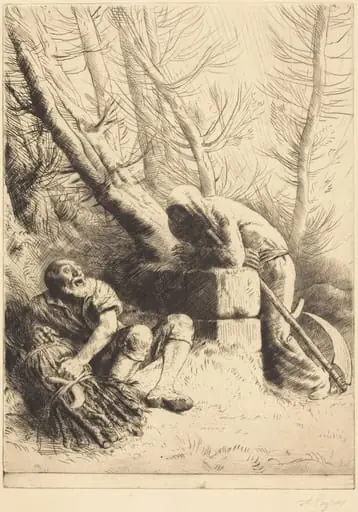 Death and the Woodcutter, 4th plate (La mort et le bucheron)
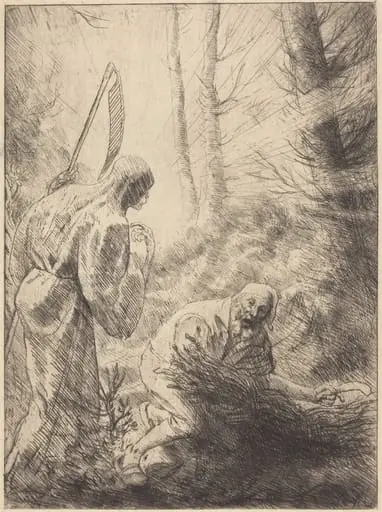 Death and the Woodcutter, 2nd plate (La Mort de le bucheron)
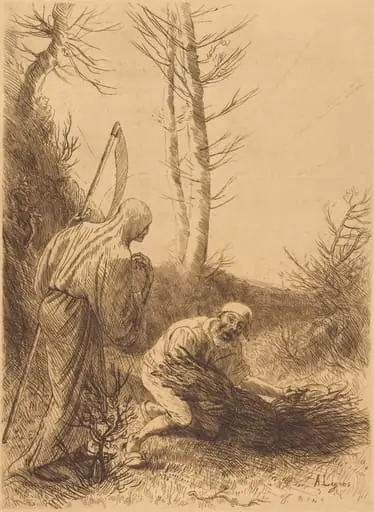 Death and the Woodcutter, 2nd plate (Le mort et le bucheron)
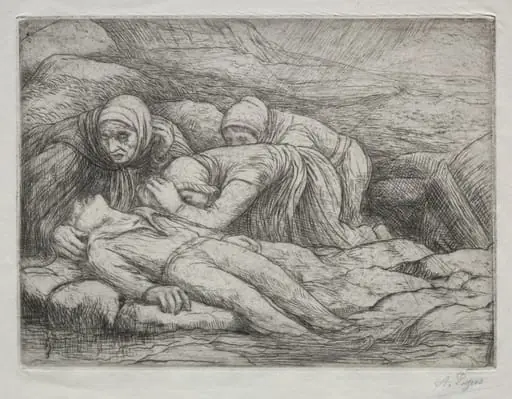 Triomphe de la Mort: La Mort chez une famille de Marins
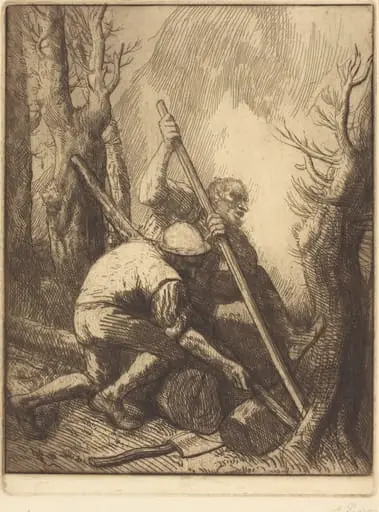 Woodcutters, 3rd plate (Les bucherons)
 Woodcutters, 3rd plate (Les bucherons)