Artwork
Sinbad the Sailor (Sinbad le marin)
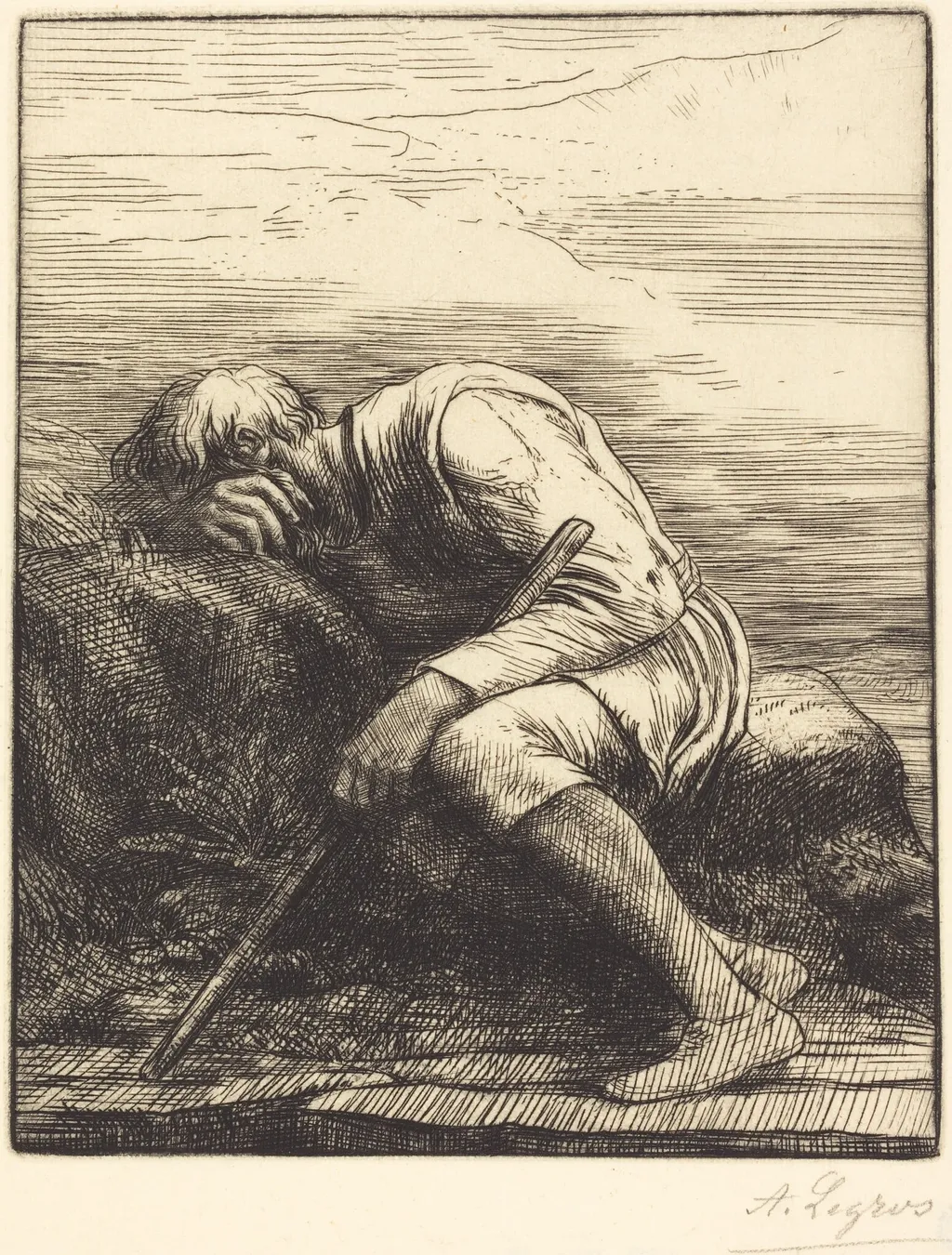
Sinbad the Sailor (Sinbad le marin) is an ink print by the Romanticist artist Alphonse Legros. It dates from 1874 and is held in the collection of the National Gallery of Art.
About this work
Overview
Known for his contributions to multiple media, Legros was instrumental in revitalizing etching as a serious artistic practice in Britain.
Alphonse Legros, a French artist who moved to London in 1863 and later became a British citizen, produced this etching in 1874. Known for his contributions to multiple media, Legros was instrumental in revitalizing etching as a serious artistic practice in Britain. This print, part of his broader engagement with narrative imagery, reflects his interest in literary and mythic subjects through the quiet intensity of printmaking.
Subject & Meaning
The figure is interpreted as Sinbad the Sailor, drawn from the Arabian Nights tales, depicted not in the midst of adventure but in a moment of stillness. Seated on a barren shore, his posture—head resting on hand, staff across his lap—suggests exhaustion after prolonged travel. The scene evokes introspection rather than action, emphasizing the psychological weight of endurance over heroic spectacle.
Technique & Style
Legros employed etching to render fine linear textures and subtle tonal gradations. The rocky terrain and distant horizon are suggested through delicate, incised lines, while the figure’s clothing and the staff are defined with controlled, expressive strokes. The absence of heavy shading creates a restrained atmosphere, allowing the composition’s quiet drama to emerge from line and negative space.
History & Provenance
Created during Legros’s tenure at the Slade School of Fine Art, the etching emerged from a period when he was actively shaping British print culture. Though not widely exhibited at the time, it was part of a private circulation among artists and collectors interested in the revival of hand-made prints. Its survival reflects its significance within Legros’s print oeuvre rather than public acclaim.
Context
In the 1870s, British artists were re-engaging with etching as a medium distinct from mass-produced illustrations. Legros, influenced by Dutch and French precedents, promoted it as a vehicle for personal expression. His choice of Sinbad—a figure from Eastern storytelling—aligns with Victorian fascination with exotic narratives, yet his treatment avoids spectacle, favoring psychological realism.
Legacy
Legros’s etchings, including this one, helped establish printmaking as a legitimate fine art form in Britain. His emphasis on direct, hand-crafted imagery influenced a generation of artists who rejected industrial reproduction. Though less known today, this work remains a quiet testament to his role in elevating etching’s status and its capacity for introspective storytelling.
Artist & collection

Artist
Alphonse Legros (French pronunciation: ; 8 May 1837 – 8 December 1911) was a French, later British, painter, etcher, sculptor, and medallist.

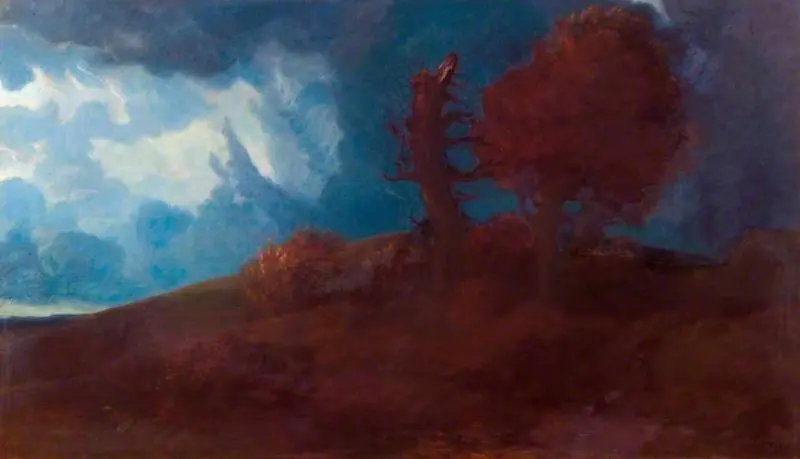
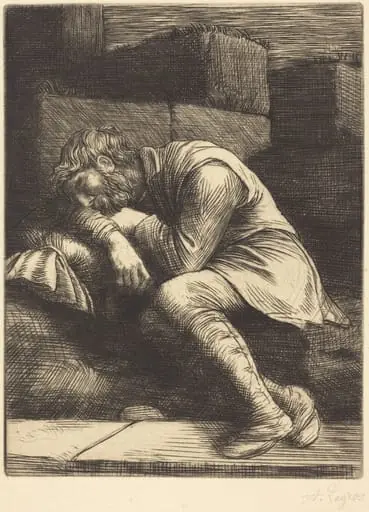 Sleeping Beggar (Mendiant endormi)
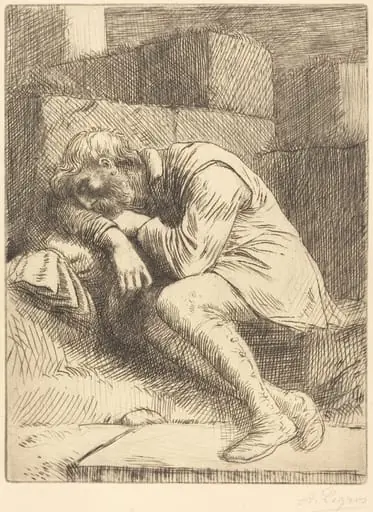 Sleeping Beggar (Mendiant endormi)
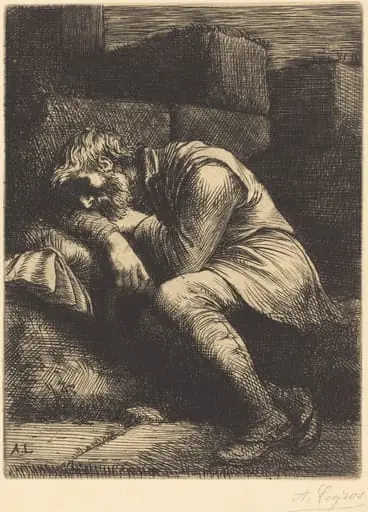 Sleeping Beggar (Mendiant endormi)
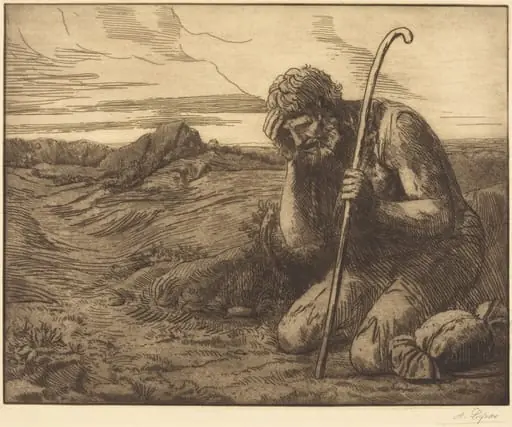 The Prodigal Son, 6th plate (L'enfant prodigue)
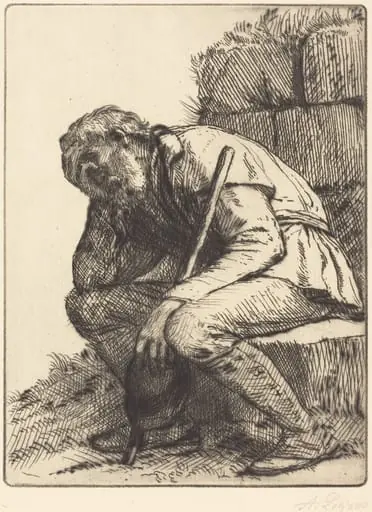 Desperate Man (Le desespere)
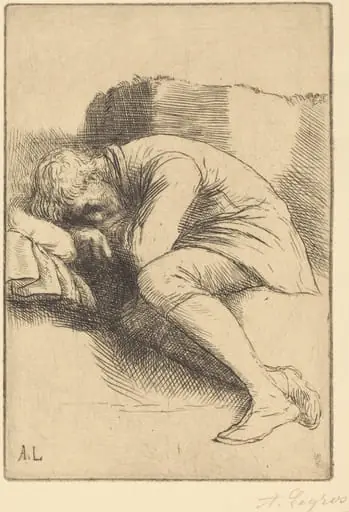 Sleeper (Un dormeur)
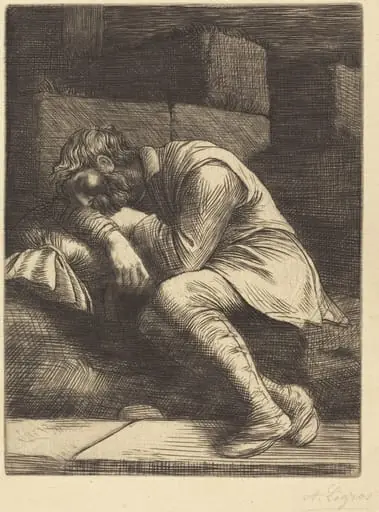 Sleeping Beggar (Mendiant endormi)
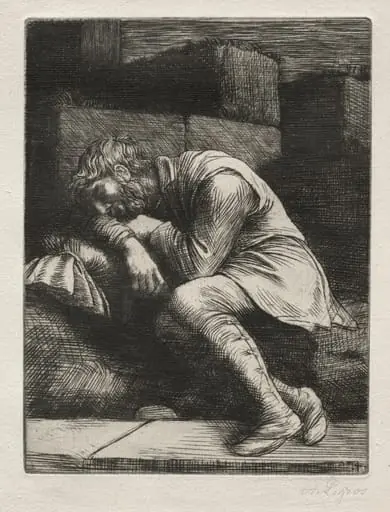 The Sleeping Beggar
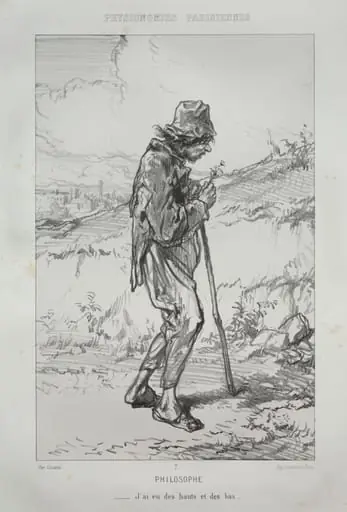 Philosophe
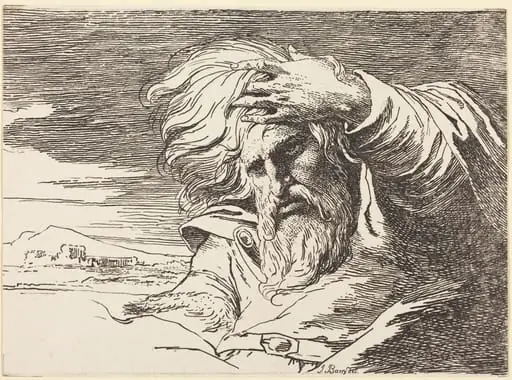 Eastern Patriarch
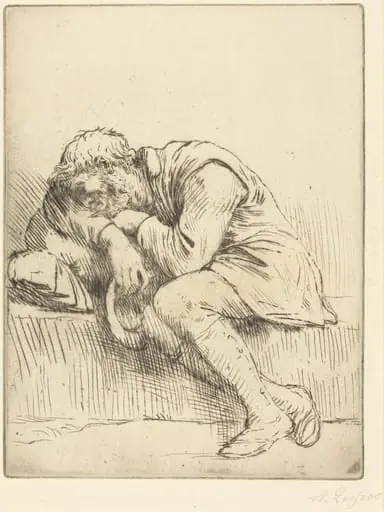 Sleeping Beggar (Mendiant endormi)
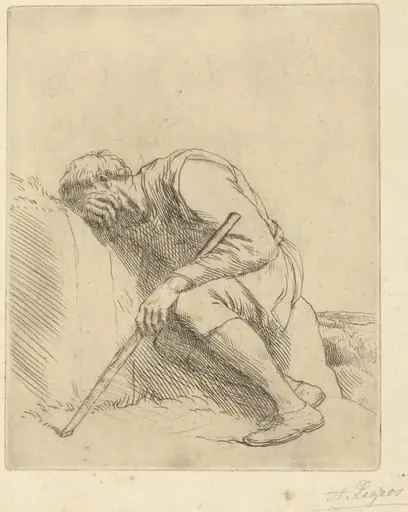 Sinbad the Sailor (Sinbad le marin)