Artwork
Retour
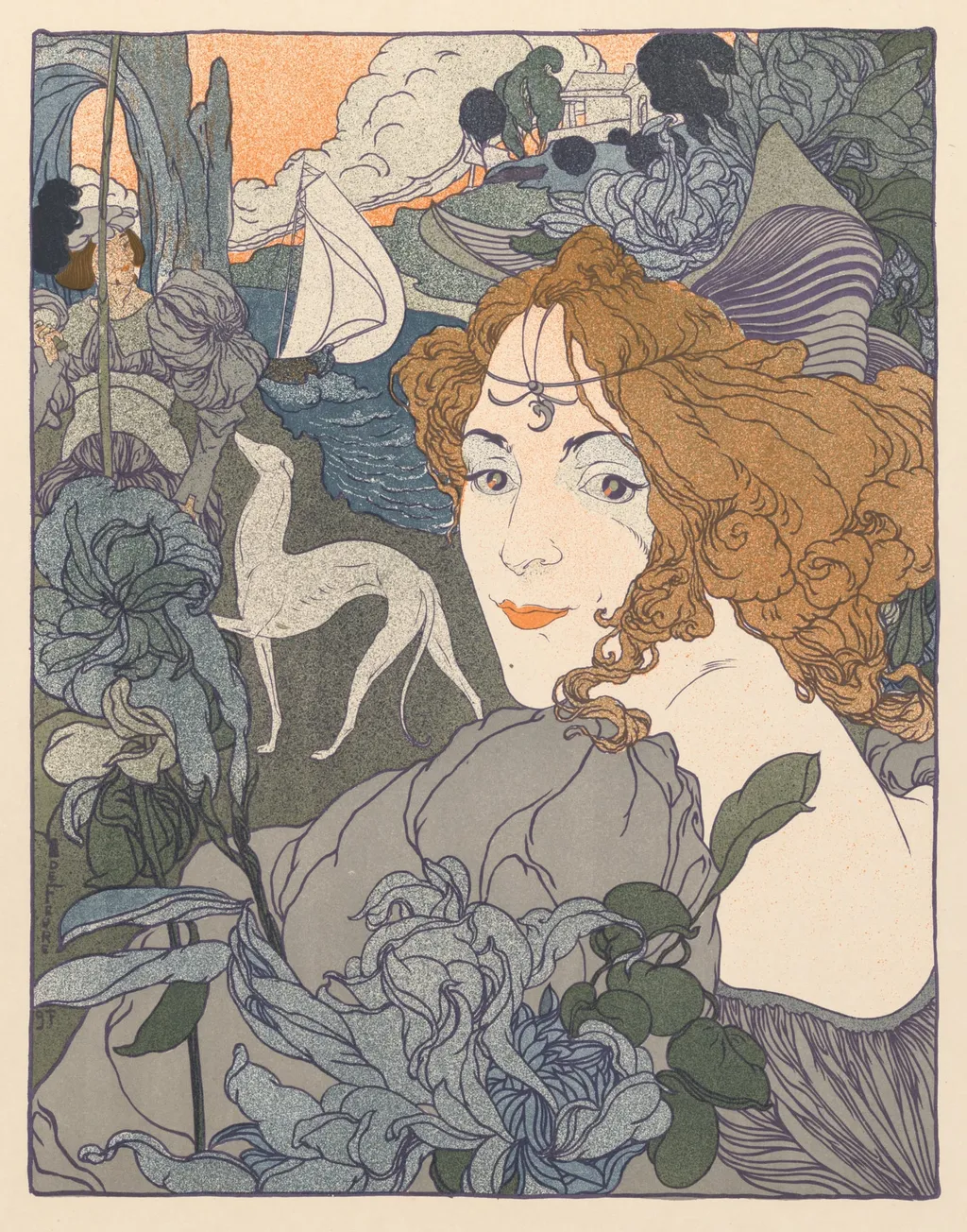
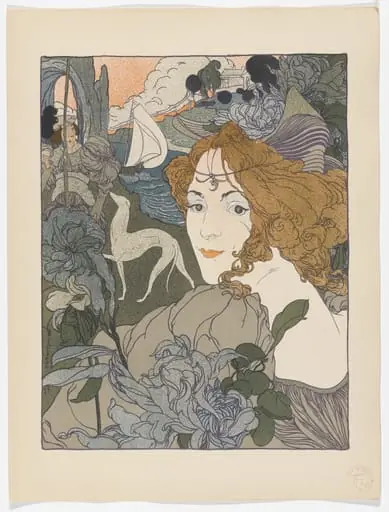
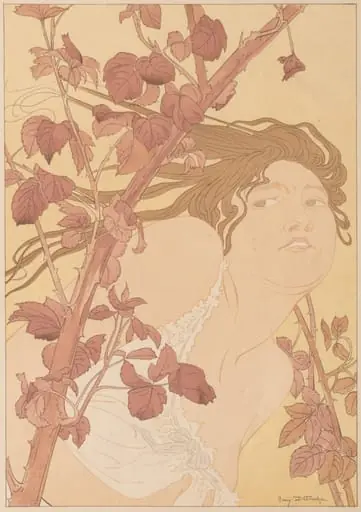
Retour is a print by the Impressionist artist Georges de Feure. It dates from 1897 and is held in the collection of the Cleveland Museum of Art.
About this work
Overview
De Feure, born in Paris to a Dutch architect and Belgian mother, was active across multiple disciplines including painting, stage design, and decorative arts.
Created in 1897 by Georges de Feure, *Retour* is a print that bridges Symbolist themes with Art Nouveau aesthetics. De Feure, born in Paris to a Dutch architect and Belgian mother, was active across multiple disciplines including painting, stage design, and decorative arts. The work resides in The Cleveland Museum of Art’s collection, reflecting his engagement with the decorative arts movement of the late 19th century.
Subject & Meaning
The print depicts a woman with intense gaze and curly red hair, her hand resting on a stone, as a smaller, ethereal figure hovers above water, holding a long pole. The figures suggest a psychological or mythic encounter—perhaps a return to memory or the subconscious. The isolation of the central figure and the floating presence imply inner turmoil or transition, common motifs in Symbolist imagery seeking to evoke emotion beyond literal narrative.
Technique & Style
De Feure employs a contrast between sharply defined contours—especially in the woman’s face, reminiscent of woodcut precision—and fluid, organic lines in the background. Soft washes of muted purples and oranges create atmospheric depth, while the wavy vegetation and distant architecture dissolve into dreamlike abstraction. This interplay of clarity and ambiguity was characteristic of Art Nouveau’s effort to animate flat surfaces with emotional resonance.
History & Provenance
The print entered The Cleveland Museum of Art’s collection as part of its broader acquisition of late 19th-century decorative and graphic works. While specific exhibition history prior to its acquisition is not widely documented, its inclusion reflects the museum’s interest in Symbolist and Art Nouveau prints from the fin de siècle period, particularly those by artists who blurred boundaries between fine and applied arts.
Context
In the 1890s, Parisian artists like de Feure responded to industrialization by reviving handcrafted aesthetics and psychological depth in art. Symbolism’s focus on inner states aligned with Art Nouveau’s flowing forms, creating a visual language that rejected realism. De Feure’s work in theater and design informed his graphic style, where narrative ambiguity and decorative rhythm took precedence over literal representation.
Legacy
Though less known than contemporaries like Mucha or Klimt, de Feure’s prints contributed to the broader acceptance of graphic art as a vehicle for symbolic expression. *Retour* exemplifies how artists of the period used printmaking to explore mood and myth, influencing later developments in modernist illustration and the integration of fine art into domestic interiors.
Own this work as a print
Artist & collection
Artist
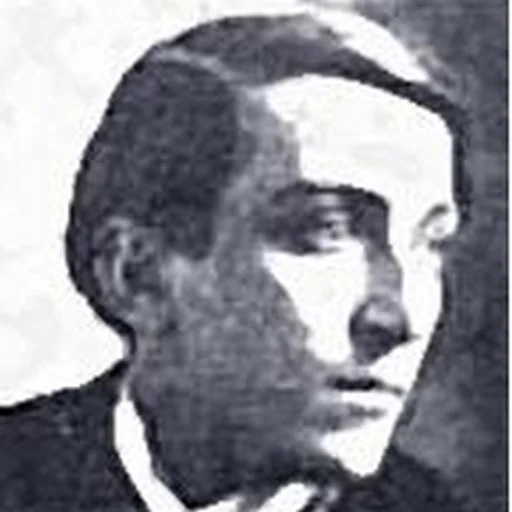
Georges de Feure (real name Georges Joseph van Sluijters; 6 September 1868 – 26 November 1943) was a French painter, theatrical designer, and industrial art designer in the symbolism and Art Nouveau styles.