Artwork
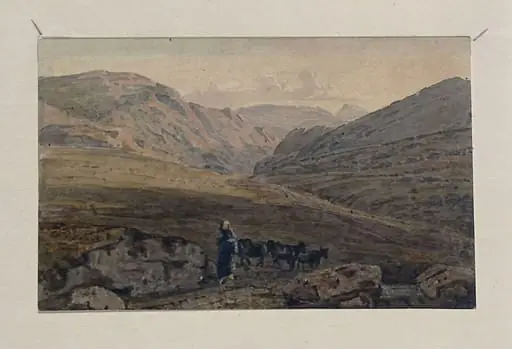
A Seated Man Contemplating a Sunlit Mountain Valley
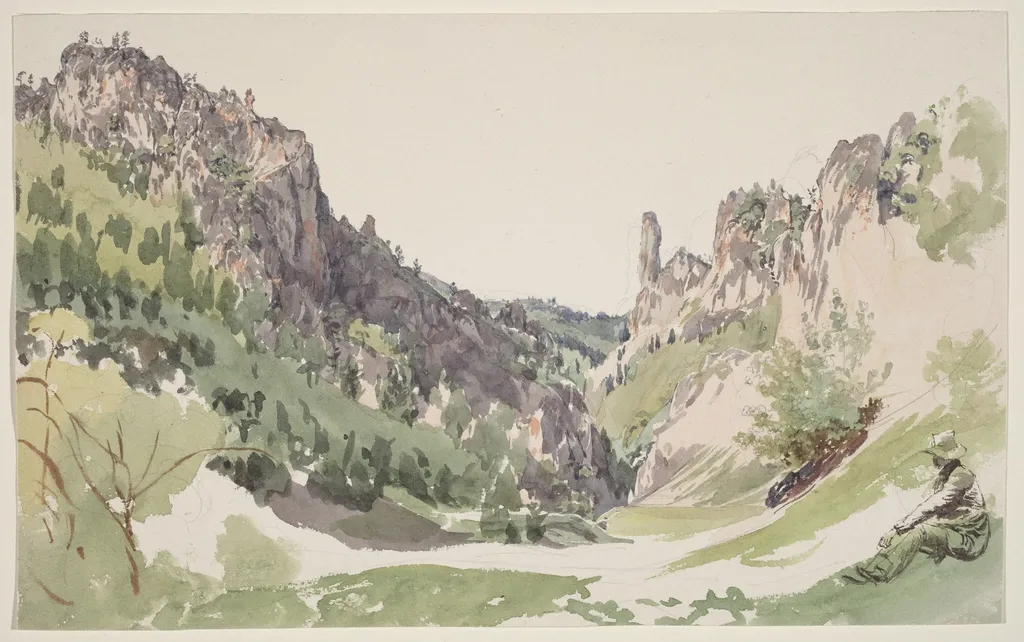
A Seated Man Contemplating a Sunlit Mountain Valley is a graphite drawing by the Romanticist artist Jakob Alt. It dates from 1825 and is held in the collection of the National Gallery of Art.
About this work
Overview
Executed on wove paper with graphite underdrawing, the work exemplifies early 19th-century German Romantic landscape traditions.
Created around 1825, this watercolor drawing by Jakob Alt depicts a solitary figure seated on a grassy slope, facing a distant mountain valley bathed in sunlight. Executed on wove paper with graphite underdrawing, the work exemplifies early 19th-century German Romantic landscape traditions. Its quiet composition and restrained palette emphasize introspection rather than dramatic spectacle, aligning with the period’s interest in nature as a space for quiet reflection.
Subject & Meaning
The seated man, dressed in a long coat and hat, appears absorbed in the view before him, his posture suggesting contemplation rather than action. He is neither a traveler nor a guide but a silent observer, integrated into the landscape without dominating it. The valley, glowing under soft sunlight, invites the viewer to share his stillness. The figure’s anonymity reinforces a universal theme: the individual in communion with the natural world.
Technique & Style
Alt employed delicate watercolor washes over a light graphite sketch to achieve subtle tonal transitions and atmospheric depth. The brushwork is precise yet fluid, with muted blues and greens suggesting distance and air. Light is rendered not through bold highlights but through gentle gradations, allowing the valley to emerge from the surrounding shadows. The texture of the wove paper enhances the softness of the medium, reinforcing the scene’s calm mood.
History & Provenance
The work originates from Jakob Alt’s period of active landscape study in southern Germany and Austria, during which he traveled extensively to sketch natural scenery. While its early ownership is undocumented, it entered public collections in the 20th century as part of broader efforts to preserve Romantic-era German drawings. Its survival reflects its status as a representative example of private, intimate landscape practice rather than large-scale public commissions.
Context
In the 1820s, German artists increasingly turned to nature as a subject worthy of serious artistic attention, influenced by Romantic philosophy and the rise of travel literature. Alt’s work aligns with contemporaries like Caspar David Friedrich, though his approach is less symbolic and more observational. This drawing reflects a growing cultural emphasis on personal experience of landscape, distinct from idealized or mythologized depictions common in earlier centuries.
Legacy
Though not widely exhibited during Alt’s lifetime, this drawing contributes to the understanding of how Romantic ideals were translated into intimate, small-scale works. It exemplifies a mode of landscape art focused on quietude and personal perception, influencing later generations of German and Austrian watercolorists. Its preservation underscores the value placed on such modest, reflective works within institutional collections of 19th-century graphic art.
Own this work as a print
Artist & collection


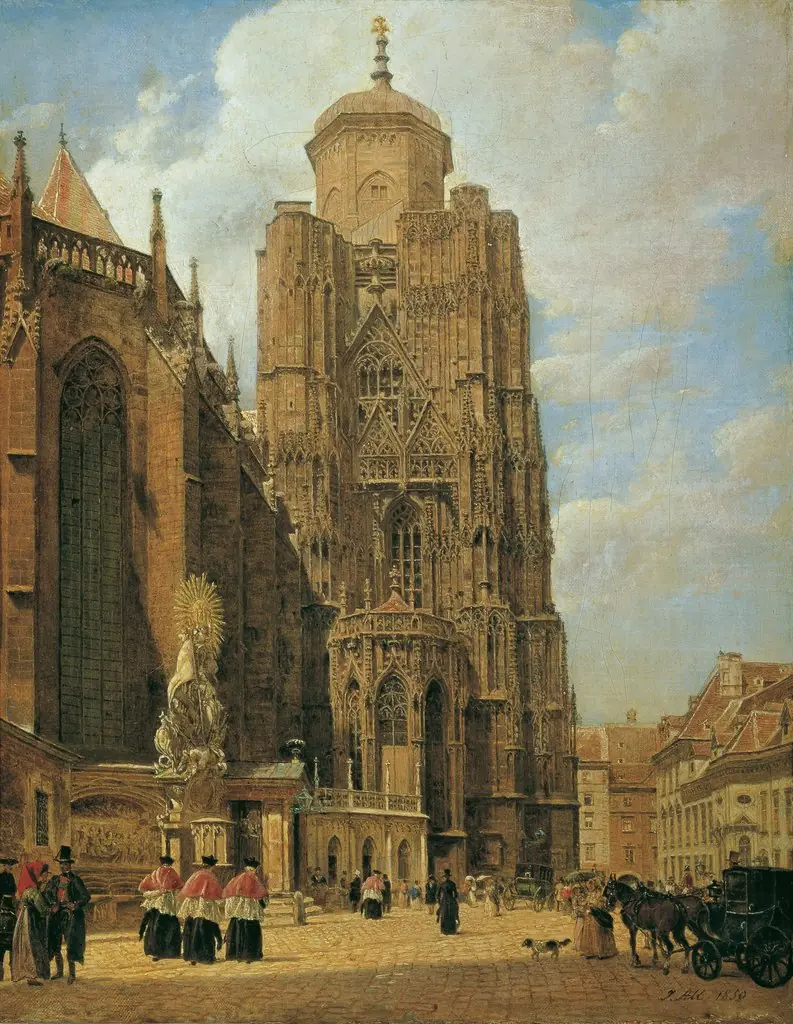 St. Stephen's Cathedral in Vienna
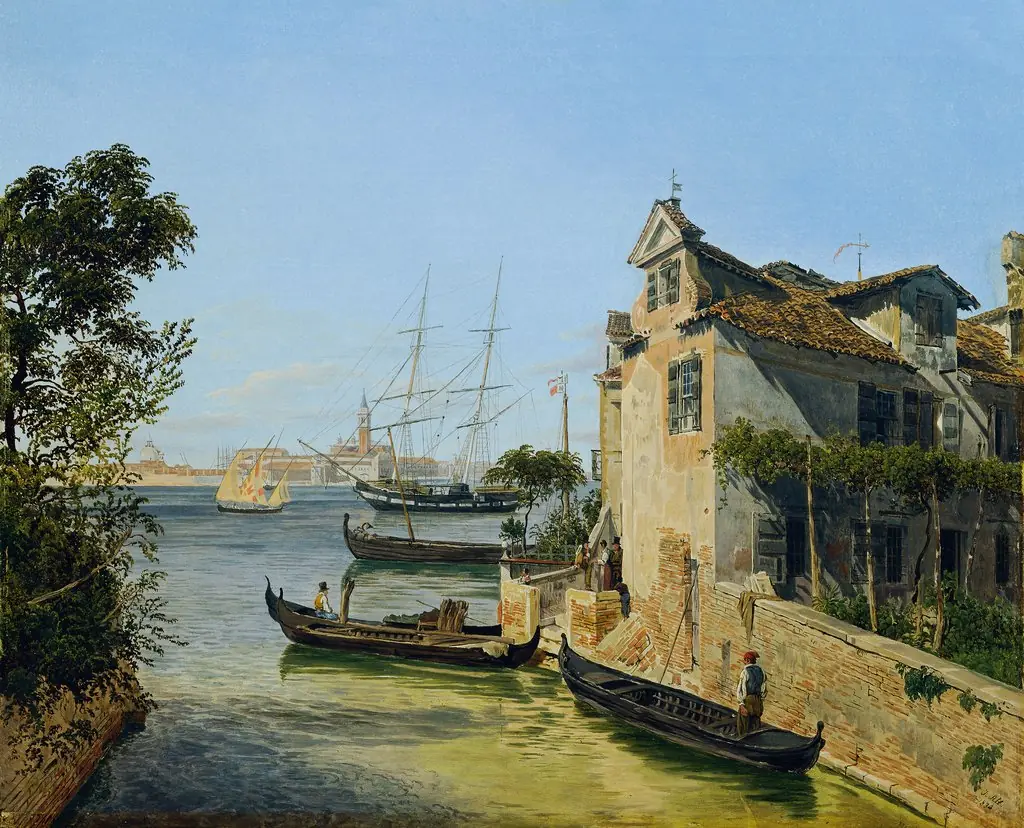 View of San Giorgio Maggiore in Venice
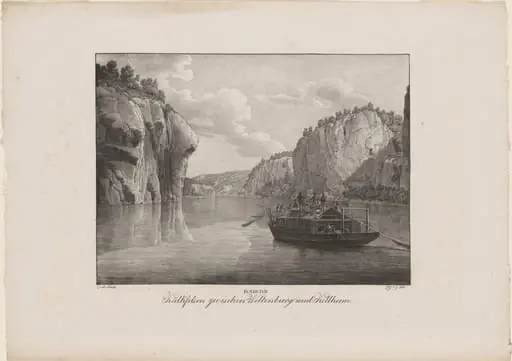 Baiern, Kalkfelsen zwischen Weltenburg und Kellheim (Bavaria, Chalk Cliffs between Weltenburg and Kellheim)
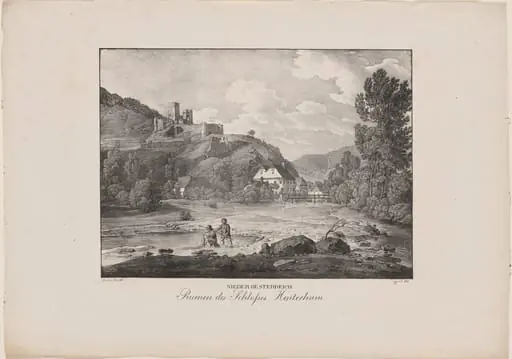 Nieder-Oesterreich, Ruinen des Schlosses Hinterhaus (Lower Austria, Ruins of Hinterhaus Castle)
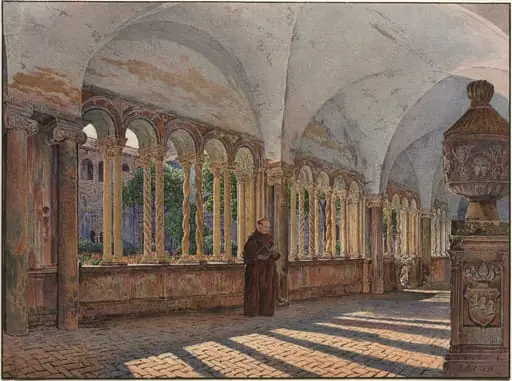 View of the Cloister of San Giovanni in Laterano, Rome
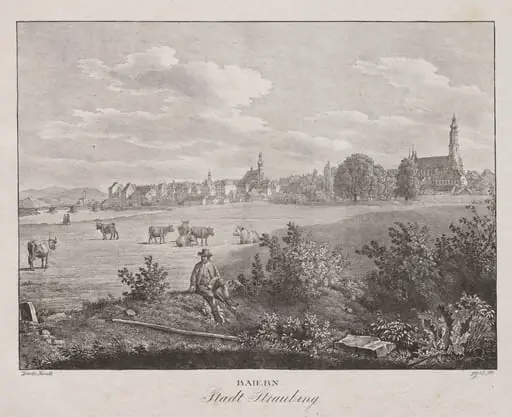 Baiern, Stadt Straubing
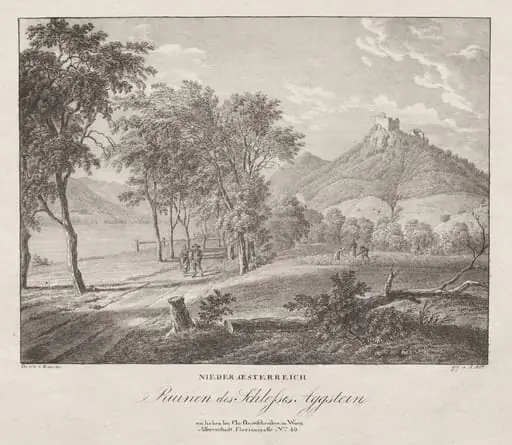 Nieder-oesterreich, Ruinen des Schlosses Aggenstein
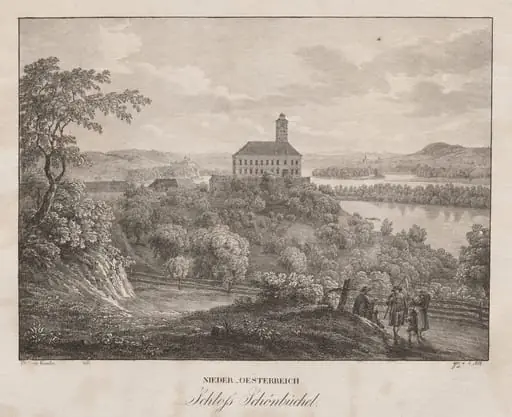 Nieder-oesterreich, Schloss Schöbüchel
 Untitled
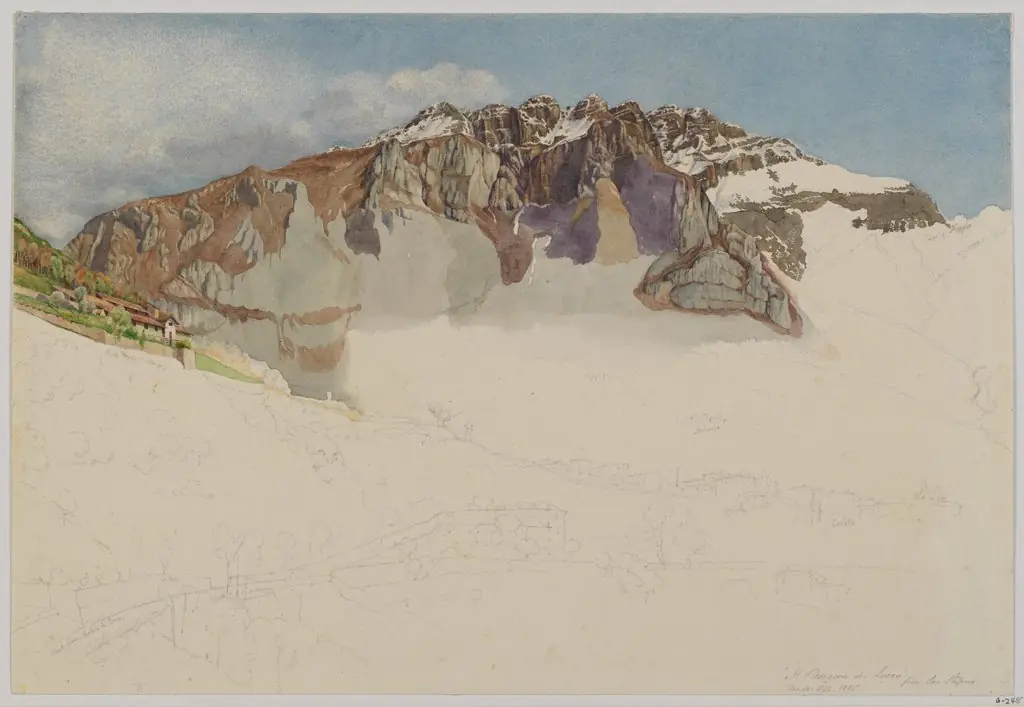 Mountainous Landscape in Italy : "Il Resegone"
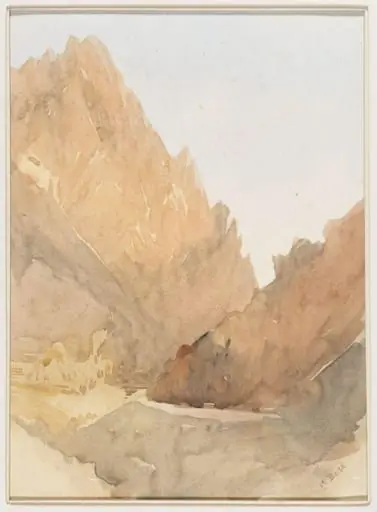 The Gate of the Desert
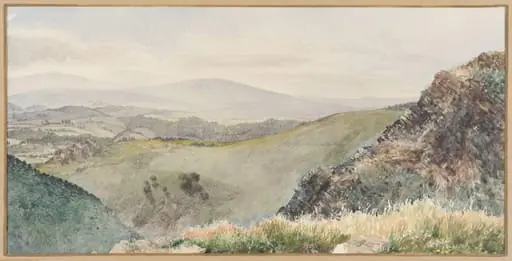 Untitled
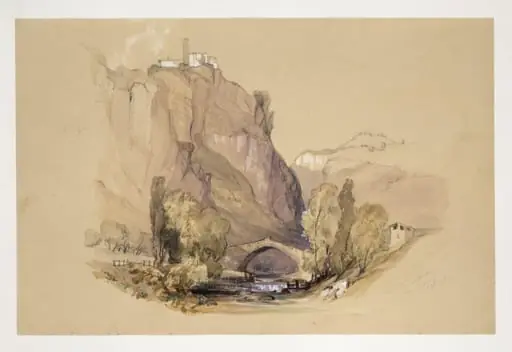 San Pietro, near Porlezza, Lake Lugano
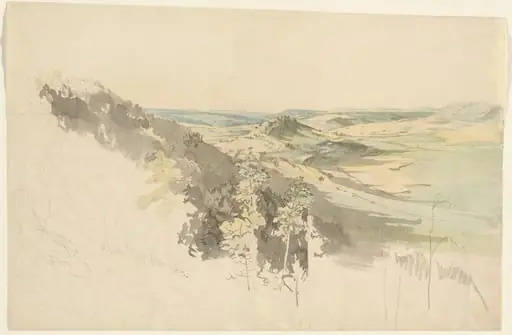 Hilly Landscape with Landsberg Castle
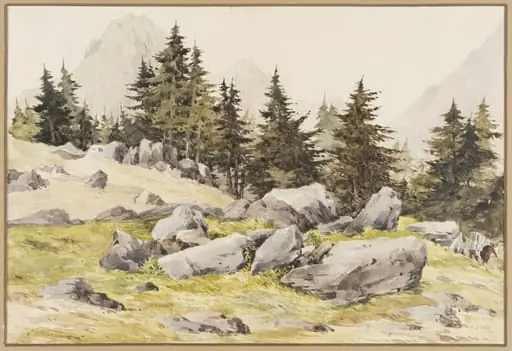 View at Handeck, Switzerland
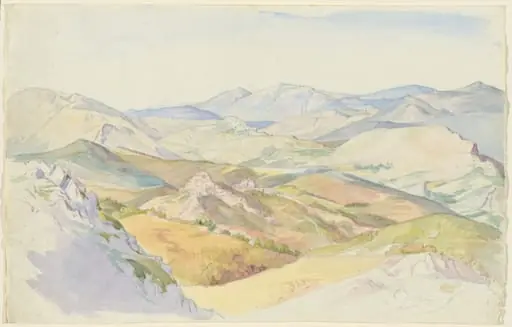 The Sabine Hills and Rocca Santo Stefano Seen from Civitella
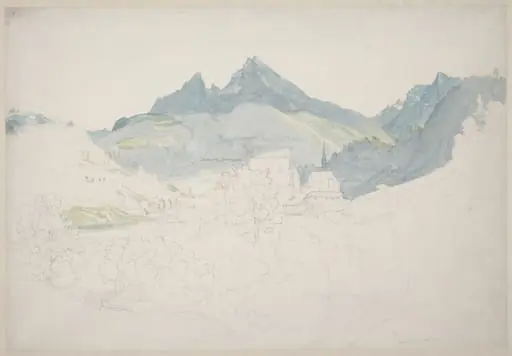 Berchtesgaden with the Watzmann Peak in the Distance
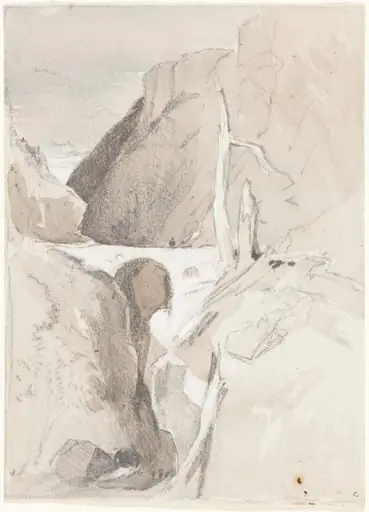 Gorge with Tree Stumps
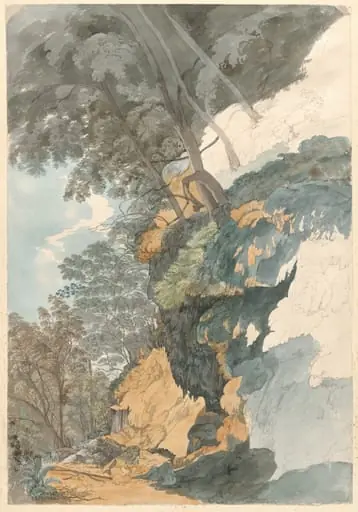 A Cliff Overhung with Trees
 A mountainous landscape - evening