Artwork
Nieder-oesterreich, Schloss Schöbüchel
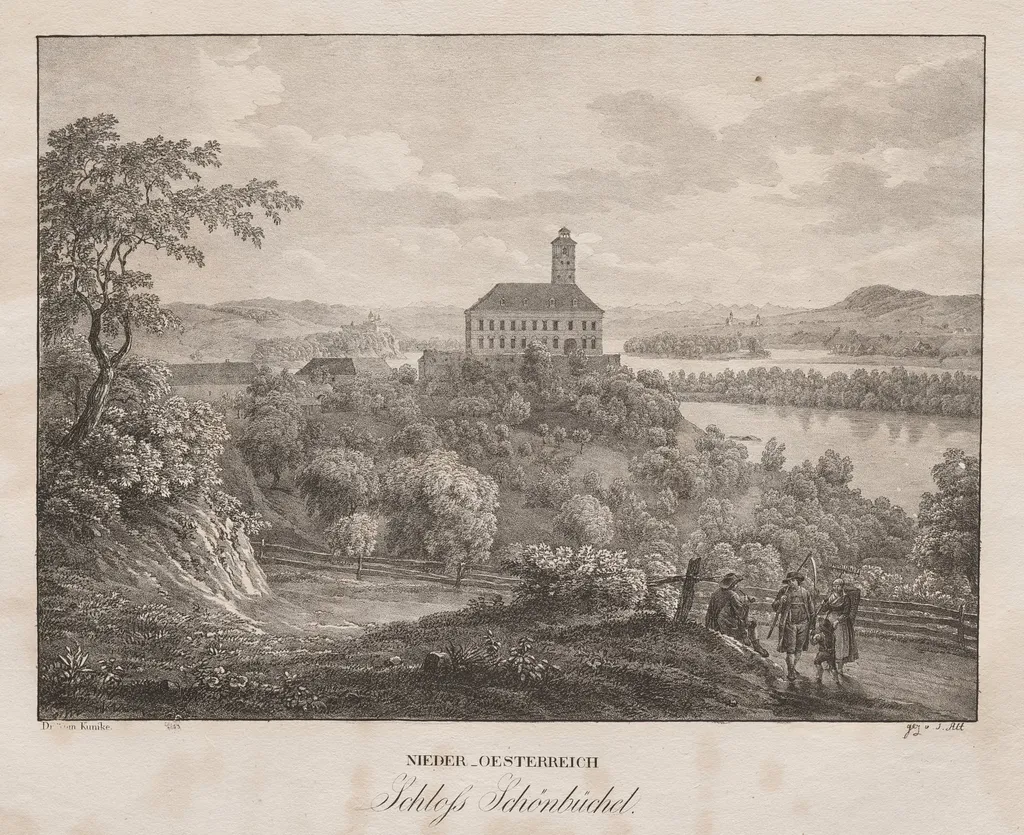
Nieder-oesterreich, Schloss Schöbüchel is a print by Jakob Alt. It dates from 1839 and is held in the collection of the Cleveland Museum of Art.
About this work
Overview
Jakob Alt’s early nineteenth‑century print, dated circa 1839, depicts the Austrian estate of Schloss Schöbüchel. Executed as a single‑sheet image, the work is part of the Cleveland Museum of Art’s collection. The composition presents a tranquil rural landscape dominated by a winding river, cultivated fields, and a hill‑top castle with a prominent tower.
Subject & Meaning
The scene captures a bucolic moment: a river meanders through verdant pastures, while a modest group of three figures—two adults and a child—stand on the bank, gazing toward the water. The distant castle, perched among trees and smaller dwellings, anchors the view, suggesting a harmonious relationship between aristocratic residence and surrounding agrarian life.
Technique & Style
Alt employs fine linear engraving combined with delicate hatching to model volume and atmospheric depth. Gradual shading renders the foliage and architectural forms, creating a sense of recession into space. The careful modulation of tone distinguishes foreground figures from the distant structures, exemplifying the meticulous draftsmanship typical of early Romantic landscape prints.
History & Provenance
Created around 1839, the print entered the Cleveland Museum of Art’s holdings through acquisition in the twentieth century, though the precise purchase details remain undocumented in public records. Its presence in the museum’s print and drawing department reflects the institution’s commitment to representing Central European landscape art of the period.
Context
Jakob Alt, a member of a prominent Austrian artistic family, was known for documenting regional scenery and architecture. This work aligns with the broader nineteenth‑century interest in picturesque travel views, serving both as a visual record of the Schöbüchel estate and as an illustration of the era’s fascination with rural idylls and historic sites.
Artist & collection


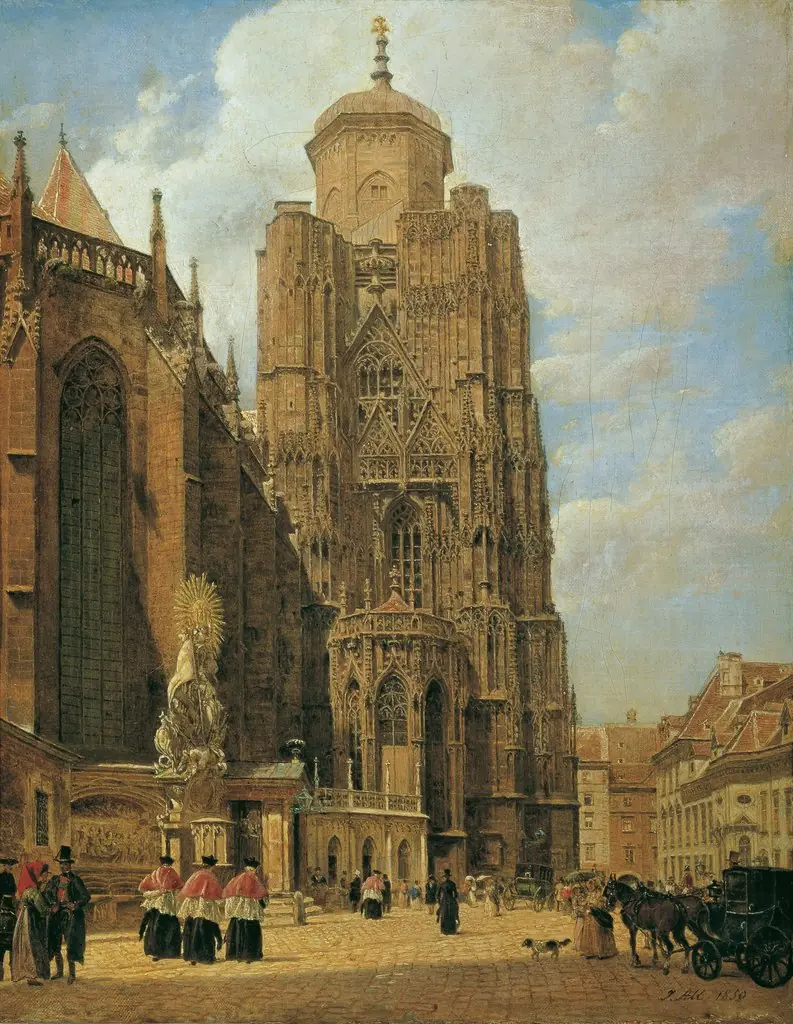 St. Stephen's Cathedral in Vienna
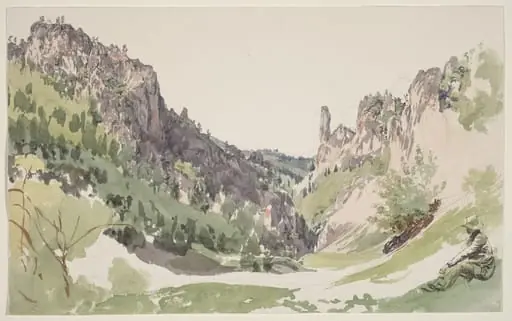 A Seated Man Contemplating a Sunlit Mountain Valley
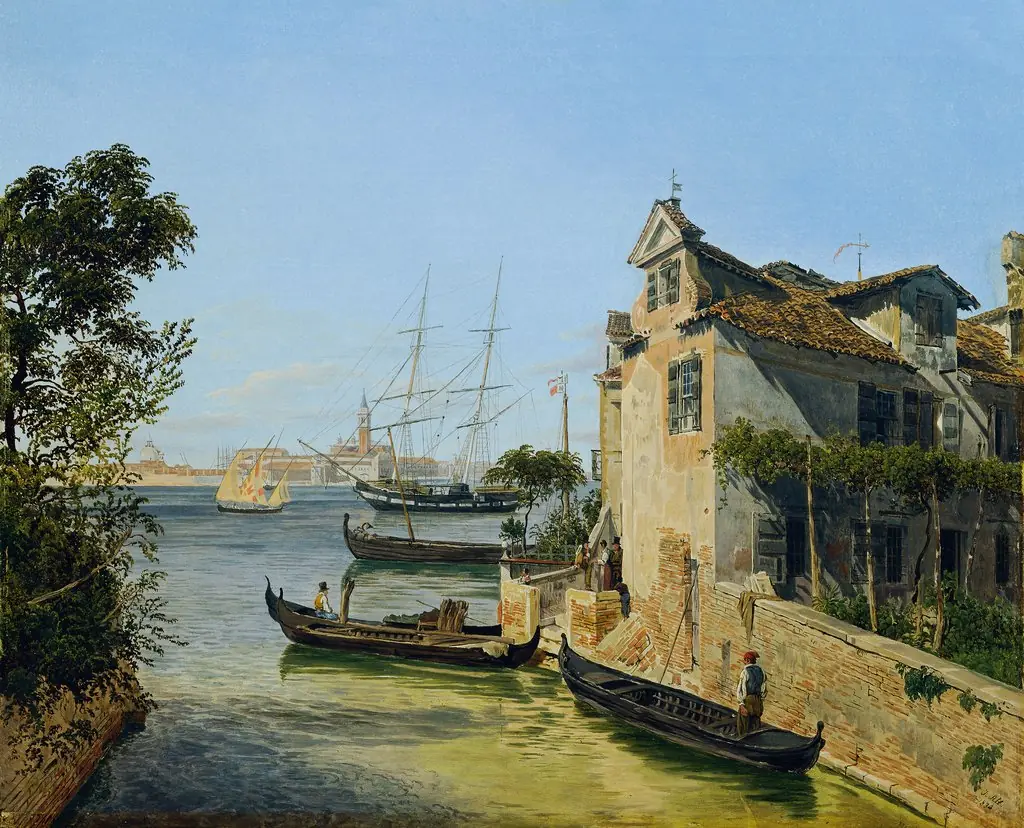 View of San Giorgio Maggiore in Venice
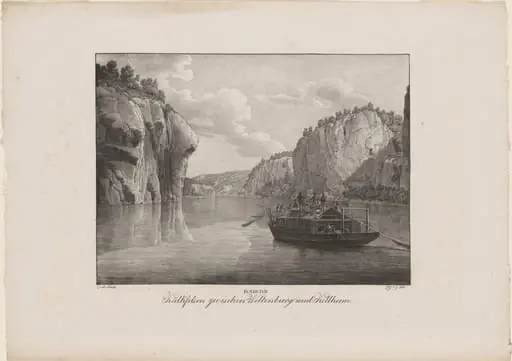 Baiern, Kalkfelsen zwischen Weltenburg und Kellheim (Bavaria, Chalk Cliffs between Weltenburg and Kellheim)
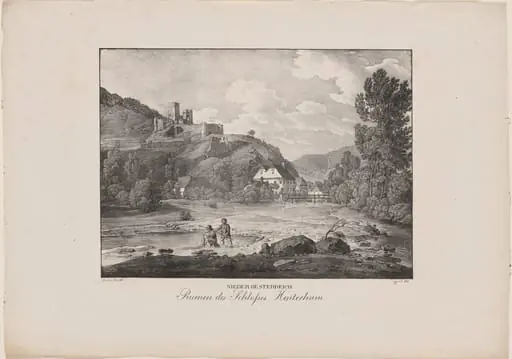 Nieder-Oesterreich, Ruinen des Schlosses Hinterhaus (Lower Austria, Ruins of Hinterhaus Castle)
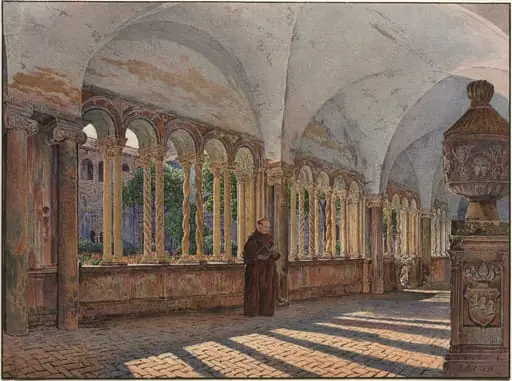 View of the Cloister of San Giovanni in Laterano, Rome
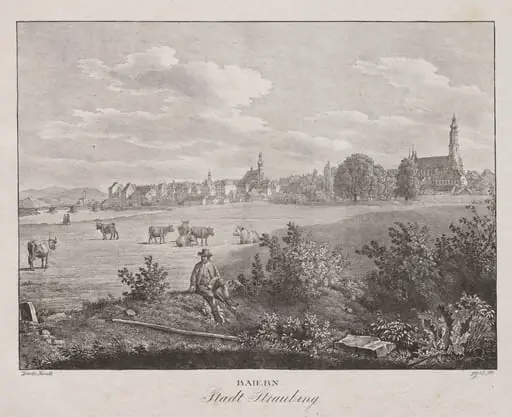 Baiern, Stadt Straubing
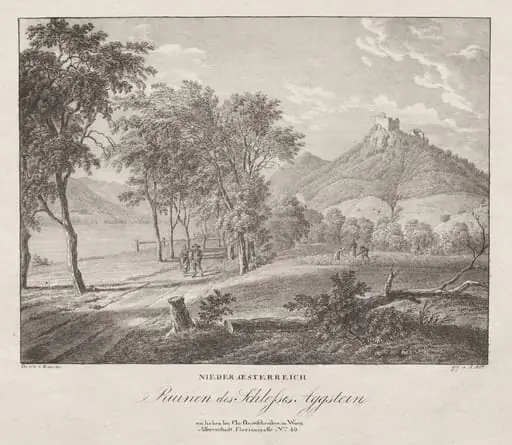 Nieder-oesterreich, Ruinen des Schlosses Aggenstein
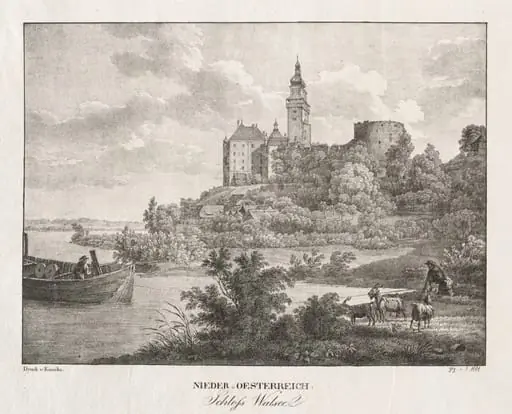 Nieder-oesterreich, Schloss Walseel
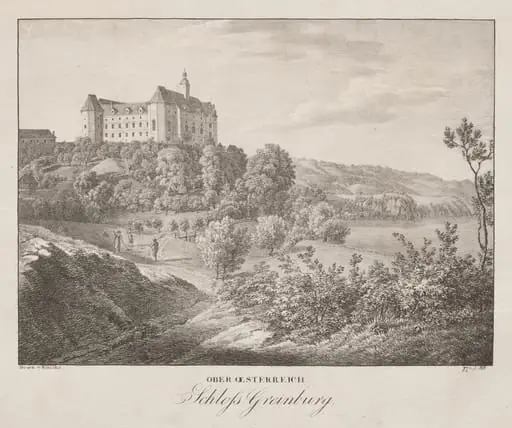 Ober-oesterreich, Schloss Greinburg
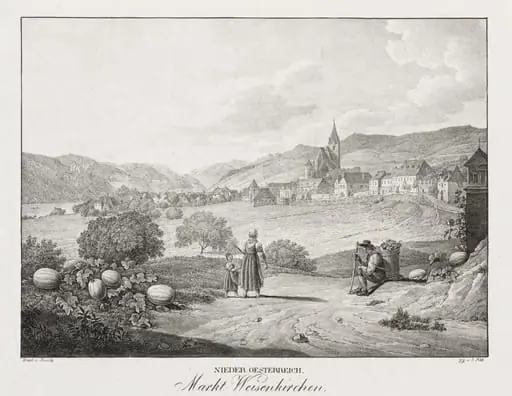 Nieder-oesterreich, Markt Weisenkirchen
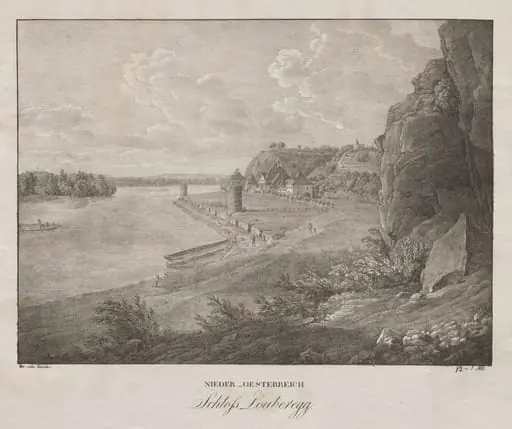 Nieder-oesterreich, Schloss Louberegg
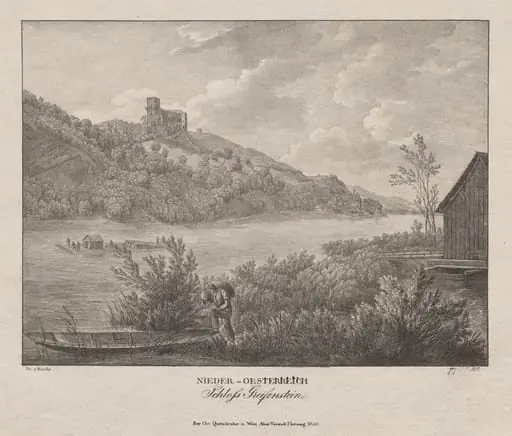 Nieder-oesterreich, Schloss Greifenstein
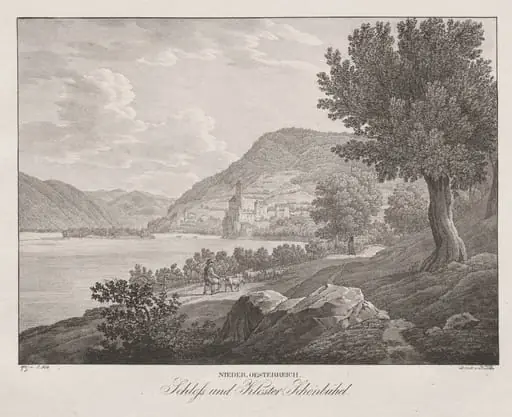 Nieder-oesterreich, Schloss und Kloster Schönbühel
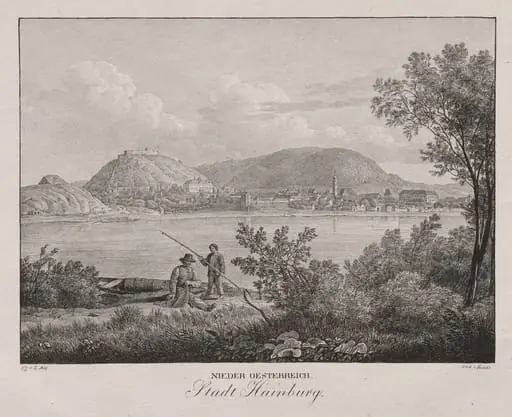 Nieder-oesterreich, Stadt Hainburg
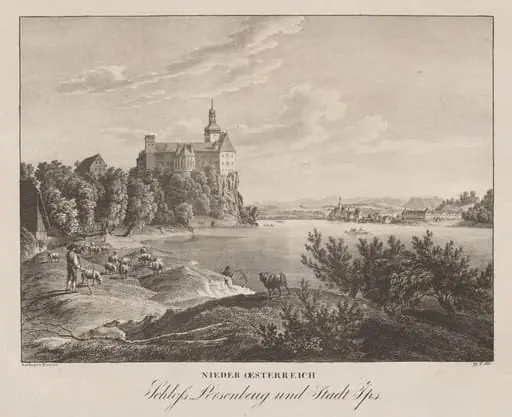 Nieder-oesterreich, Schloss Persenbeug und Stadt Ips
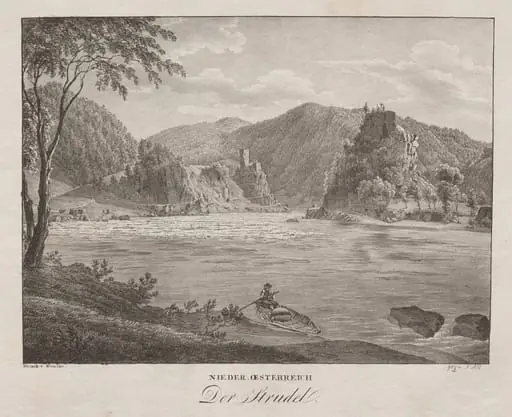 Nieder-oesterreich, Der Strudel
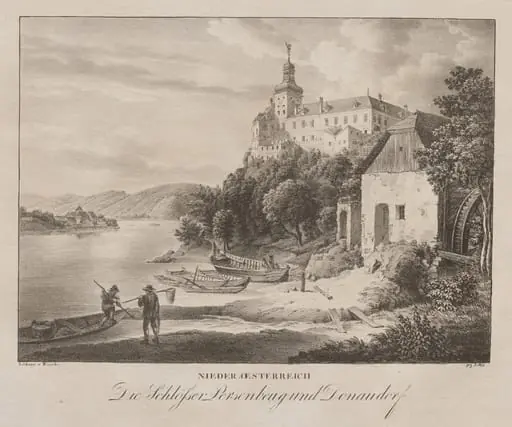 Nieder-oesterreich, Die Schlosser Persenbeug
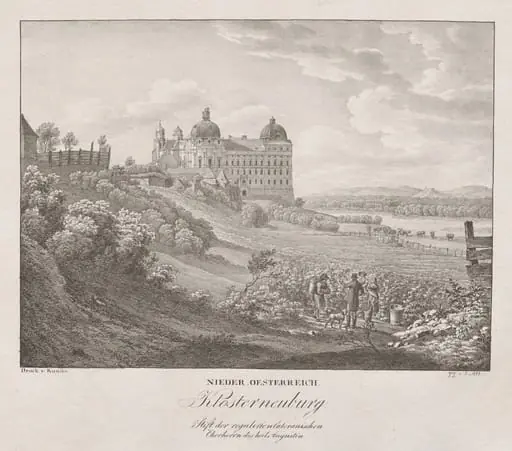 Nieder-oesterreich, Klosterneuberg
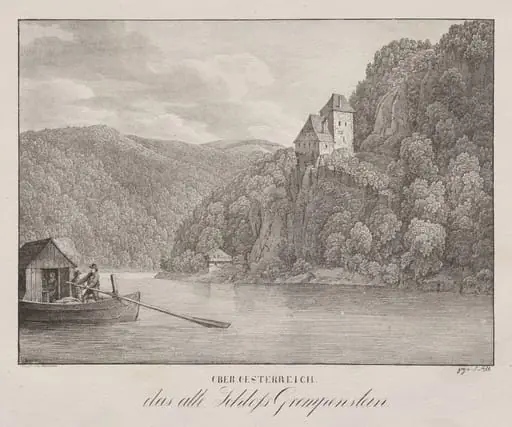 Nieder-oesterreich, Das Alte Schloss Grempenstein