Artwork
View at Handeck, Switzerland
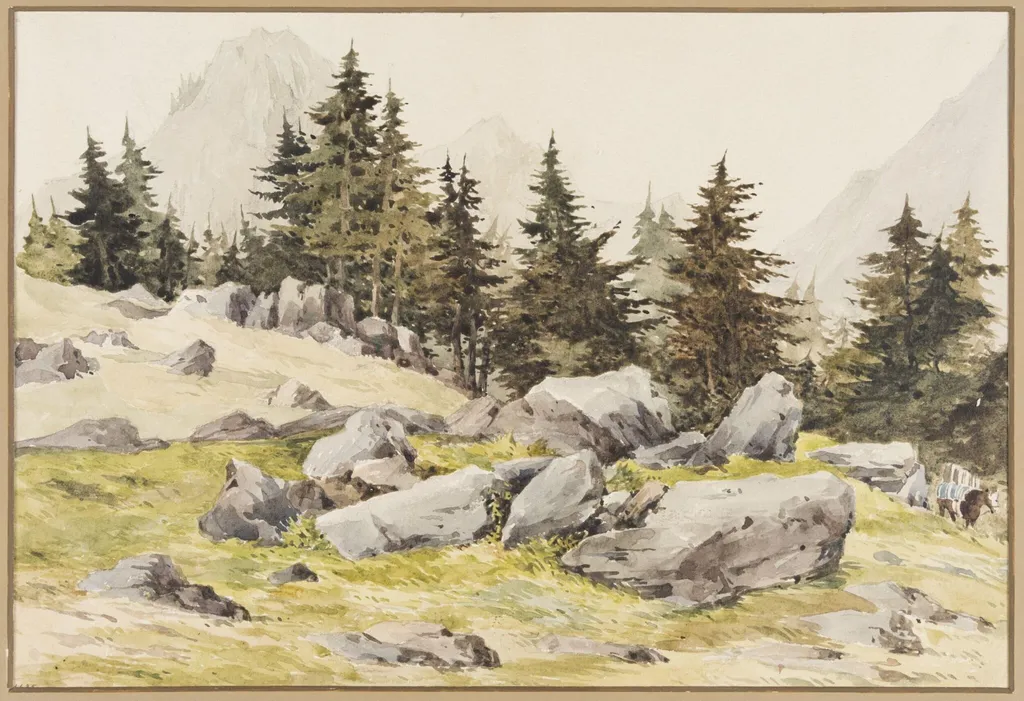
View at Handeck, Switzerland is a watercolor work on paper by the British Romanticist artist Charles Claude Pyne. It dates from 1822 and is held in the collection of the Victoria and Albert Museum.
About this work
Overview
A single horse moves along a narrow path, grounding the landscape in quiet human presence without disrupting its solitude.
Charles Claude Pyne's watercolour captures a quiet alpine scene in Switzerland, focusing on the terrain near Handeck. The composition layers distant snow-capped peaks behind a foreground of rugged rocks and dense pine trees. A single horse moves along a narrow path, grounding the landscape in quiet human presence without disrupting its solitude. The work is rendered entirely in watercolour, emphasizing subtle tonal shifts over bold detail.
Subject & Meaning
The scene presents nature as serene and untamed, with no signs of human habitation. The lone horse suggests passage rather than settlement, reinforcing a theme of transience. The towering pines and distant peaks evoke a sense of scale and stillness, aligning with Romantic-era ideals that valued nature’s emotional resonance over idealized beauty. The absence of dramatic action invites contemplation rather than narrative.
Technique & Style
Pyne employed soft, layered watercolour washes to suggest atmospheric depth and muted light. The foreground rocks and trees are defined with restrained, dry-brush strokes, creating silhouetted forms that contrast against the pale sky. Delicate gradients in the mountains convey distance and faint snowfall, while the uneven ground is suggested through irregular pigment deposits, enhancing the sense of natural texture without artificial precision.
History & Provenance
The work is attributed to Charles Claude Pyne, a 19th-century British artist known for topographical watercolours of Alpine regions. Likely created during one of his sketching trips through Switzerland, it reflects the period’s growing interest in documenting natural landscapes. Its provenance traces to private European collections, though no public exhibition history is widely documented prior to its current acquisition.
Context
Created during the height of Romanticism, the piece aligns with a broader European trend of artists seeking emotional truth in untamed landscapes. Unlike grandiose Alpine paintings, Pyne’s work avoids theatricality, favoring quiet observation. This approach resonated with travelers and naturalists who valued authenticity over spectacle, reflecting a shift toward intimate, personal responses to nature.
Legacy
While not widely reproduced, the watercolour exemplifies the quiet precision of British topographical watercolourists working in the Alps. Its restrained aesthetic influenced later generations of landscape artists who prioritized atmospheric effect over dramatic composition. It remains a modest but representative example of 19th-century travel sketching, valued for its sincerity rather than its scale.
Own this work as a print
Artist & collection

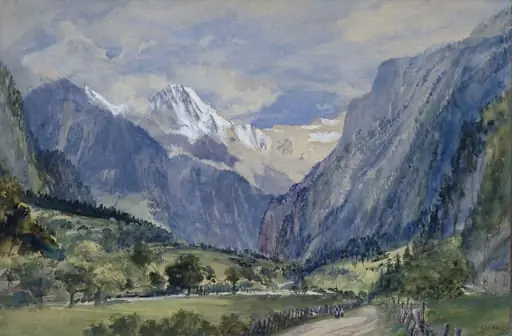 The Jungfrau from Interlaken in Switzerland
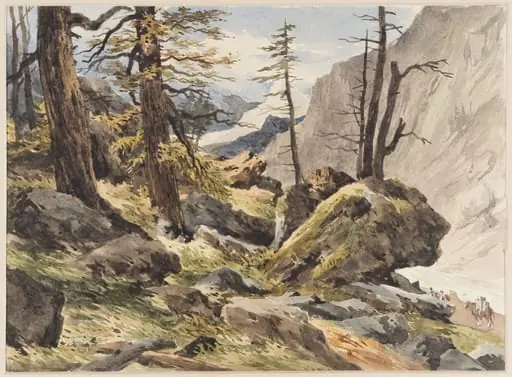 Road leading to Zermatt, Switzerland
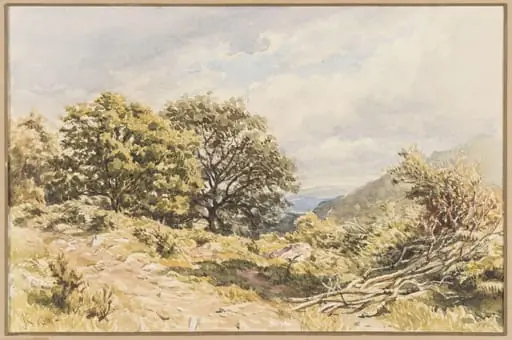 A Woody Bit, North Wales
 Alpine Landscape
 An Alpine Valley with Trees and Boulders
 A Seated Man Contemplating a Sunlit Mountain Valley
 View of Chamonix-Mont-Blanc
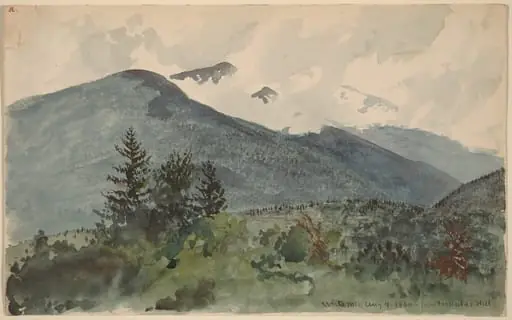 White Mountains from Fernald's Hill
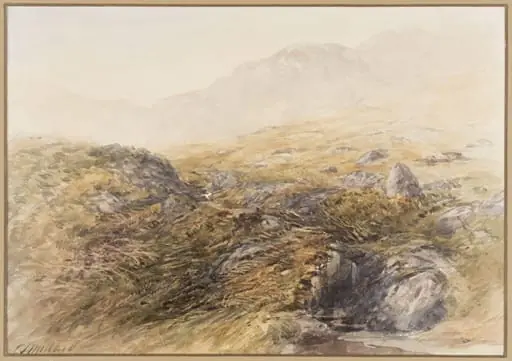 View Near Bettws-y-Coed
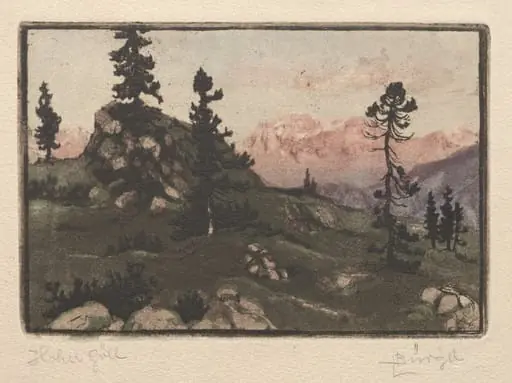 Hoher Gull