Artwork
Centaur with a Vase
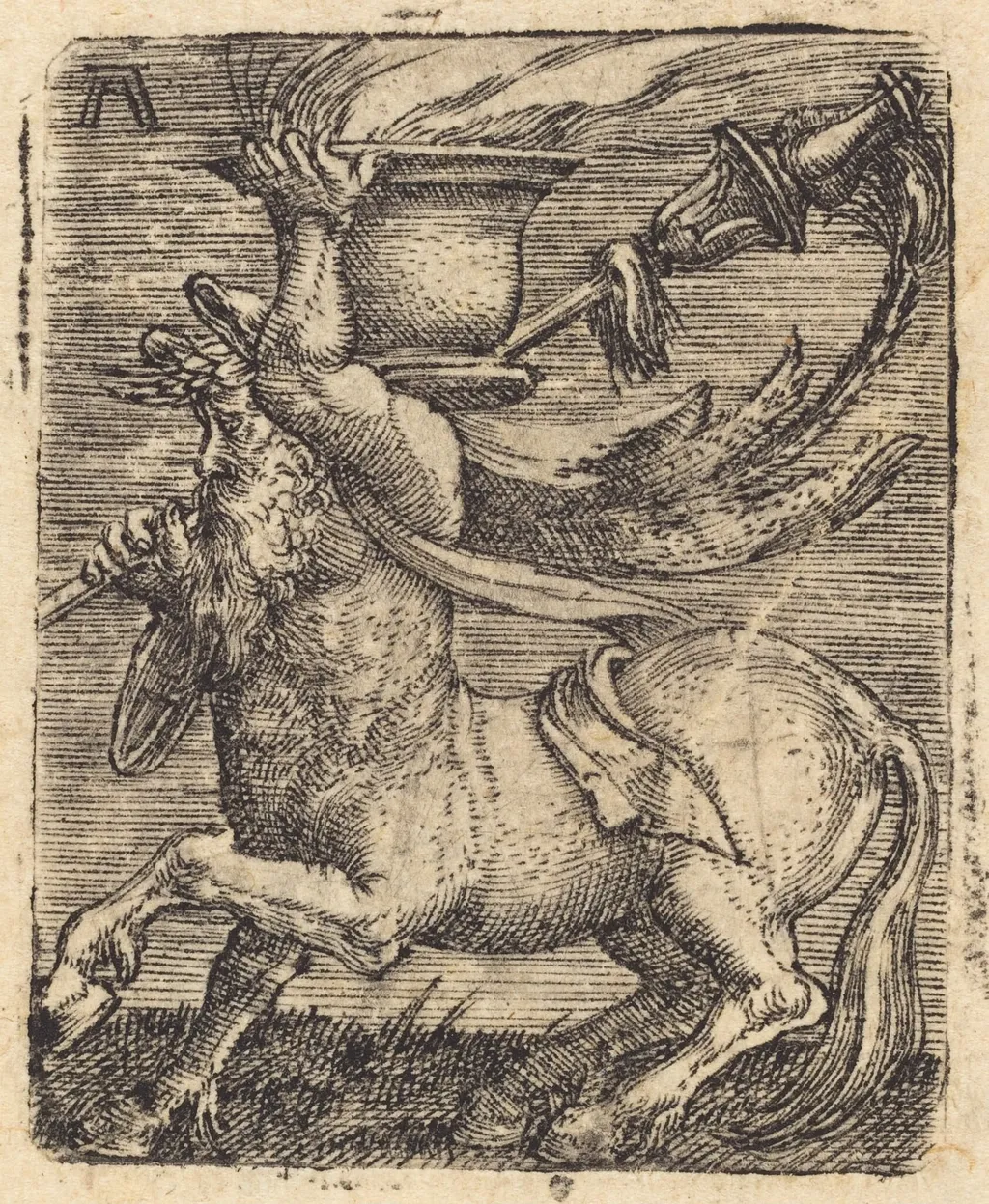
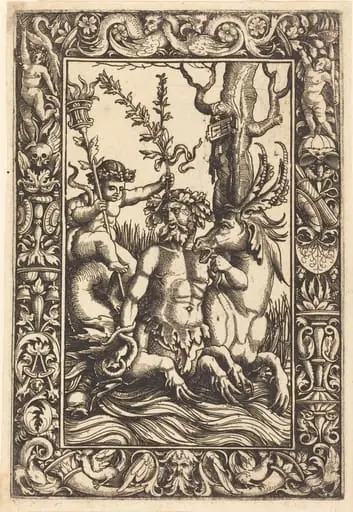
Centaur with a Vase is an ink print by the Renaissance artist Albrecht Altdorfer. It dates from 1520 and is held in the collection of the National Gallery of Art.
About this work
Overview
Created circa 1520 by Albrecht Altdorfer, this engraving on laid paper presents a mythological figure within a tightly controlled graphic field.
Created circa 1520 by Albrecht Altdorfer, this engraving on laid paper presents a mythological figure within a tightly controlled graphic field. As a key figure in the Danube School, Altdorfer merged classical themes with naturalistic settings, using the precision of engraving to explore form and movement. The work reflects his broader interest in integrating human and animal forms within immersive, if implied, landscapes.
Subject & Meaning
The centaur, a hybrid of human and equine anatomy, holds a large, decorated vase with arms raised in a twisting posture. This dynamic stance suggests motion, perhaps in ritual or labor, though no narrative context is explicitly given. The figure evokes ancient myth but is rendered without overt symbolism, inviting contemplation of the creature’s presence rather than its story.
Technique & Style
Altdorfer employed fine engraving lines and cross-hatching to model volume and texture, particularly in the centaur’s fur and the vase’s ornamental bands. The background remains minimal, focusing attention on the figure’s tension and the intricate surface details. His handling of line conveys both weight and energy, characteristic of his engagement with the Nuremberg Little Masters’ precision while retaining a more expressive sensibility.
History & Provenance
The print originates from Altdorfer’s active period in Regensburg, where he produced numerous engravings alongside paintings and architectural projects. While specific early ownership records are sparse, the work aligns with his known output from the early 1520s, a time when he was refining his graphic style and exploring mythological subjects through printmaking.
Context
In early 16th-century Germany, mythological imagery was increasingly used in prints to demonstrate artistic skill and classical learning. Altdorfer’s focus on the natural world—though not fully rendered here—was part of a broader shift toward landscape as a subject in its own right. His engravings contributed to the growing circulation of such imagery among educated patrons.
Legacy
This engraving exemplifies Altdorfer’s role in expanding the expressive potential of printmaking beyond mere reproduction. His integration of mythic figures with tactile detail and implied motion influenced later Northern European artists, reinforcing the engraving’s capacity to convey psychological and physical presence without color or elaborate setting.
Artist & collection
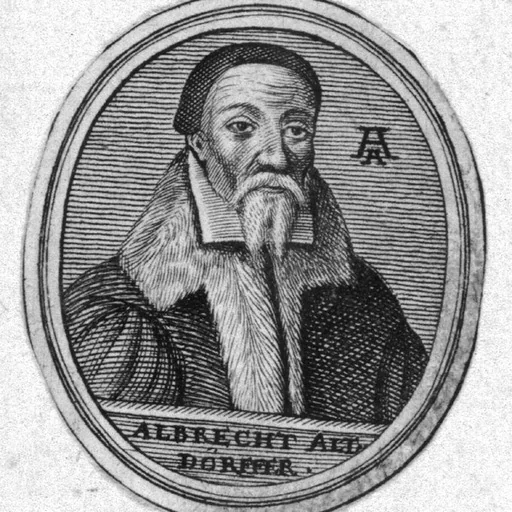
Artist
Albrecht Altdorfer (c. 1480 – 12 February 1538) was a German painter, engraver and architect of the Renaissance working in Regensburg. Along with Lucas Cranach the Elder and Wolf Huber he is regarded to be the main…