Artwork
The Fall of Man
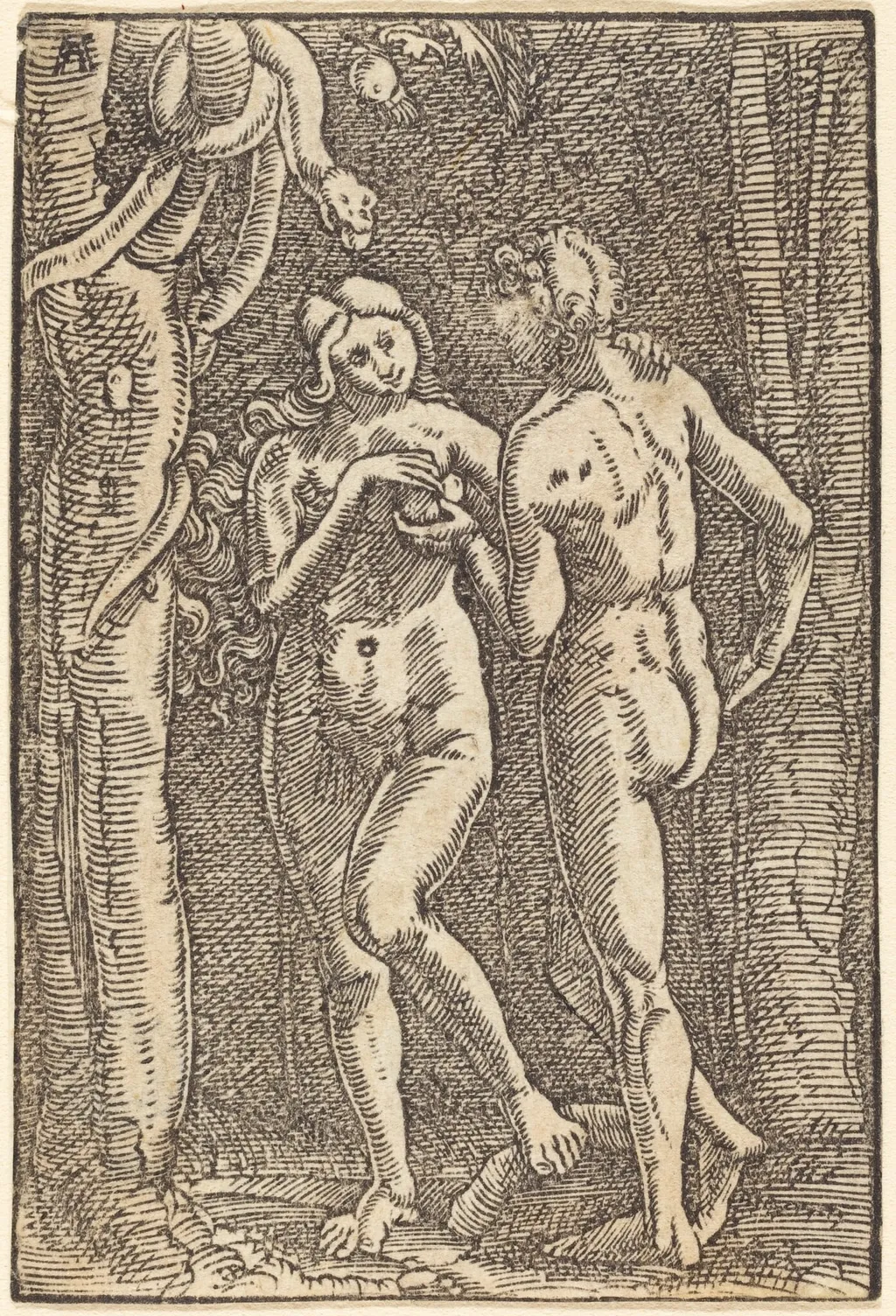
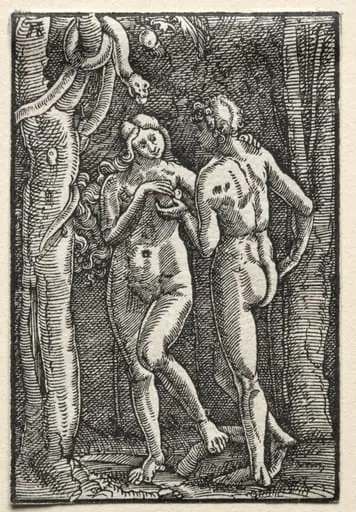
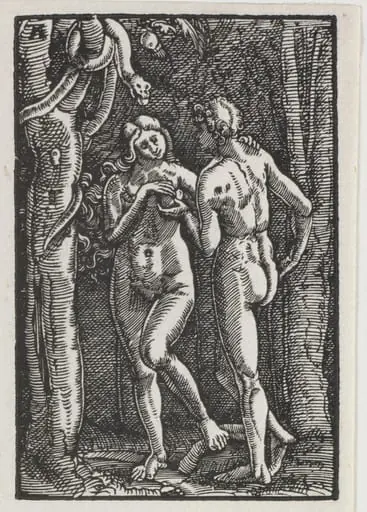
The Fall of Man is an ink print by the Renaissance artist Albrecht Altdorfer. It dates from 1513 and is held in the collection of the National Gallery of Art.
About this work
Overview
The Fall of Man is a woodcut on laid paper created by Albrecht Altdorfer around 1513. As a prominent figure of the Danube School, Altdorfer was known for framing biblical and historical scenes within vivid landscapes, also pioneering independent landscape art.
Subject & Meaning
Depicting two naked figures near a tree with twisting branches, one reaching up and the other looking down, the print symbolizes the story of humans in relation to nature, with the tree as a central element, likely alluding to the biblical narrative of the Fall.
Technique & Style
The woodcut showcases Altdorfer's intricate engraving style, characterized by tiny crosshatch lines creating depth and texture. This technique aligns with the traditions of the Nuremberg Little Masters, emphasizing detailed, expressive designs.
History & Provenance
Created circa 1513 by Albrecht Altdorfer in Regensburg, the work reflects his contribution to both illustrated religious themes and the emerging genre of standalone landscape prints.
Context
As part of the Danube School, Altdorfer's work blends religious narrative with a strong emphasis on natural scenery, marking a shift towards more expressive and detailed landscape representations in early 16th-century German art.
Legacy
The Fall of Man contributes to Altdorfer's legacy as a versatile Renaissance artist, influencing the development of both religious iconography and landscape art in Europe through his unique blend of biblical themes and naturalistic settings.
Own this work as a print
Artist & collection
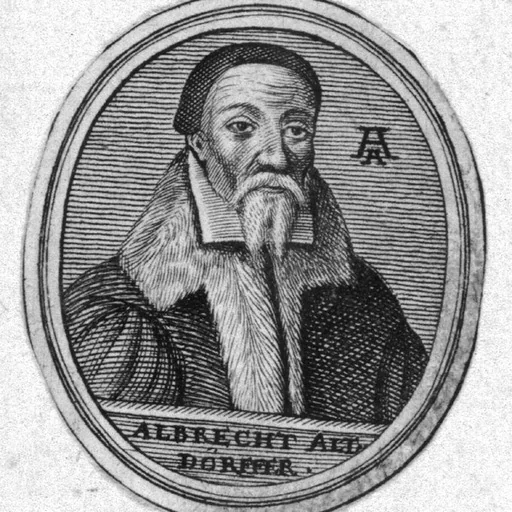
Artist
Albrecht Altdorfer (c. 1480 – 12 February 1538) was a German painter, engraver and architect of the Renaissance working in Regensburg. Along with Lucas Cranach the Elder and Wolf Huber he is regarded to be the main…