Artwork
Man and Woman with a Ball
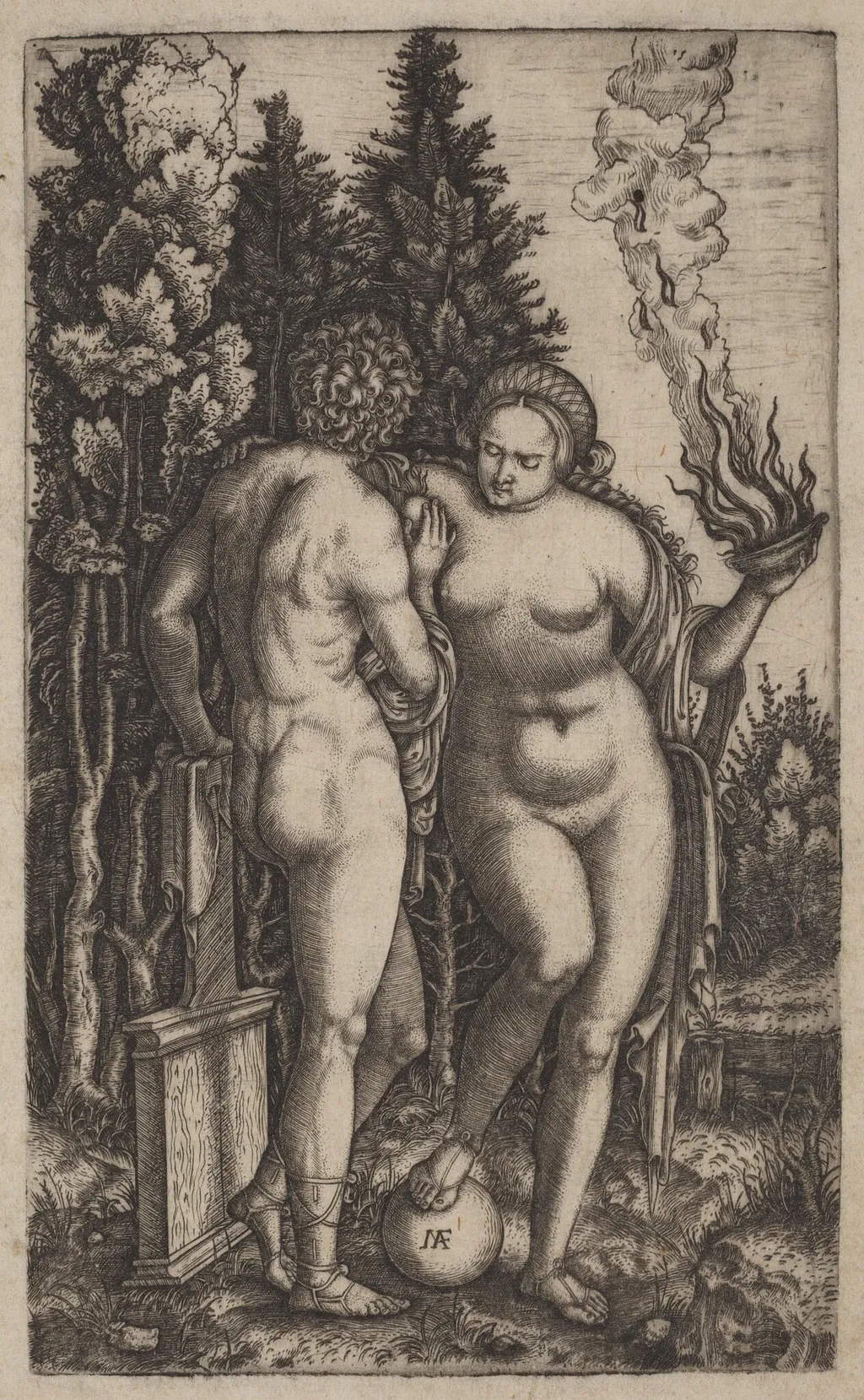
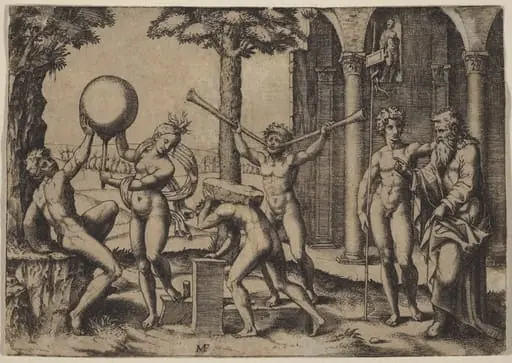
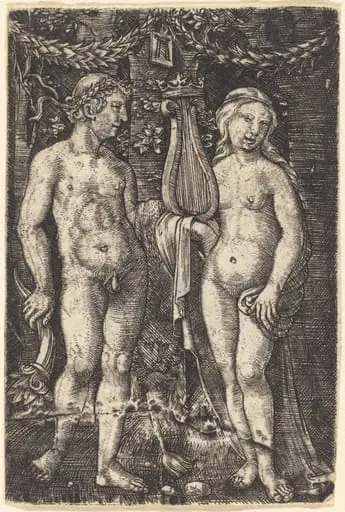
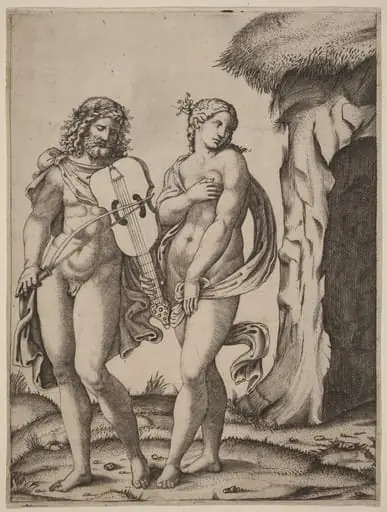
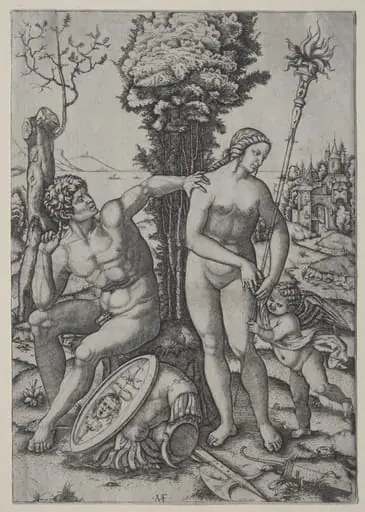
Man and Woman with a Ball is an ink print by the Renaissance artist Marcantonio Raimondi. It dates from 1507 and is held in the collection of the National Gallery of Art.
About this work
Overview
Created in 1507 by Marcantonio Raimondi, this engraving is part of a broader effort to translate painted compositions into printed form.
Created in 1507 by Marcantonio Raimondi, this engraving is part of a broader effort to translate painted compositions into printed form. Raimondi, an Italian printmaker, specialized in reproducing the works of contemporary painters, particularly Raphael. His technical precision and disciplined line work helped standardize the dissemination of High Renaissance imagery across Europe, making this piece a key example of early reproductive printmaking.
Subject & Meaning
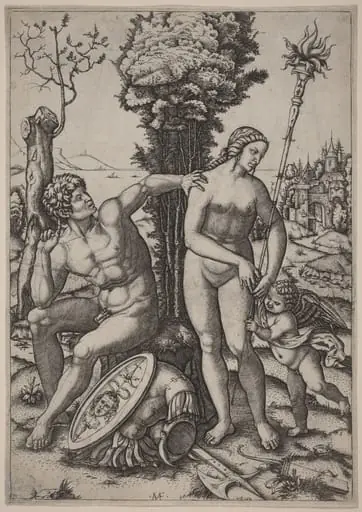
The scene shows a nude man and a partially draped woman standing beside a small fire, holding a ball and a shallow dish. Their poses suggest a ritual or allegorical moment, possibly referencing classical themes of harmony or domestic virtue. The inclusion of fire and foliage may allude to natural cycles or mythological settings, though no definitive narrative is recorded. The figures’ interaction, restrained yet intimate, reflects Renaissance ideals of balanced composition and humanist symbolism.
Technique & Style
Raimondi employed fine, controlled engraving lines to model form and texture with remarkable subtlety. The man’s musculature, the woman’s drapery, and the foliage are rendered through meticulous cross-hatching and delicate contouring. The background trees and the flickering fire are suggested rather than fully detailed, creating spatial depth without clutter. This methodical approach to line and tone became a hallmark of his style and influenced generations of printmakers.
History & Provenance
The engraving was produced during Raimondi’s most productive period, before Raphael’s death in 1520. While no early ownership records are documented for this specific print, it aligns with the broader circulation of Raimondi’s works through European print markets. His workshop produced multiple impressions, and surviving examples are held in major collections, indicating its early and sustained distribution among collectors and artists.
Context
In early 16th-century Italy, the demand for accessible images of classical and contemporary art surged. Raimondi’s engravings met this need by translating monumental paintings into portable, reproducible formats. His work, often based on Raphael’s designs, helped standardize visual language across regions. This engraving, though not directly after a known painting, reflects the stylistic norms of Raphael’s circle and the era’s fascination with idealized human forms.
Legacy
Raimondi’s systematic engraving techniques set a precedent for reproductive printmaking in Europe. His ability to translate painterly effects into linear media influenced Northern and Southern artists alike. Though later printmakers developed more expressive styles, his precision and clarity remained a reference point. This engraving exemplifies the quiet but profound impact of print culture in shaping Renaissance visual literacy.
Artist & collection

Artist
Marcantonio Raimondi, often called simply Marcantonio (c. 1470/82 – c. 1534), was an Italian engraver, known for being the first important printmaker whose body of work consists largely of prints copying paintings. He…