Artwork
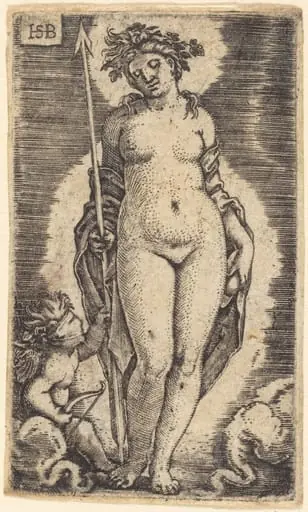
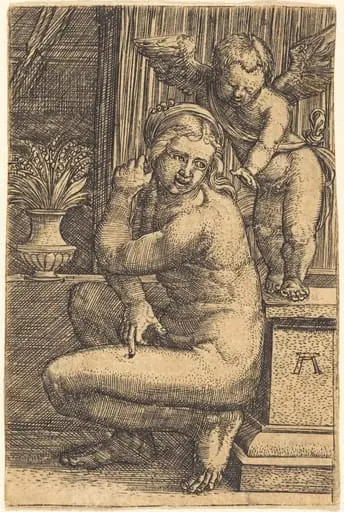
Venus with Two Putti
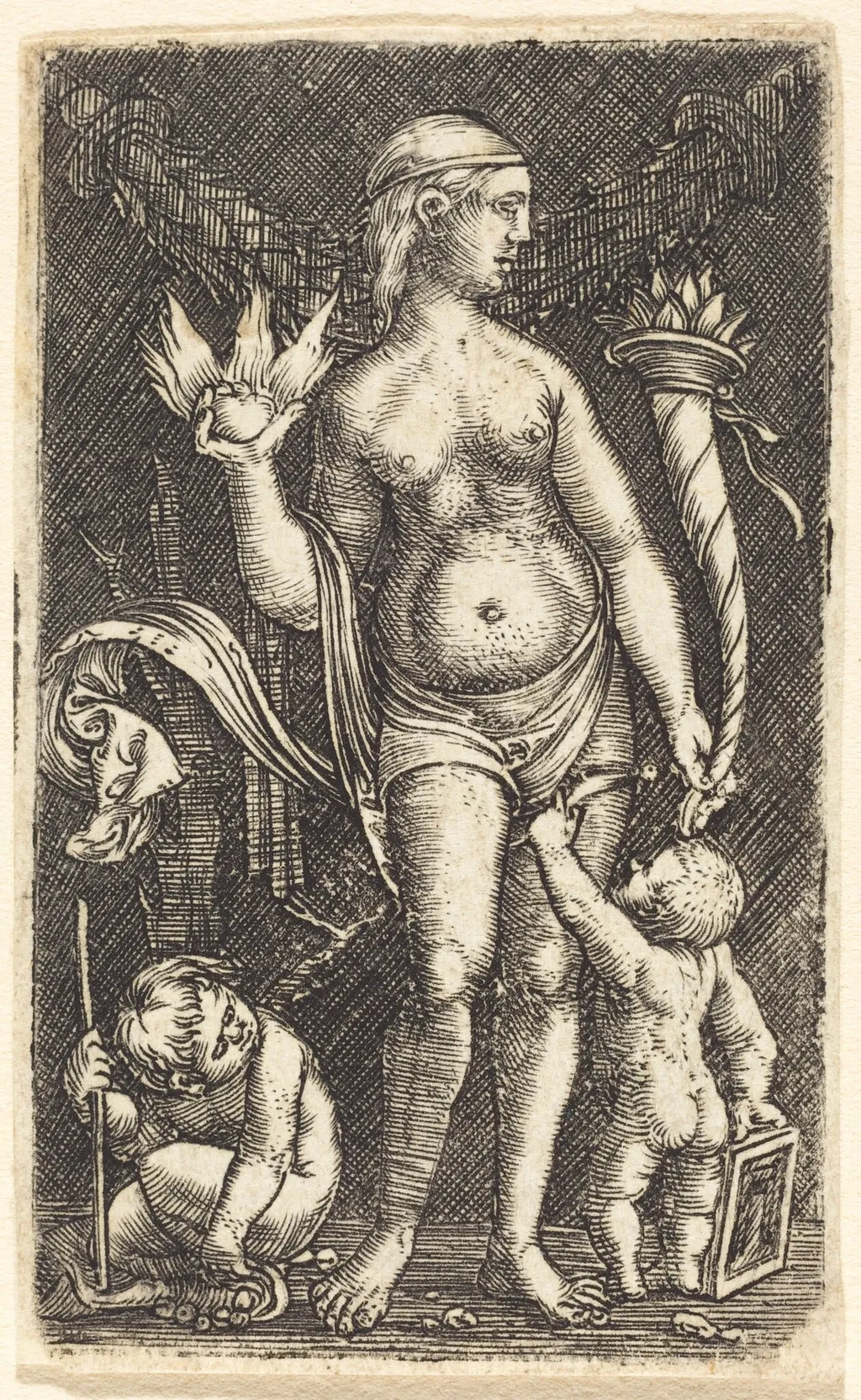
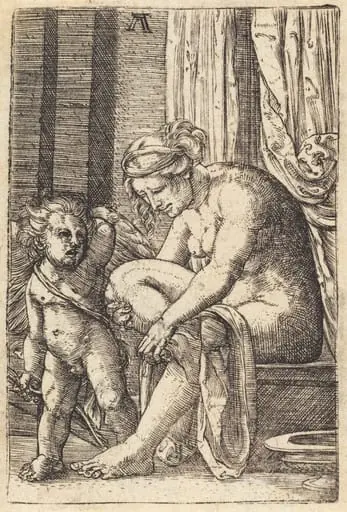
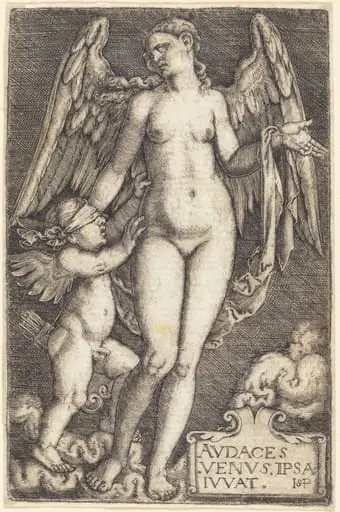
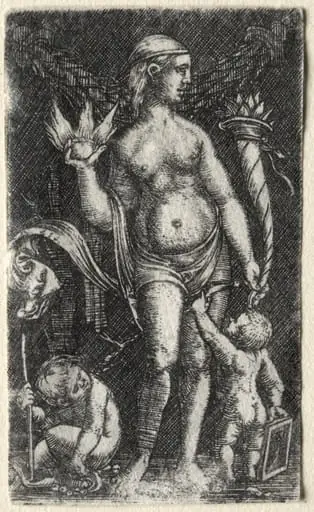
Venus with Two Putti is an ink print by the Renaissance artist Albrecht Altdorfer. It dates from 1514 and is held in the collection of the National Gallery of Art.
About this work
Overview
The work belongs to a group of small-scale engravings associated with the Nuremberg Little Masters, noted for their precision and intricate execution.
Created around 1514 by Albrecht Altdorfer, this engraving on laid paper presents a mythological scene centered on Venus. Executed in Regensburg, it reflects Altdorfer’s engagement with classical themes during the early 16th century. Though primarily known for his landscapes, Altdorfer also produced finely detailed prints that demonstrate his mastery of line and tone. The work belongs to a group of small-scale engravings associated with the Nuremberg Little Masters, noted for their precision and intricate execution.
Subject & Meaning
Venus, the Roman goddess of love, stands nude at the center, flanked by two putti holding symbolic objects: a mask and a box. One putto grips her shoulder while she holds a flower, suggesting themes of beauty, transience, or concealed identity. The ribbon around her waist may imply connection or constraint. The objects, though not clearly defined in classical sources, invite interpretation as metaphors for illusion, desire, or hidden knowledge, aligning with Renaissance humanist interests in layered allegory.
Technique & Style
Altdorfer employed fine cross-hatching and delicate shading to model form and create depth in the darkened background. The contrast between the illuminated figure and the muted surroundings draws focus to Venus, while the intricate linework renders textures in skin, fabric, and hair with precision. His handling of tone avoids heavy outlines, instead building volume through gradations of ink. The composition is tightly contained, emphasizing intimacy over grandeur, characteristic of his smaller engravings.
History & Provenance
The engraving was produced during Altdorfer’s time in Regensburg, where he served as a city architect and artist. Few records detail its early ownership, but it circulated among collectors of Northern Renaissance prints. Its survival in multiple impressions suggests modest but sustained demand. It was likely printed shortly after its design, as was customary for engravers of the period who often retained control over their plates.
Context
In early 16th-century Germany, interest in classical mythology grew alongside humanist scholarship. Altdorfer’s engagement with Venus reflects this trend, though his treatment remains distinct from Italian models—less idealized, more psychologically subtle. His integration of myth into a dark, atmospheric setting diverges from the clarity of Italian Renaissance prints, instead aligning with the Danube School’s emotional intensity and atmospheric experimentation.
Legacy
Though less celebrated than his landscapes, this engraving exemplifies Altdorfer’s versatility and technical finesse. It contributed to the broader acceptance of mythological subjects in Northern printmaking and influenced later artists exploring allegory in intimate formats. Its survival in major collections attests to its enduring recognition among scholars of Renaissance graphic arts.
Artist & collection
Artist
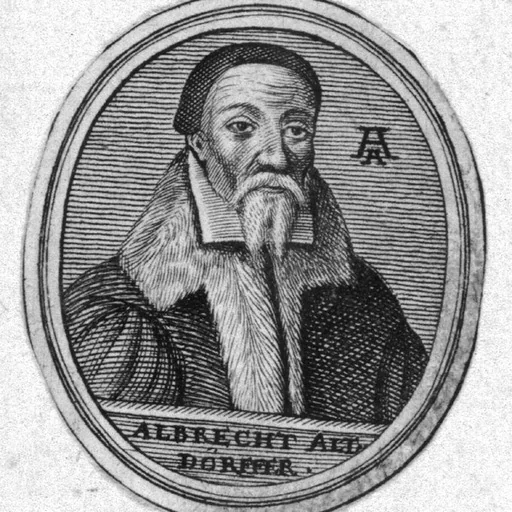
Albrecht Altdorfer (c. 1480 – 12 February 1538) was a German painter, engraver and architect of the Renaissance working in Regensburg. Along with Lucas Cranach the Elder and Wolf Huber he is regarded to be the main…