Artwork
Judith and Her Servant Standing
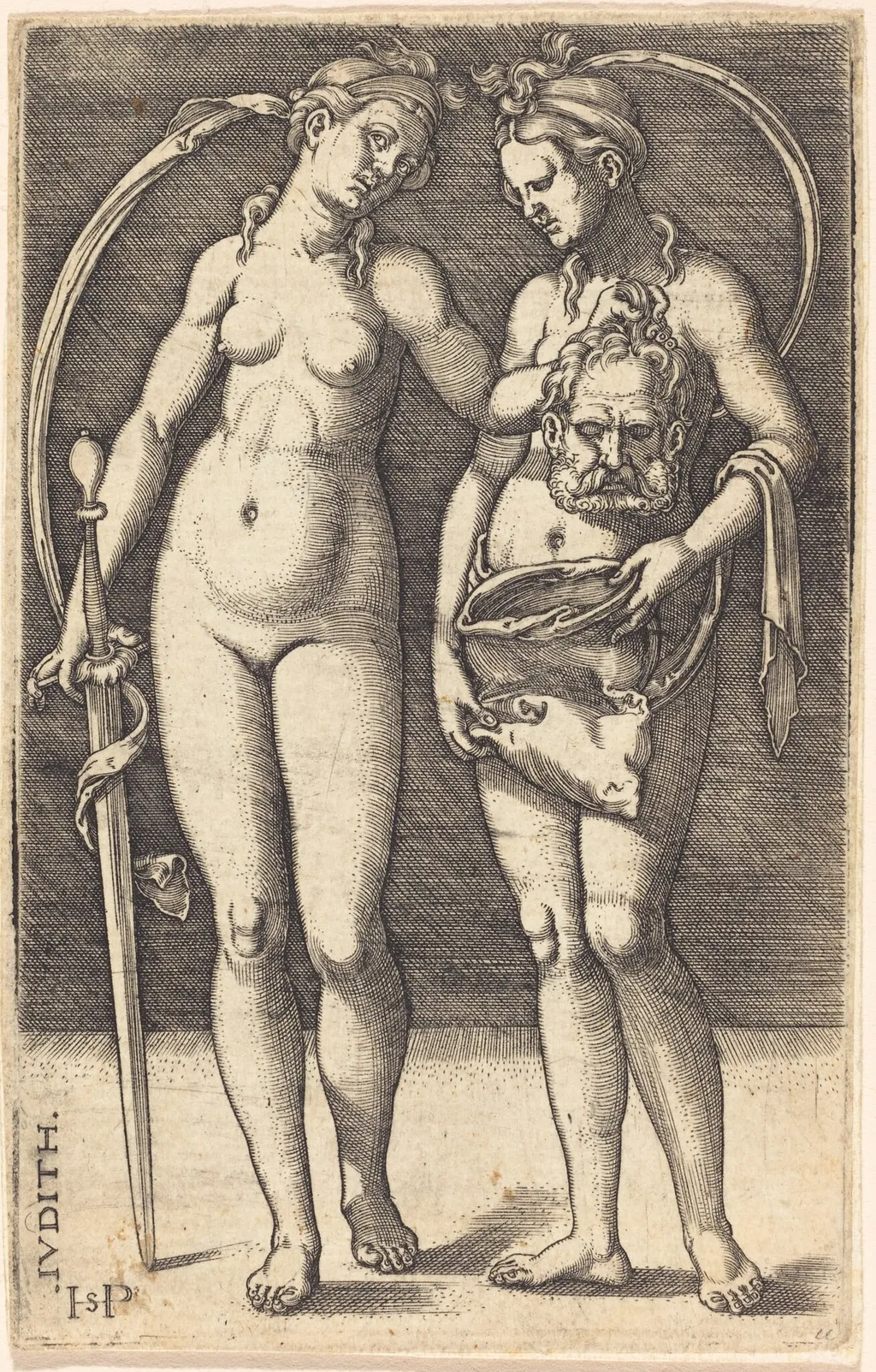
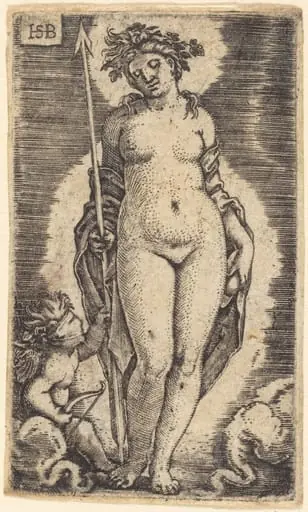
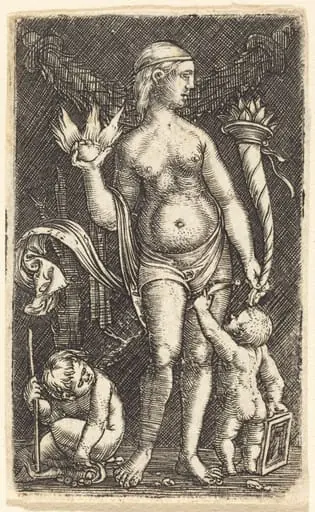
Judith and Her Servant Standing is an ink print by the Renaissance artist Sebald Beham. It dates from 1525 and is held in the collection of the National Gallery of Art.
About this work
Overview
Judith and Her Servant Standing is a 1525 engraving by Sebald Beham, a Nuremberg-born German artist associated with the 'Little Masters'. This work exemplifies his characteristic small-scale, highly detailed printmaking style.
Subject & Meaning
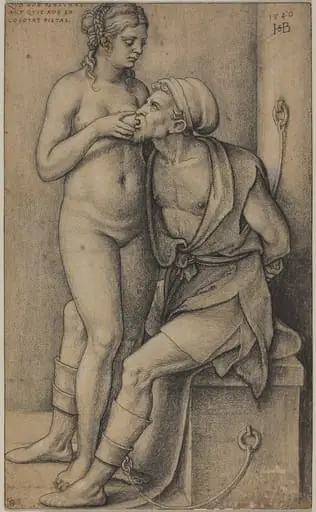
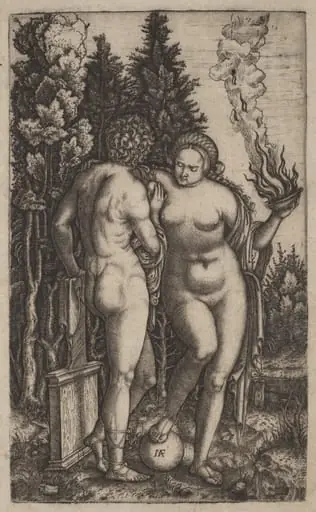
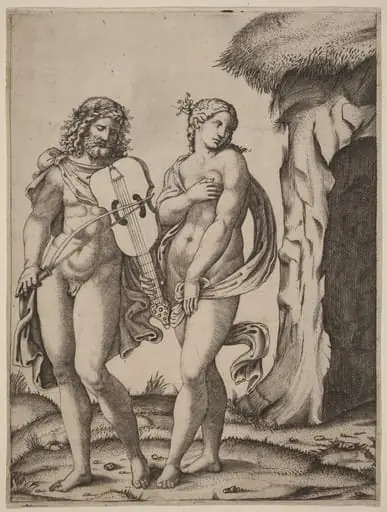
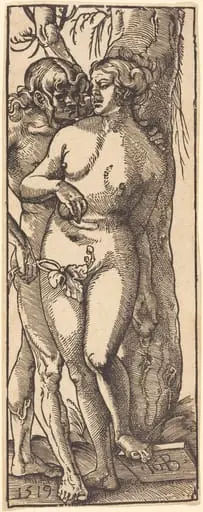
The engraving depicts three figures from the Judith biblical narrative: Judith herself, holding a distinctive curved-handle sword; an older, bearded man (likely Holofernes' head bearer); and her servant, observing from behind. Tense facial expressions and the sword's prominence suggest a moment of drama or impending action.
Technique & Style
Beham employed fine, intricate lines to render muscular and skin textures, lending solidity to the figures. The plain background emphasizes the group's dynamic. The work showcases Beham's refined engraving technique, characteristic of the 'Little Masters'.
History & Provenance
Part of Beham's prolific output of approximately 252 engravings, alongside etchings and woodcuts, Judith and Her Servant Standing was created during his time in Frankfurt. Specific provenance details are not provided.
Context
As a 'Little Master', Beham's work, including this engraving, contributed to the 16th-century German printmaking tradition, notable for its small, detailed works. The piece reflects the era's interest in biblical themes.
Legacy
Judith and Her Servant Standing, through its technique and subject, represents Beham's contribution to the 'Little Masters' movement, influencing subsequent generations of printmakers with its meticulous style.
Artist & collection
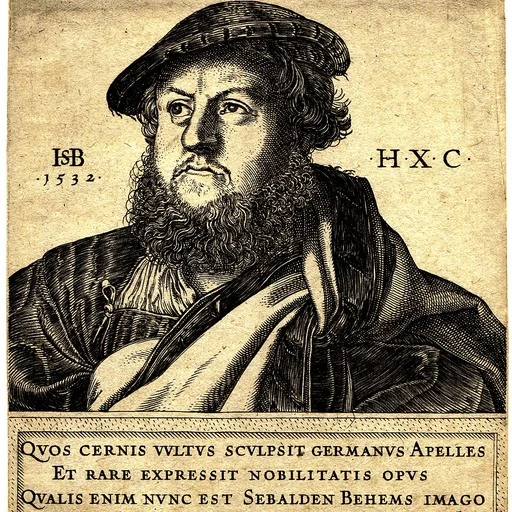
Artist
Sebald Beham (1500–1550) was a German painter and printmaker, mainly known for his very small engravings.