Artwork
Winged Woman on a Star
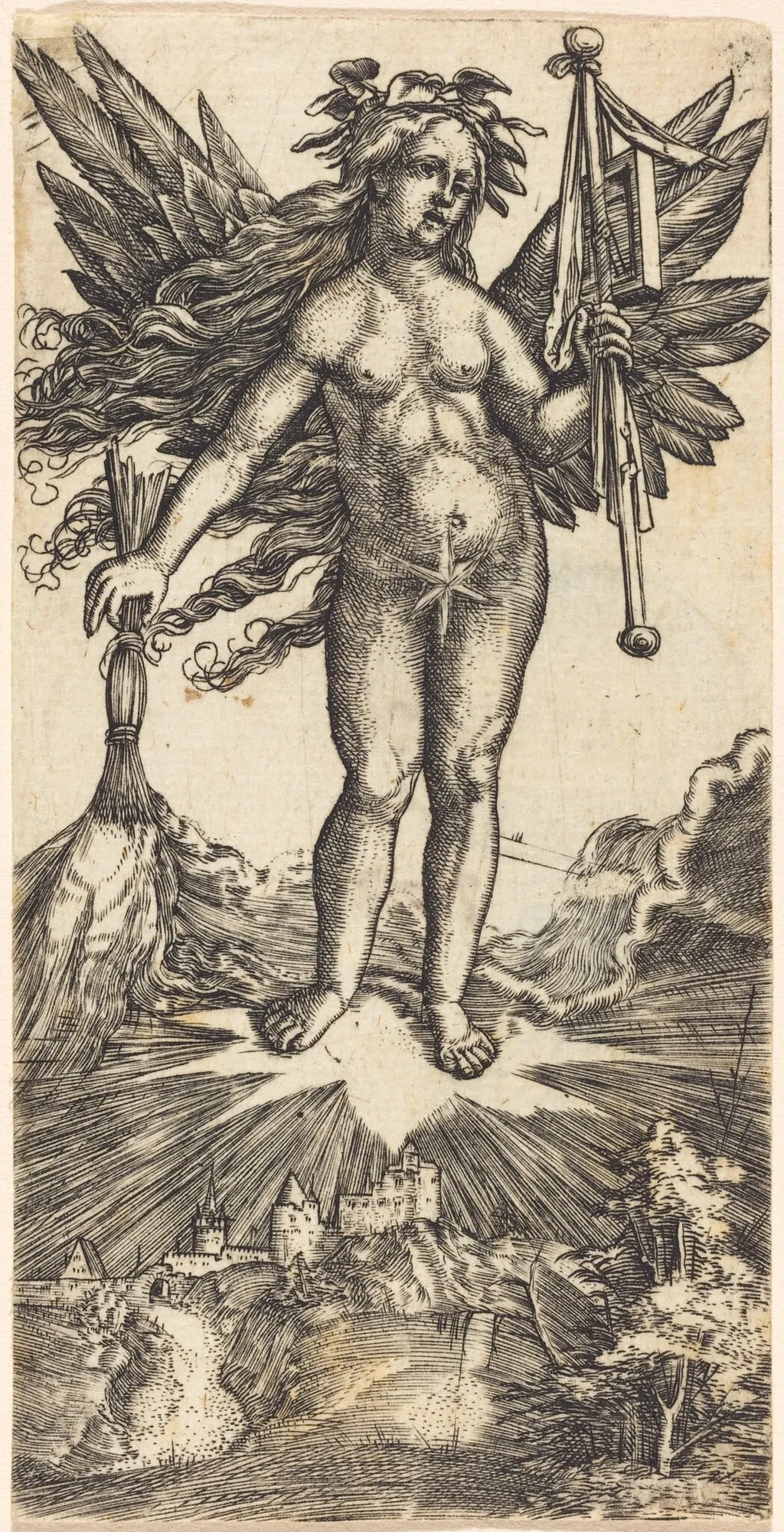
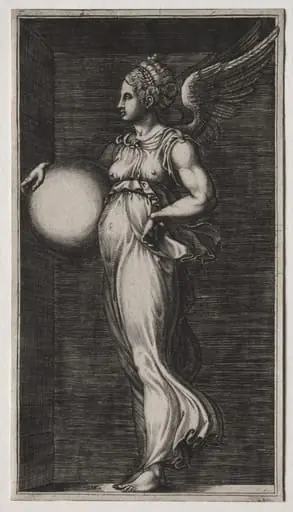
Winged Woman on a Star is an ink print by the Renaissance artist Albrecht Altdorfer. It dates from 1516 and is held in the collection of the National Gallery of Art.
About this work
Overview
It belongs to a body of prints that bridge figurative symbolism with immersive natural settings, characteristic of the Danube School.
Created around 1516 by Albrecht Altdorfer, this engraving on laid paper depicts a mysterious winged female figure standing atop a rocky outcrop under a starlit sky. Executed in Regensburg, the work exemplifies Altdorfer’s mastery of the engraving technique, using fine, controlled lines to render texture, depth, and atmosphere. It belongs to a body of prints that bridge figurative symbolism with immersive natural settings, characteristic of the Danube School.
Subject & Meaning
The central figure, barefoot and winged, holds a staff crowned with a globe and a bundle of sticks, suggesting a hybrid of celestial and earthly authority. Her wild hair and solitary posture evoke mythic or allegorical associations, possibly representing divine wisdom, cosmic order, or a personified star. The distant town with spires implies human presence beneath a larger, unseen force, reinforcing a theme of earthly life observed from a transcendent vantage.
Technique & Style
Altdorfer employed engraving to build tonal gradations through meticulously incised lines, creating the illusion of light and shadow without pigment. The fine, cross-hatched strokes define the figure’s form and the textured rock, while looser lines suggest atmospheric depth in the sky and distant architecture. This method, precise yet expressive, reflects the influence of the Nuremberg Little Masters, yet expands their scale into more expansive, emotive compositions.
History & Provenance
The print was produced during Altdorfer’s active years in Regensburg, where he served as a civic architect and artist. Few early records of individual print ownership survive, but the work’s technical quality and thematic complexity suggest it was circulated among educated patrons familiar with humanist and esoteric traditions. Its survival in multiple institutional collections attests to its enduring recognition among early print collectors.
Context
In early 16th-century southern Germany, artists began to explore landscape not merely as backdrop but as a carrier of mood and meaning. Altdorfer’s work emerged alongside shifting religious and intellectual currents, where classical myth, Christian symbolism, and natural philosophy intertwined. This print reflects a broader trend: the elevation of nature as a domain worthy of contemplation, independent of narrative doctrine.
Legacy
Altdorfer’s integration of detailed figuration within expansive, emotionally charged landscapes influenced later generations of Northern European printmakers. His use of engraving to convey atmosphere rather than mere illustration helped redefine the medium’s expressive potential. Though not widely reproduced in his lifetime, this work now stands as a key example of how Renaissance artists expanded the boundaries of printmaking beyond reproduction into poetic invention.
Artist & collection
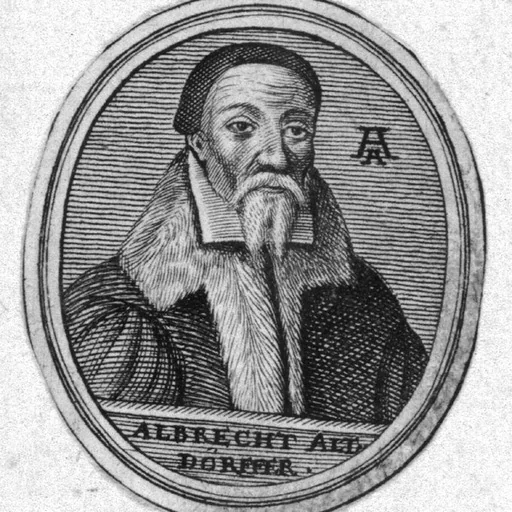
Artist
Albrecht Altdorfer (c. 1480 – 12 February 1538) was a German painter, engraver and architect of the Renaissance working in Regensburg. Along with Lucas Cranach the Elder and Wolf Huber he is regarded to be the main…