Artwork
Venus
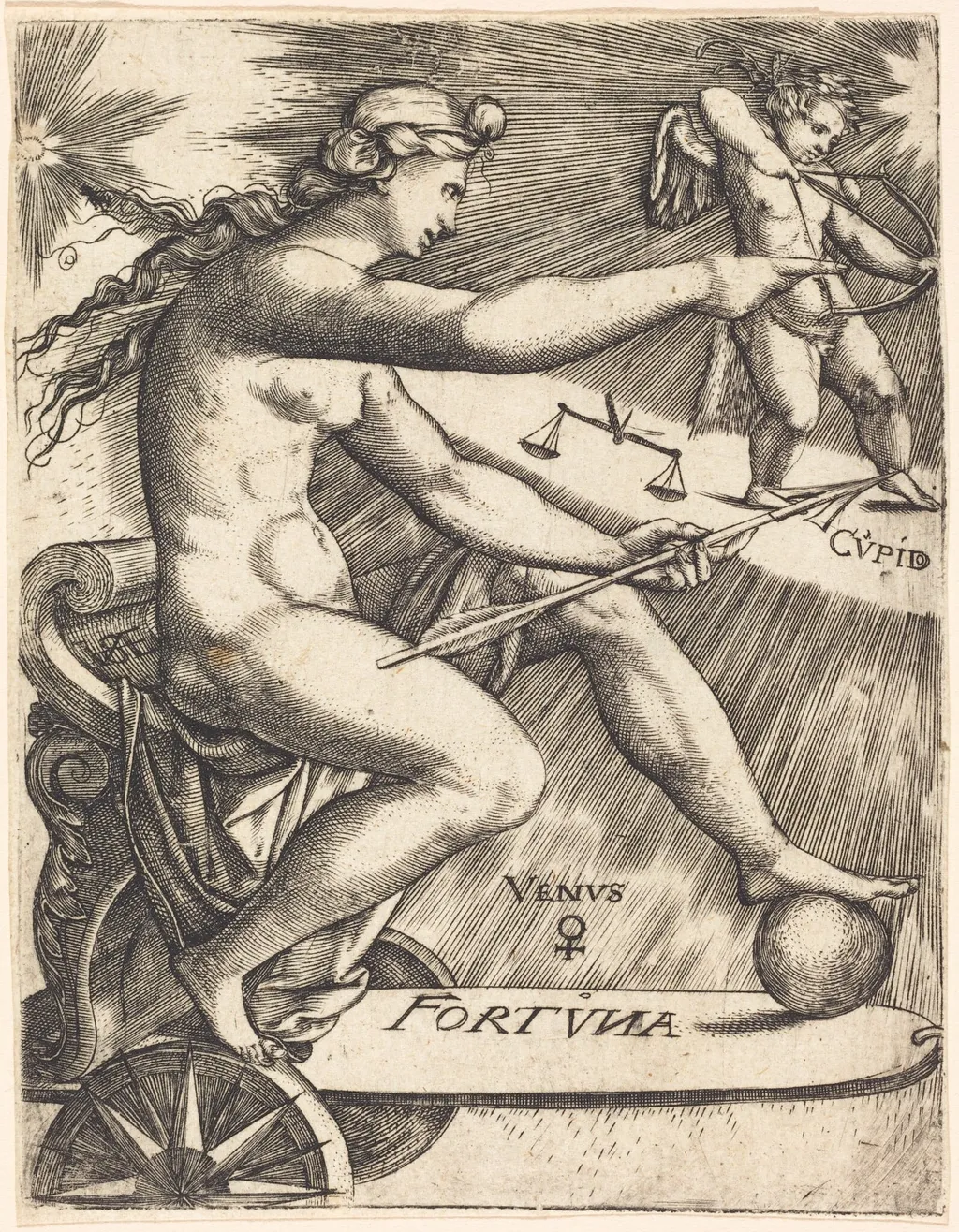
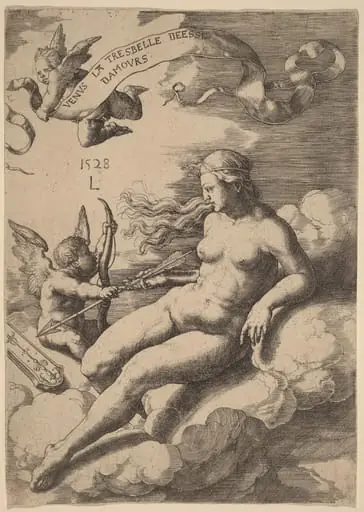
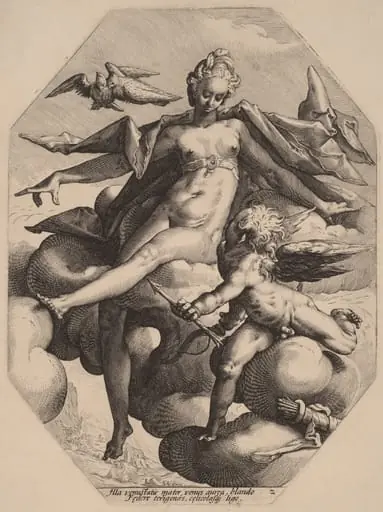
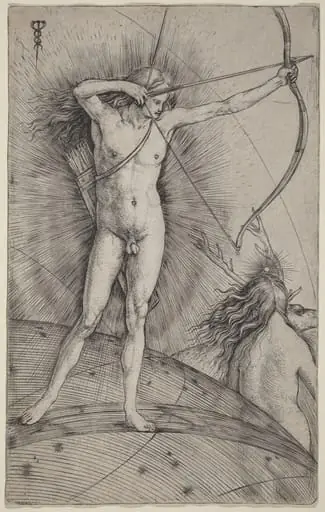
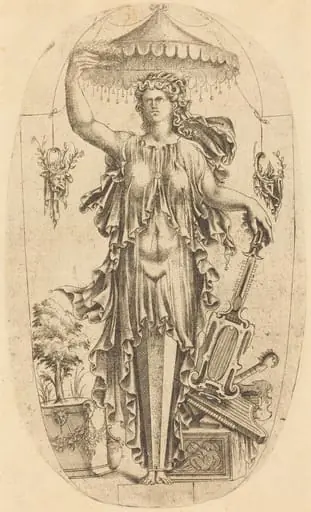
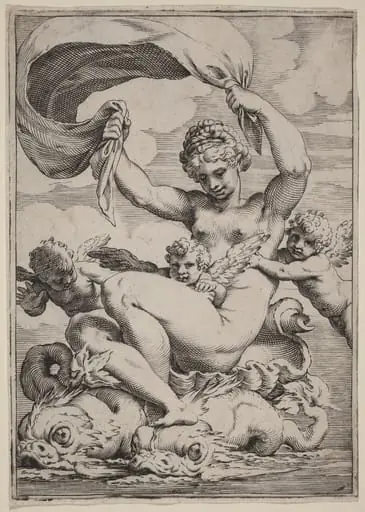
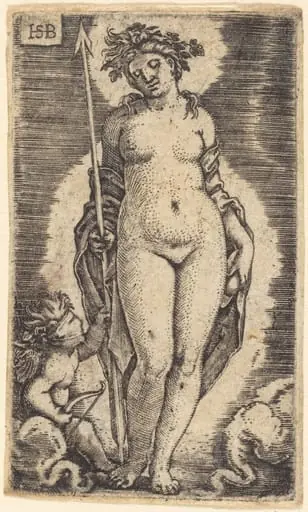
Venus is an ink print by the Renaissance artist Johann Ladenspelder. It dates from 1536 and is held in the collection of the National Gallery of Art.
About this work
Overview
Created in 1536 by Johann Ladenspelder, this engraving portrays Venus, the Roman goddess of love, in a spirited composition. Rendered in ink on paper, the work belongs to the printmaking tradition of early 16th-century Germany. Its intricate line work and dynamic arrangement reflect the period’s interest in mythological subjects and technical precision in engraving.
Subject & Meaning
Venus is depicted mid-motion, holding a bow and arrow—symbols of her power over desire—and cradling a sphere, possibly representing the cosmos or earthly love. A diminutive Cupid appears in the upper right, reinforcing the theme of amorous force. The imagery aligns with Renaissance humanist ideals, merging classical mythology with moral and cosmic symbolism.
Technique & Style
Ladenspelder employs fine cross-hatching to model form and suggest volume, particularly in Venus’s drapery and musculature. The background is animated with swirling, directional lines that amplify motion, contrasting with the stillness of the central figure. The precision of the lines reveals mastery of the burin tool, characteristic of Nuremberg engravers of the era.
History & Provenance
The engraving was produced during Ladenspelder’s active years in Nuremberg, a center for printmaking under the influence of Dürer. No early ownership records are widely documented, but the work survives in several institutional collections, suggesting it was circulated among collectors and artists interested in mythological prints.
Context
In the 1530s, German artists increasingly turned to classical themes as humanist scholarship spread. Engravings like this served both artistic and educational purposes, making mythological imagery accessible beyond painted altarpieces. Ladenspelder’s work reflects this trend, bridging devotional and secular visual culture.
Legacy
Though not among the most widely reproduced prints of the period, this engraving exemplifies the technical rigor and narrative clarity favored by Nuremberg’s printmakers. It contributes to the broader understanding of how classical mythology was visually adapted in Northern Europe during the Reformation.
Artist & collection