Artwork
Venus
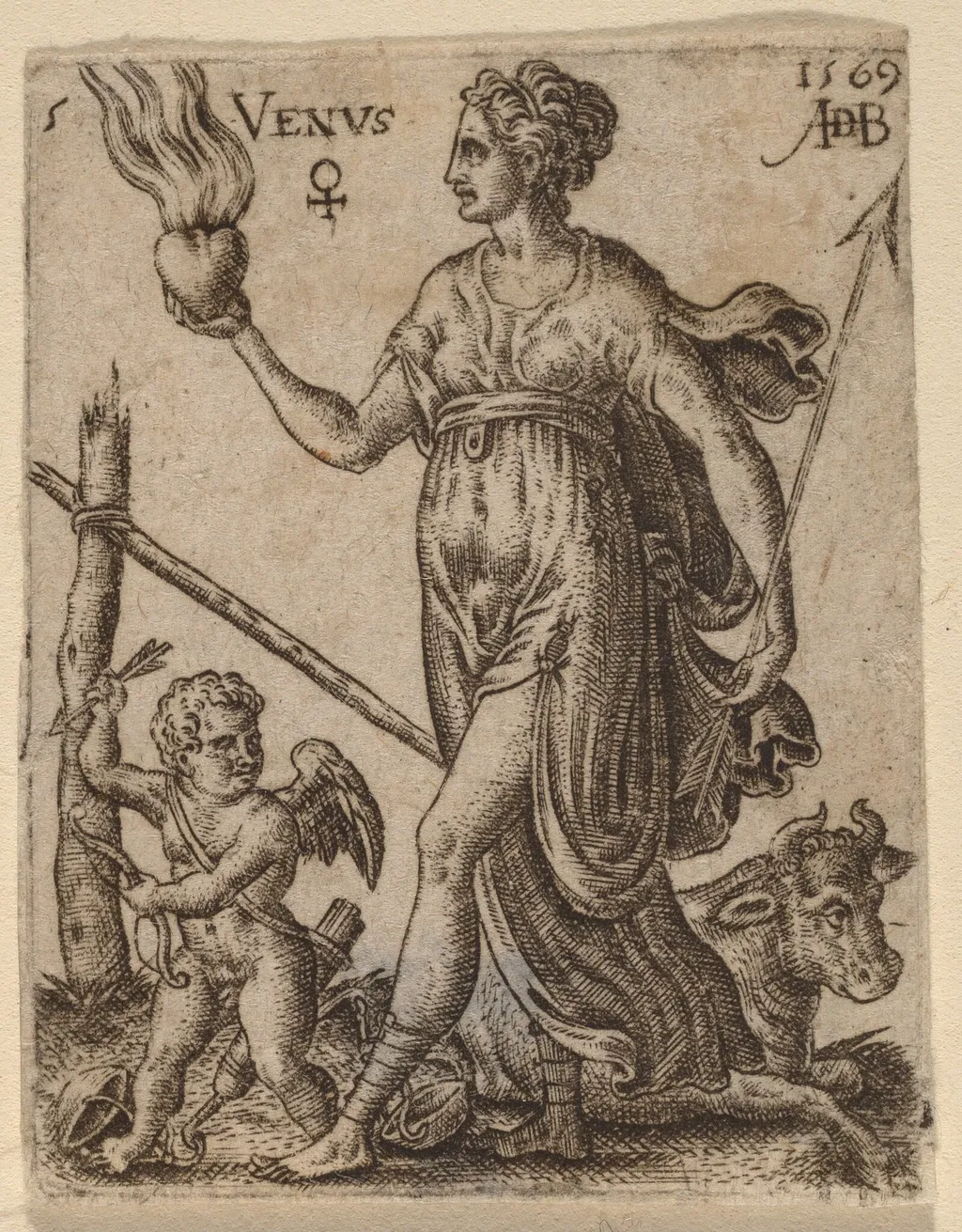
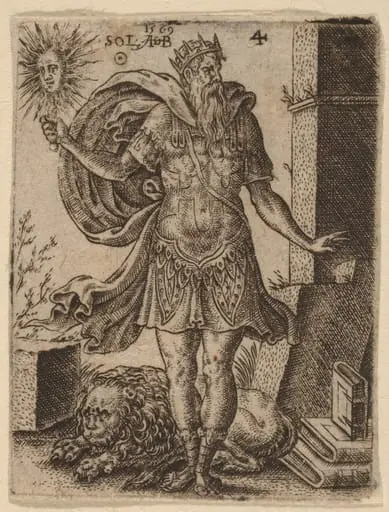
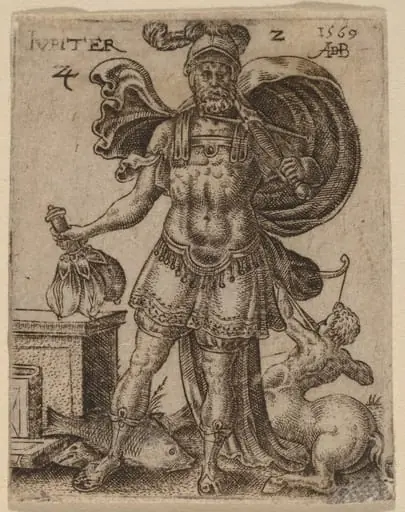
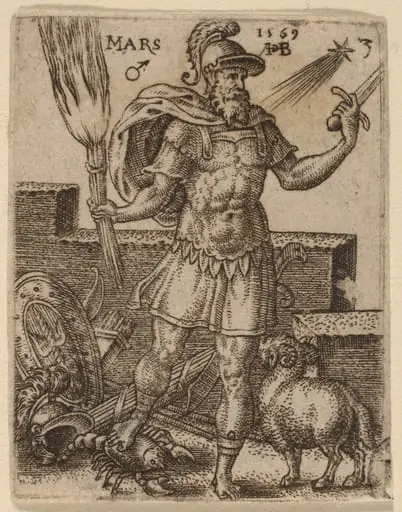
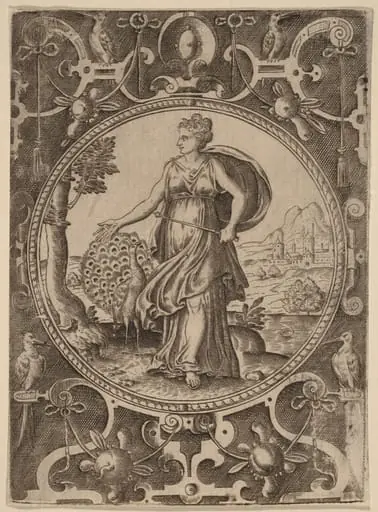
Venus is an ink print by the Renaissance artist Abraham de Bruyn. It dates from 1569 and is held in the collection of the National Gallery of Art.
About this work
Overview
Abraham de Bruyn’s 1569 print, titled Venus, is an etching and engraving executed on laid paper. The composition centers on a female figure identified by an inscription above her head. She holds a lit torch in her right hand, is draped in a flowing robe, and is accompanied by a cherubic figure and a cow, all rendered in a balanced, classical arrangement.
Subject & Meaning
The central woman is presented as the goddess Venus, a symbol of love and beauty in classical mythology. The torch may allude to illumination or desire, while the playful cherub and the domestic cow introduce a contrast between divine elegance and earthly familiarity, suggesting a harmonious blend of the sacred and the mundane.
Technique & Style
De Bruyn employed both etching and engraving, allowing for fine line work and varied textures on the laid paper surface. The print exhibits the precise, intricate detailing characteristic of Northern Renaissance printmaking, with careful shading that models the drapery and creates depth in the surrounding figures.
History & Provenance
Created in 1569, the work reflects de Bruyn’s active period in the Low Countries, where he was known for his prolific output of prints after classical and contemporary subjects. The piece survives in several museum collections, attesting to its circulation among collectors of Renaissance prints during the late sixteenth and early seventeenth centuries.
Artist & collection