Artwork
Allegorical Figure Holding a Sphere
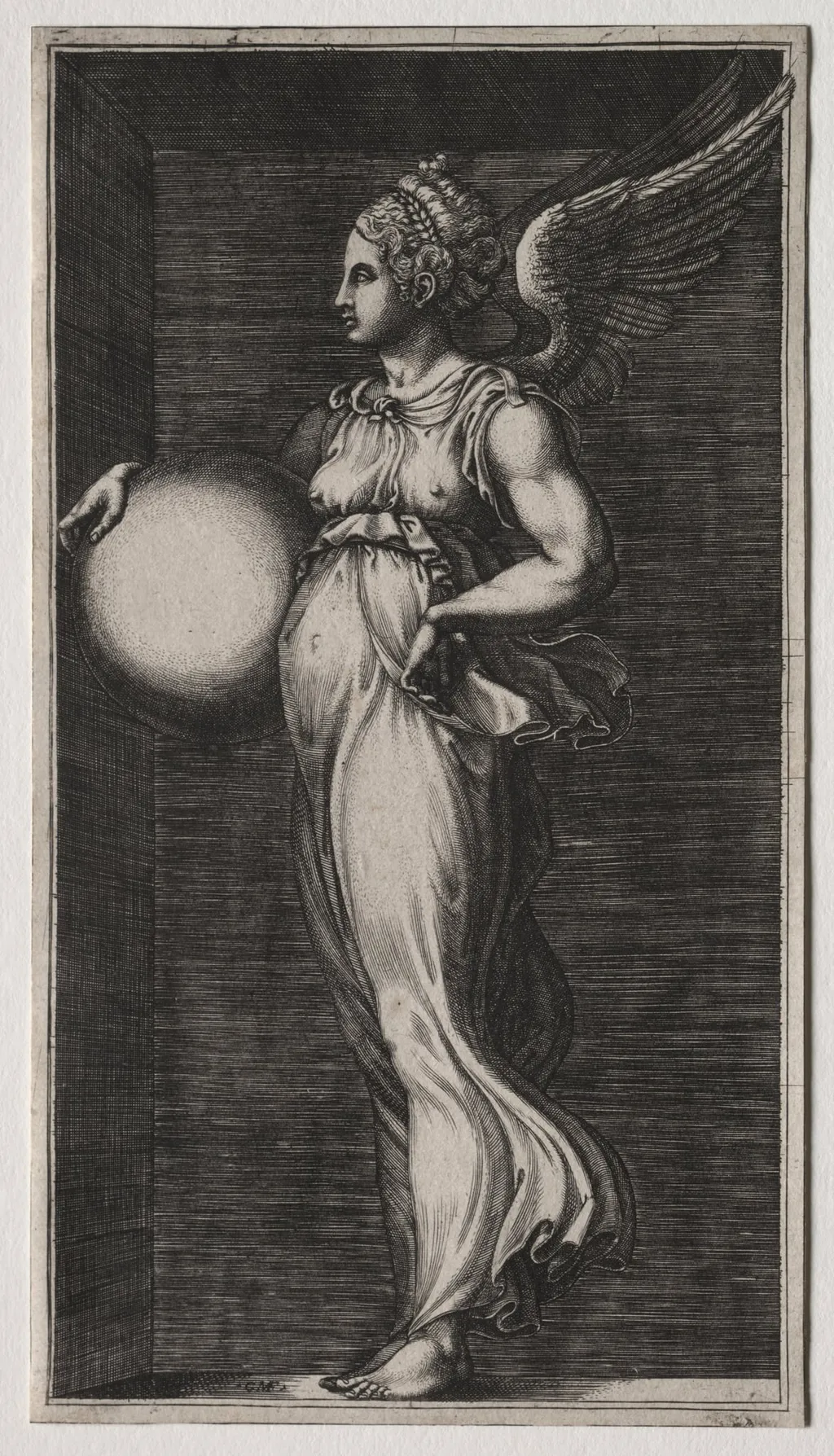
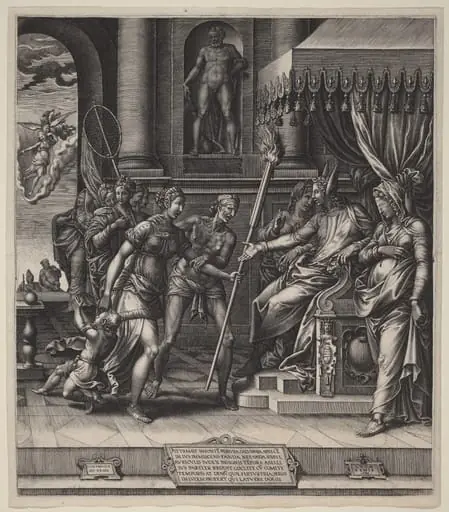
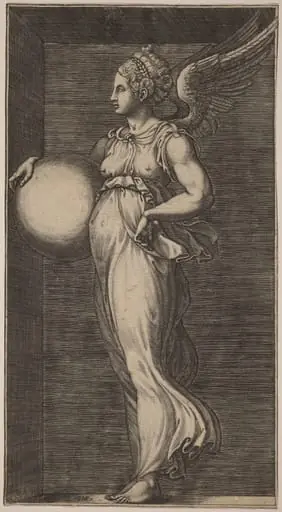
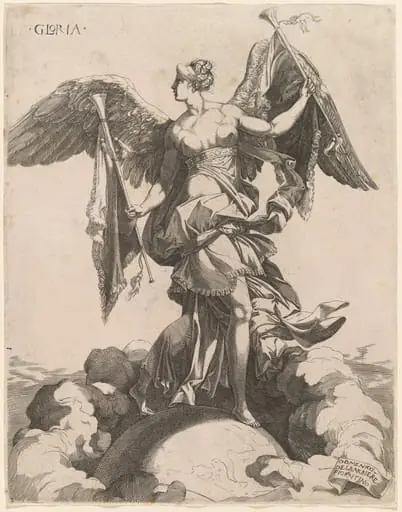
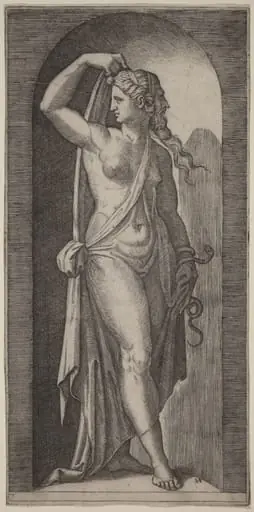
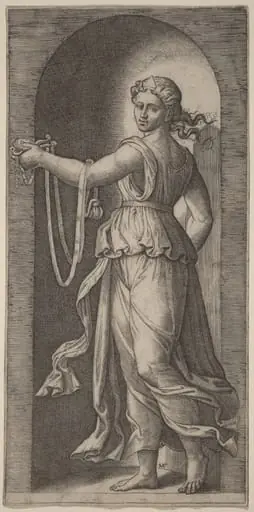
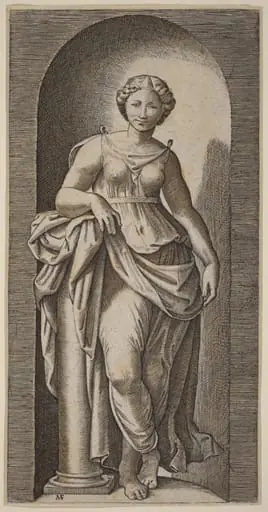
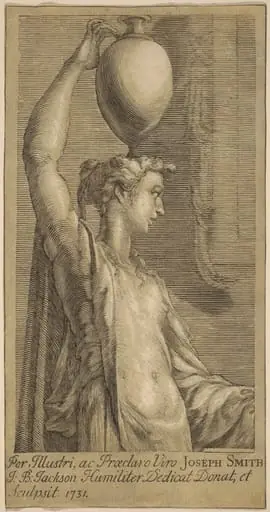
Allegorical Figure Holding a Sphere is a print by the Renaissance artist Giorgio Ghisi. It dates from 1564 and is held in the collection of the Cleveland Museum of Art.
About this work
Overview
This mid-1560s engraving by Giorgio Ghisi depicts a robed female figure cradling a sphere, rendered in fine linear detail.
This mid-1560s engraving by Giorgio Ghisi depicts a robed female figure cradling a sphere, rendered in fine linear detail. Though attributed to a design possibly derived from Giulio Romano, the work is firmly Ghisi’s execution. The print, acquired by the museum through the Dudley P. Allen Fund in 1972, exemplifies the Mannerist tradition of translating complex iconography into engraved form, blending classical allusion with intellectual ambiguity.
Subject & Meaning
The identity of the figure remains unresolved among scholars. Proposed interpretations include Victory, Fortune, Temperance, or the Primum Mobile—the celestial sphere thought to initiate the motion of the heavens. The sphere she holds may symbolize cosmic order, earthly dominion, or divine will, but no single reading is definitive. The absence of clear attributes leaves the meaning deliberately open, inviting contemplation rather than declaration.
Technique & Style
Ghisi employed precise engraving to render flowing drapery, delicate textures, and subtle gradations of light. His lines are controlled yet expressive, capturing the weight and movement of fabric without relying on tone or shading. The composition is tightly focused, isolating the figure against a neutral background to emphasize form and symbolic gesture, characteristic of Mannerist printmaking’s intellectual rigor over naturalism.
History & Provenance
The print entered the museum’s collection in 1972 via the Dudley P. Allen Fund. Its earlier provenance is undocumented, though Ghisi’s engravings were widely circulated in 16th-century Europe among collectors and artists. As a reproductive printmaker, Ghisi often worked from designs by major painters, and this piece likely circulated as a study in allegory, valued for its craftsmanship rather than its originality.
Context
Created during the height of Mannerism, the work reflects a period fascinated by layered symbolism and philosophical themes drawn from antiquity and Renaissance cosmology. Engravings like this served as vehicles for disseminating complex ideas among educated elites. Ghisi’s engagement with Romano’s style situates the print within a network of artistic exchange centered in Mantua and Rome, where myth and metaphysics intertwined.
Legacy
Though not widely reproduced in modern scholarship, the print endures as an example of Ghisi’s technical mastery and the Mannerist predilection for enigmatic allegory. It contributes to understanding how printmaking functioned as a medium for intellectual discourse, preserving ambiguous symbols that resisted easy interpretation—offering viewers not answers, but questions about order, power, and the cosmos.
Artist & collection
Artist
Giorgio Ghisi (1520 — 15 December 1582) was an Italian engraver from Mantua who also worked in Antwerp and in France.