Artwork
St Helena
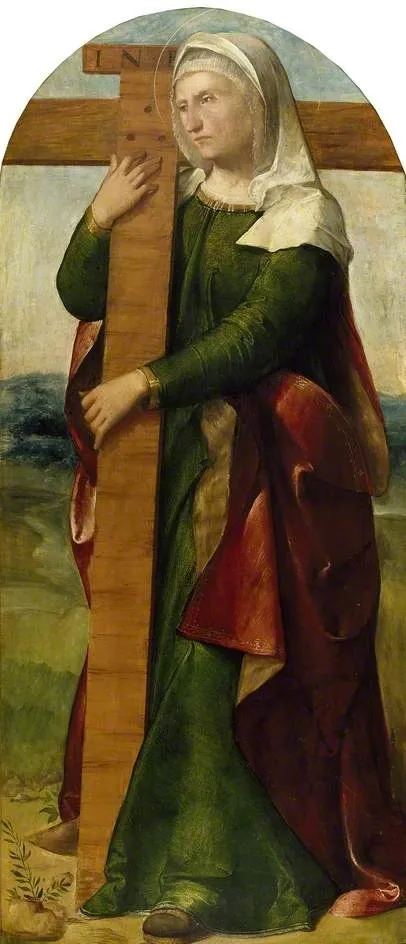
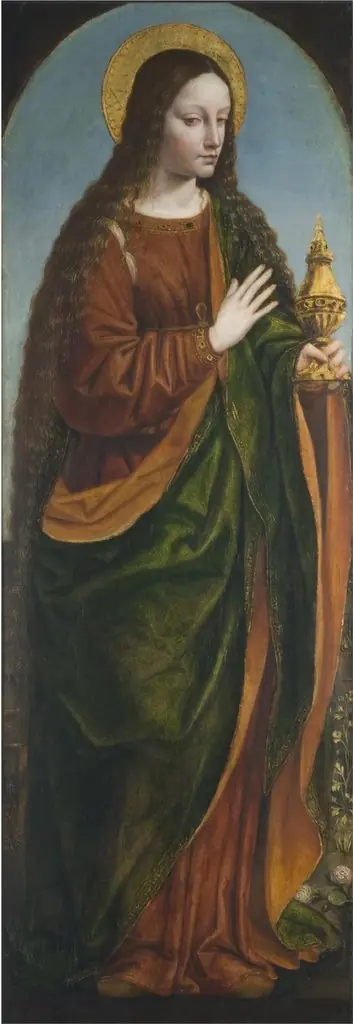
St Helena is an oil painting by Altobello Melone. It dates from 1524 and is held in the collection of the Ashmolean Museum.
About this work
Overview
Painted around 1524, this oil work by Altobello Melone depicts Saint Helena, the mother of Emperor Constantine, identified by her attributes and posture.
Painted around 1524, this oil work by Altobello Melone depicts Saint Helena, the mother of Emperor Constantine, identified by her attributes and posture. The painting is part of the Ashmolean Museum’s collection in Oxford. Its composition centers on a solitary figure against a quiet landscape, emphasizing spiritual presence over narrative detail. The artist’s restrained palette and focus on form reflect regional Lombard tendencies of the early 16th century.
Subject & Meaning
The figure represents Saint Helena, traditionally venerated for discovering the True Cross in Jerusalem. Her gesture of holding the large wooden cross signifies her pivotal role in Christian relic tradition. The calm gaze directed to the left suggests contemplation or divine vision. The inclusion of the cross, rather than a scene of discovery, shifts focus to her enduring spiritual authority rather than a specific event.
Technique & Style
Melone employs oil paint with a muted background of soft blues and earth tones to isolate the figure’s vivid green robe and crimson cloak. The clothing is rendered with subtle gradations, avoiding excessive detail, while the cross is rendered with solid, sculptural weight. Brushwork is controlled and deliberate, prioritizing clarity of form over atmospheric depth, characteristic of Lombard painting of the period.
History & Provenance
The painting entered the Ashmolean Museum’s collection in the 19th century, though its earlier ownership remains undocumented. It was likely created for private devotion, given its intimate scale and devotional subject. No records confirm its original location or commission, but its stylistic ties to Cremonese and Brescian workshops suggest it originated in northern Italy.
Context
Created during the High Renaissance, the painting reflects a regional shift away from grand narrative toward introspective religious imagery. While Italian centers like Florence and Rome embraced classical harmony, northern Lombard artists like Melone favored quiet, symbolic compositions. Saint Helena’s depiction here aligns with devotional trends that emphasized personal piety over dramatic storytelling.
Legacy
Though not widely known outside specialist circles, the painting exemplifies the quiet devotional style of early 16th-century Lombardy. It contributes to understanding how regional artists interpreted sacred figures with restraint and psychological subtlety. Its preservation in a major public collection ensures continued study of lesser-known Renaissance practitioners beyond the major urban centers.
Artist & collection