Artwork
Chastity
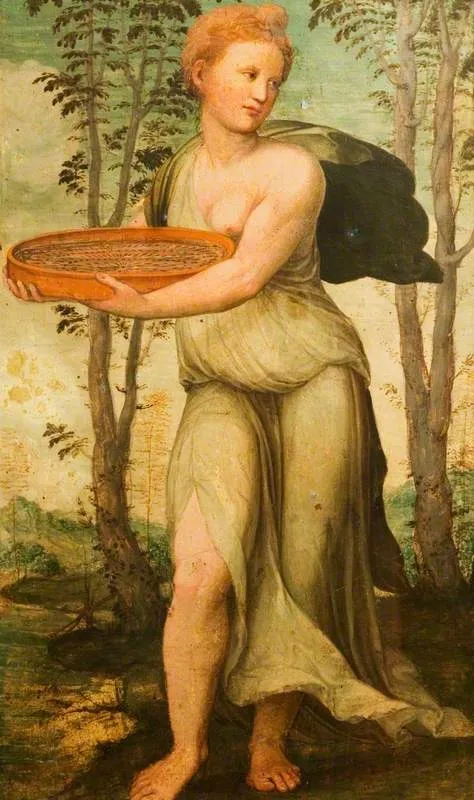
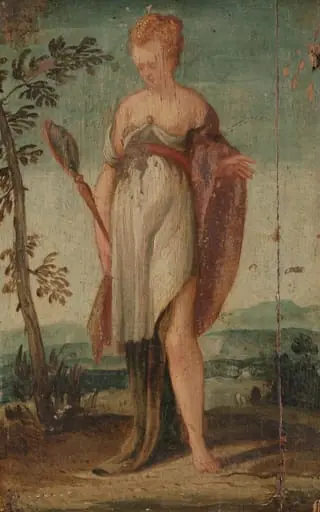
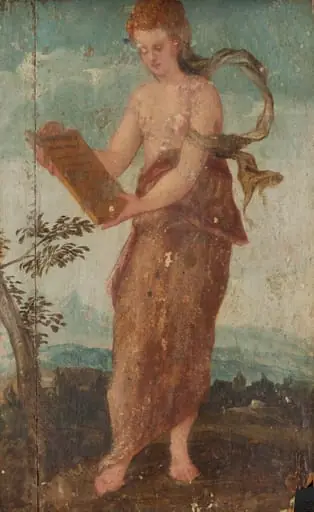
Chastity is a tempera painting by Bartolomeo Neroni. It dates from 1548 and is held in the collection of the Victoria and Albert Museum.
About this work
Overview
Chastity is a tempera painting created by Bartolomeo Neroni, known as Il Riccio, around 1548. The work is part of the Victoria and Albert Museum's collection.
Subject & Meaning
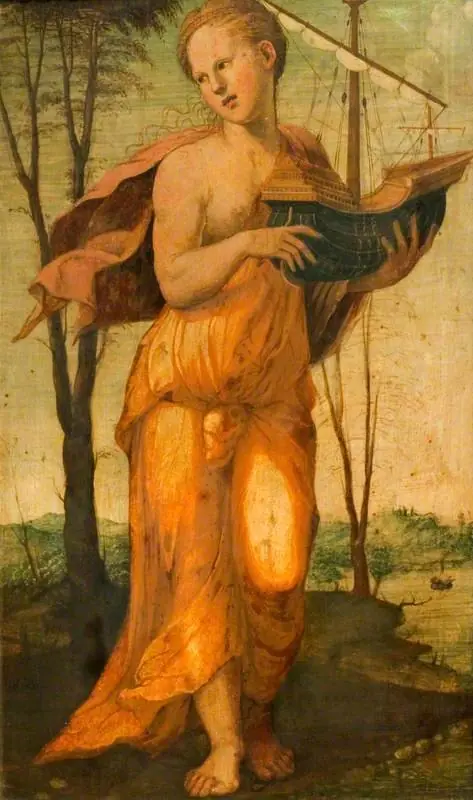
The painting depicts an allegorical representation of Chastity as a serene woman in a landscape, dressed in a draped robe. Her pose and attire convey a sense of elegance, embodying a moral virtue.
Technique & Style
Neroni's use of tempera adds delicacy to the composition. The woman's short, curly hair is styled in an updo, and her gaze is directed to the left, creating a sense of calm.
Context
As a member of the Sienese School, Neroni worked during a period when the Italian Renaissance influenced central Italian art, often incorporating classical themes and moral virtues into his work.
Artist & collection
Artist
Bartolomeo Neroni, also known as Il Riccio or Riccio Sanese (c.1505–1571) was an Italian painter, sculptor, architect and engineer of the Sienese School. He was born and died in Siena.