Artwork
The Prairie on Fire
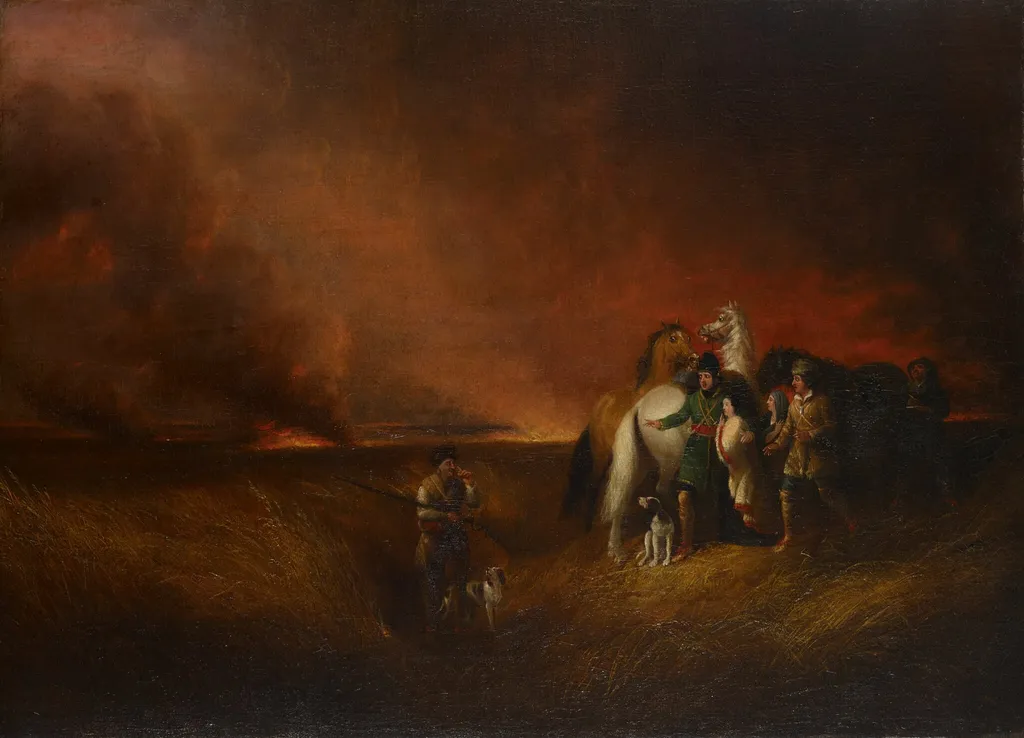
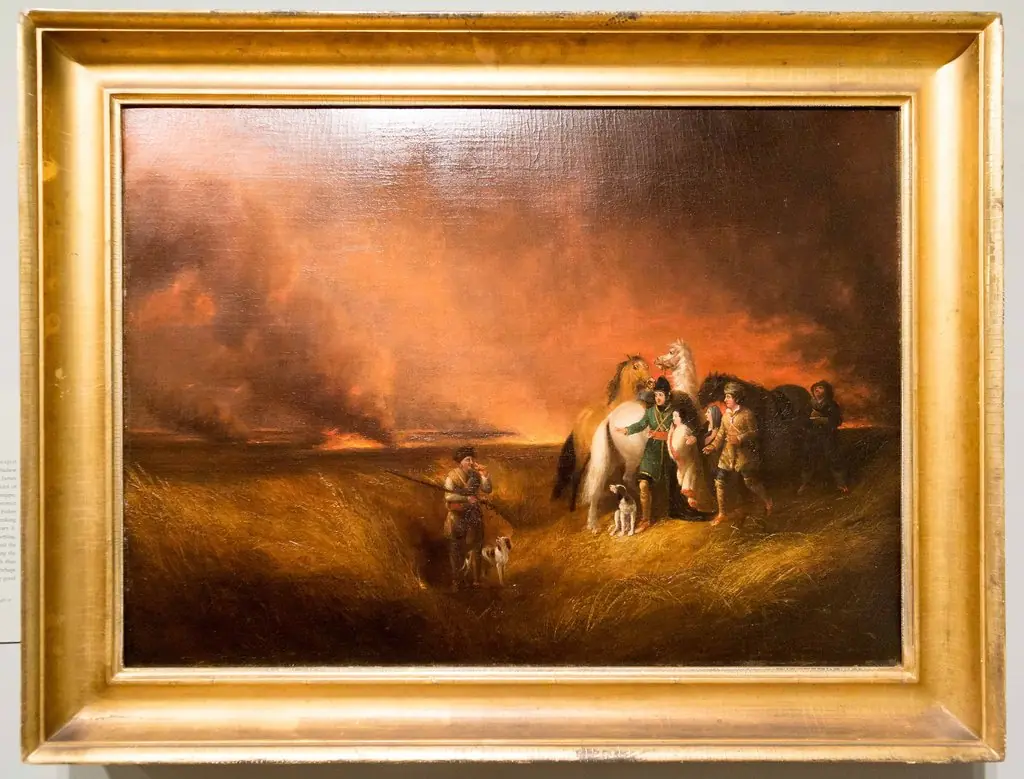
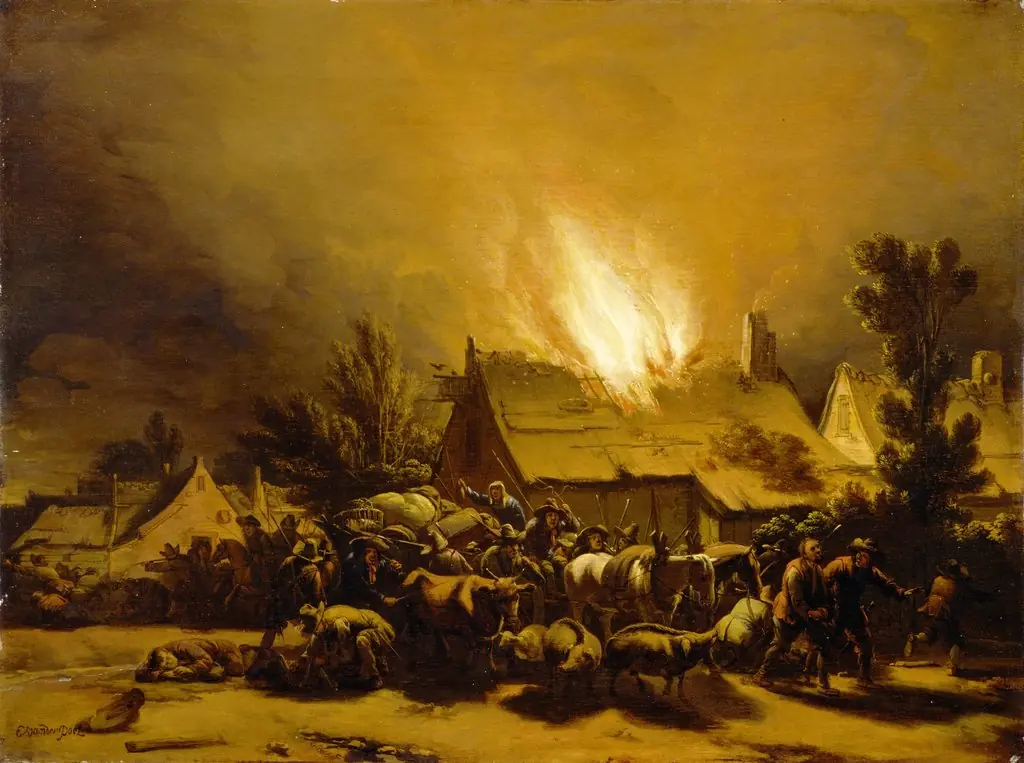
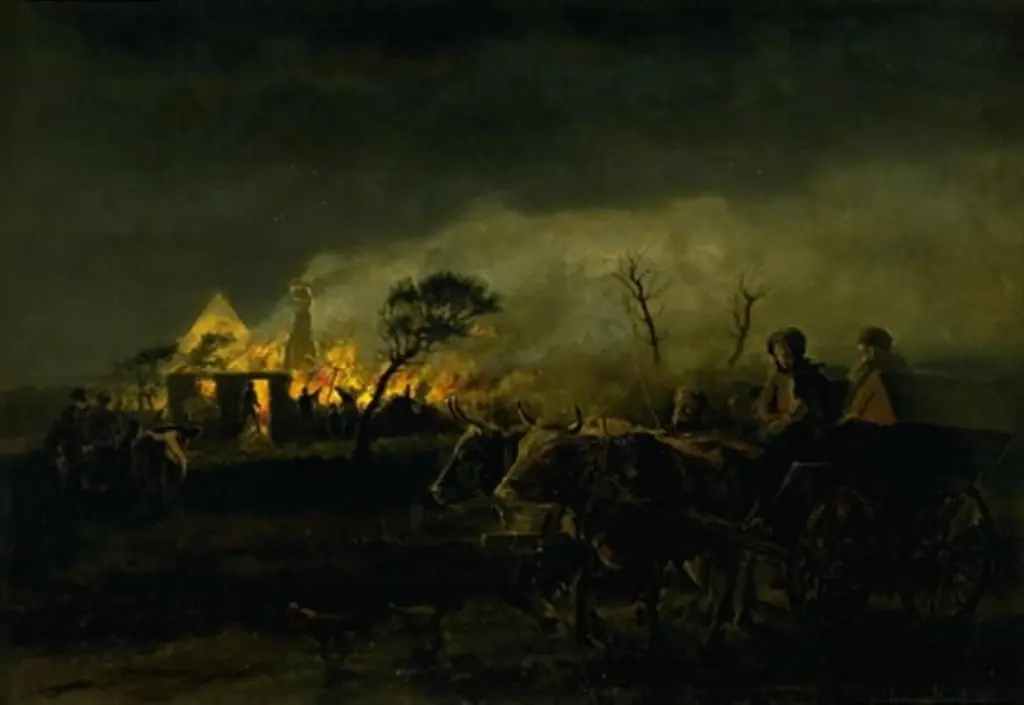
The Prairie on Fire is an oil painting by the Hudson River School artist Alvan Fisher. It dates from 1827 and is held in the collection of the Art Institute of Chicago.
About this work
Overview
The painting stands as a rare visual interpretation of Cooper’s literary world, distinguished by its immersive setting rather than mere narrative illustration.
Alvan Fisher’s oil on canvas depicts a nocturnal prairie engulfed in controlled flames, drawn from James Fenimore Cooper’s 1827 novel The Prairie. As one of the earliest American artists to treat landscape as a subject of serious contemplation, Fisher rendered this scene with atmospheric precision, emphasizing nature’s scale and power over human presence. The painting stands as a rare visual interpretation of Cooper’s literary world, distinguished by its immersive setting rather than mere narrative illustration.
Subject & Meaning
The scene illustrates Natty Bumppo, the frontier hero, creating a firebreak to shield travelers from an advancing wildfire. Fisher captures the moment not as action but as quiet resolve, with the lone figure dwarfed by the vast, burning expanse. The firebreak symbolizes human intervention in nature’s chaos, reflecting themes from Cooper’s novel: survival, isolation, and the fragile boundary between civilization and wilderness. The painting elevates the prairie from backdrop to central character.
Technique & Style
Fisher employed chiaroscuro to heighten the drama of the night fire, contrasting incandescent flames with deep shadows of smoke and timber. The prairie grasses are rendered with meticulous detail, their texture and movement suggesting wind and heat. Unlike contemporaneous illustrations that minimized setting, Fisher’s composition immerses the viewer in the environment, using scale and light to evoke both awe and peril. His brushwork balances realism with Romantic sensibility, prioritizing mood over literal accuracy.
History & Provenance
Painted in the 1830s, this work emerged during Fisher’s most productive period as a landscape artist, before the Hudson River School fully coalesced. It was likely commissioned or inspired by Cooper’s growing literary fame. The author himself acknowledged it as the only satisfactory visual representation of his work, a rare endorsement that underscores its fidelity to the novel’s spirit. The painting remained in private hands until entering a public collection in the late 19th century.
Context
Fisher worked at a time when American art was seeking its own identity, moving away from European models. His focus on native landscapes—particularly the untamed Midwest—preceded the Hudson River School’s more celebrated works. The Prairie on Fire aligns with Romanticism’s fascination with nature’s sublime forces and the individual’s place within them. It also reflects broader cultural interest in frontier literature and the mythos of the American wilderness during the Jacksonian era.
Legacy
Though Fisher is less widely known today, this painting remains a significant early example of American landscape painting that treated nature as both subject and symbol. Its integration of literary narrative with visual atmosphere influenced later artists seeking to convey the emotional weight of the American frontier. The work endures as a quiet testament to the convergence of literature and visual art in shaping national identity during the 19th century.
Own this work as a print
Artist & collection