Artwork
Ein Ausbruch des Vesuvs
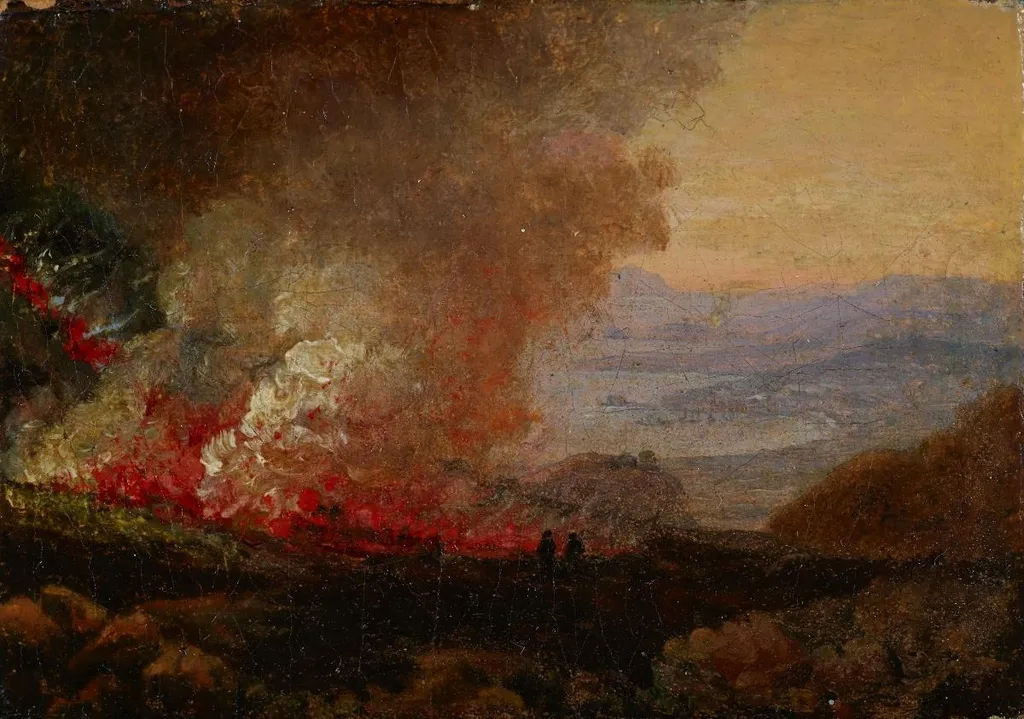
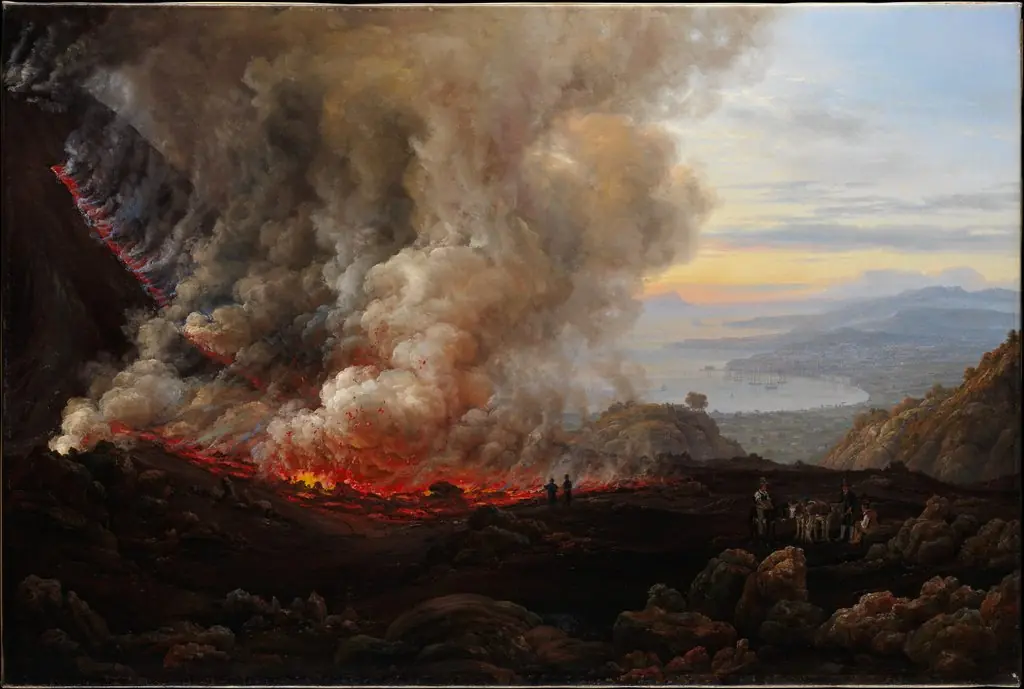
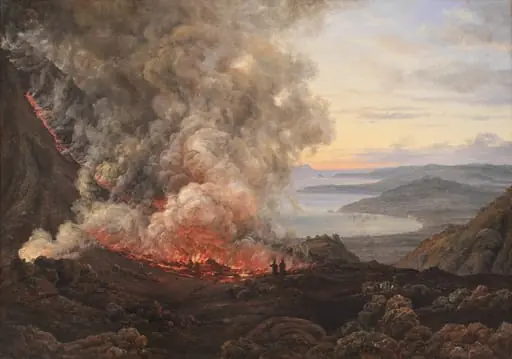
Ein Ausbruch des Vesuvs is an oil painting by Johan Christian Dahl. It dates from 1820 and is held in the collection of the Kunsthaus Zürich.
About this work
Overview
Johan Christian Dahl’s 1820 oil painting *Ein Ausbruch des Vesuvs* captures a volcanic eruption set against a luminous yellow sky. The composition balances a distant, mist‑veiled mountain range with a foreground blaze, where fire and smoke dominate the left side, creating a dramatic contrast of light and darkness.
Subject & Meaning
The work portrays the sudden, violent outburst of Mount Vesuvius, using the natural disaster as a visual metaphor for the sublime power of nature. By focusing on the eruptive plume and the glowing landscape, Dahl emphasizes humanity’s smallness before elemental forces.
Technique & Style
Dahl employs chiaroscuro to heighten the sense of depth, allowing the bright flames to emerge from a darker surrounding atmosphere. Warm tones dominate the palette, while the misty background mountains are rendered with softer, cooler hues, reinforcing the three‑dimensional space.
History & Provenance
Created during Dahl’s early mature period, the painting entered the collection of the Kunsthaus Zürich, where it remains on display. Its acquisition reflects the museum’s interest in early 19th‑century European Romantic landscape painting.
Context
As a leading figure of Norwegian Romanticism, Dahl was among the first from his country to gain recognition across Europe. *Ein Ausbruch des Vesuvs* exemplifies the Romantic fascination with dramatic natural phenomena, aligning with contemporary works that explored awe‑inspiring landscapes.
Artist & collection
Artist
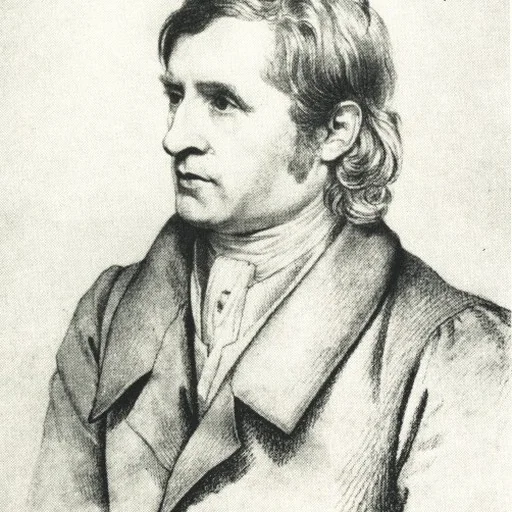
Johan Christian Claussen Dahl (24 February 1788 – 14 October 1857), often known as J.


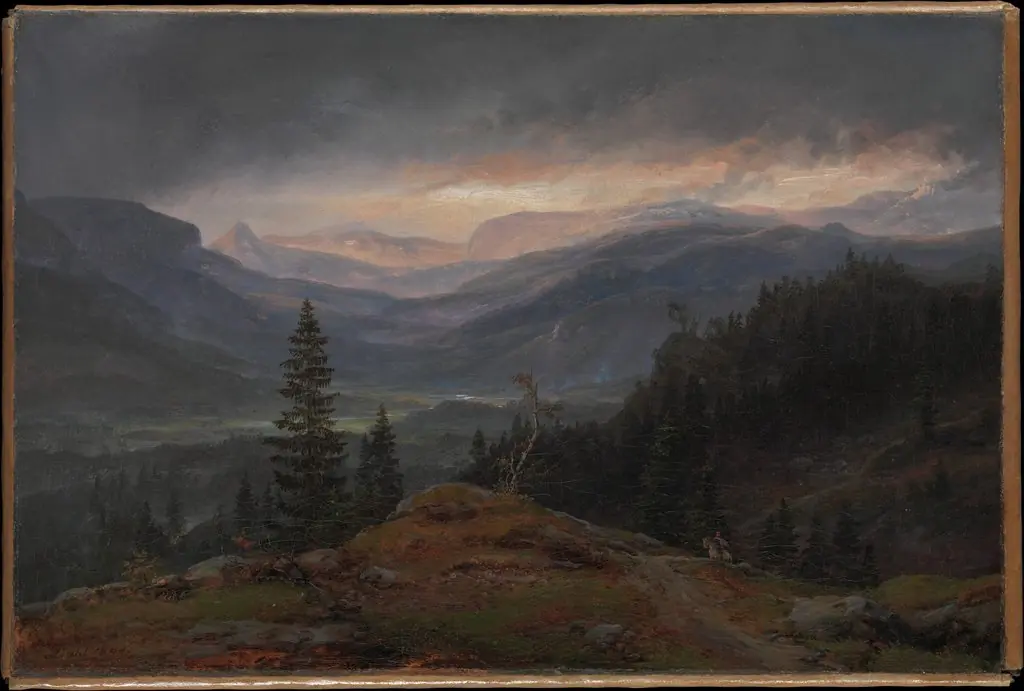
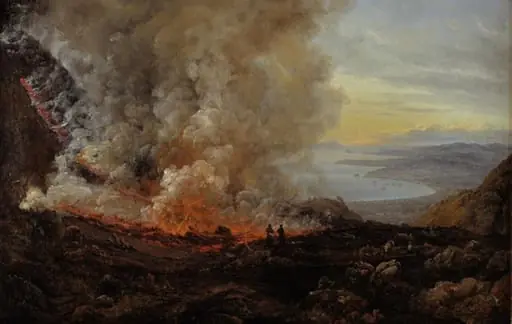 The Eruption of Vesuvius
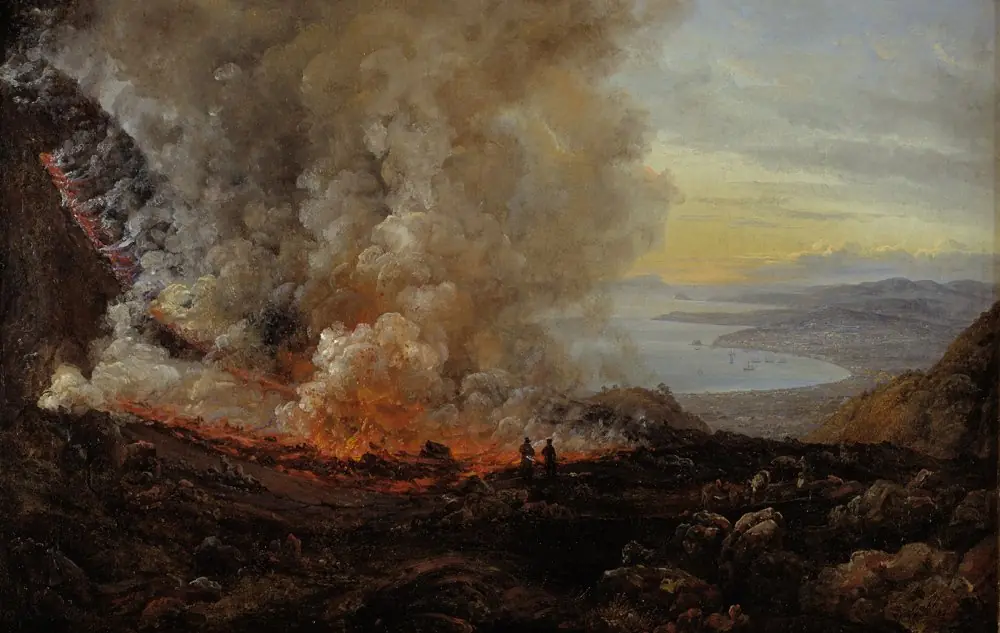 The Eruption of Vesuvius
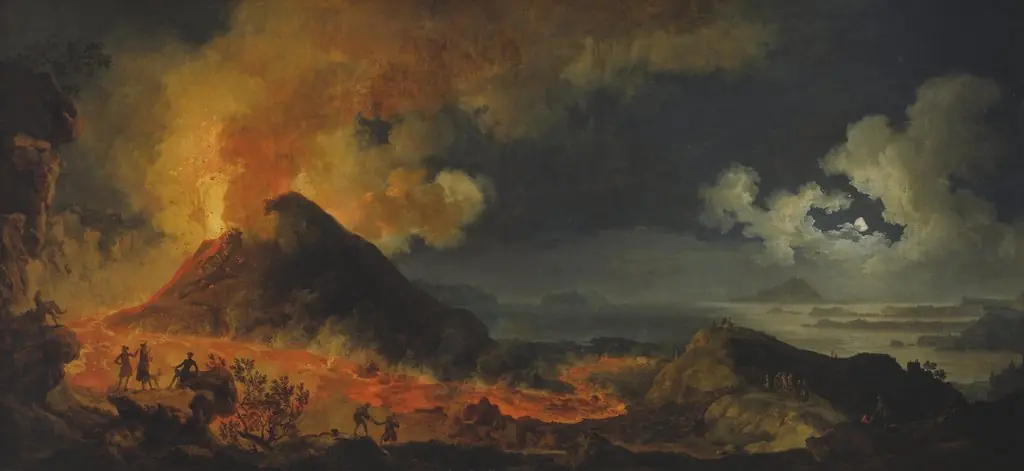 The Eruption of Vesuvius
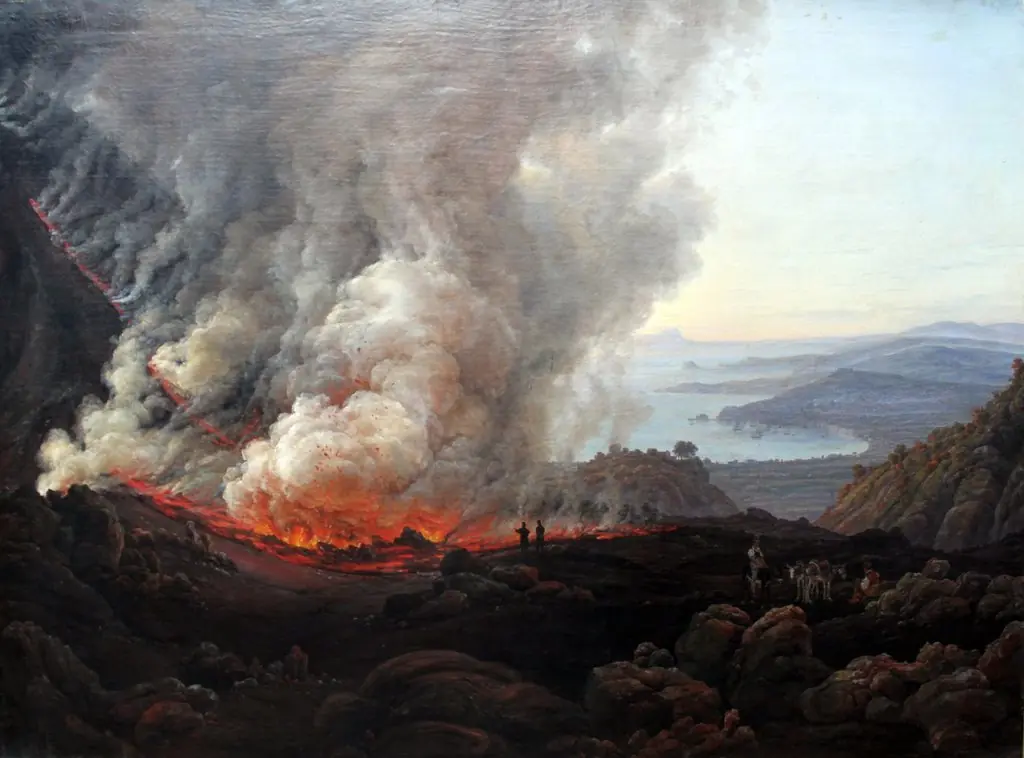 Der Ausbruch des Vesuv im Dezember 1820
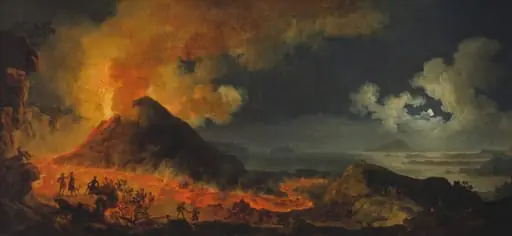 The Eruption of Vesuvius
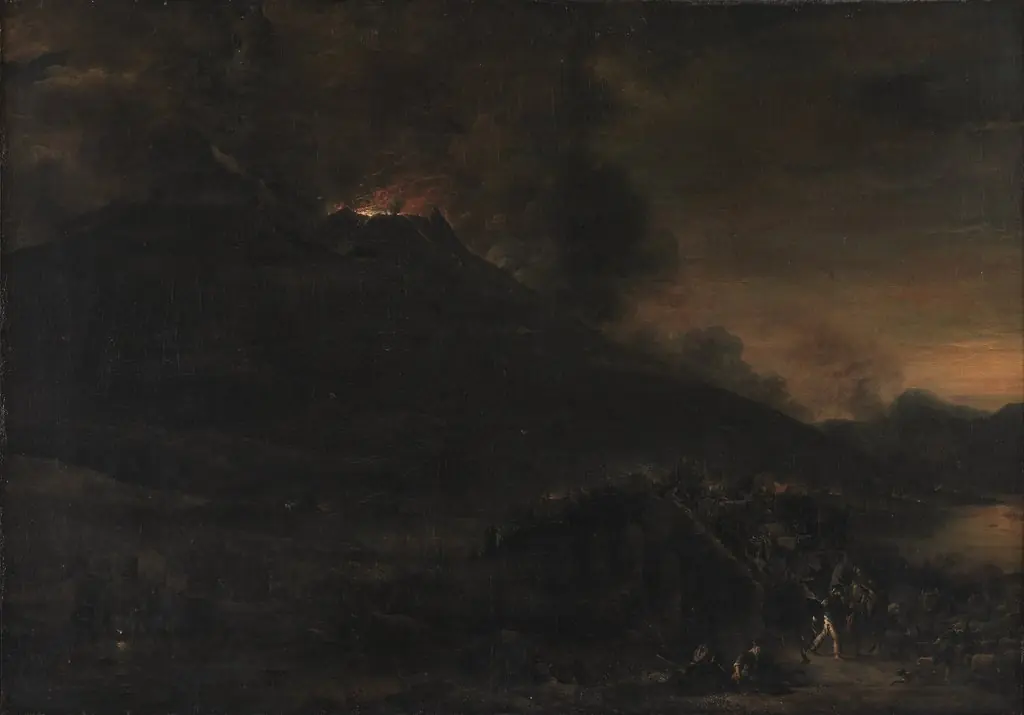 Vesuvius Erupting at Nightfall
 Vesuvius Erupting at Nightfall
 Eruption of the Volcano Vesuvius
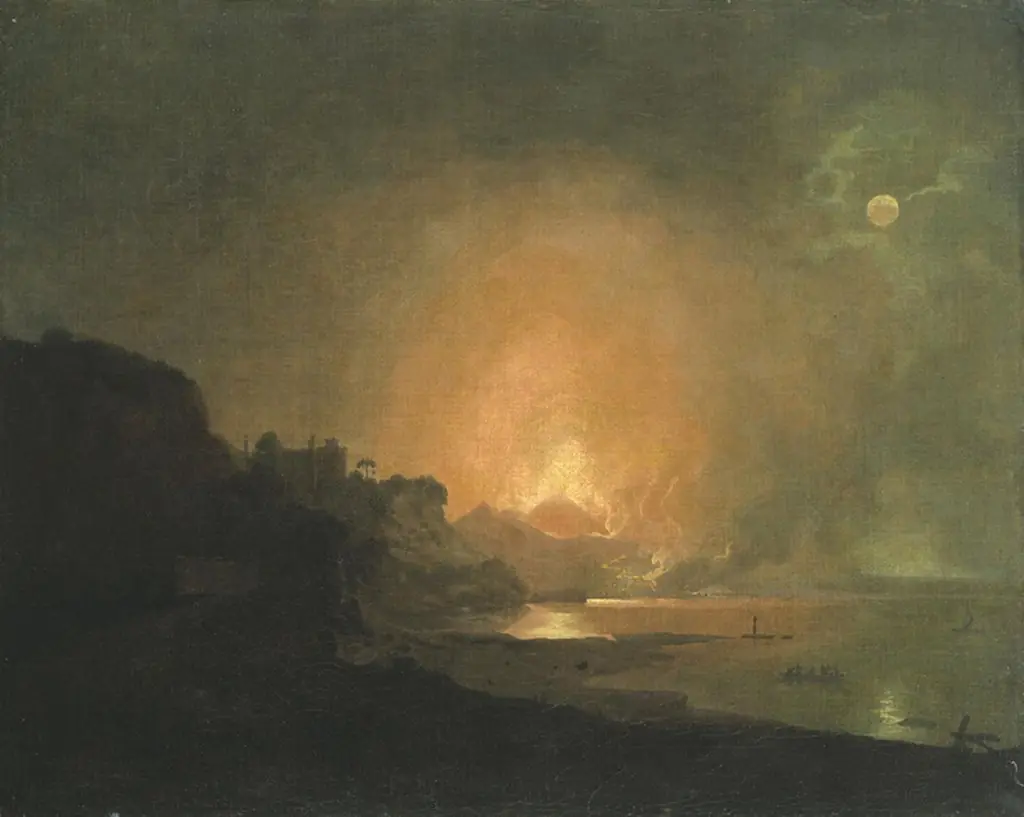 Vesuvius in Eruption
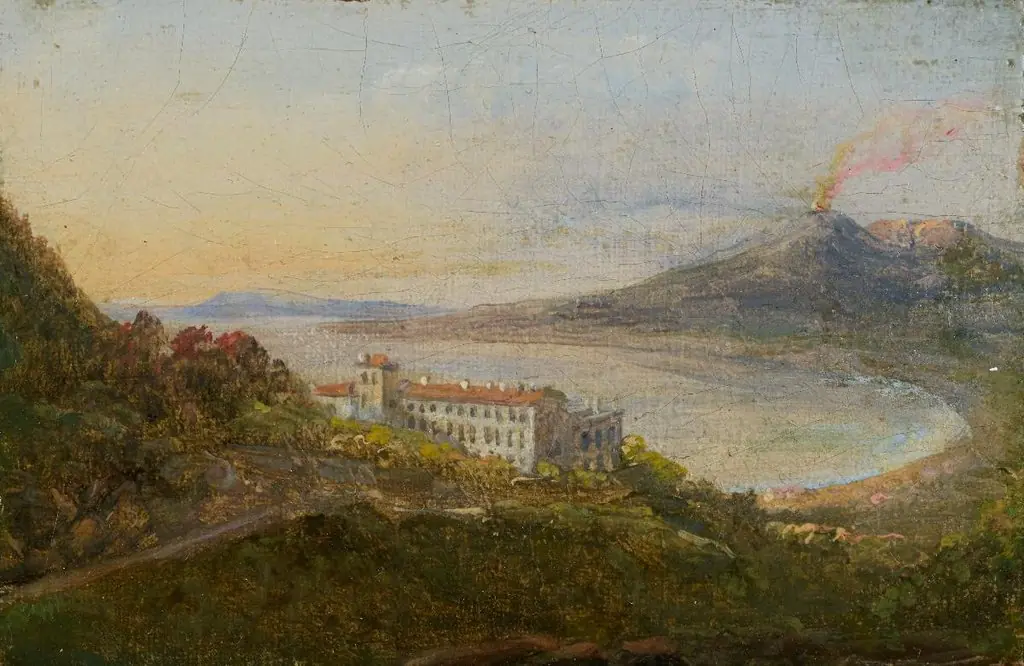 View over Quisisana and the Bay of Napels
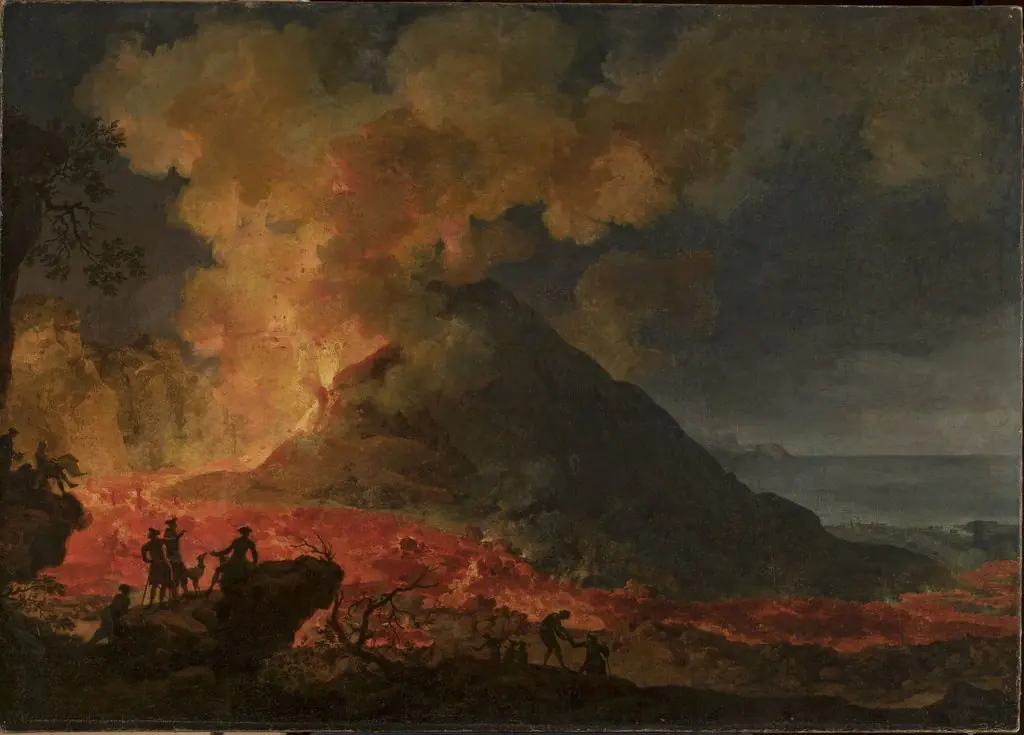 Eruption of Vesuvius