Artwork
Untitled
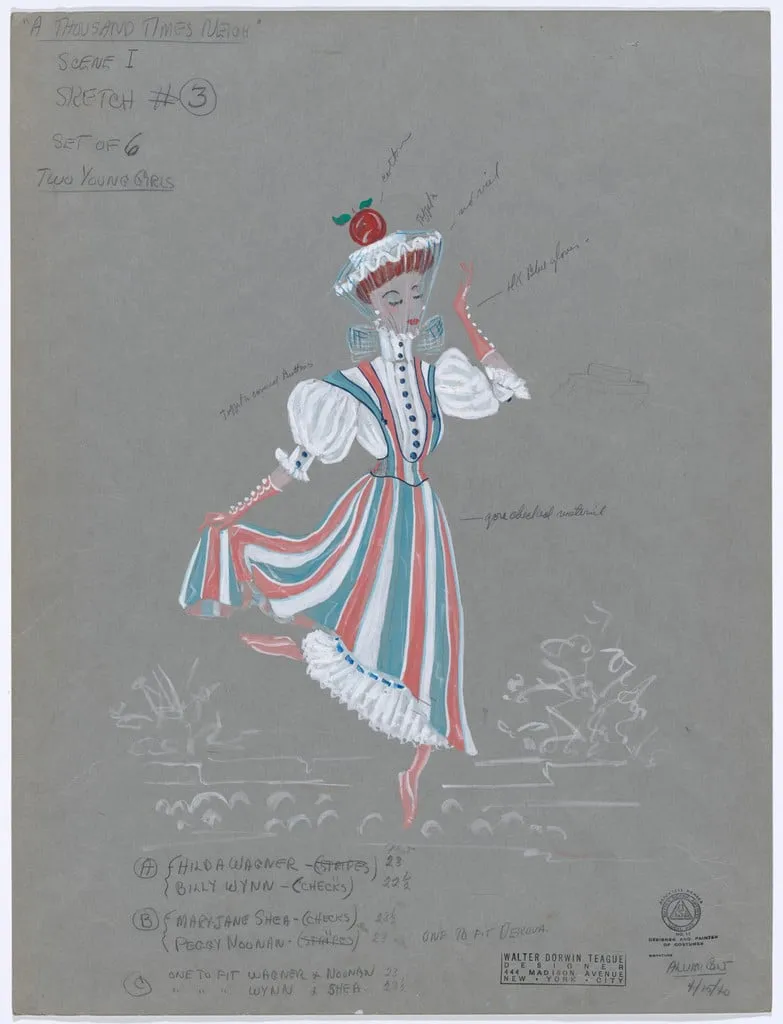
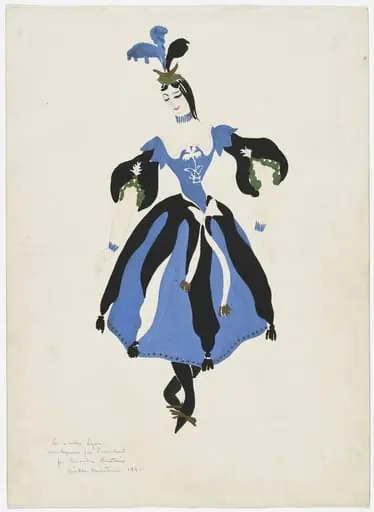
Untitled is a gouache drawing by Alvin Colt. It dates from 1940 and is held in the collection of the Museum of Modern Art.
About this work
Overview
Created in 1940, this drawing by Alvin Colt combines gouache, pencil, and stamped ink on colored card. It functions as a costume design sketch for a theatrical production, not a standalone artwork. The piece is held in the collection of The Museum of Modern Art, where it is preserved as a record of mid-century stage design practice.
Subject & Meaning
The figure is a dancer in a vividly striped dress and an elaborate hat topped with a red apple, captured mid-motion with arms extended and one foot raised. The apple and theatrical posture suggest a stylized, possibly whimsical character from a musical or operetta. Handwritten annotations reference two young girls in the scene, indicating this was part of a larger ensemble design for performance.
Technique & Style
Gouache provides opaque, saturated color across the costume, while pencil defines fine details and stamped ink adds texture. The background is minimally suggested with soft clouds and a grid-like floor, emphasizing the figure. Measurements such as '23' and '22½' are annotated beside names, revealing the drawing’s practical purpose: translating visual ideas into physical garments.
History & Provenance
The work originated as a working sketch for a stage production in the early 1940s, likely for Broadway or a touring show. It entered The Museum of Modern Art’s collection as part of its broader effort to document design as cultural artifact. Its survival reflects a shift in institutional interest toward ephemeral theatrical materials.
Context
During the 1940s, costume designers like Colt often worked under tight deadlines, producing detailed sketches that bridged artistic vision and technical execution. Handwritten notes and measurements were standard practice, ensuring accuracy in fabrication. This drawing exemplifies the collaborative, utilitarian nature of theater design during the era.
Legacy
Though not intended for public display, the drawing now serves as a window into the unseen labor behind stage performances. It underscores how costume design, once considered ancillary, holds historical value as a record of creative process, craftsmanship, and the material culture of American theater.
Artist & collection