Artwork
Ghivece cu flori
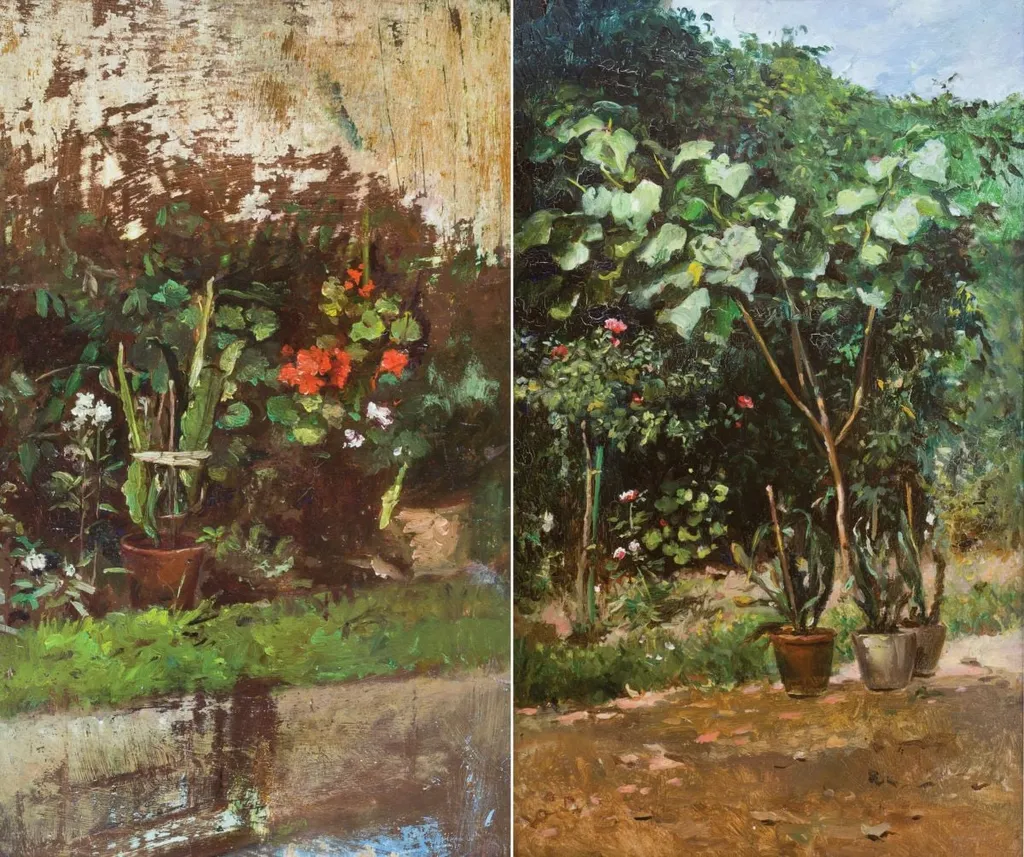
Ghivece cu flori is a print by Theodor Aman. It dates from 1850 and is held in the collection of the Bucharest Municipality Museum.
About this work
Overview
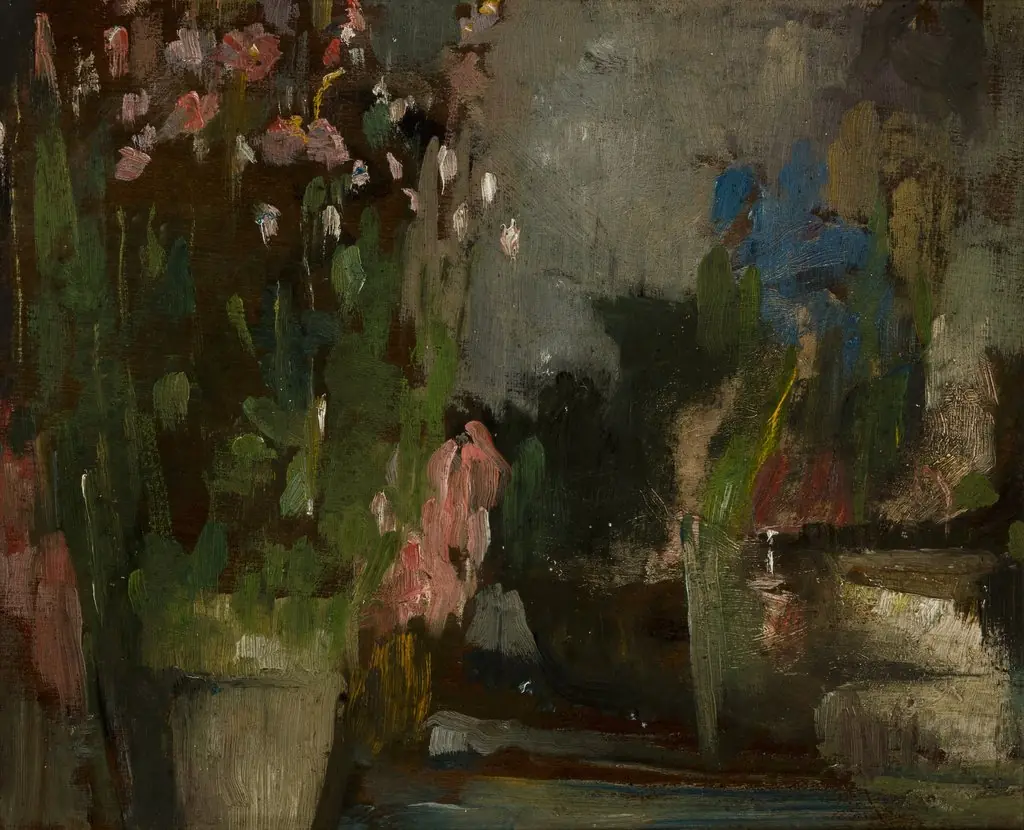
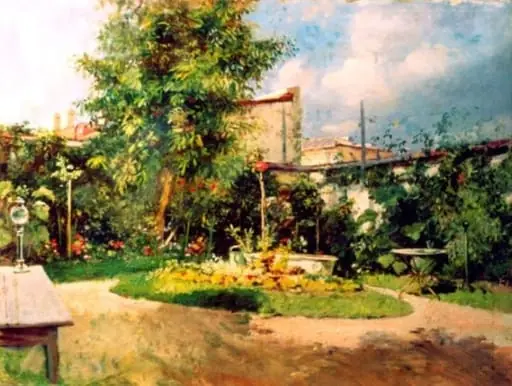
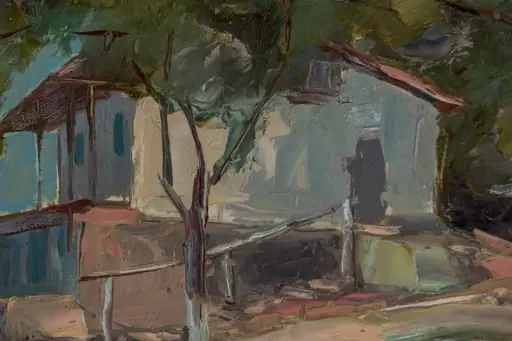
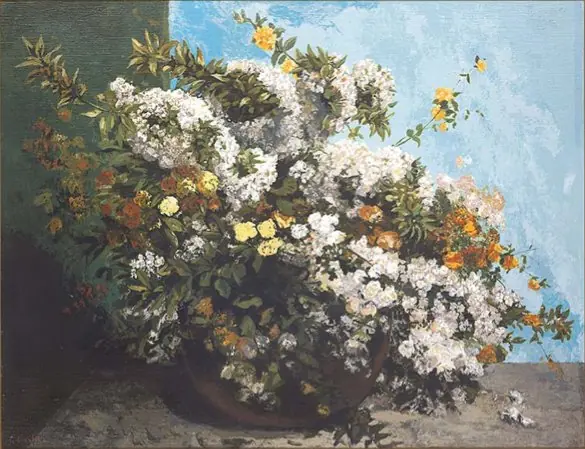
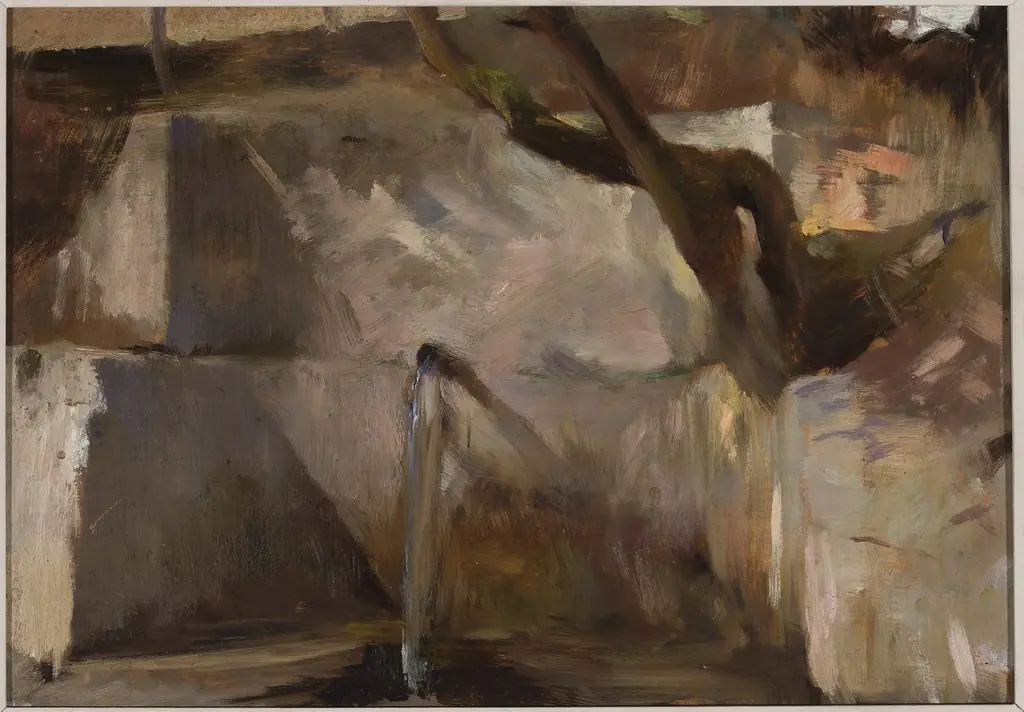
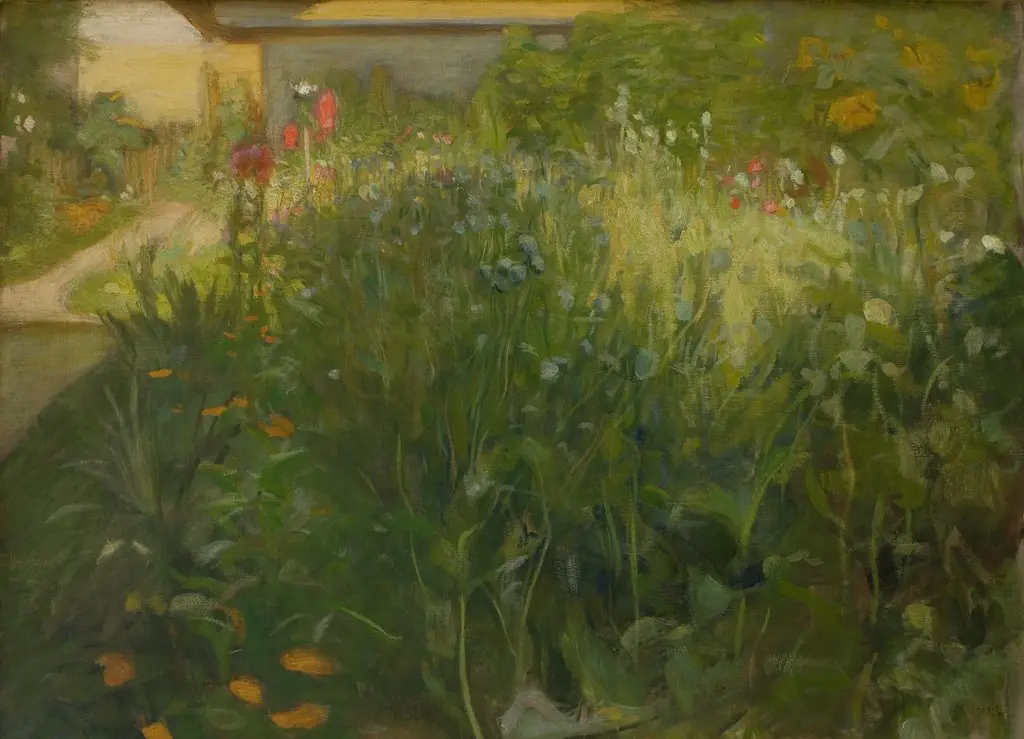
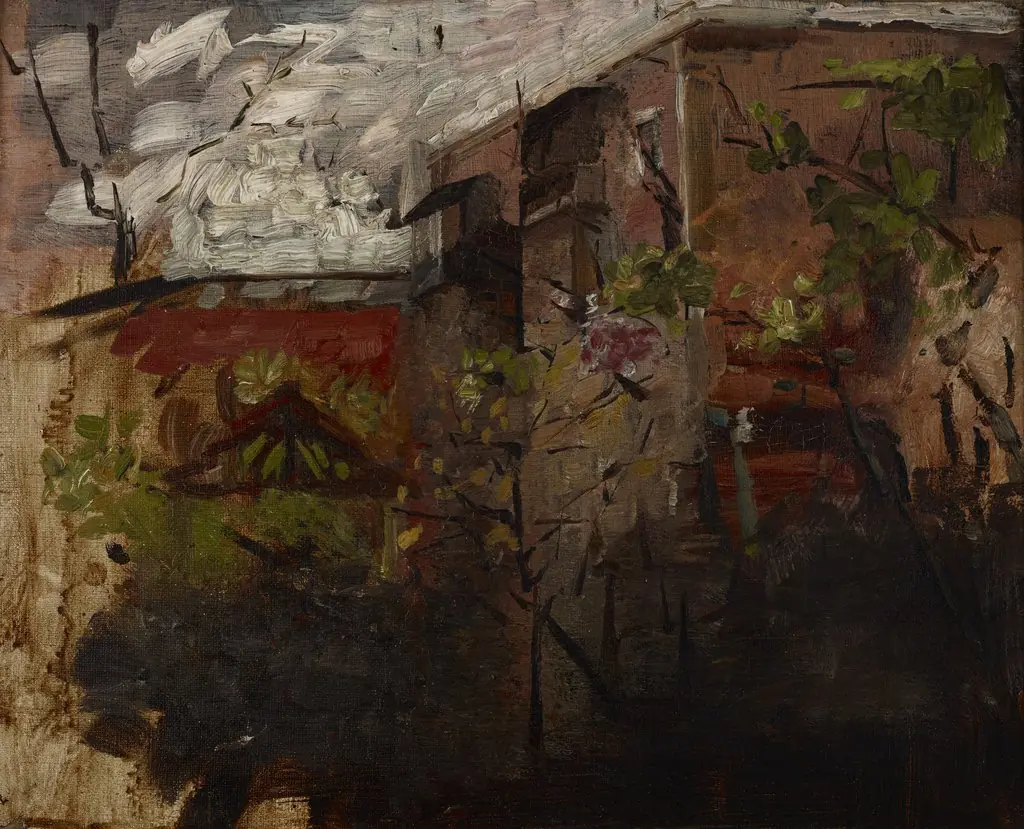
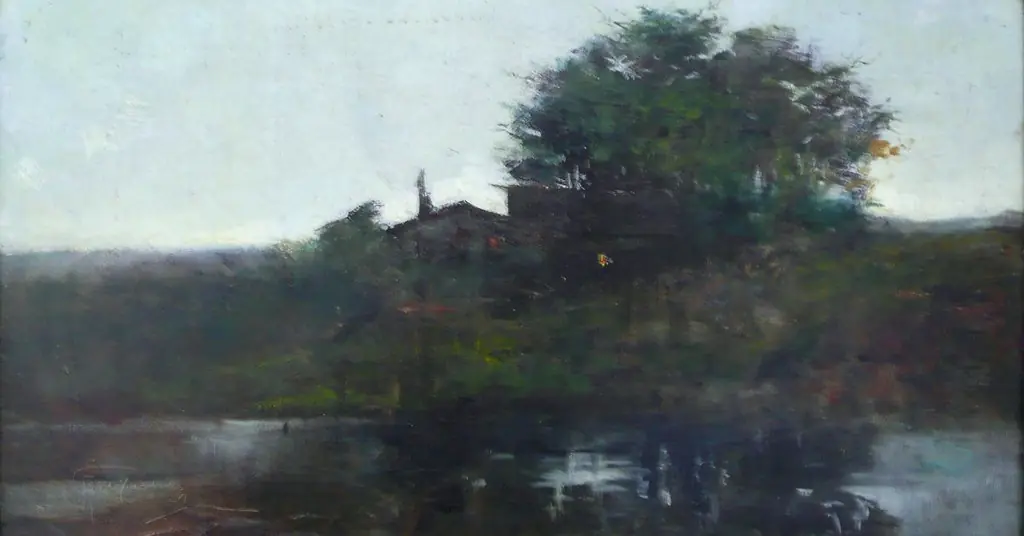
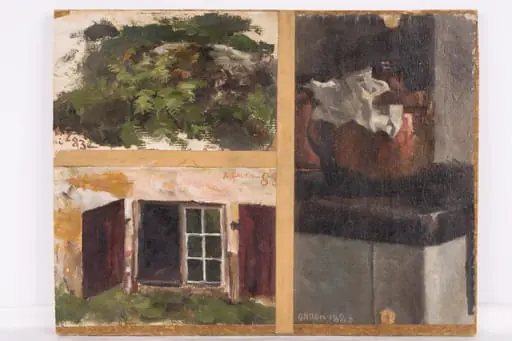
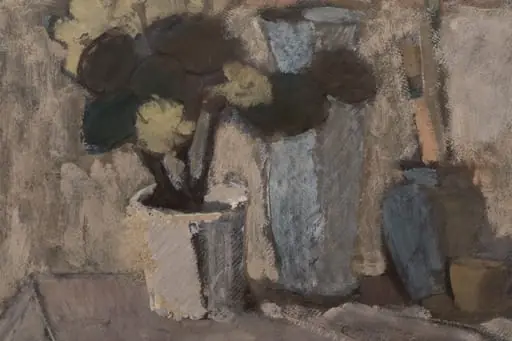
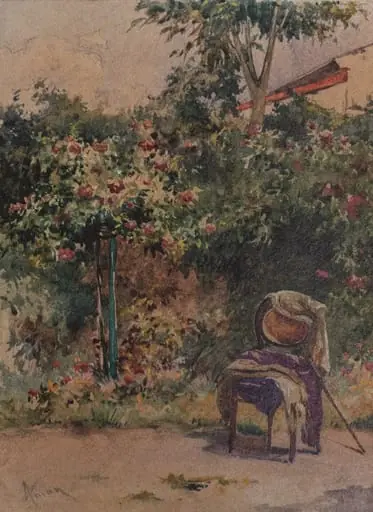
Ghivece cu flori (c. 1850) is a still-life painting by Romanian artist Theodor Aman, featuring two distinct garden scenes with potted plants, executed in a realistic style with prominent textural elements.
Subject & Meaning
The painting depicts two small-scale outdoor arrangements: one with bright red and white flowers in a clay pot beside a stone wall on a wet ground, and another with a bushy green plant and small pink flowers in a pot, accompanied by climbing plants on a wooden trellis. The emphasis is on capturing the natural, everyday beauty of these planted vignettes.
Technique & Style
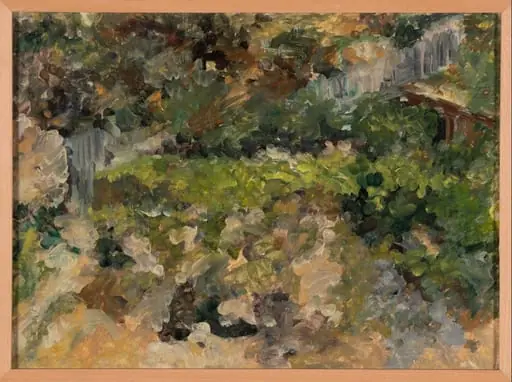
Aman employed a distinctive technique characterized by heavy, textured brushstrokes, bordering on impasto, which imbues the plants with a sense of realism and vitality. This approach contrasts with the simpler, less detailed backgrounds.
History & Provenance
Created around 1850 by Theodor Aman (1831-1895), a pivotal figure in 19th-century Romanian art as a painter, engraver, and educator, the work is now part of the Museum of Ethnography's collection.
Context
While primarily a still-life, Ghivece cu flori reflects Aman's broader realistic approach, more commonly associated with his genre and history paintings, adapting this sensibility to a quieter, observational subject matter.
Legacy
As part of Aman's oeuvre, the painting contributes to the development of Romanian visual arts in the 19th century, though its specific impact or influence within his body of work is not distinctly highlighted by the available information.
Artist & collection
Artist
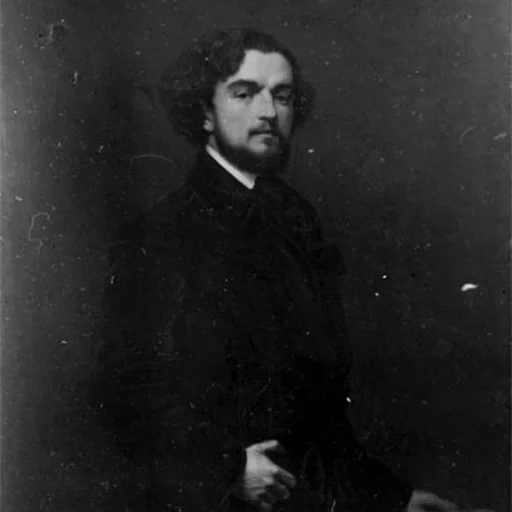
Theodor Aman (20 March 1831 – 19 August 1891) was a Romanian painter, engraver and art professor. He mostly produced genre and history scenes.