Artwork
Winter Scene
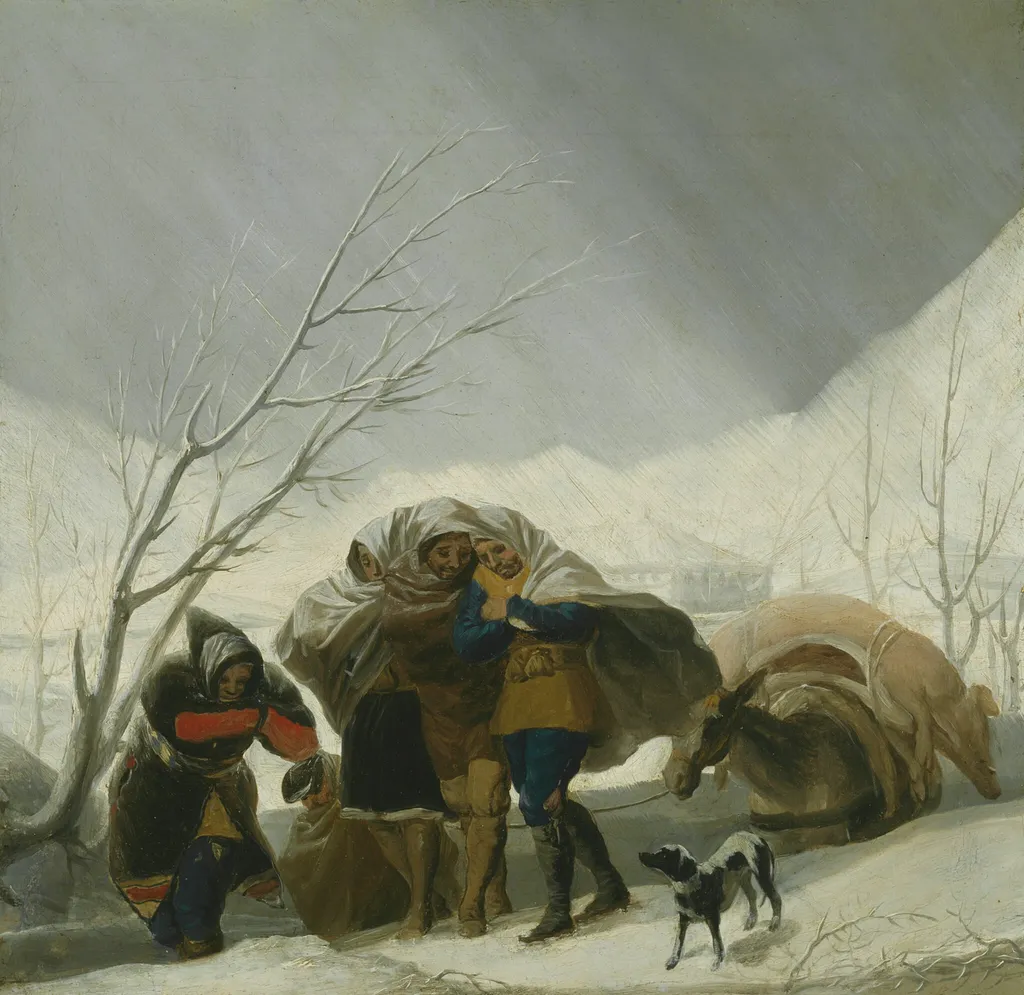
Winter Scene is an oil painting by the Rococo painting artist Francisco Goya. It dates from 1786 and is held in the collection of the Art Institute of Chicago.
About this work
Overview
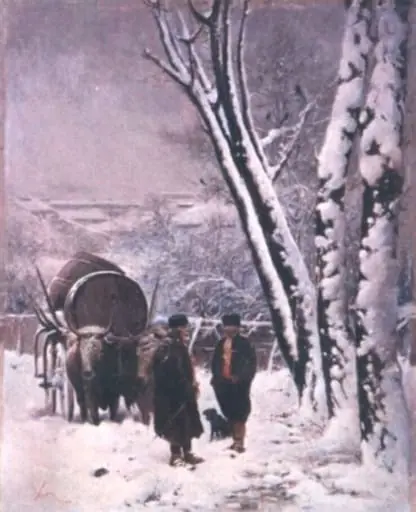
This oil-on-canvas study by Francisco de Goya depicts a snow-laden road in winter, where two groups of laborers navigate the harsh conditions.
This oil-on-canvas study by Francisco de Goya depicts a snow-laden road in winter, where two groups of laborers navigate the harsh conditions. One carries a slaughtered pig, the other moves with bundled goods. Painted in muted grays and whites, the scene emphasizes the physical strain of rural life under inclement weather. It was not intended as a final work but as a preparatory model for a larger tapestry design.
Subject & Meaning
The painting portrays ordinary people enduring winter’s hardships, not idealized nobility or mythological figures. The presence of the dead pig suggests a practical, even grim, routine of subsistence. Goya’s focus on laborers in a natural setting reflects a quiet realism, contrasting with the grand narratives typically favored in royal commissions. The scene honors the resilience of common folk without sentimentality.
Technique & Style
Goya employed loose, diagonal brushstrokes to simulate falling snow and the weight of wind-blown drifts. Cool tonal ranges dominate, with minimal contrast to evoke the diffuse light of a stormy day. The composition uses receding paths and bent trees to guide the eye through depth, while the figures are rendered with economical detail—enough to convey motion and burden without ornamentation.
History & Provenance
Created around 1786–1787, this study was part of a series commissioned by the Spanish Crown for the Royal Tapestry Factory. Designed to be enlarged and woven into tapestries for the dining room at El Pardo Palace, the work was one of several seasonal themes. Though the tapestries were completed and installed, the original studies like this one remained in Goya’s possession and later entered public collections.
Context
During the late 18th century, Spanish royalty commissioned tapestries to decorate palace interiors with scenes of everyday life, aiming to project an image of harmonious social order. Goya’s studies, though rooted in observation, subtly undermined idealized portrayals by emphasizing labor, cold, and isolation. These works bridged the gap between folk realism and courtly decoration, reflecting broader cultural shifts in Spanish art.
Legacy
Though created as functional models, Goya’s seasonal studies are now valued for their emotional honesty and technical economy. They reveal his early mastery of atmosphere and human endurance, foreshadowing his later, more critical works. These small canvases stand as quiet testaments to the dignity of labor, influencing later realist painters who sought truth in the mundane.
Own this work as a print
Artist & collection
Artist
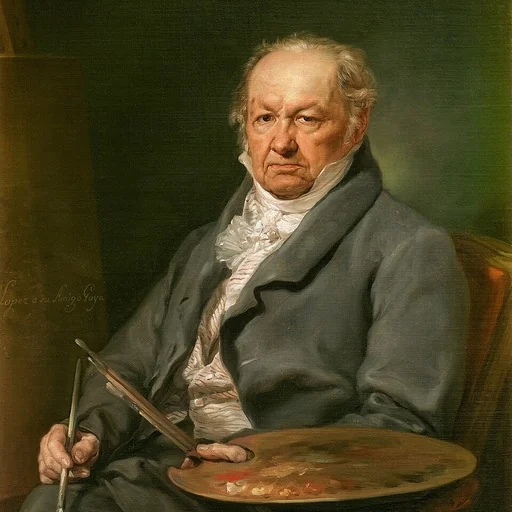
Francisco José de Goya y Lucientes (; Spanish: ; 30 March 1746 – 16 April 1828) was a Spanish romantic painter and printmaker.