Artwork
În atelierul artistului
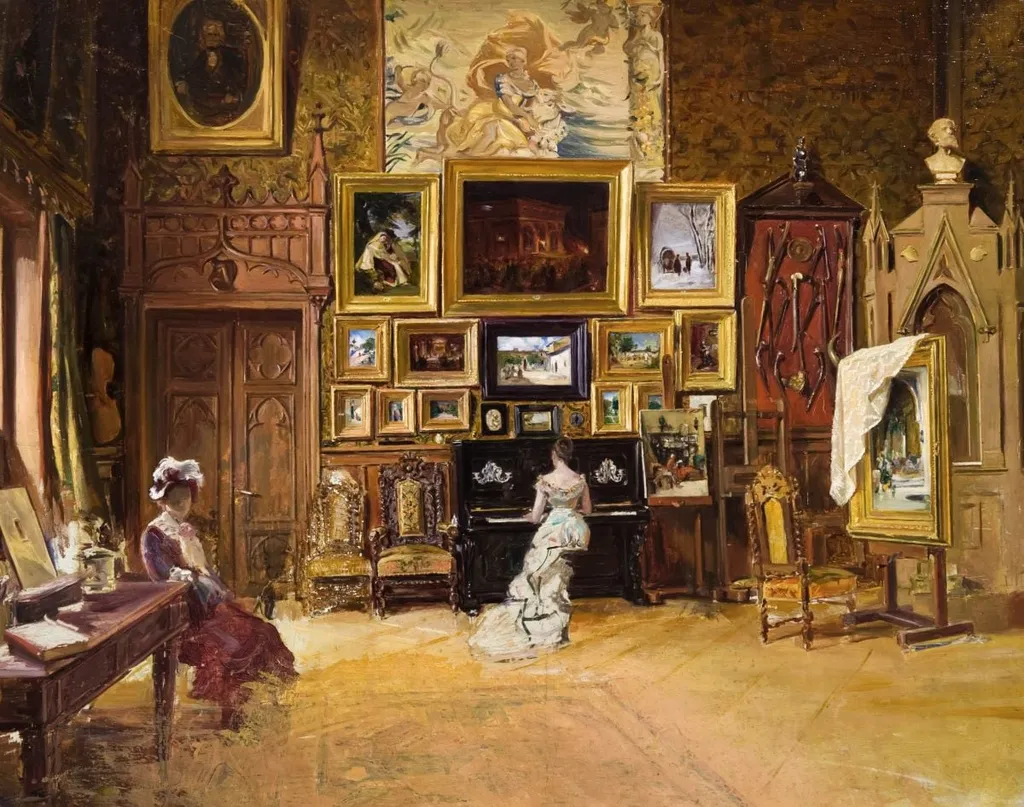
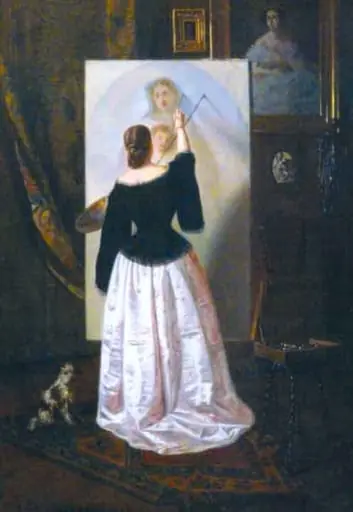
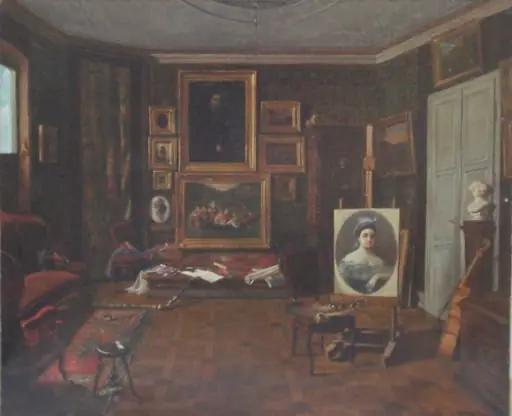
În atelierul artistului is a print by Theodor Aman. It dates from 1850 and is held in the collection of the National Museum of Art of Romania.
About this work
Overview
Painted around 1850, *În atelierul artistului* by Theodor Aman presents a detailed interior of a working studio, capturing the daily rhythm of artistic life in mid-19th century Romania. The scene is neither idealized nor narrative-driven but instead offers a quiet, observational glimpse into a creative environment, reflecting Aman’s interest in genre subjects and the material culture of artists.
Subject & Meaning
The scene conveys a sense of domesticated artistic labor, where creativity is woven into everyday life rather than performed as spectacle.
The studio is populated by two women engaged in quiet, intellectual pursuits—one writing at a desk, the other playing the piano—suggesting a space where art, music, and literature intersect. The presence of numerous framed works on the walls implies the artist’s personal collection and ongoing creative output. The scene conveys a sense of domesticated artistic labor, where creativity is woven into everyday life rather than performed as spectacle.
Technique & Style
Aman employs chiaroscuro to model forms and direct attention, with light falling deliberately on the women’s faces and the piano keys, contrasting with the deeper shadows of the cluttered room. The brushwork is precise yet unpolished, capturing textures of wood, fabric, and canvas without idealization. The composition is dense and layered, mirroring the studio’s physical accumulation of objects and artworks, reinforcing its authenticity as a lived-in space.
History & Provenance
Created during Aman’s early career, the painting predates his later role as a professor at the Bucharest Academy of Fine Arts. It reflects his personal environment and artistic priorities before institutional influence shaped Romanian art education. The work remained within Romanian collections, serving as a document of domestic artistic practice in a period when national identity in the arts was being actively formed.
Context
In mid-19th century Romania, the studio was emerging as a symbolic space of cultural legitimacy. Aman’s depiction aligns with European trends in genre painting but grounds them in local reality: the cluttered room, the mix of artistic media, and the presence of women as active participants in creative life reflect a society in transition, where art was becoming both profession and cultural aspiration.
Legacy
The painting stands as an early example of Romanian genre painting that prioritizes observation over narrative. It influenced later artists by validating the studio as a legitimate subject and by portraying the artist’s world as complex and inhabited, not isolated or romanticized. Its quiet realism contributed to a shift in Romanian art toward documenting everyday cultural life with sincerity.
Artist & collection
Artist
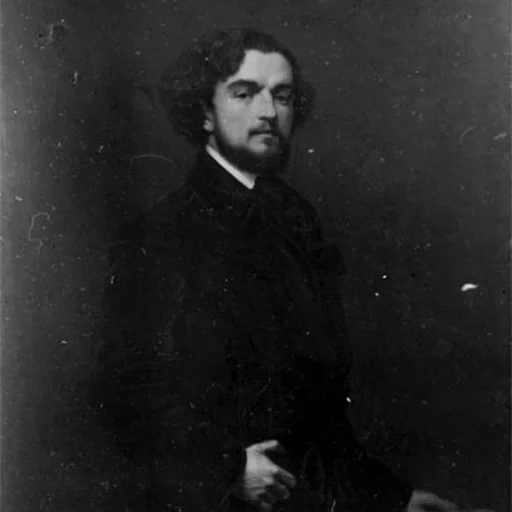
Theodor Aman (20 March 1831 – 19 August 1891) was a Romanian painter, engraver and art professor. He mostly produced genre and history scenes.