Artwork
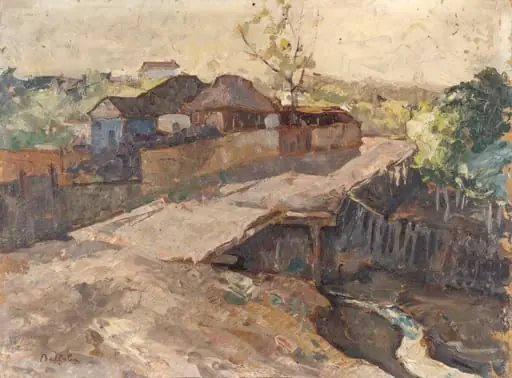
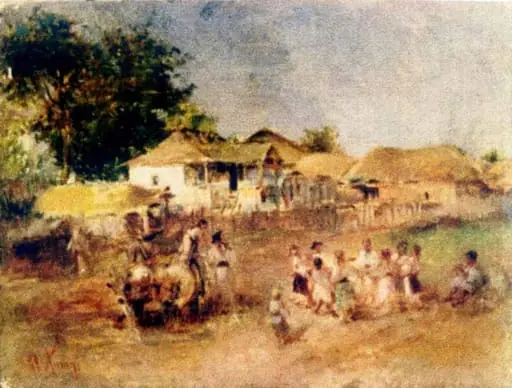
Scenă campestră. Verso: Peisaj cu bordeie îngropate, eboșă
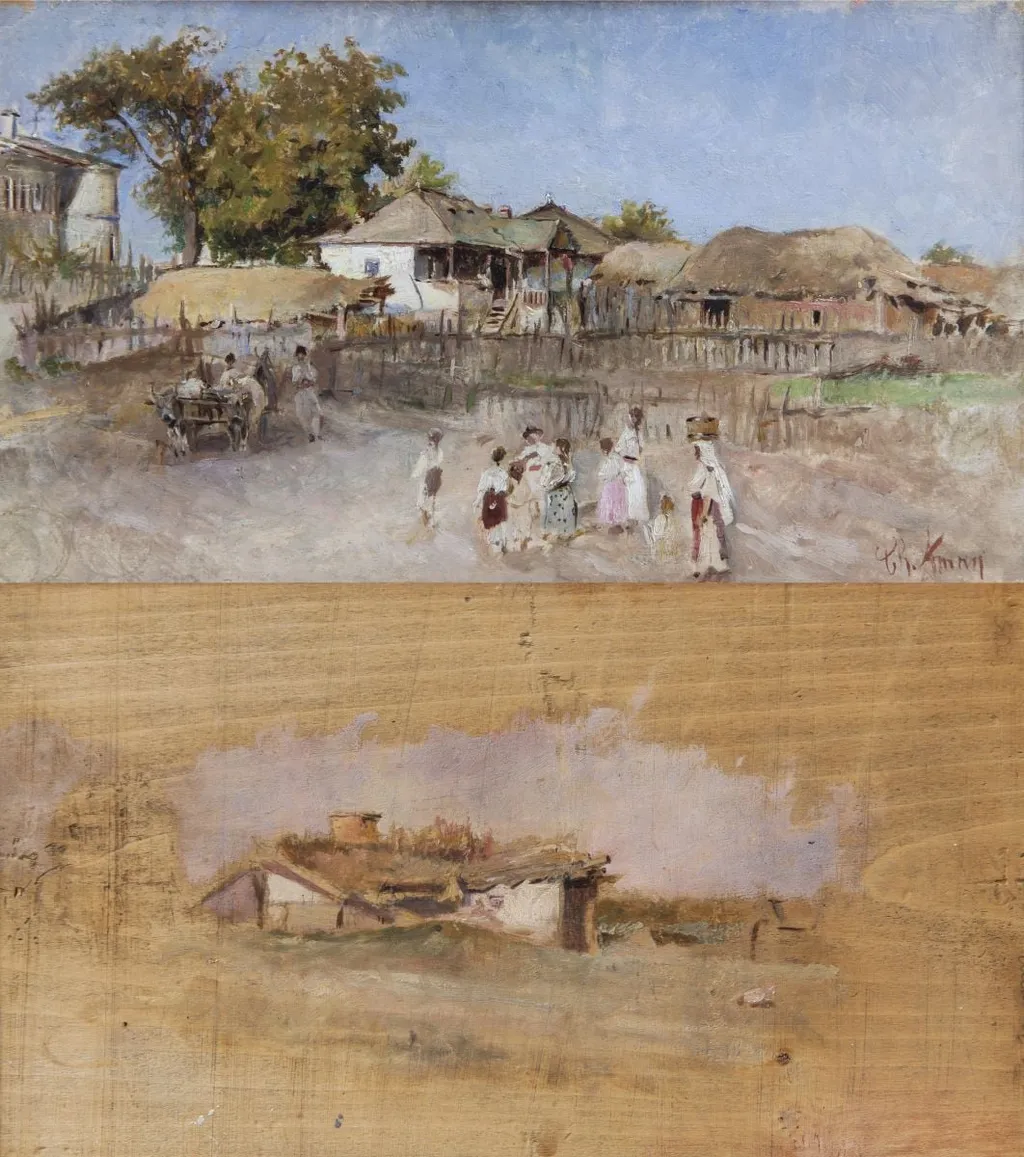
Scenă campestră. Verso: Peisaj cu bordeie îngropate, eboșă is a print by Theodor Aman. It dates from 1850 and is held in the collection of the National Museum of Art of Romania.
About this work
Overview
Theodor Aman's 'Scenă campestră. Verso: Peisaj cu bordeie îngropate, eboșă' is a painting from around 1850, created by a Romanian artist known for his work in genre and historical scenes.
Subject & Meaning
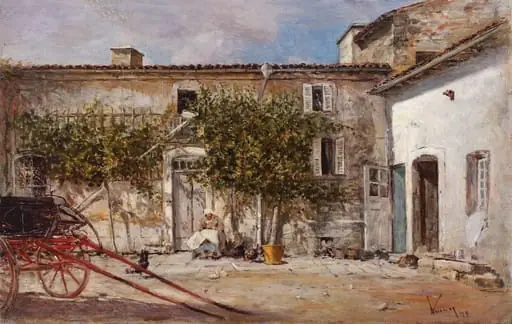
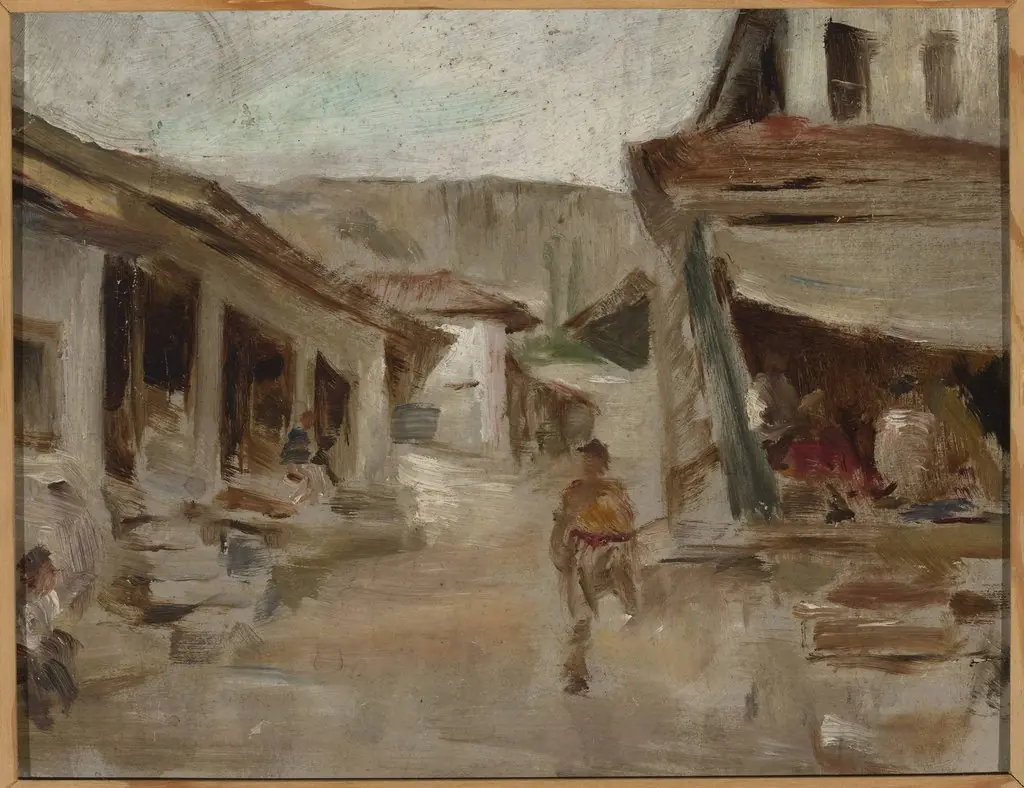
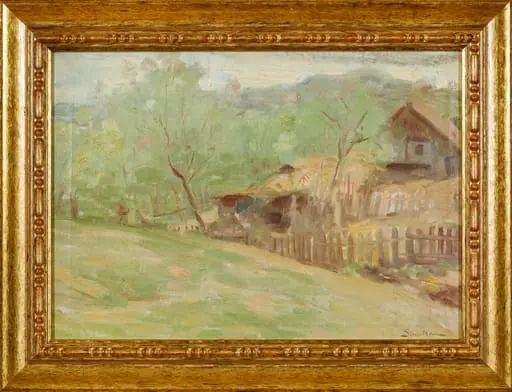
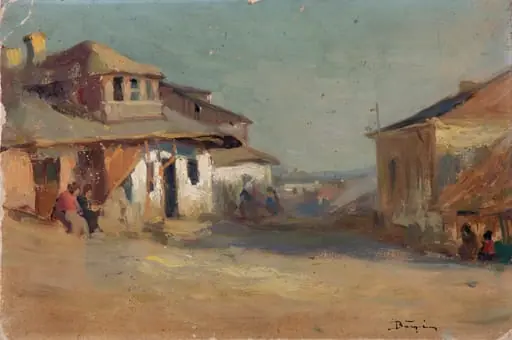
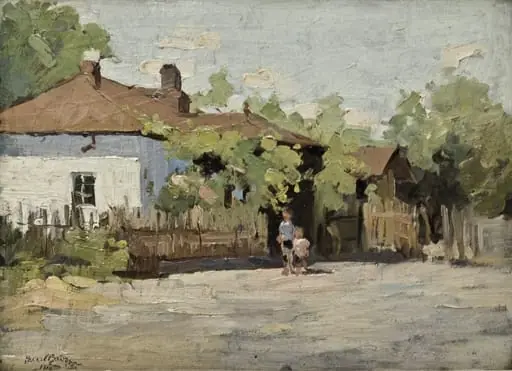
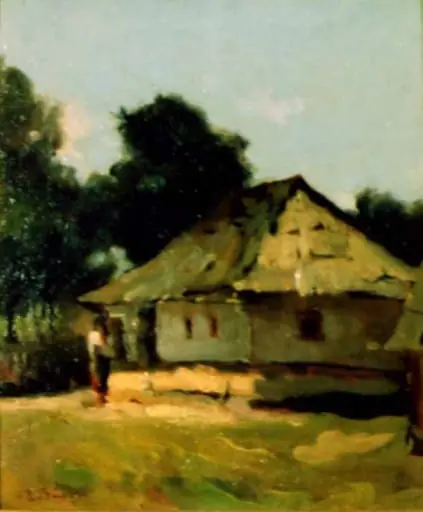
The painting depicts a rural village scene by a river, with figures in traditional clothing walking along a dirt path, surrounded by simple houses and a horse-drawn cart.
Technique & Style
The work is characterized by loose, rapid brushstrokes and a predominantly earthy color palette, with muted greens, browns, and grays, and a hint of blue in the sky, giving it a sketchy appearance.
Context
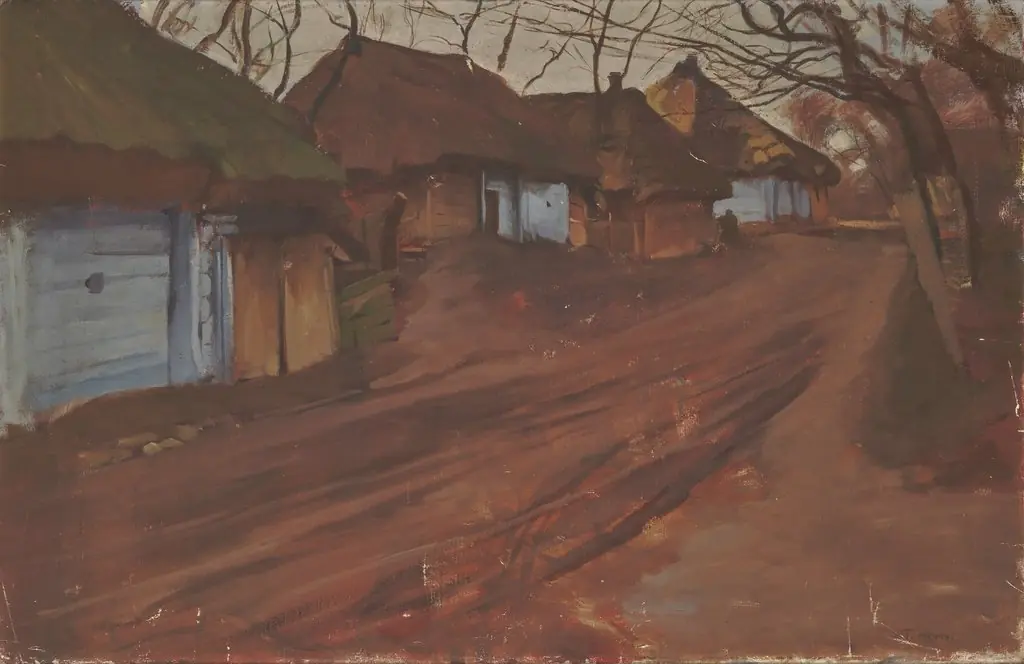
The verso of the painting features a study of earth-covered peasant huts, suggesting an interest in rural life and landscapes.
Artist & collection
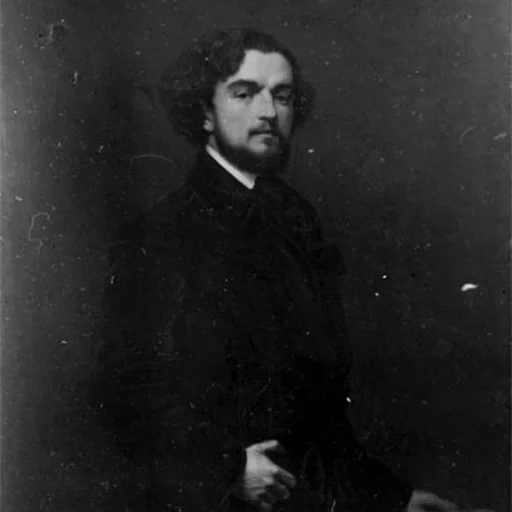
Artist
Theodor Aman (20 March 1831 – 19 August 1891) was a Romanian painter, engraver and art professor. He mostly produced genre and history scenes.