Artwork
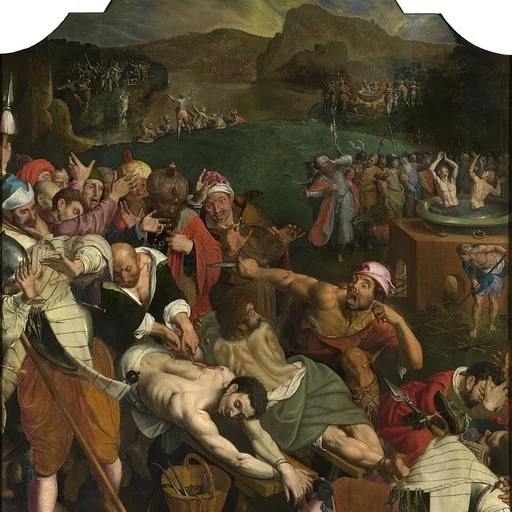
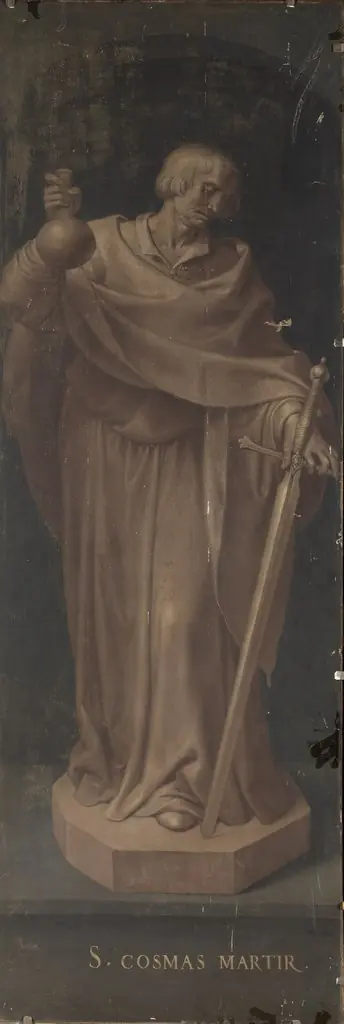
Heilige Damianus, arts en martelaar
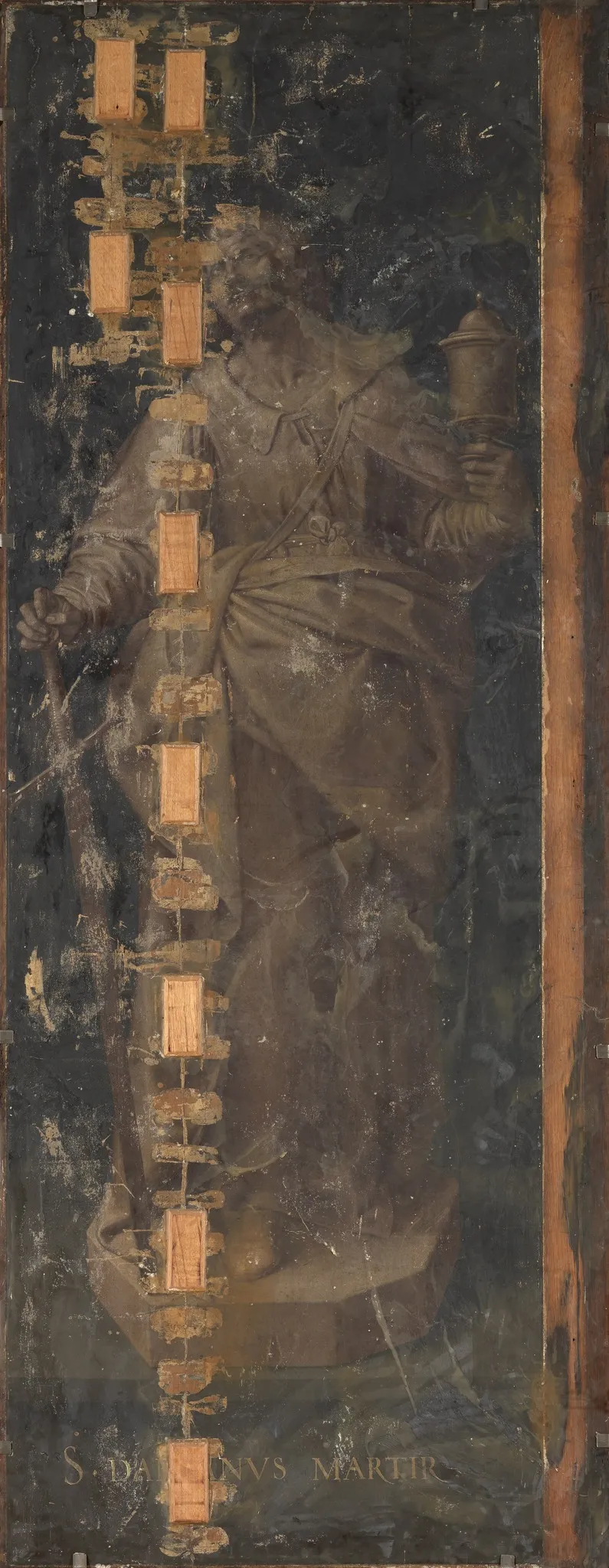
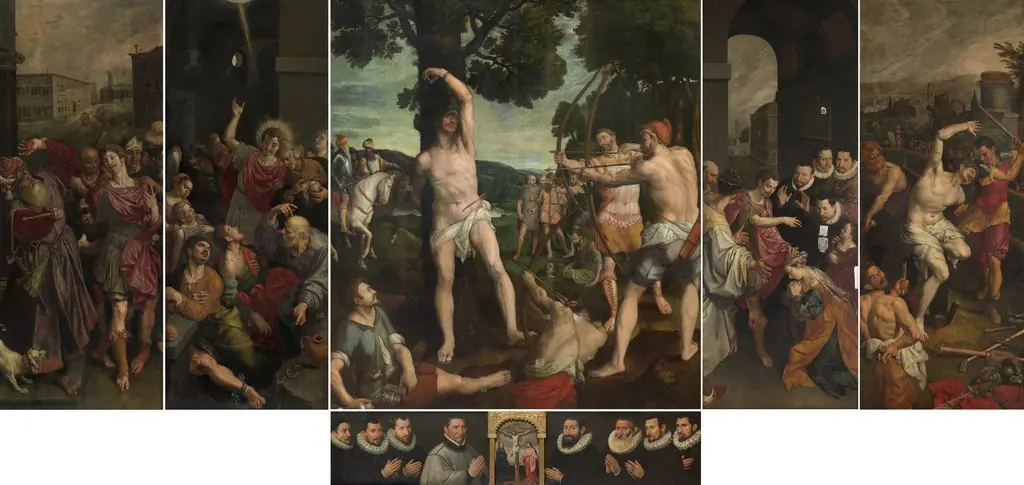
Heilige Damianus, arts en martelaar is an oil painting by the Flemish Baroque painting artist Ambrosius Francken I. It dates from 1598 and is held in the collection of the Onze-Lieve-Vrouwekathedraal.
About this work
Overview
It resides today in the Royal Museum of Fine Arts Antwerp, part of a broader corpus of devotional imagery produced by Francken and his artistic family.
Painted in 1598 by Ambrosius Francken I, this oil-on-panel work portrays Saint Damian, a physician and martyr, in a solemn, contemplative pose. Executed during the late Mannerist phase of Flemish art, the painting reflects the religious devotion characteristic of the period. It resides today in the Royal Museum of Fine Arts Antwerp, part of a broader corpus of devotional imagery produced by Francken and his artistic family.
Subject & Meaning
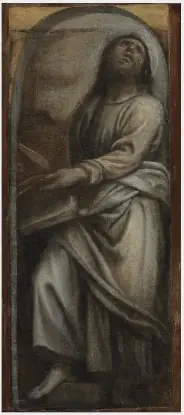
The figure represents Saint Damian, one of the twin saints revered as patron healers in Christian tradition. He holds a cup, symbolizing his role as a physician who treated the sick, and a staff, denoting spiritual authority. His downward gaze suggests introspection or prayer, reinforcing his identity as both healer and martyr. The absence of narrative detail focuses attention on his sanctity rather than a specific event from his life.
Technique & Style
Francken applied oil paint with restrained modeling, emphasizing form over dramatic lighting. The robes are rendered in flowing, linear folds, typical of late Mannerist aesthetics, while the dark, undefined background isolates the figure and heightens its spiritual presence. The surface shows signs of age—cracking and pigment loss—consistent with its age and material, yet the composition retains its intended clarity and solemnity.
History & Provenance
Commissioned likely for a church or private devotional setting, the painting entered the collection of the Royal Museum of Fine Arts Antwerp in the 19th century. It was produced during a period when Francken’s family dominated religious painting in Antwerp, and its survival reflects the enduring value placed on such devotional imagery in the Southern Netherlands after the Reformation.
Context
Created in the wake of the Council of Trent, the painting aligns with Counter-Reformation demands for clear, emotionally resonant religious imagery. Francken’s work responded to this by presenting saints as accessible yet dignified figures, avoiding excessive ornamentation. His style bridged Mannerist elegance and emerging Baroque naturalism, making his output influential in shaping regional religious art.
Legacy
Though less widely known than some contemporaries, Ambrosius Francken I contributed significantly to the continuity of Flemish religious painting. His depictions of saints, including this one, helped standardize iconographic conventions in the region. The painting remains a quiet testament to the devotional culture of late 16th-century Antwerp and the role of family workshops in sustaining artistic traditions.
Artist & collection
Artist
Ambrosius Francken I (1544/45–October 1618) was a Flemish painter known for his religious works and historical allegories painted in a late Mannerist style.

![Saint Francis [far left panel], by Cosmè Tura](https://artifactworldgallery.com/img/cosme-tura--saint-francis-far-left-panel--3b890eb4471ebc8a-w320.webp)