Artwork
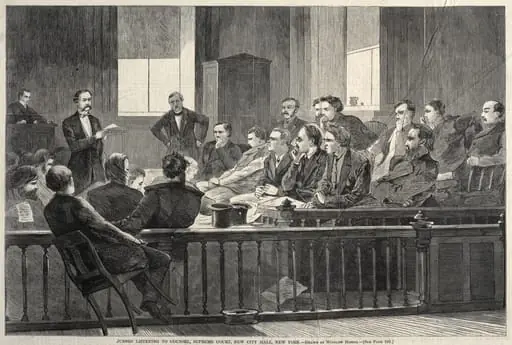
Jurors Listening to Counsel, Supreme Court, New City Hall, New York
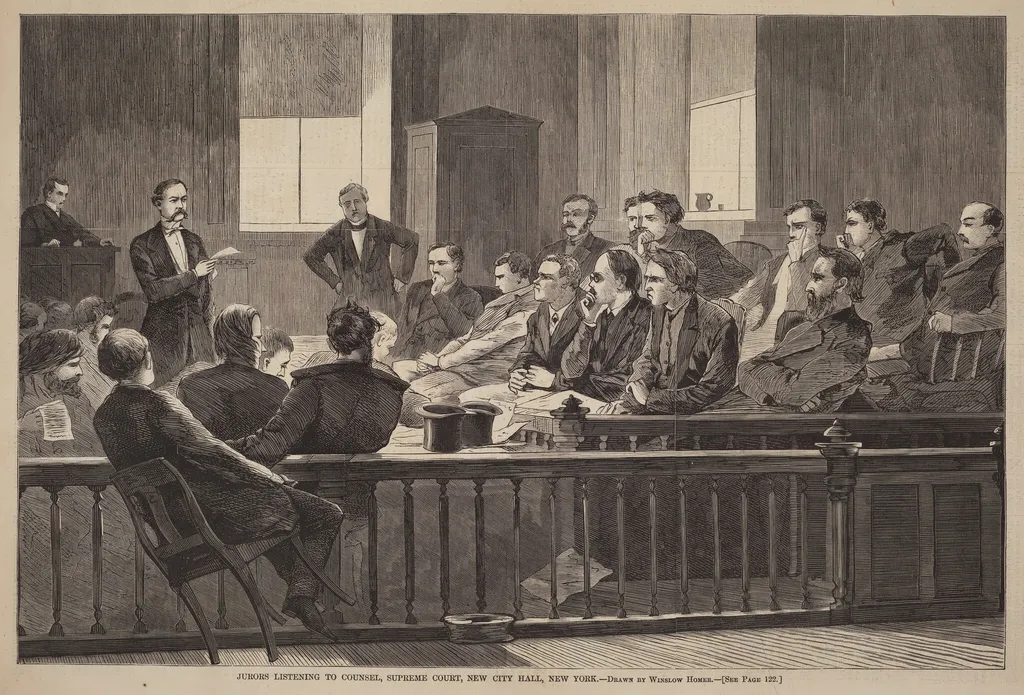
Jurors Listening to Counsel, Supreme Court, New City Hall, New York is an ink print by the Impressionist artist American 19th Century. It dates from 1869 and is held in the collection of the National Gallery of Art. This black-and-white wood engraving depicts a courtroom scene in New York’s New City Hall, capturing a moment during a trial.
About this work
Overview
The composition emphasizes quiet attention, rendered through precise, fine lines typical of 19th-century journalistic illustration.
This black-and-white wood engraving depicts a courtroom scene in New York’s New City Hall, capturing a moment during a trial. Twelve jurors sit in focused stillness, while a lawyer gestures with a document before them. Spectators in formal attire observe from the rear. The composition emphasizes quiet attention, rendered through precise, fine lines typical of 19th-century journalistic illustration.
Subject & Meaning
The scene portrays the judicial process in action, highlighting the jurors’ role as passive recipients of legal argument. The lawyer’s gesture suggests persuasion, while the seated jurors convey solemn engagement. The presence of onlookers underscores the public nature of court proceedings, reflecting democratic ideals of transparency in law.
Technique & Style
Executed as a wood engraving, the image relies on tightly controlled linear detail to define textures of fabric, facial expressions, and architectural elements. The monochrome palette and clean contrasts suit mass reproduction, aligning with the illustrative standards of newspapers and periodicals of the era. The style avoids embellishment, favoring clarity and legibility.
History & Provenance
Created for publication in a New York newspaper or legal journal, the print likely documented an actual trial at the New City Hall, which served as the city’s judicial center in the mid-1800s. Its production method—carving an image into a hardwood block for printing—was standard for illustrated periodicals before photographic reproduction became widespread.
Context
During the mid-19th century, public interest in legal proceedings grew alongside urban expansion and media development. Wood engravings like this provided visual access to courtrooms for readers who could not attend in person, reinforcing the connection between civic institutions and the press in shaping public understanding of justice.
Legacy
As a representative example of journalistic printmaking, the work preserves a visual record of courtroom culture before photography. Its technique and subject matter reflect the era’s reliance on illustration to document public life, offering insight into how legal processes were perceived and communicated to a broad audience.
Artist & collection

Artist
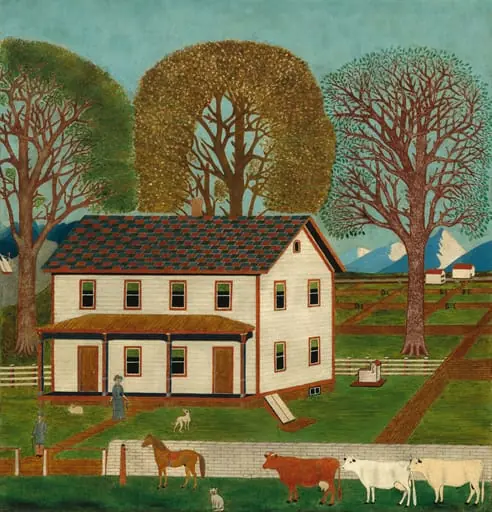
This artist painted everyday American life in the 1800s. Look at *Farmhouse in Mahantango Valley*—a quiet, sunlit scene of rural Pennsylvania. *Boy and Girl* shows two children standing close, their faces turned toward…


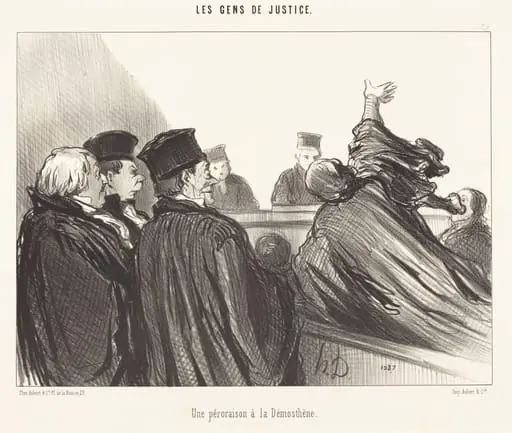 Une Péroraison a la Démosthène
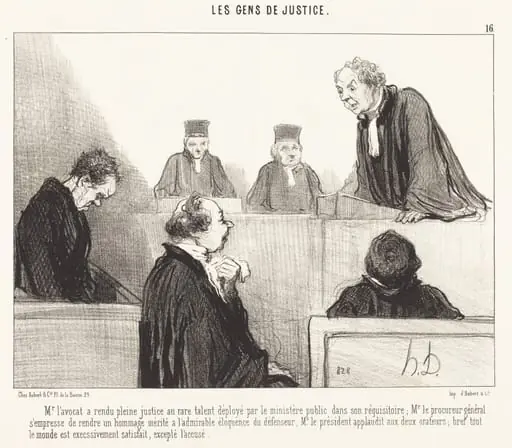 Mr. l'avocat a rendu pleine justice...
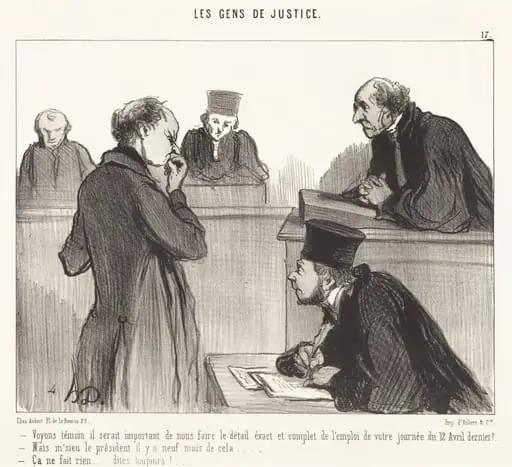 Voyons témoin il serait important de...
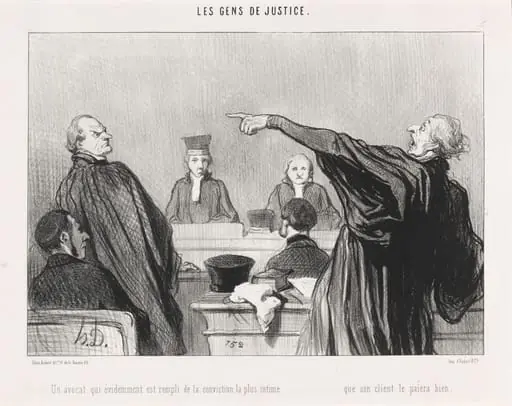 Un Avocat qui est... rempli de la conviction... intime...
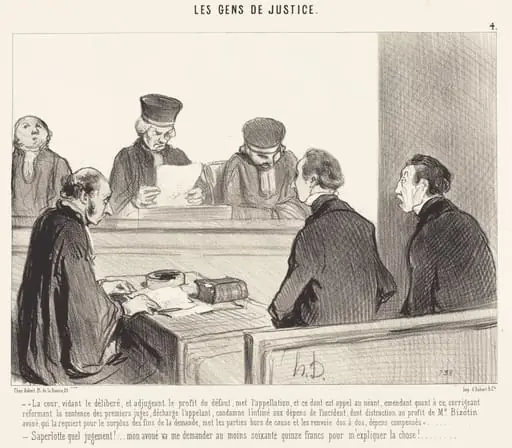 La Cour, vidant le délibéré...
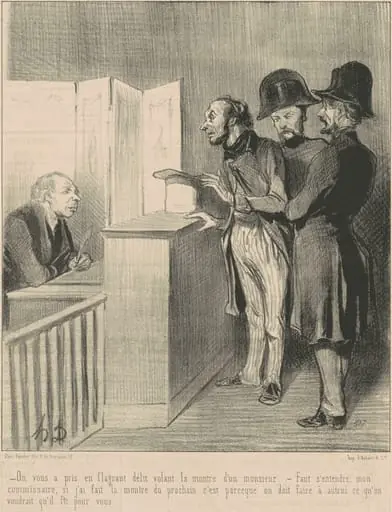 On vous a pris en flagrant délit ...
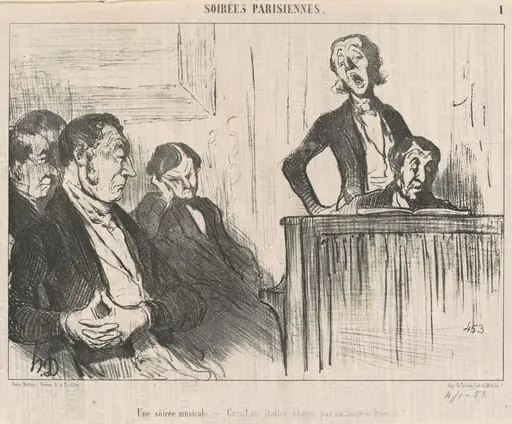 Une soirées musicale
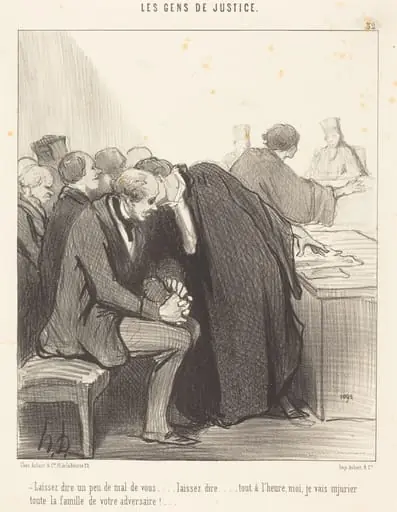 Laissez dire un peu de mal de vous...
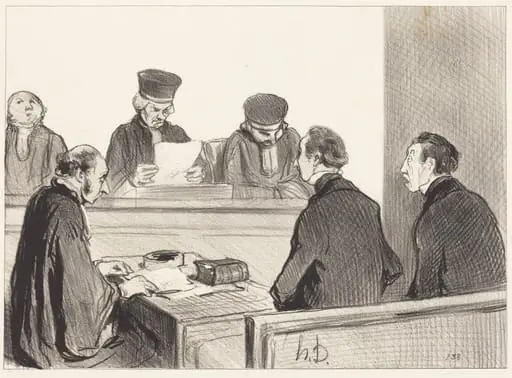 La Cour, vidant le délibéré...
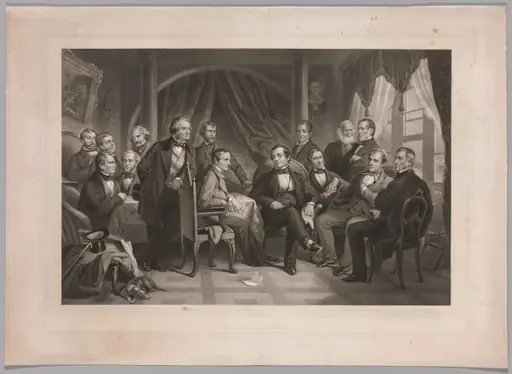 Washington Irving and his Literary Friends at Sunnyside
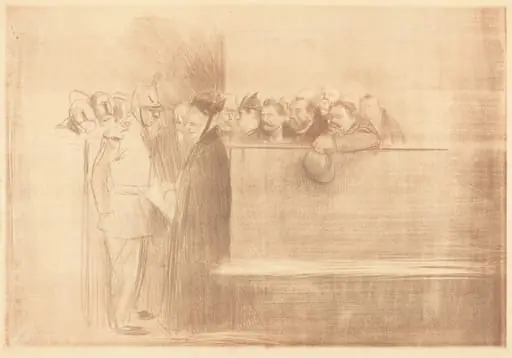 L'audience (3e planche) (The Hearing) (third plate)
 Jurors Listening to Counsel, Supreme Court, New City Hall, New York