Artwork
La Cour, vidant le délibéré...
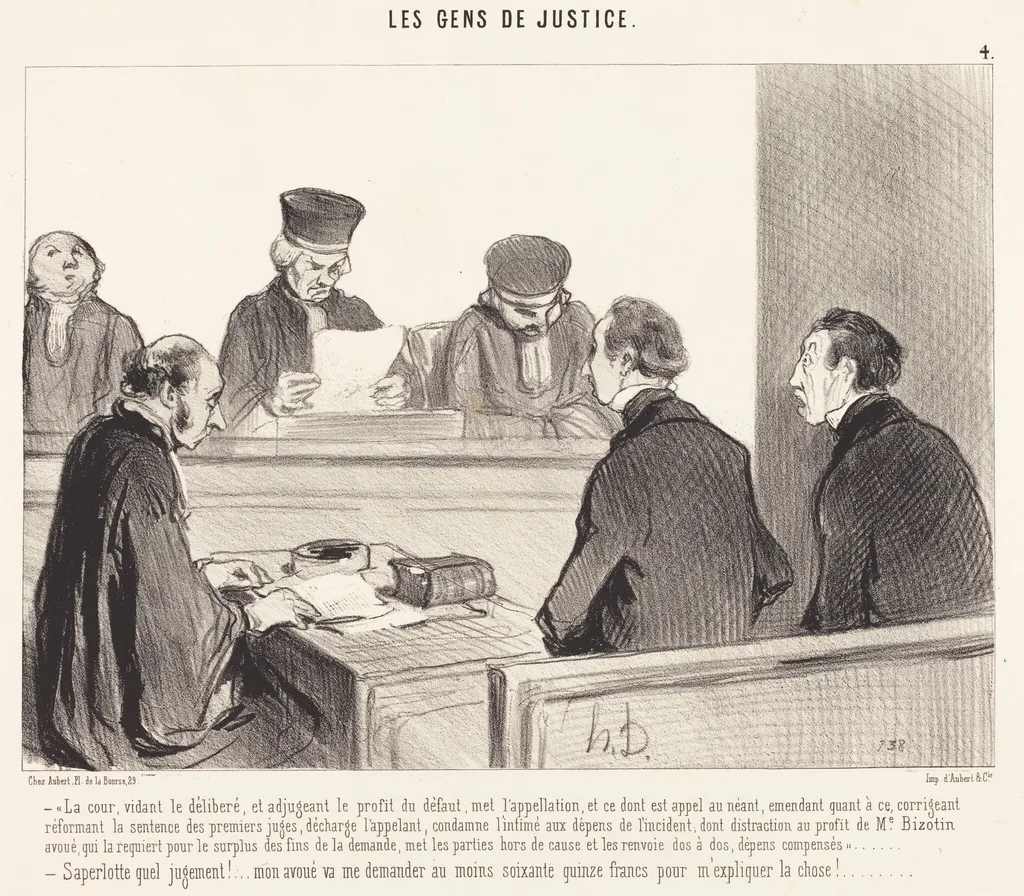
La Cour, vidant le délibéré... is an ink print by the Romanticist artist Honoré Daumier. It dates from 1845 and is held in the collection of the National Gallery of Art.
About this work
Overview
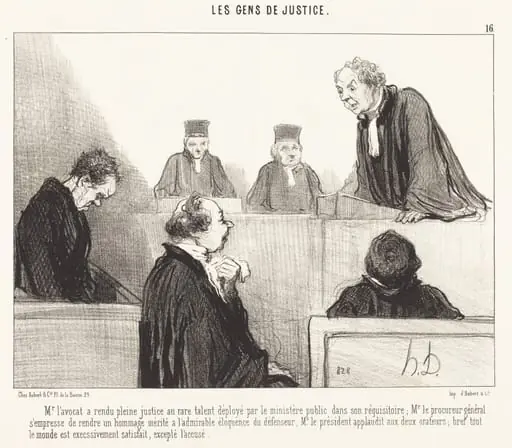
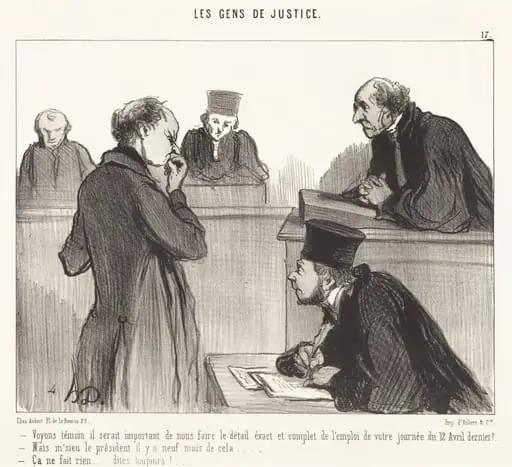
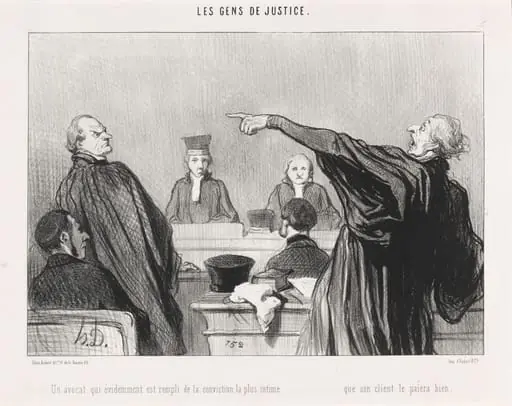
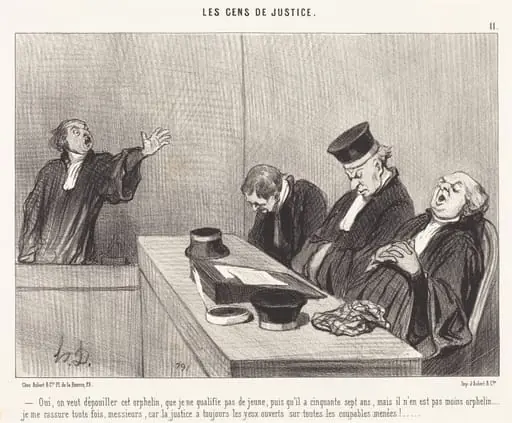
Honoré Daumier’s 1845 lithograph *La Cour, vidant le délibéré…* presents a cramped courtroom where a judge, two lawyers, and an onlooker are caught in a moment of heated dispute. Rendered in a restrained palette, the scene is illuminated by strong contrasts that draw attention to the central figures and convey a palpable tension.
Subject & Meaning
The composition satirizes judicial proceedings, exposing the performative nature of legal argumentation. By emphasizing the animated gestures of the lawyers and the judge’s detached posture, Daumier critiques the authority of institutions that, in his view, served the interests of a privileged elite rather than the public.
Technique & Style
Executed as a lithograph, the work relies on the medium’s capacity for bold line work and tonal variation. Daumier employs chiaroscuro through dense hatching and wash, creating depth and a dramatic chiaroscuro that heightens the emotional intensity of the scene while maintaining the immediacy characteristic of his caricatural prints.
History & Provenance
Created during a period of intense political turmoil in France, the print was circulated among the republican circles that supported Daumier’s anti‑monarchical stance. It appeared in the satirical journals of the era, which served as vehicles for his commentary on the judiciary and the broader social order.
Context
The lithograph belongs to Daumier’s broader body of work that targeted the French establishment—monarchy, aristocracy, and clergy—through biting visual satire. Produced in the wake of the 1848 revolutions, it reflects the artist’s alignment with democratic ideals and his engagement with contemporary debates over justice and governance.
Artist & collection

Artist
Honoré-Victorin Daumier was a French painter, sculptor, and printmaker, whose many works offer commentary on the social and political life in France, from the Revolution of 1830 to the fall of the Second French Empire in 1870.