Artwork
Frida
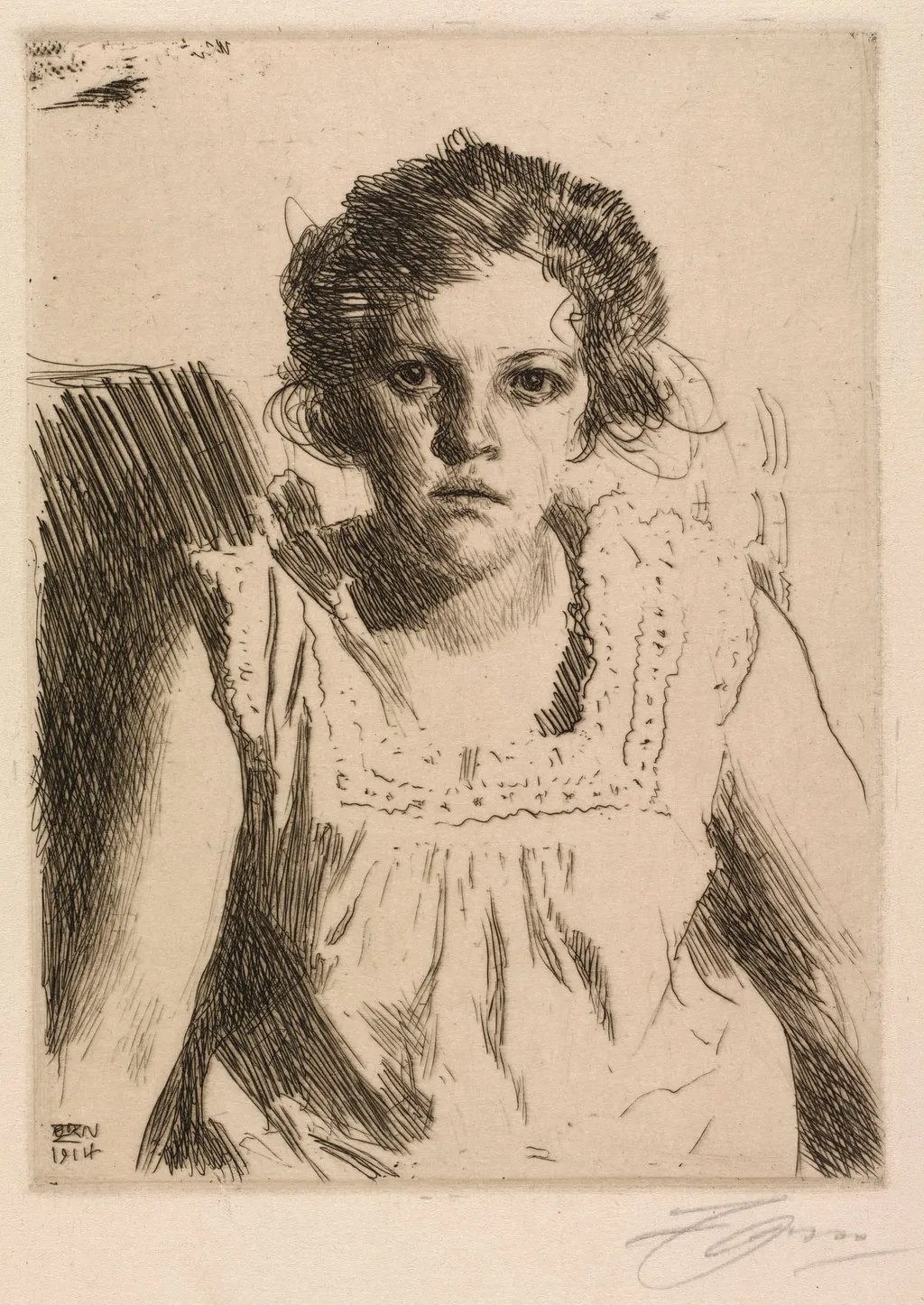
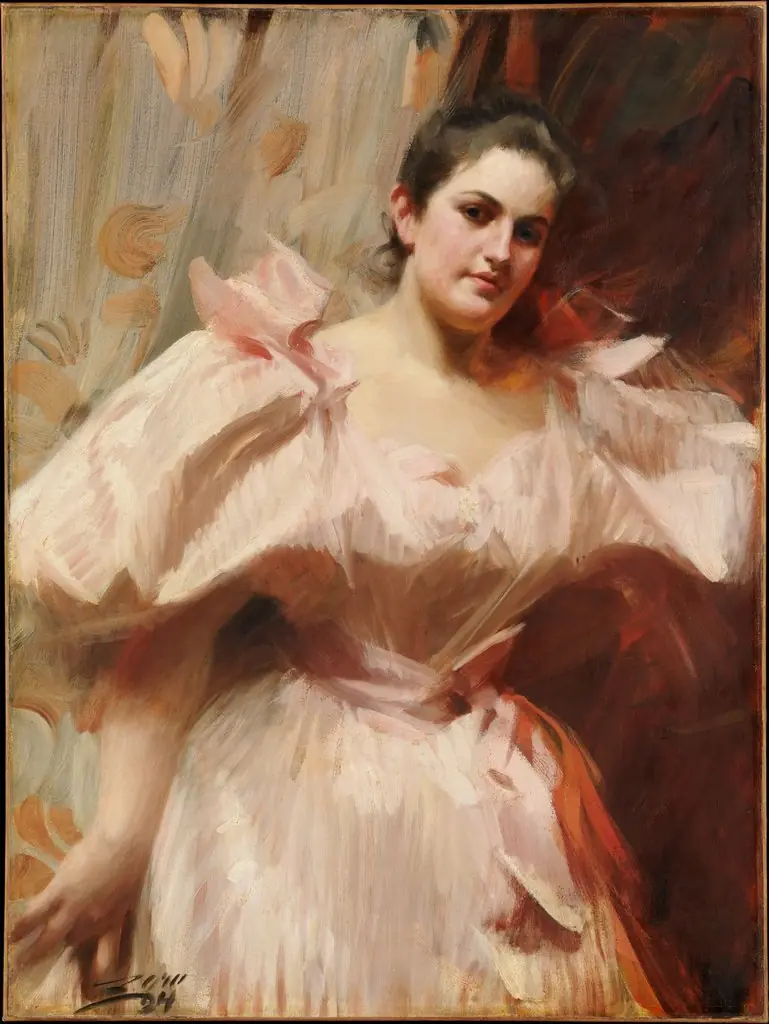
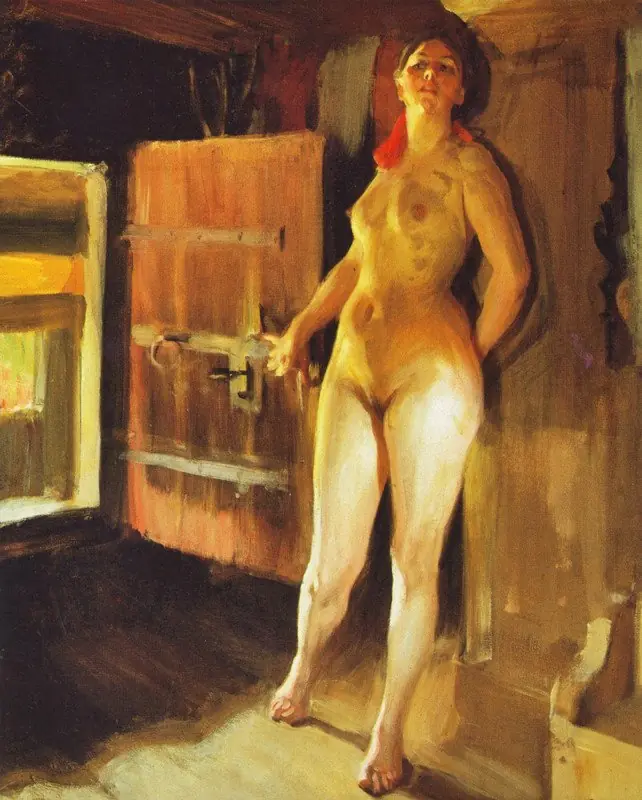
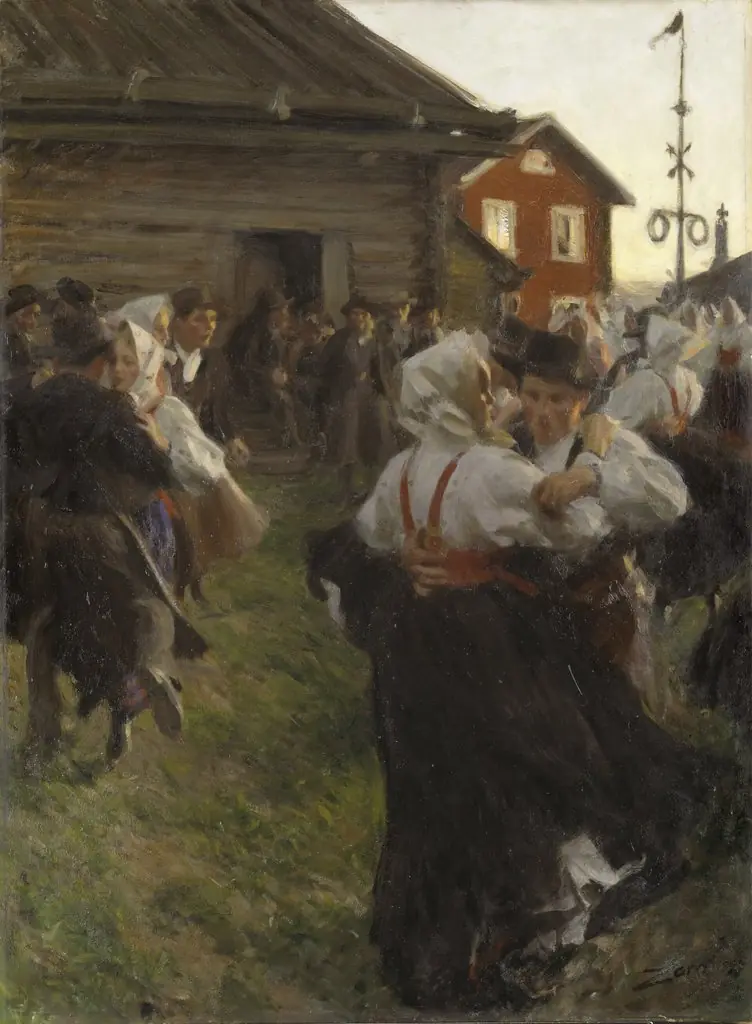
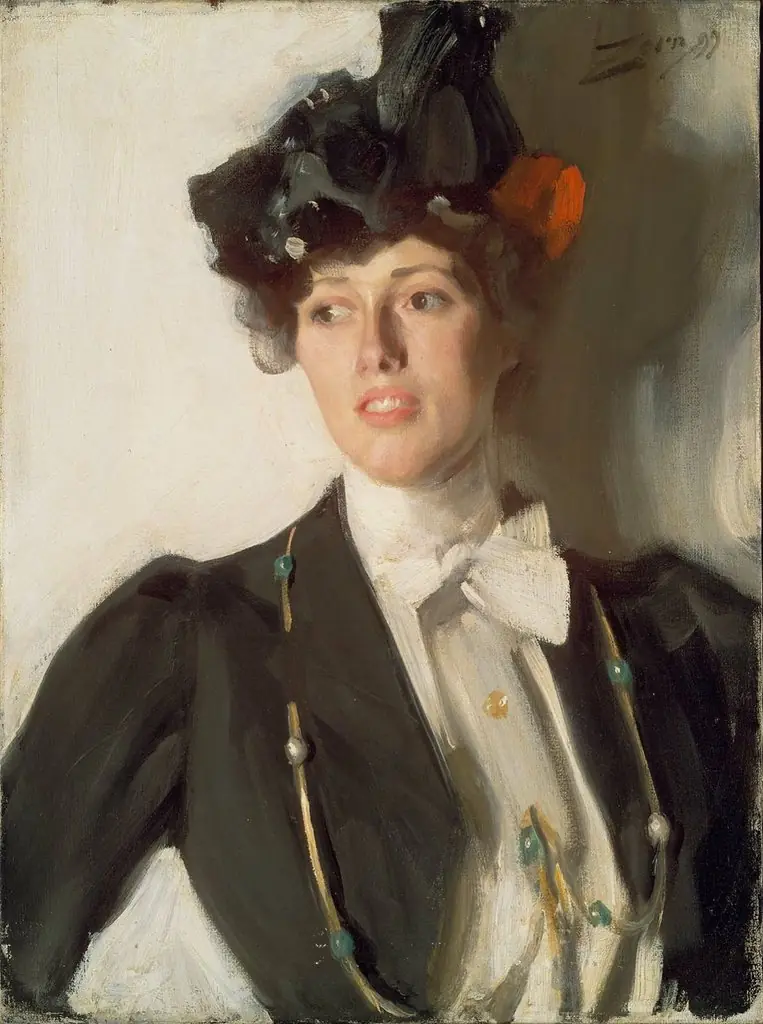
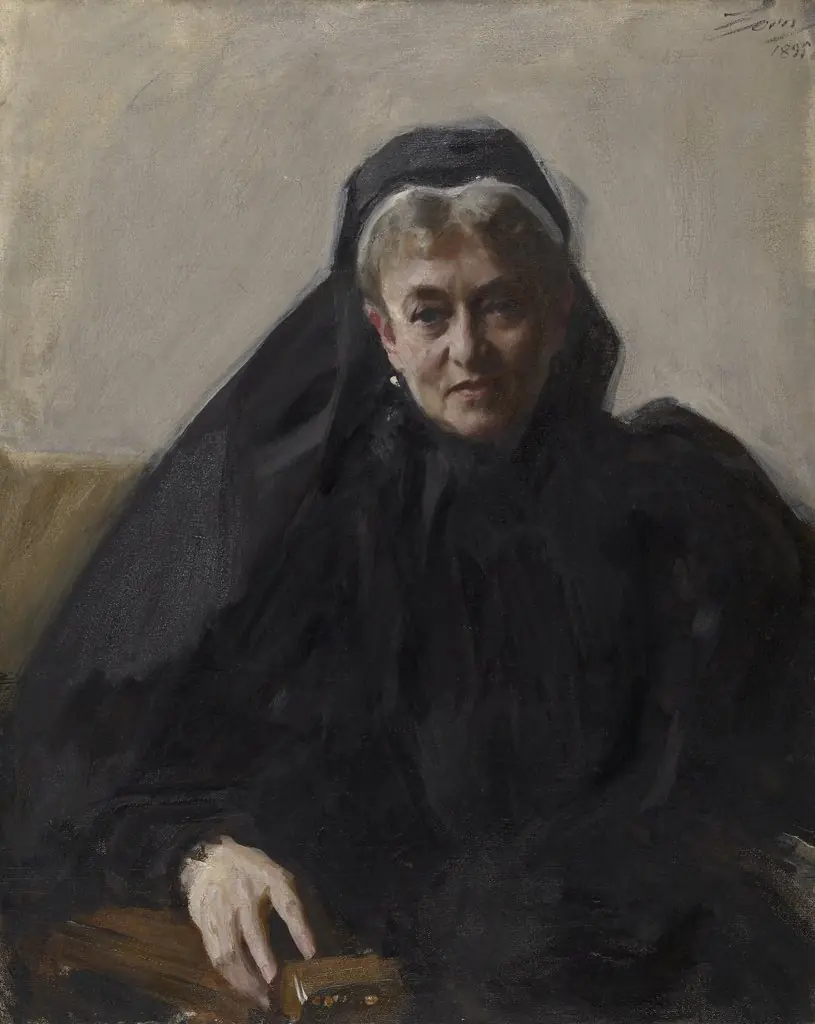
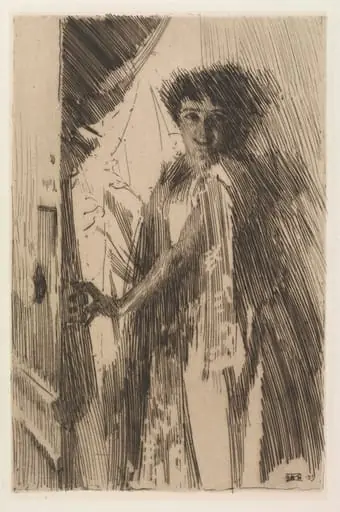
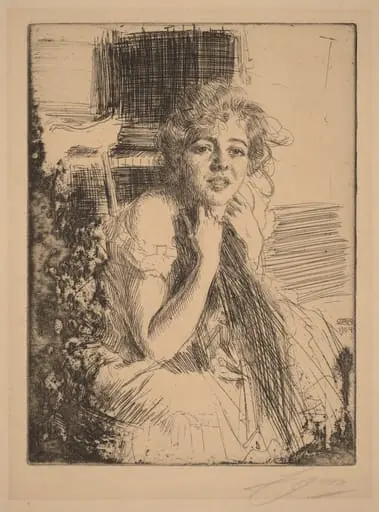
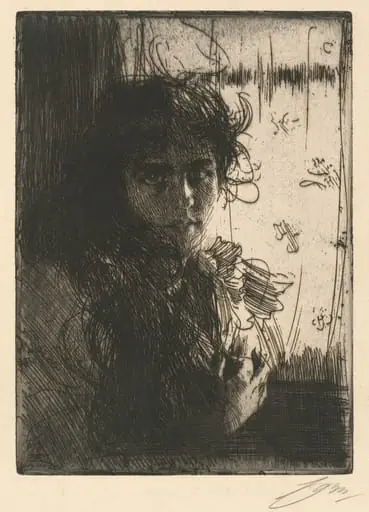
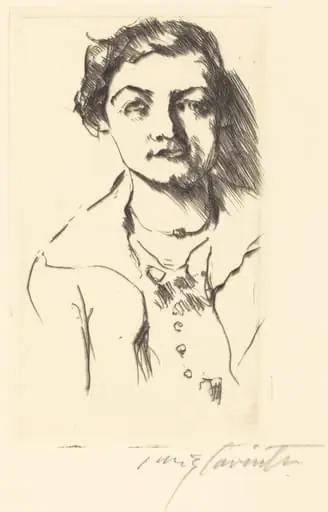
Frida is a print by Anders Zorn. It dates from 1914 and is held in the collection of the Cleveland Museum of Art.
About this work
The artist used rough, uneven strokes to create shadows and texture, especially on her hair and dress.
This sketch shows a woman’s face and shoulders, drawn in quick, loose lines. Her hair is curly, and she wears a high-necked dress with lace at the collar. The background is mostly blank, with just a few strokes suggesting a dark shape behind her.
The artist used rough, uneven strokes to create shadows and texture, especially on her hair and dress. The sketch feels fast and sketchy, like it was drawn in one go.
Next, check out Anders Zorn (Swedish, 1860–1920) to see more of his work.
Overview
Frida is a 1914 charcoal drawing by Swedish artist Anders Zorn, currently in the collection of The Cleveland Museum of Art. Executed with rapid, expressive strokes, the work captures a woman’s upper torso and face in a single, fluid gesture. The composition is minimal, with no detailed setting, emphasizing the immediacy of the subject’s presence. Zorn’s technique conveys motion and spontaneity, characteristic of his approach to portraiture.
Subject & Meaning
The subject, identified as Frida, is rendered with quiet intimacy. Her high-necked lace collar and curly hair suggest a domestic or personal setting, though no narrative is overtly stated. Zorn focuses on her gaze and the texture of her attire, inviting contemplation rather than storytelling. The absence of context directs attention to her individuality, reflecting Zorn’s interest in capturing character over circumstance.
Technique & Style
Zorn employed loose, uneven charcoal strokes to define form and shadow, particularly in the hair and fabric of the dress. The background is left largely untouched, with only faint indications of depth. This economy of line and tone reflects his mastery of suggestion over detail. The drawing’s urgency and lack of refinement are intentional, aligning with his belief in the expressive power of the sketch.
History & Provenance
Created in 1914, Frida entered The Cleveland Museum of Art’s collection through established acquisition channels, though its earlier ownership history is not publicly documented. As a work from Zorn’s later period, it reflects his continued engagement with intimate portraiture after achieving international acclaim. Its preservation in a major U.S. institution underscores its recognition within broader modernist drawing traditions.
Context
Zorn worked during a time when artists across Europe were redefining portraiture through direct observation and informal techniques. Frida aligns with this trend, echoing the immediacy found in the sketches of Degas or Toulouse-Lautrec. Unlike formal commissioned portraits, this drawing prioritizes personal presence over social status, reflecting a shift toward psychological realism in early 20th-century art.
Legacy
Frida exemplifies Zorn’s enduring influence on modern draftsmanship. His ability to convey depth and personality with minimal means inspired later generations of portraitists. Though not widely exhibited, the drawing remains a key example of his commitment to the sketch as a finished artistic statement, bridging academic tradition and modern spontaneity.
Artist & collection

Artist
Anders Leonard Zorn was born in February 1860 in Mora, Dalarna, the illegitimate son of a Bavarian brewer and a Swedish farmer's daughter; his mother died shortly after his birth, and his grandparents raised him.