Artwork
Watlington
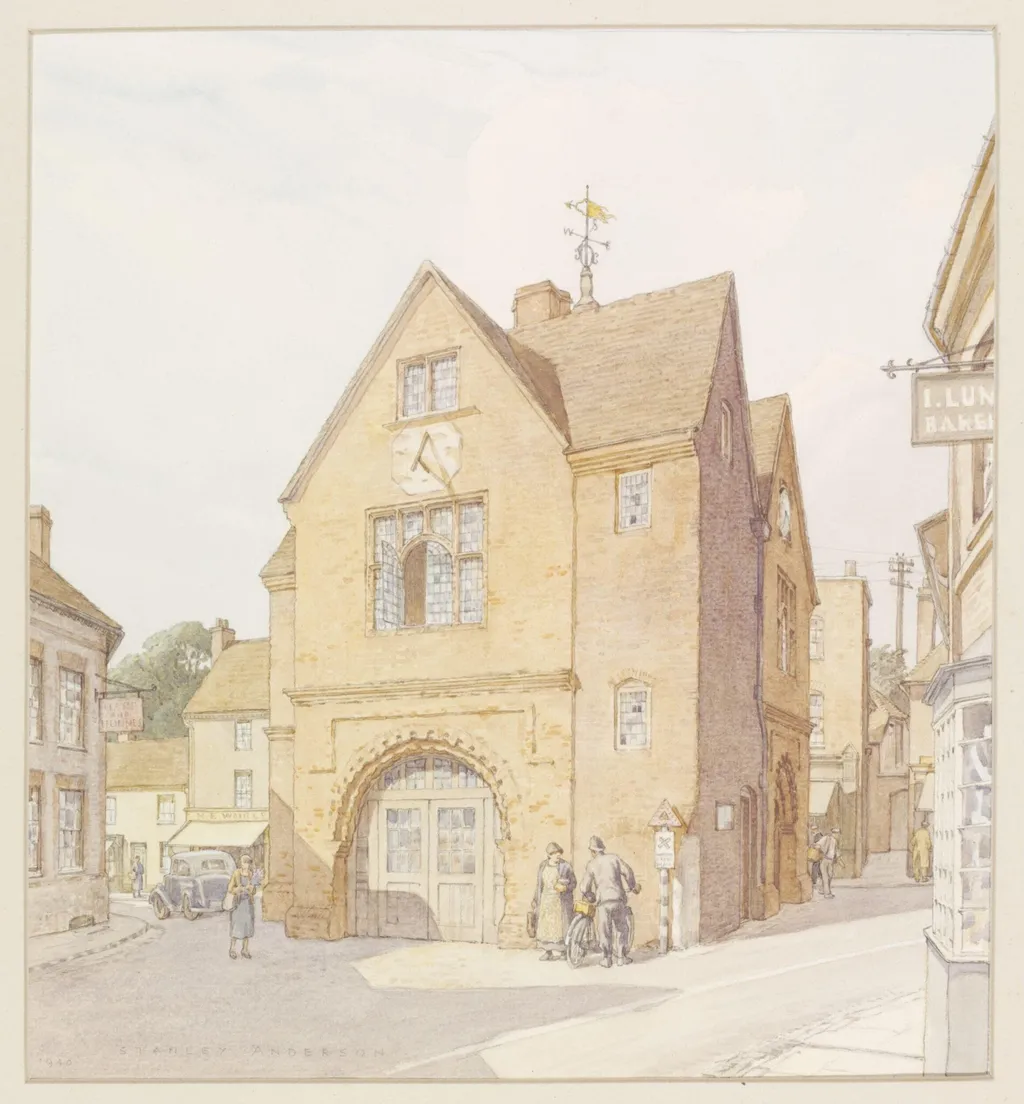
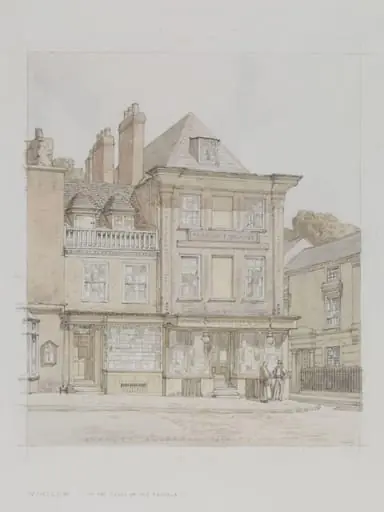
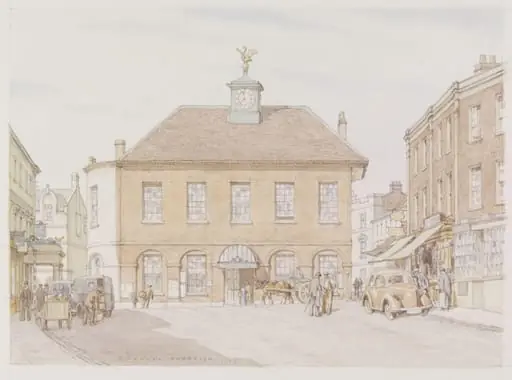
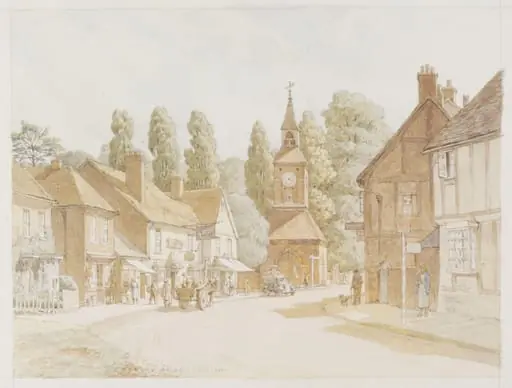
Watlington is a watercolor work on paper by Anderson. It dates from 1940 and is held in the collection of the Victoria and Albert Museum.
About this work
Overview
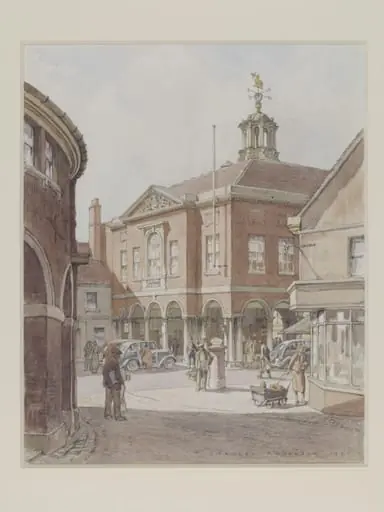
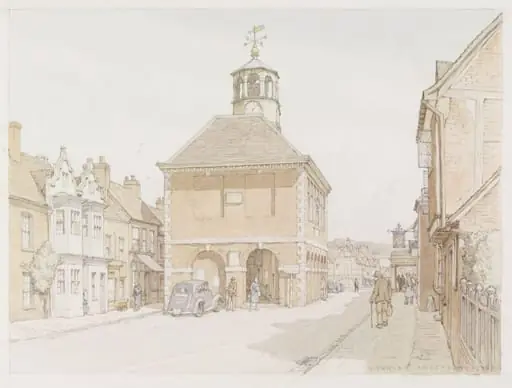
This 1940 watercolour by Anderson portrays the town hall of Watlington, a modest English market town. The composition centers on the building’s arched ground‑floor entrance and a sundial positioned on the upper level, set within a tranquil street scene that includes pedestrians, a period automobile, and nearby shops.
Subject & Meaning
The painting captures a moment of everyday civic life, emphasizing the town hall’s architectural details—arched doorway, diamond‑pane windows, steep tiled roof with a weather‑vane—against a backdrop of local commerce. The quiet atmosphere suggests a community pause amid broader wartime uncertainty.
Technique & Style
Anderson employs a restrained palette of warm, muted tones, rendering the stonework and street surface with soft washes that convey gentle daylight. Delicate brushwork defines architectural elements while broader strokes suggest the surrounding urban fabric, creating a balanced, observational tone typical of mid‑century British watercolours.
History & Provenance
The work was produced for the Recording Britain project, a wartime effort funded by the Pilgrim Trust and directed by Sir Kenneth Clark. The scheme commissioned artists to document at‑risk buildings and landscapes, assembling a visual archive of English towns, churches, and rural scenes during World War II.
Context
Recorded alongside other topographical views by prominent watercolourists, this piece reflects the broader aim of preserving cultural heritage threatened by bomb damage and post‑war development. Watlington’s town hall, as rendered here, exemplifies the type of civic architecture the project sought to safeguard through artistic record.
Artist & collection
Artist
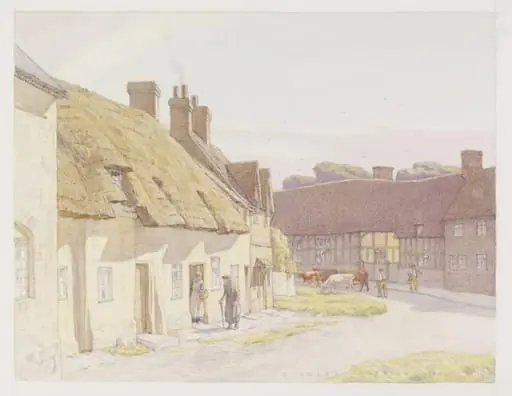
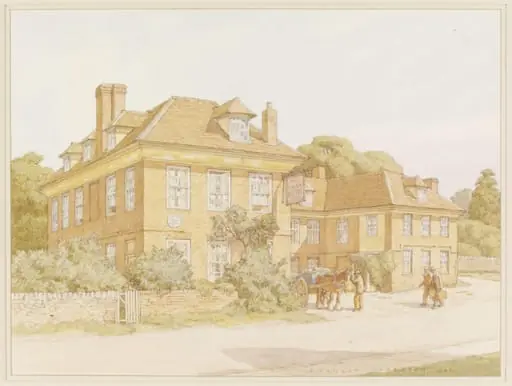
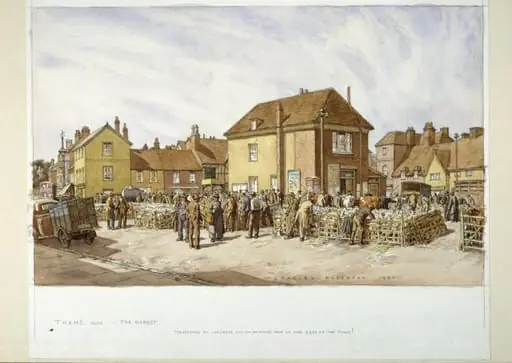
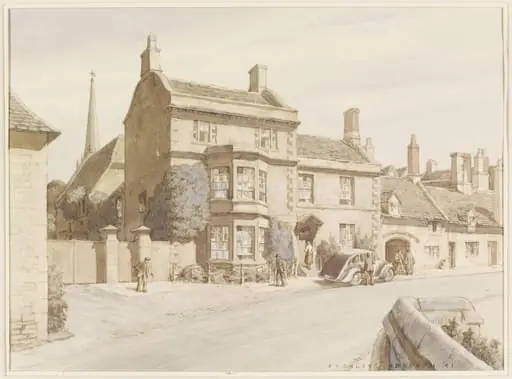
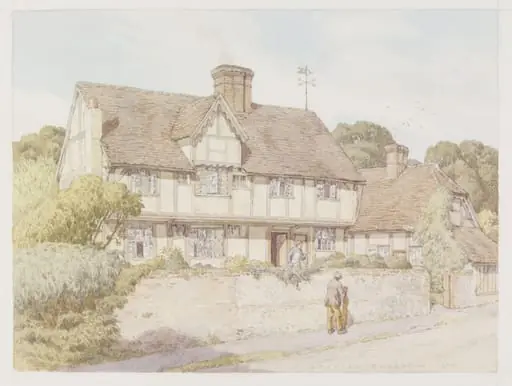
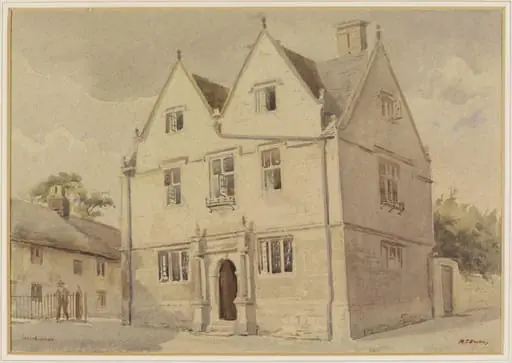
These watercolours capture quiet English villages in the 1940s, their sloping roofs and stone walls standing firm against time.