Artwork
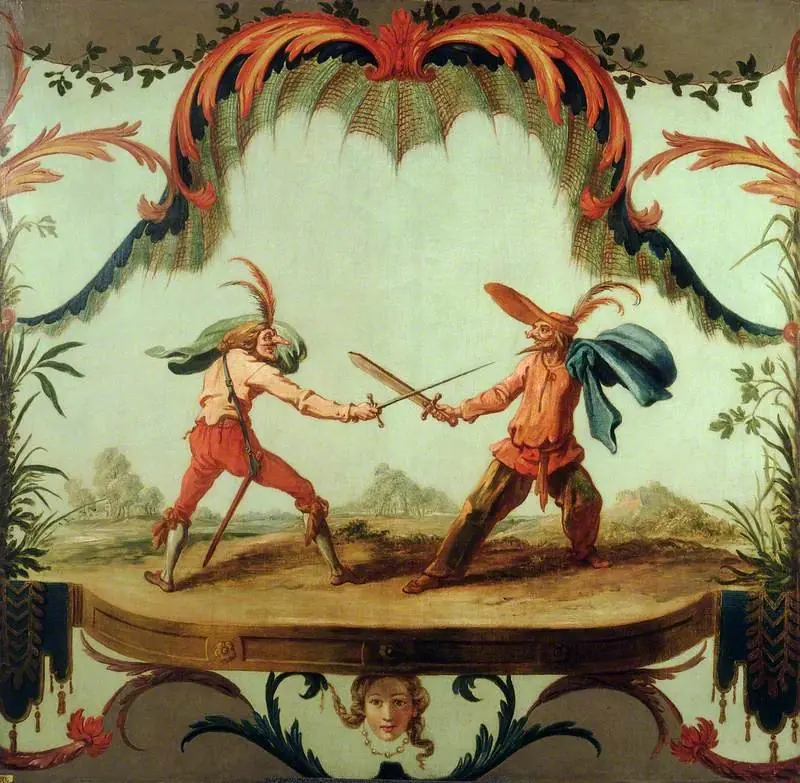
Capitano Bonbardon and Capitano Grillo
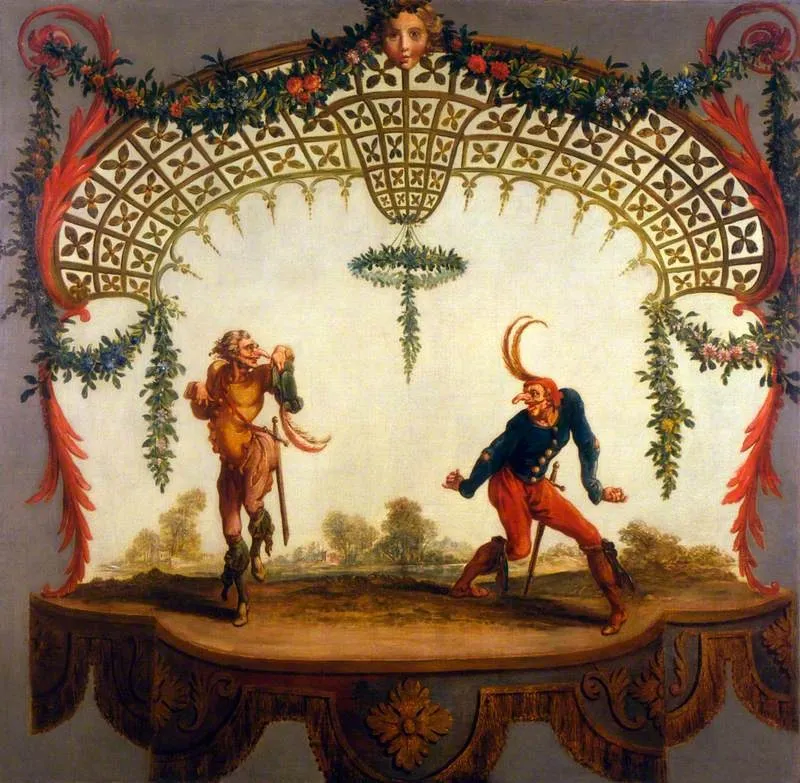
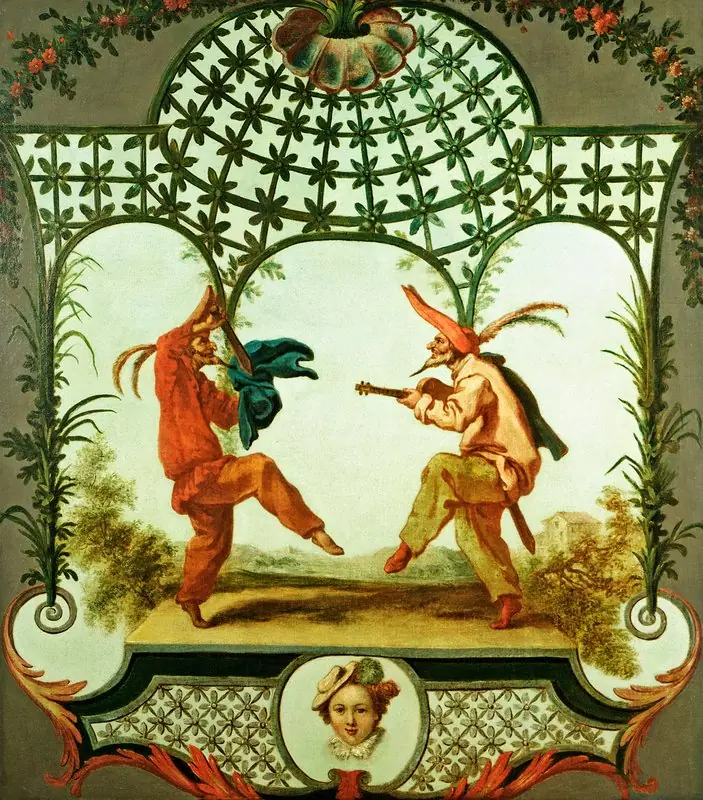
Capitano Bonbardon and Capitano Grillo is an oil painting by the Rococo painting artist Andien de Clermont. It dates from 1742 and is held in the collection of the Victoria and Albert Museum.
About this work
Overview
Painted in 1742 by French artist Andien de Clermont, this oil on canvas depicts two figures identified as Capitano Bonbardon and Capitano Grillo.
Painted in 1742 by French artist Andien de Clermont, this oil on canvas depicts two figures identified as Capitano Bonbardon and Capitano Grillo. Created during Clermont’s time in England, the work reflects his engagement with decorative arts and theatrical themes. It is part of the Victoria and Albert Museum’s collection, where it stands as an example of 18th-century British decorative painting influenced by continental styles.
Subject & Meaning
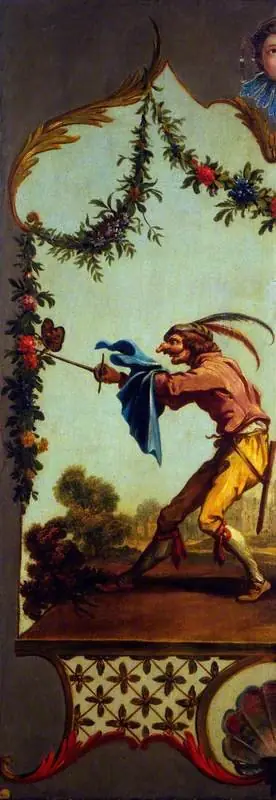
The two men, dressed in vivid, contrasting costumes, appear mid-conversation on a stage-like setting. Their exaggerated features and animated postures suggest a comedic or theatrical role, possibly drawn from Italian commedia dell’arte traditions. The scene evokes performance rather than portraiture, emphasizing character and gesture over individual identity. The setting implies a staged entertainment, aligning with contemporary tastes for lively, ornamental imagery.
Technique & Style
Clermont employed loose, energetic brushwork to convey movement and texture, particularly in the drapery and foliage. Bright, saturated colors—yellow, blue, red—enhance the theatricality, while the ornate floral arch frames the figures like a stage prop. The background’s soft landscape contrasts with the foreground’s detail, creating depth without narrative weight. The style reflects Rococo’s preference for elegance, playfulness, and decorative flourish over formal realism.
History & Provenance
The painting was produced during Clermont’s period working in England, where he contributed to interior schemes for aristocratic homes. Though little is documented about its early ownership, it entered the Victoria and Albert Museum’s collection as part of its broader effort to preserve decorative arts from the 18th century. Its survival reflects its value as a specimen of period theatrical decoration rather than as a major portrait.
Context
In mid-18th-century Britain, there was growing interest in continental theatrical and exotic themes, especially within elite interiors. Clermont’s work, including this piece, catered to this demand through stylized figures and ornamental settings. The painting fits within a broader trend of chinoiserie and singeries, where fantasy and performance replaced strict realism in decorative arts, serving as visual entertainment rather than historical record.
Legacy
While not widely known outside specialist circles, the painting remains a representative example of how French-trained artists adapted their skills to British decorative tastes. It illustrates the fluid boundary between fine art and interior design in the Rococo era. Today, it contributes to scholarly understanding of how theatrical motifs were integrated into domestic spaces during the 18th century.
Artist & collection
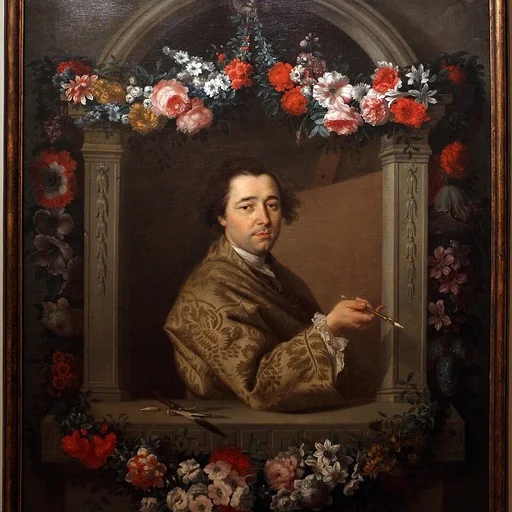
Artist
Andien de Clermont (died 1783) was a French artist who worked in England in the 18th century (c.1716–1756).

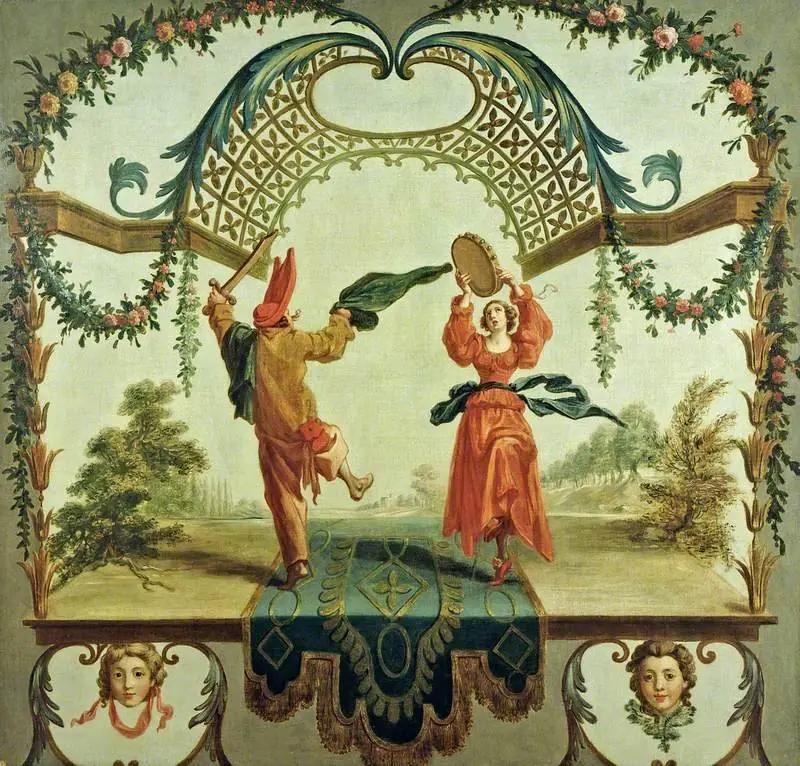 Fracischina and Gian Farina
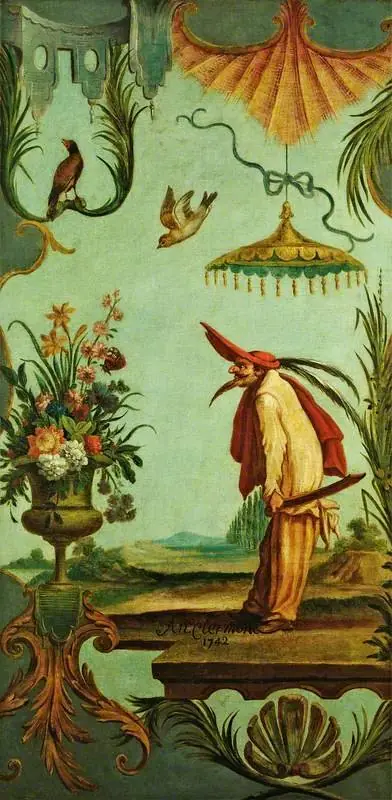 Mestolino
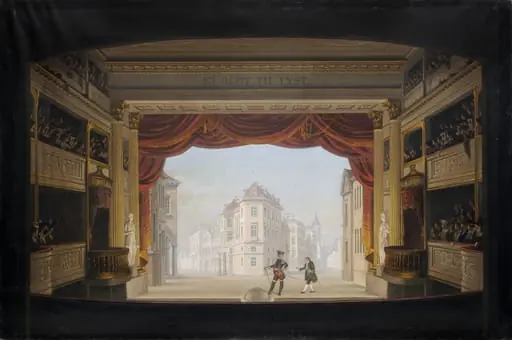 Det indvendige af Det kgl. teater under fremstillingen af Jacob v. Thyboe
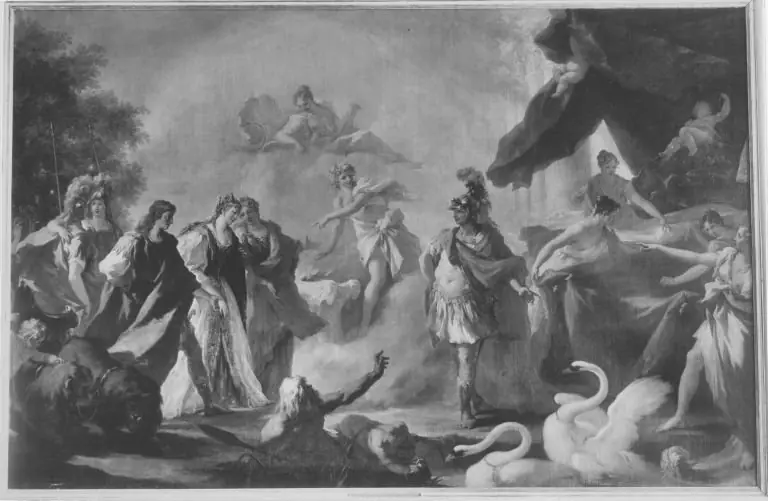 Beilager des Kurfürsten mit Maria Luisa
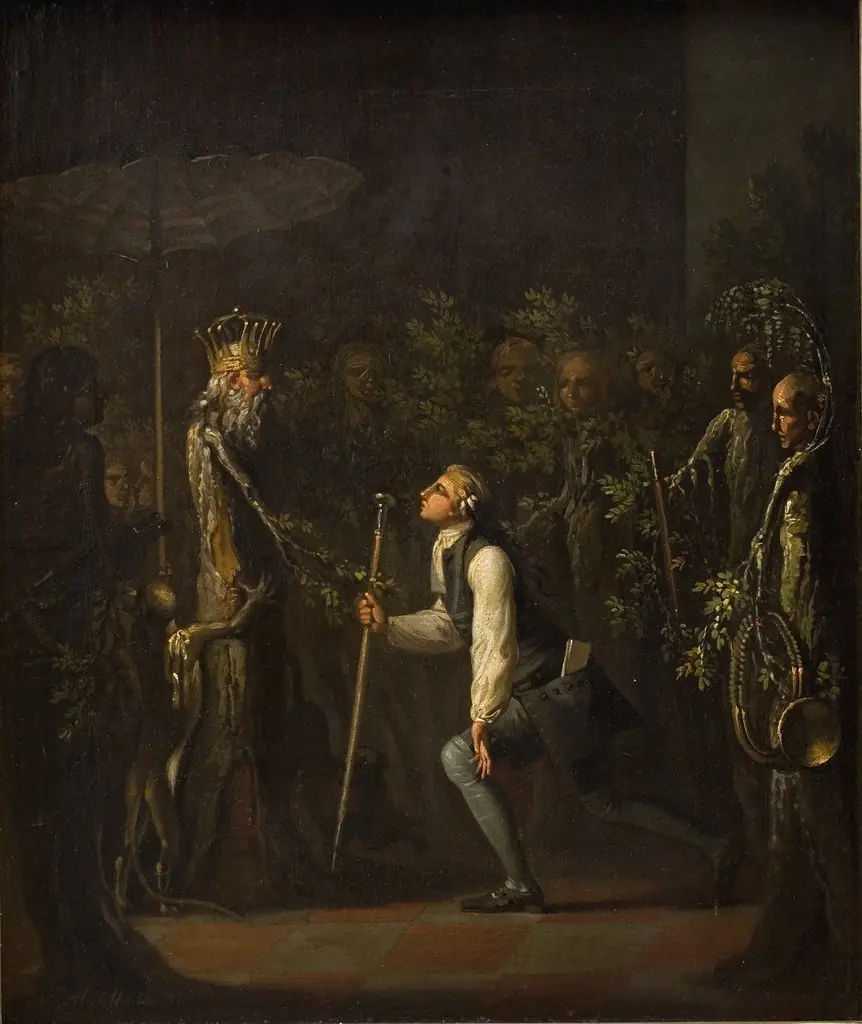 The Potuans are Surprised to see Niels Klim Genuflect in front of the Wise Prince.
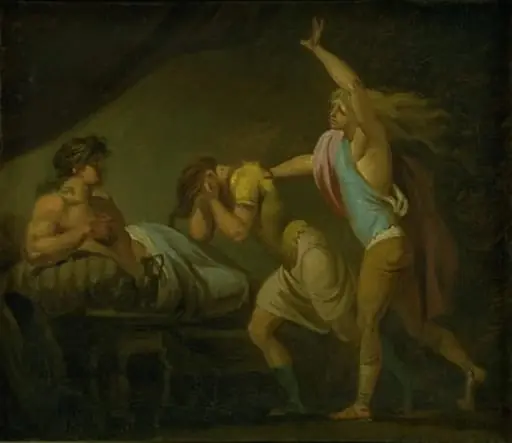 Two Young Men Confessing to Alexander the Great their Conspiracy against Him
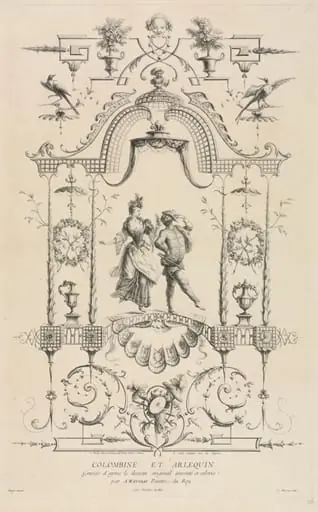 Columbine and Harlequin
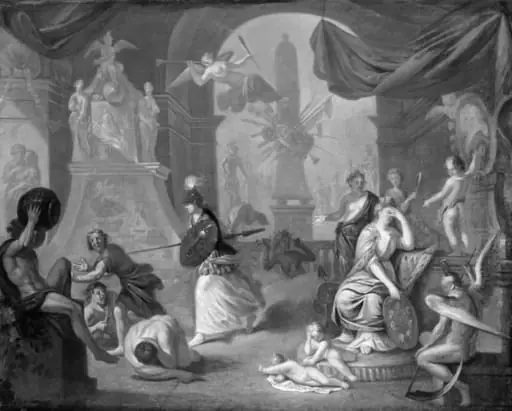 An Allegory
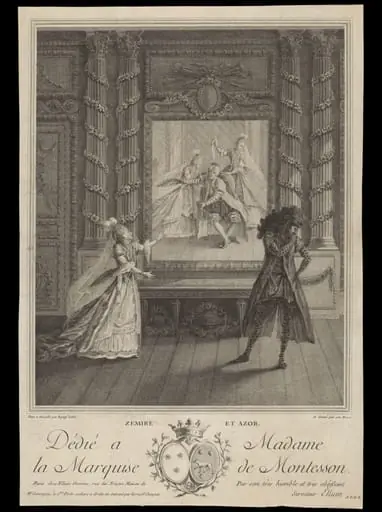 H Beard Print Collection