Artwork
Beilager des Kurfürsten mit Maria Luisa
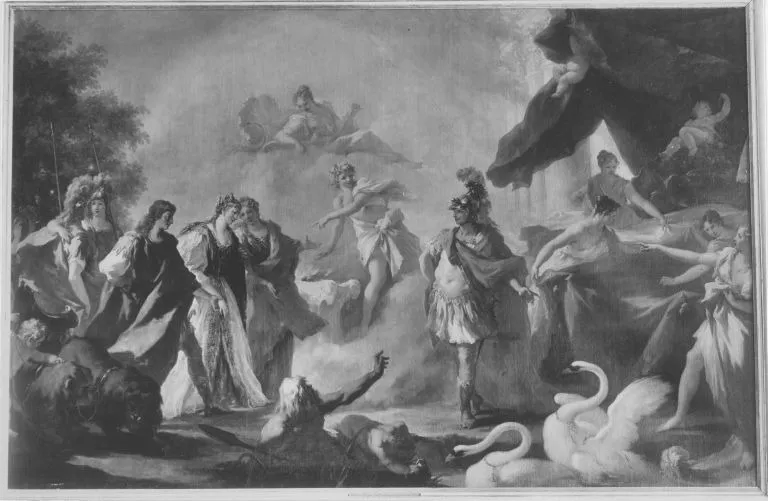
Beilager des Kurfürsten mit Maria Luisa is an unspecified painting by the Rococo painting artist Giovanni Antonio Pellegrini. It dates from 1708 and is held in the collection of the Bavarian State Painting Collections.
About this work
Overview
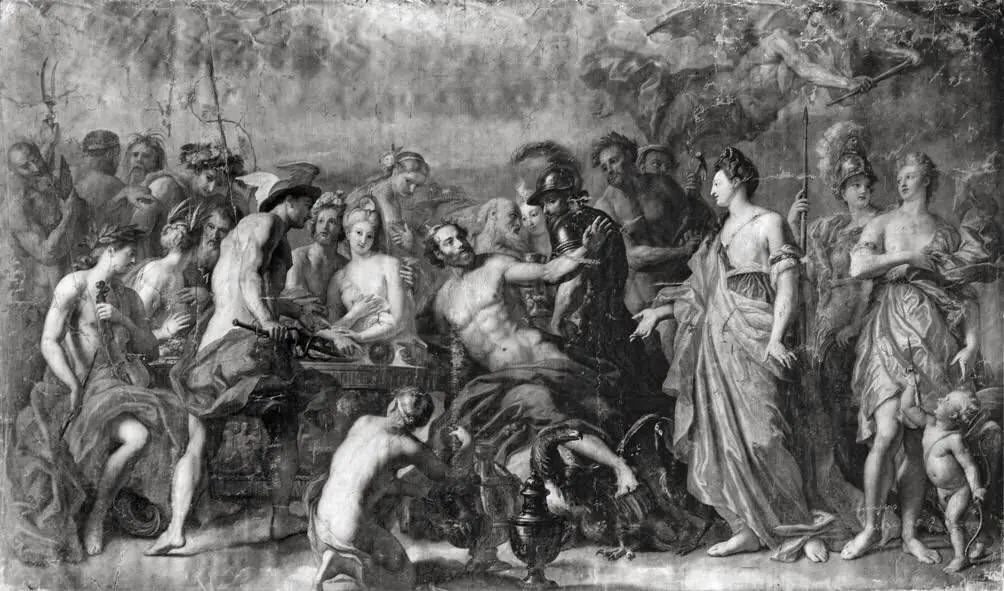
Giovanni Antonio Pellegrini painted *Beilager des Kurfürsten mit Maria Luisa* in 1708. Executed in oil on canvas, the work shows a central male figure in armor flanked by women in elaborate garments, with a swan and a snake positioned in the foreground. The composition balances narrative focus on the central figure with surrounding symbolic elements, creating a scene of ceremonial tension.
Subject & Meaning
The central figure is identified as a prince‑elector, likely in the act of a formal betrothal or marriage ceremony with Maria Luisa.
The central figure is identified as a prince‑elector, likely in the act of a formal betrothal or marriage ceremony with Maria Luisa. The surrounding women may represent attendants or allegorical virtues, while the swan, a traditional emblem of fidelity, and the snake, often linked to danger or deceit, introduce contrasting symbolic layers that hint at the political and personal stakes of the union.
Technique & Style
Pellegrini employs a palette that shifts from luminous blues and golds in the background to richer, earthier tones on the figures, achieving depth through layered glazing. The brushwork combines the grand compositional gestures of Baroque masters with the decorative lightness associated with early Rococo, reflecting influences from Veronese’s coloristic brilliance and Cortona’s dynamic spatial arrangements.
History & Provenance
Completed in 1708, the painting entered the collection of the Alte Pinakothek in Munich, where it remains on display. Pellegrini’s itinerant career, which took him to courts across Europe, facilitated the work’s acquisition by a German patron, linking the piece to the broader network of aristocratic commissions that circulated his oeuvre.
Context
Created during a period when Venetian artists were expanding beyond their native city, the work illustrates the cross‑regional appeal of Italian Baroque aesthetics. Pellegrini’s synthesis of Venetian colorism with the theatricality favored by northern courts anticipates the later developments of the Rococo, positioning him as a transitional figure between the high Baroque and the lighter, more ornamental style of the mid‑18th century.
Artist & collection
Artist
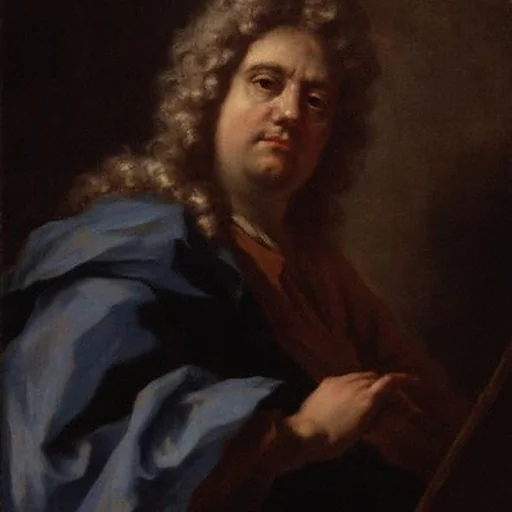
Giovanni Antonio Pellegrini (29 April 1675 – 2 or 5 November 1741) was one of the leading Venetian history painters of the early 18th century.

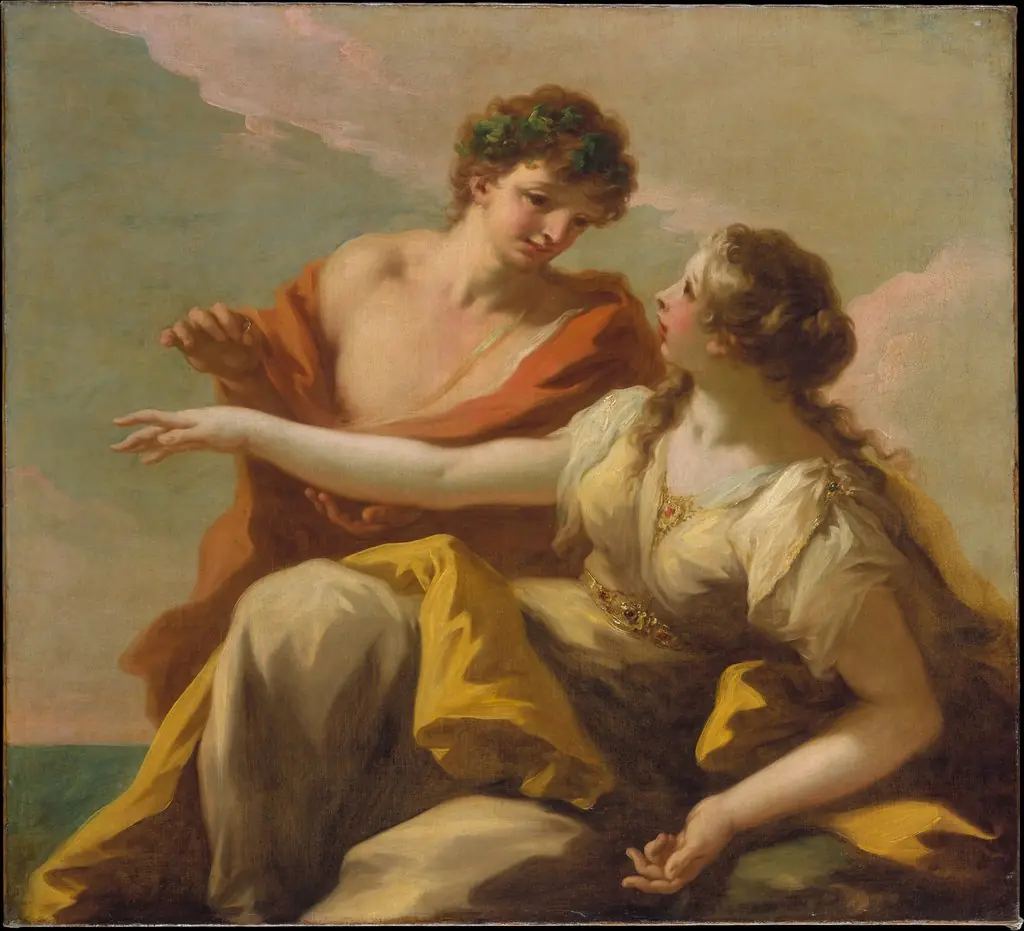 Bacchus and Ariadne
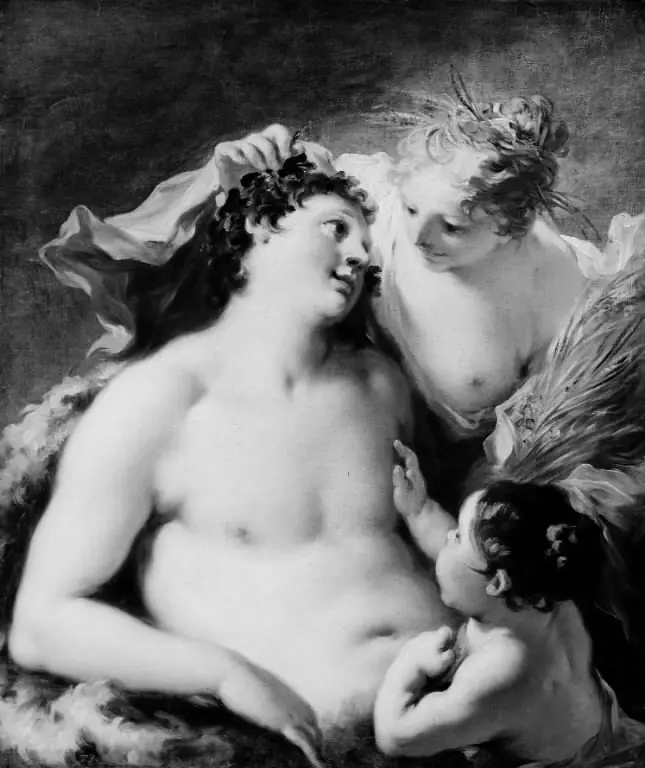 Ceres, Bacchus and Cupid
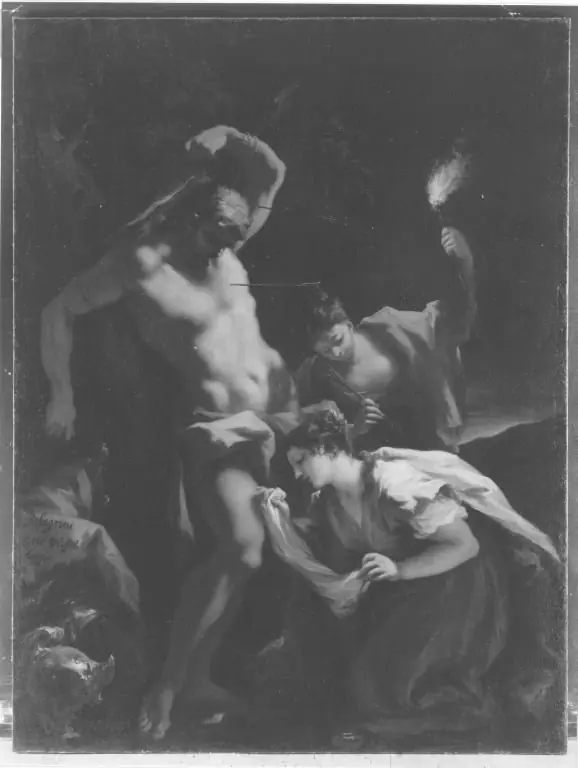 Rettung des hl. Sebastian durch Irene
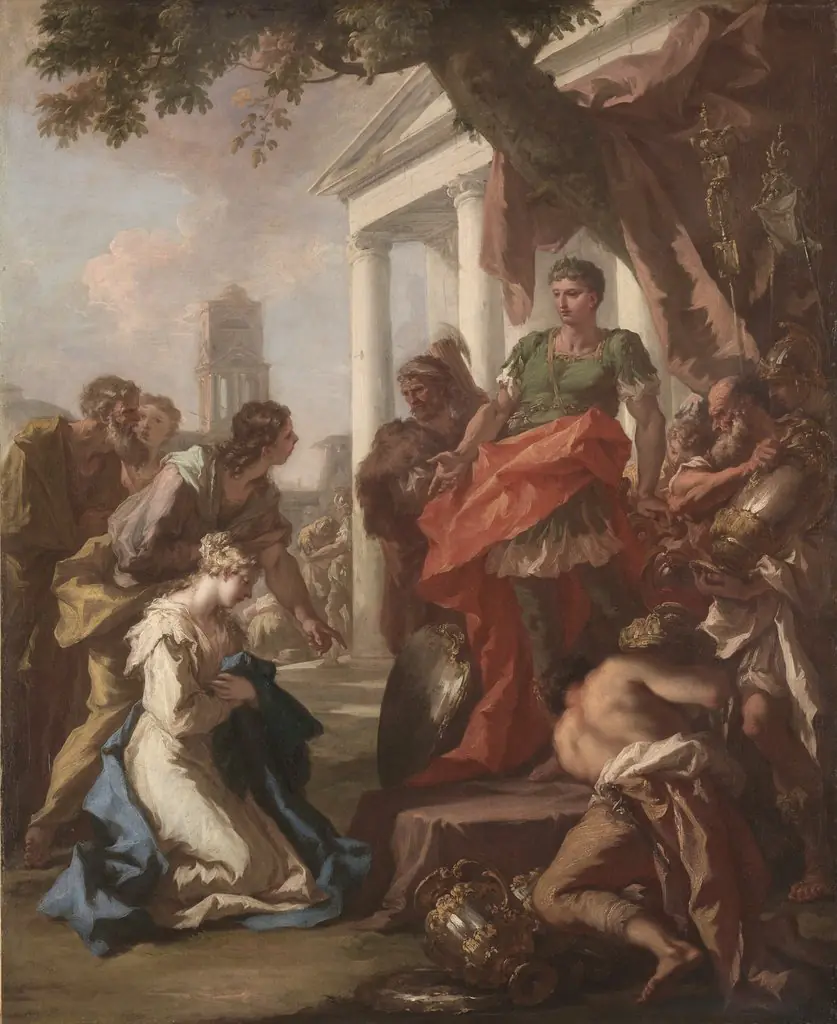 The Continence of Scipio
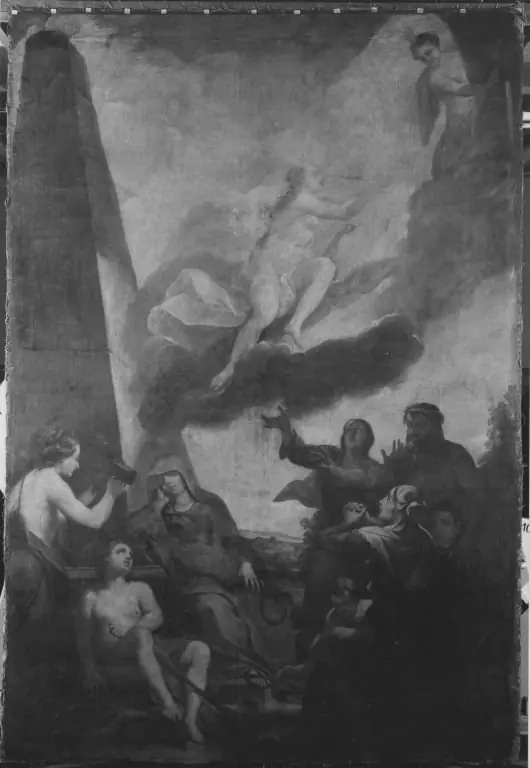 Allegorie auf den Tod einer Fürstin
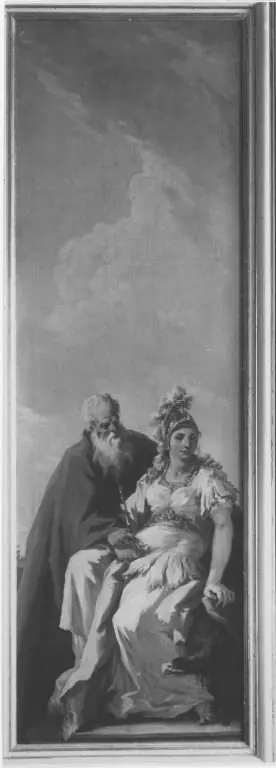 Allegorie: Ein alter Mann ergreift das Szepter
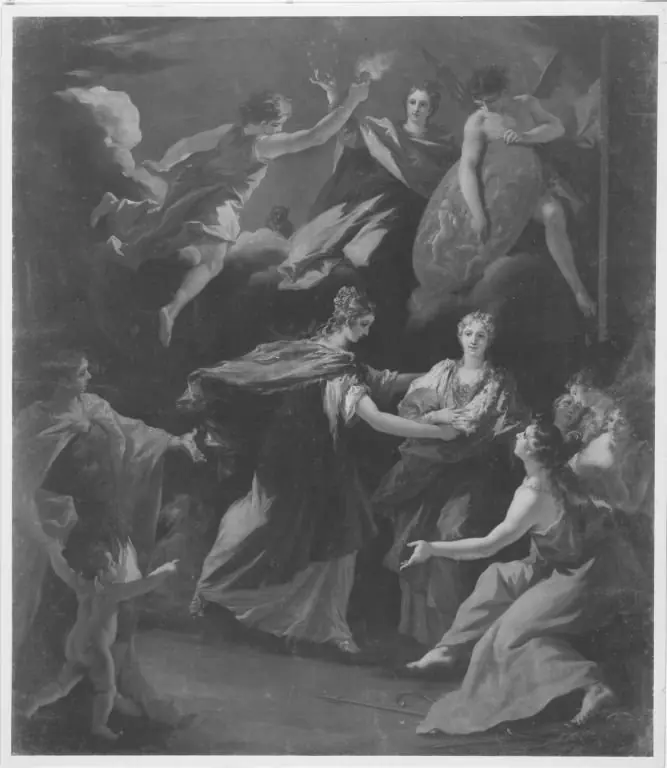 Begrüßung der Kurfürstin Maria Luisa von Toskana
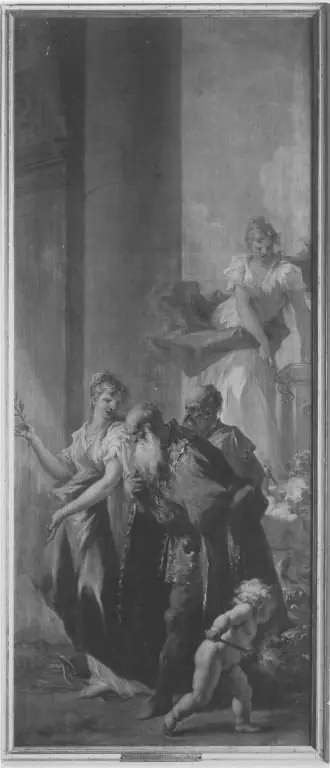 Allegorie der Befreiung vom Joch des Islam (Frieden und Glück unter Johann Wilhelm von der Pfalz)
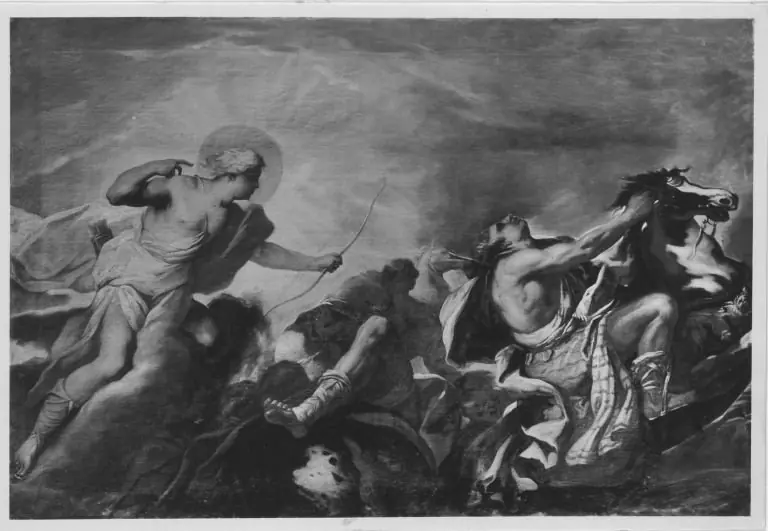 Apollo tötet die Kinder der Niobe
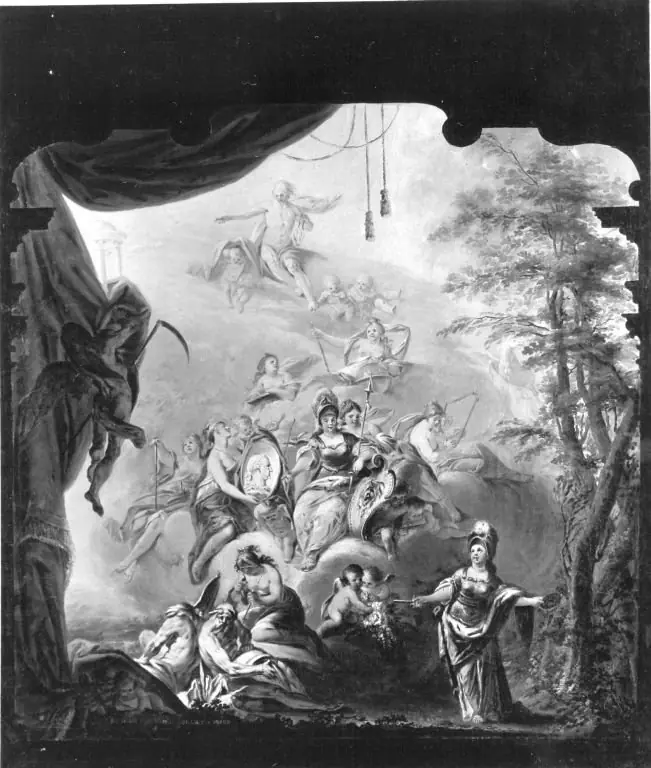 Verherrlichung des Kurfürsten Karl Theodor von der Pfalz
 Enthauptung Johannes des Täufers
 Nymphs Surprised by Satyrs
 Landscape with Diana and Nymphs
 Hunting Party with Diana
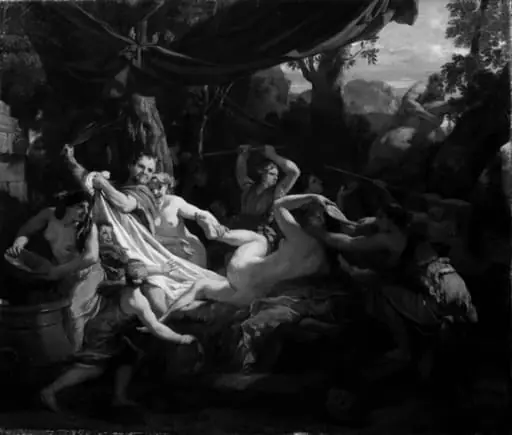 Nymphs Surprised by Satyrs
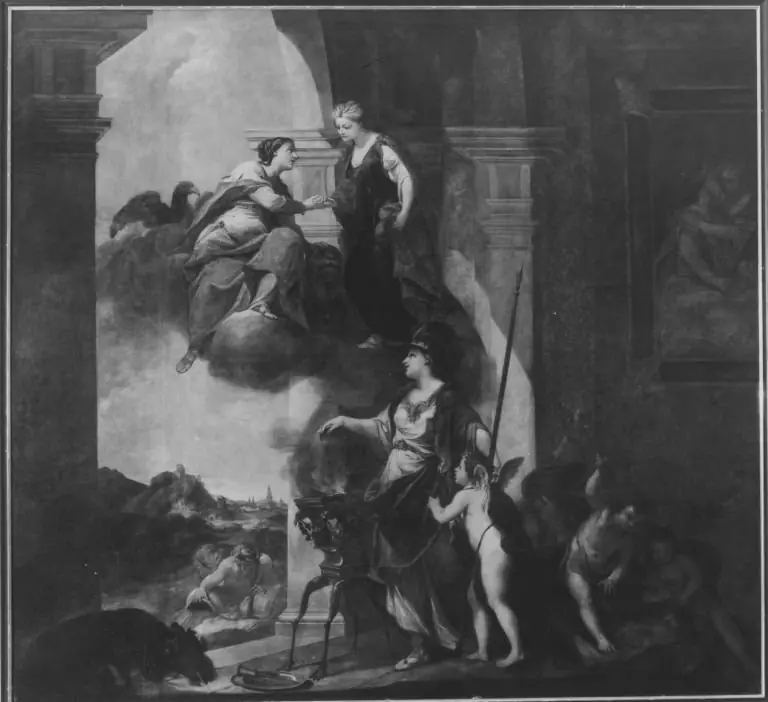 Minerva von Hymen Begleitet
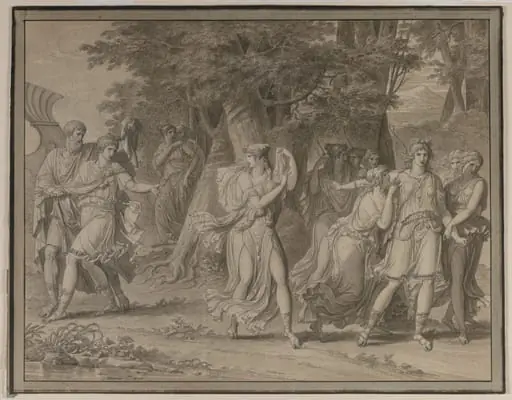 Telemachus, Urged by Mentor, Leaving the Island of Calypso
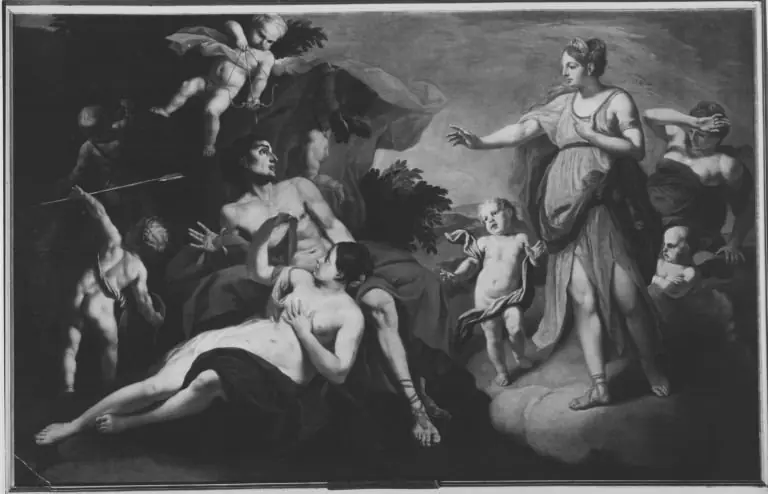 Fehltritt der Kallisto
 Christian VII som kunstens og videnskabens beskytter. Allegori
 Der Erisapfel