Artwork
Goats
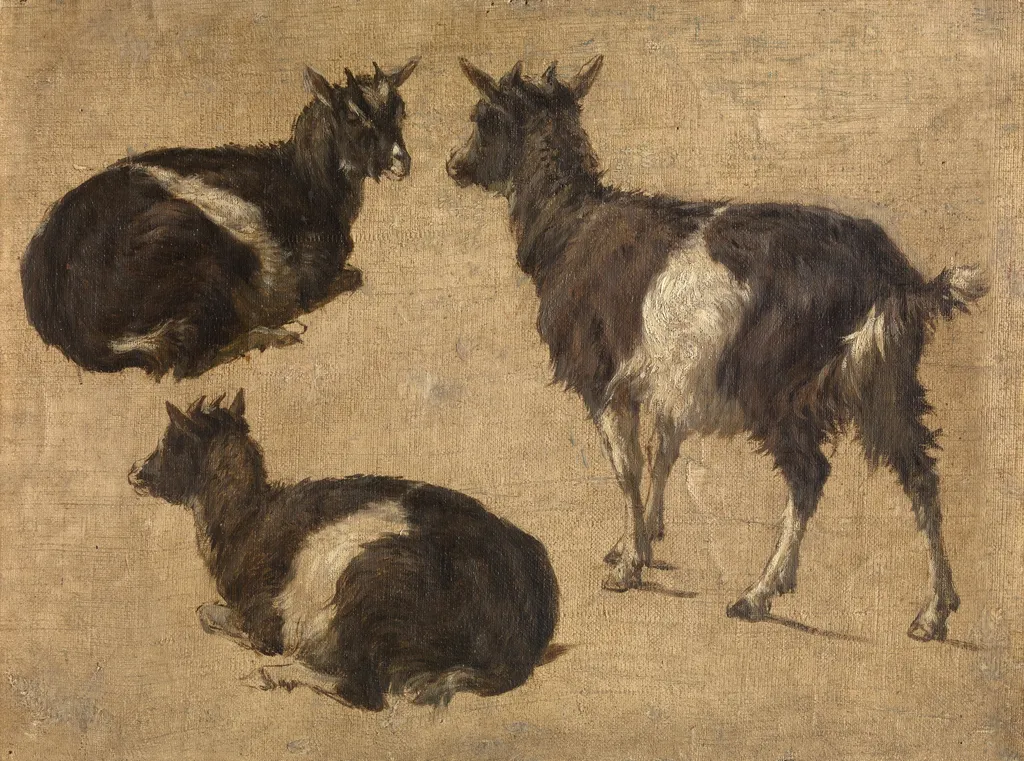
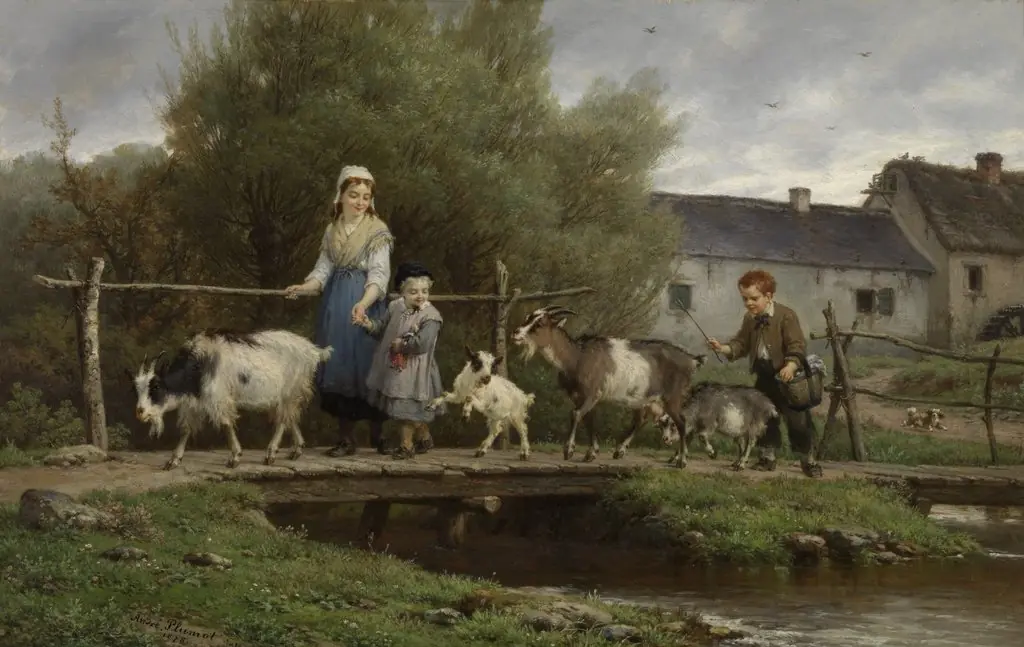
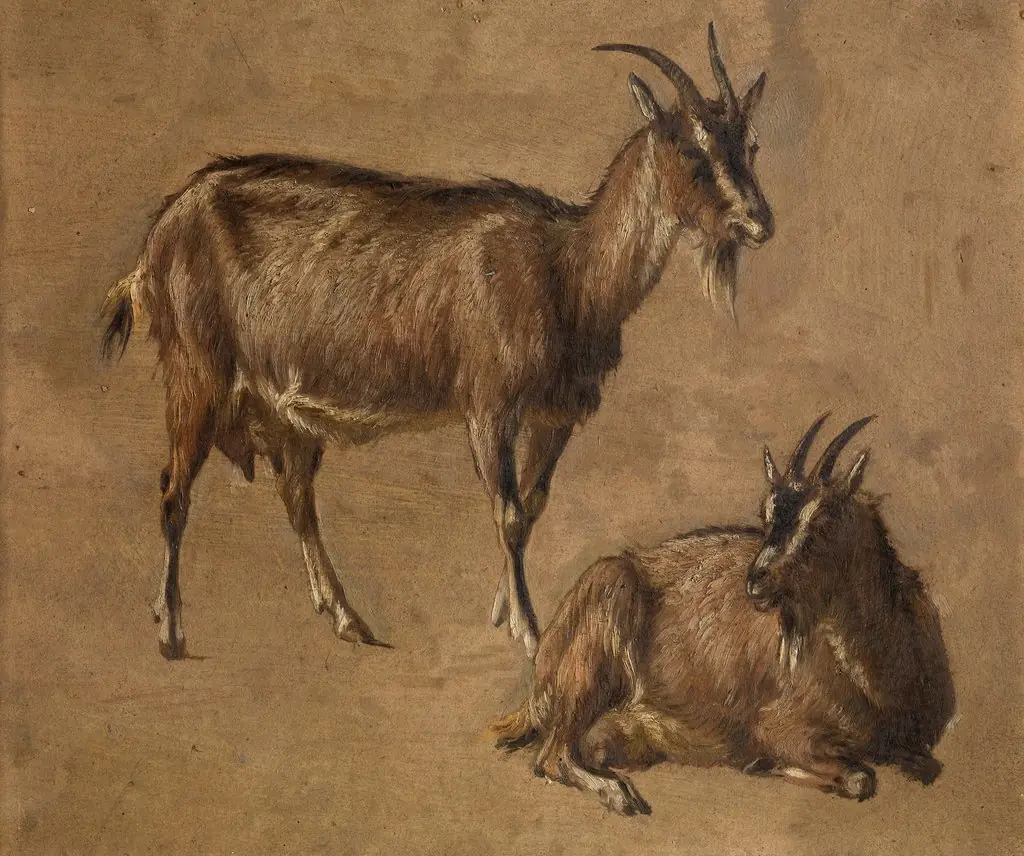
Goats is an unspecified painting by André Plumot. It dates from 1877 and is held in the collection of the Royal Museum of Fine Arts Antwerp.
About this work
Overview
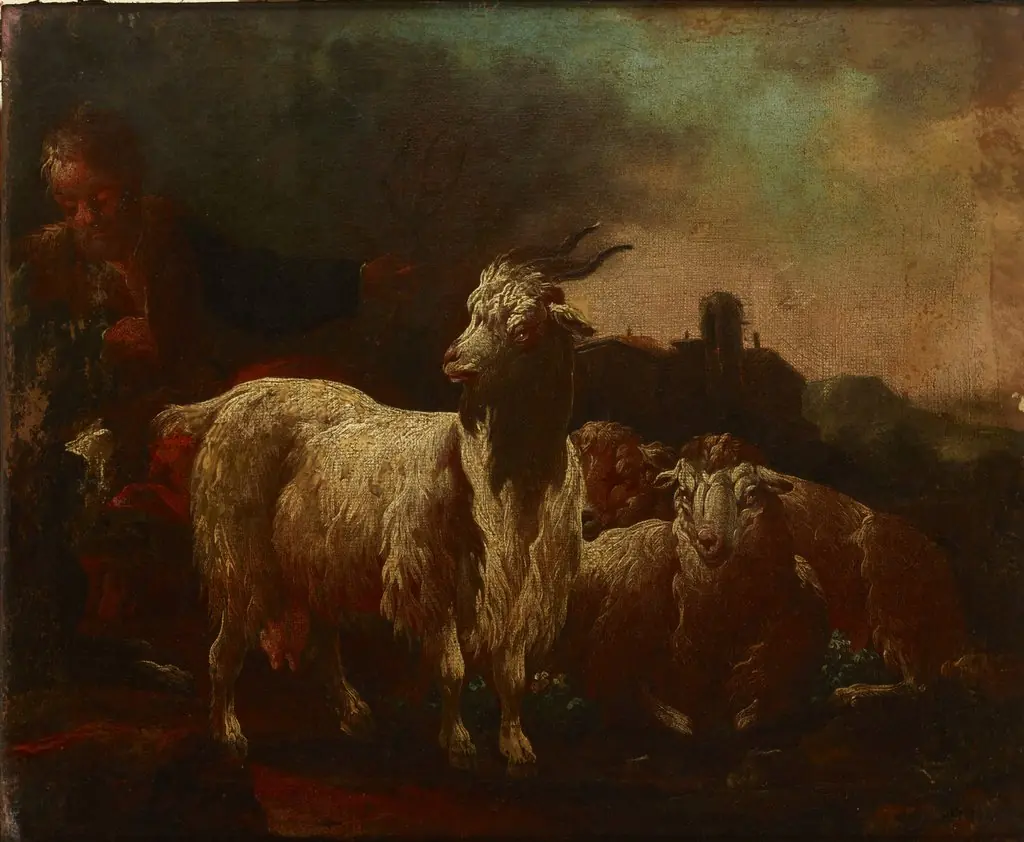
The palette is restrained, with the animals' black-and-white markings contrasting against a muted, earth-toned background.
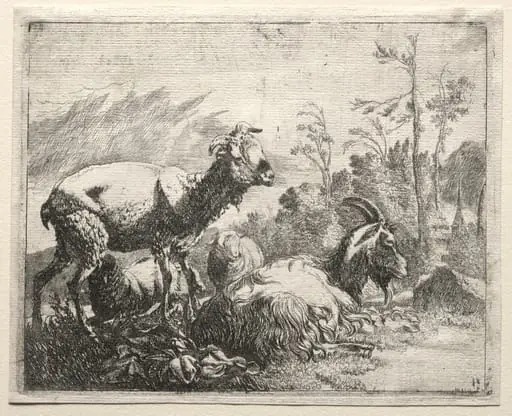
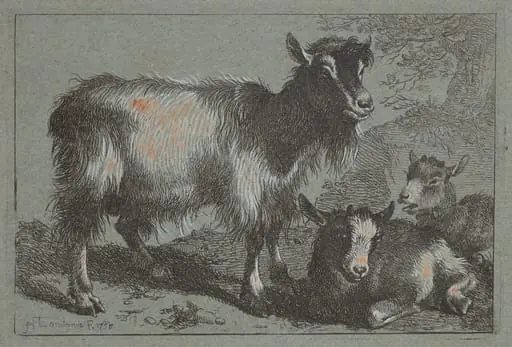
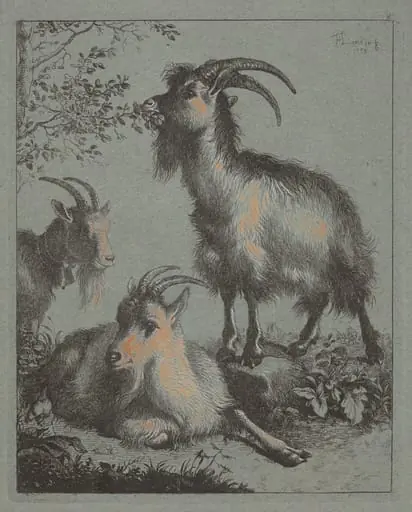
Painted around 1877 by André Plumot, Goats is a quiet study of three domesticated animals rendered in oil on canvas. The work resides in the collection of the Royal Museum of Fine Arts Antwerp. Its composition centers on the natural postures of the goats, arranged to suggest a moment of rest rather than action. The palette is restrained, with the animals' black-and-white markings contrasting against a muted, earth-toned background.
Subject & Meaning
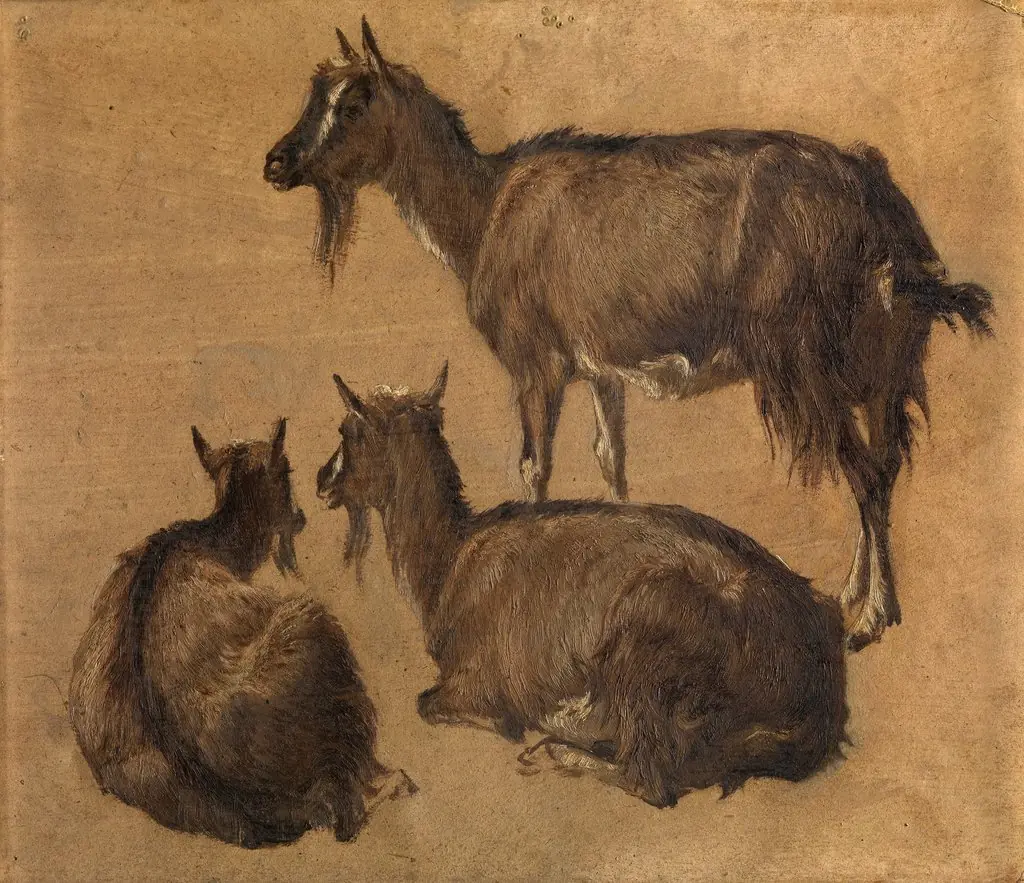
The painting presents three goats in varying states of repose: seated, standing, and recumbent. Their calm demeanor and individualized postures invite contemplation of animal life beyond utility or symbolism. There is no narrative or allegorical intent; instead, the focus lies in the quiet dignity of ordinary creatures. The absence of human figures or landscape elements reinforces the goats as the sole subjects of observation.
Technique & Style
Plumot employs a precise, observational approach, rendering each goat’s fur with careful brushwork that suggests texture and volume. Facial expressions are subtly differentiated, conveying individual temperament without anthropomorphism. The background, a soft brown wash, lacks detail, allowing the animals to dominate the space. Light falls evenly, avoiding dramatic shadows, which supports the painting’s unembellished realism.
History & Provenance
The painting entered the Royal Museum of Fine Arts Antwerp’s collection in the late 19th century, likely through acquisition or donation. Its early history prior to museum ownership remains undocumented. Unlike Plumot’s more widely known works, Goats was never exhibited publicly beyond institutional settings, suggesting it was considered a personal or academic study rather than a commercial piece.
Context
In the late 1870s, European artists increasingly turned to rural and pastoral subjects as industrialization reshaped society. Plumot’s focus on livestock aligns with this trend, though his approach lacks the sentimentality or romanticism found in some contemporaries. His work reflects a broader interest in naturalism, emphasizing direct observation over idealized representation within the academic tradition.
Legacy
Goats remains a modest but representative example of Plumot’s animal studies, illustrating his commitment to quiet realism. While not widely reproduced or critically analyzed, it contributes to understanding the breadth of 19th-century Belgian painting beyond grand historical or religious themes. The work endures as a quiet testament to the artist’s attention to the ordinary.
Own this work as a print
Artist & collection