Artwork
Portrait of a Woman
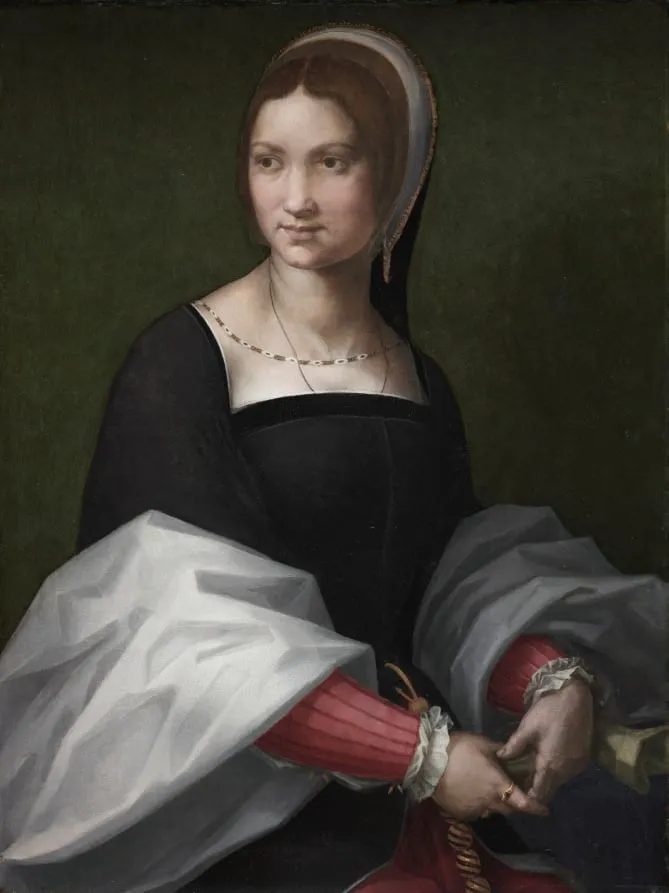
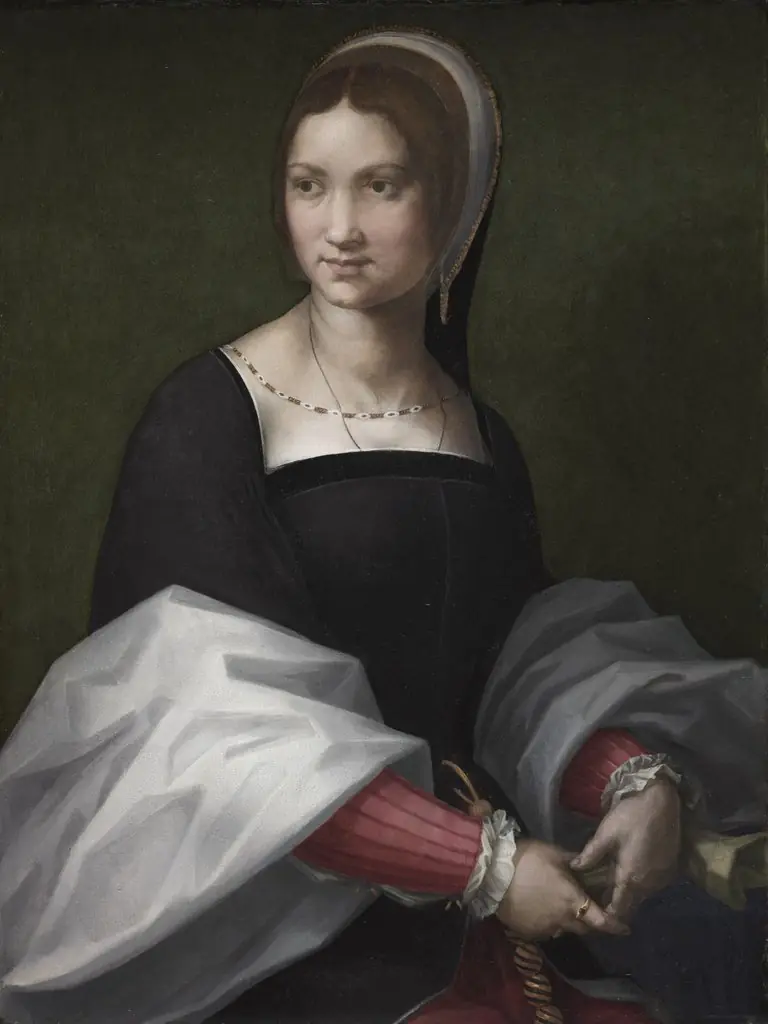
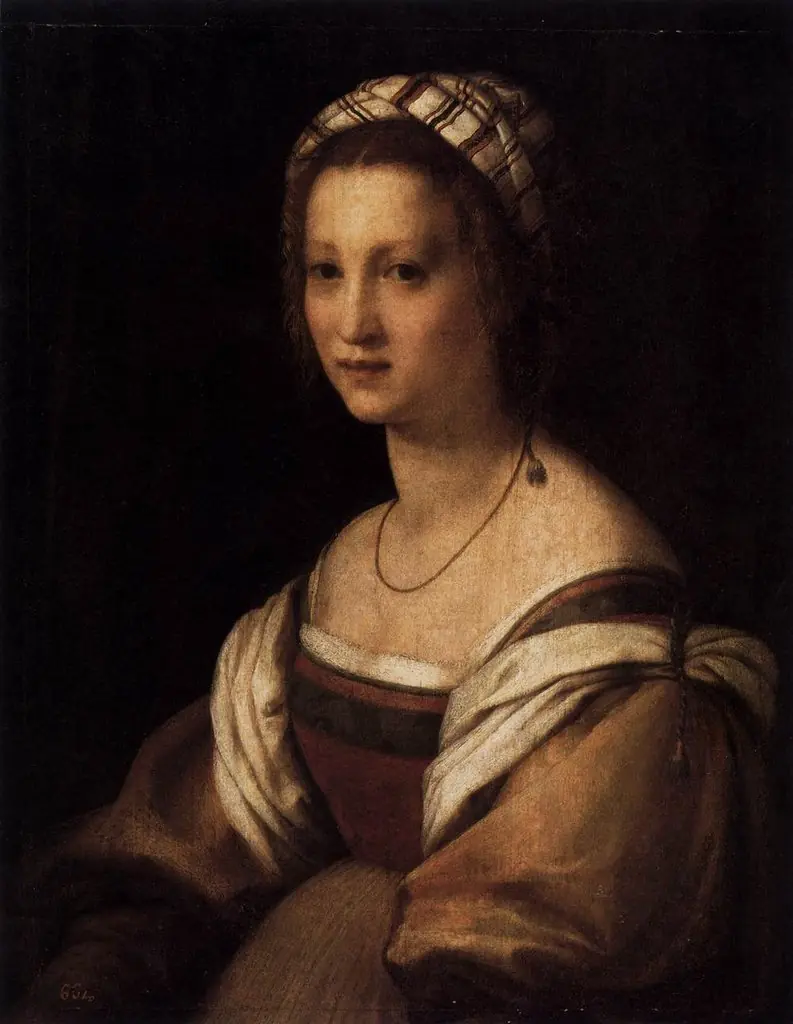
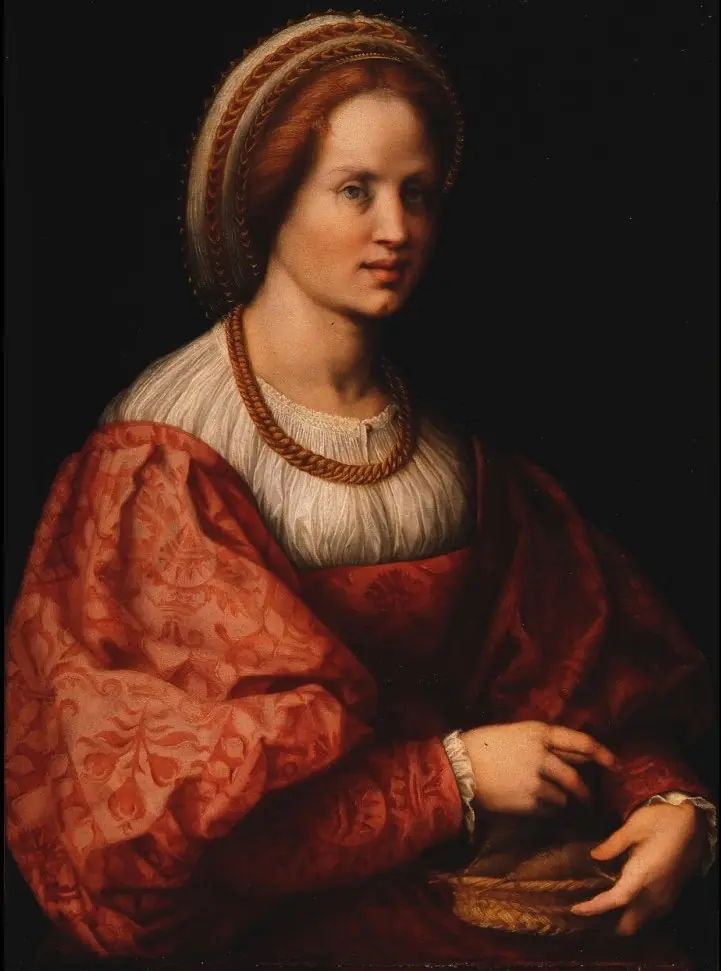
Portrait of a Woman is an unspecified painting by the High Renaissance artist Andrea del Sarto. It dates from 1518 and is held in the collection of the Cleveland Museum of Art.
About this work
The hood is French, but the artist was Italian—he painted this while working for the French king.
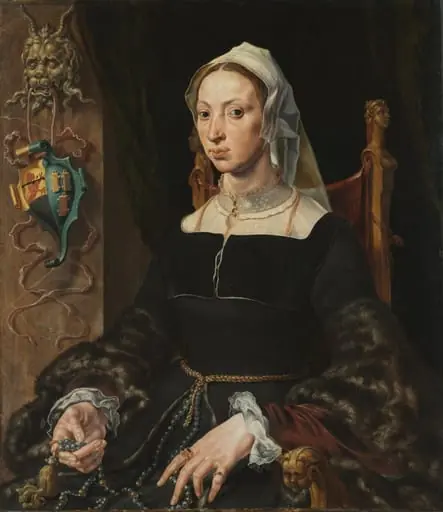
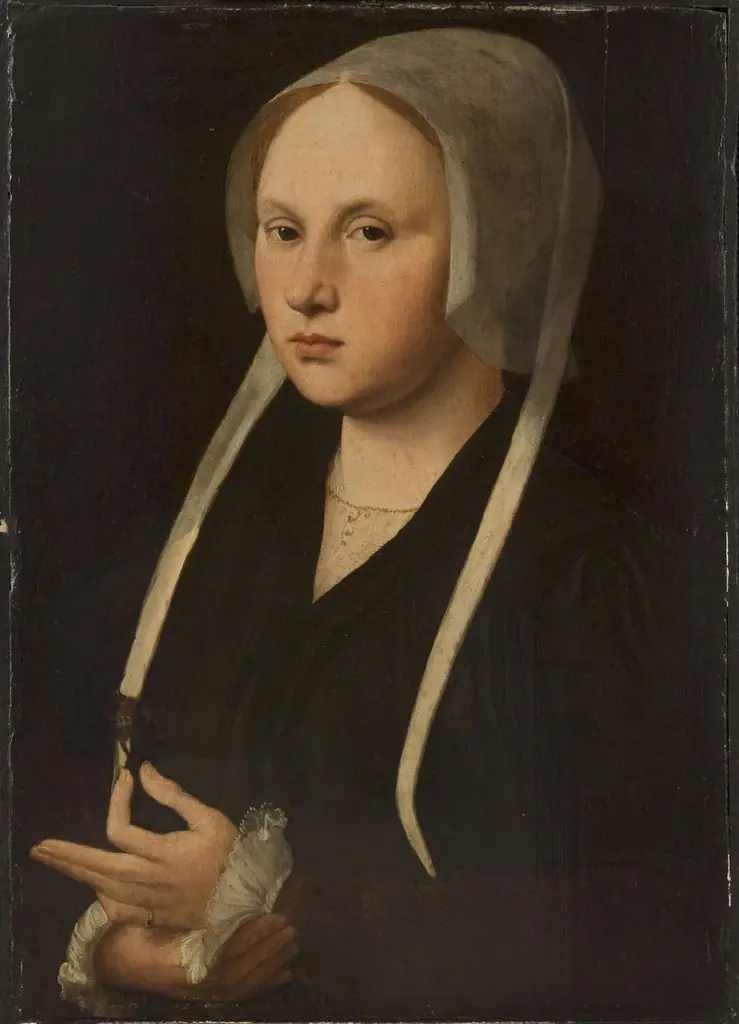
This is a woman in a black veil and a stiff white hood, her hands folded quietly in her lap. The fabric looks so real you want to touch it.
The hood is French, but the artist was Italian—he painted this while working for the French king. That mix of styles makes the portrait feel like a secret handshake between two countries.
To see how other Italians painted women in the 1500s, look up the subject: italy, 16th century.
Overview
The painting depicts a woman seated with her hands folded in her lap, wearing a stiff white French hood and a black veil that drape over her shoulders. The treatment of the fabrics conveys a tactile realism, emphasizing texture and material. Executed during the early 16th century, the work reflects the artistic exchange between Italy and France under the patronage of King Francis I.
Subject & Meaning
The sitter’s attire—a distinctly French hood paired with a modest black veil—identifies her as a member of the French court or aristocracy. Her composed posture and subdued expression suggest a portrait intended to convey dignity and refinement, typical of courtly representations that emphasized social status and personal virtue.
Technique & Style
The artist renders the veil and hood with meticulous attention to light and surface, creating a sense of three‑dimensionality that invites the viewer’s tactile imagination. The handling of flesh tones and the delicate modeling of the fabrics combine the Italian Renaissance emphasis on naturalism with French courtly conventions, resulting in a hybrid visual language.
History & Provenance
Commissioned during the brief period when the Florentine painter Andrea del Sarto was invited to work for Francis I, the portrait likely originated from the king’s effort to import Italian artistic expertise to Paris. The work remained in French collections for centuries, reflecting the monarch’s strategy of cultural patronage that linked his court to the Italian Renaissance.
Context
The painting exemplifies the cultural dialogue fostered by Francis I, who actively recruited Italian artists, architects, and scholars to enrich French artistic life. By merging Italian technique with French sartorial detail, the portrait stands as a visual testament to the early modern exchange that shaped the development of French Renaissance art.
Artist & collection
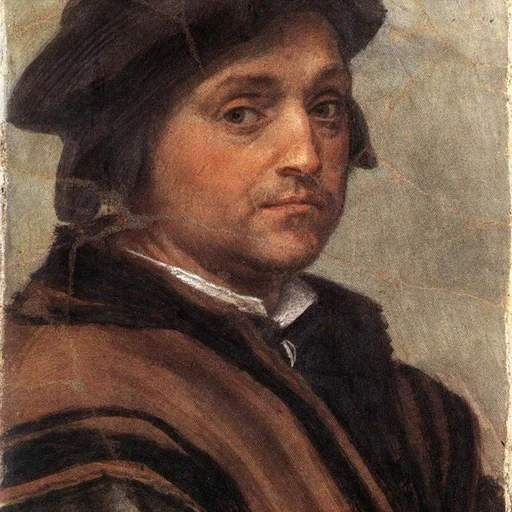
Artist
Andrea del Sarto was an Italian painter from Florence, whose career flourished during the High Renaissance and early Mannerism.