Artwork
Thronende Maria mit dem Kind und den Heiligen Martha, Magdalena und Johannes dem Täufer
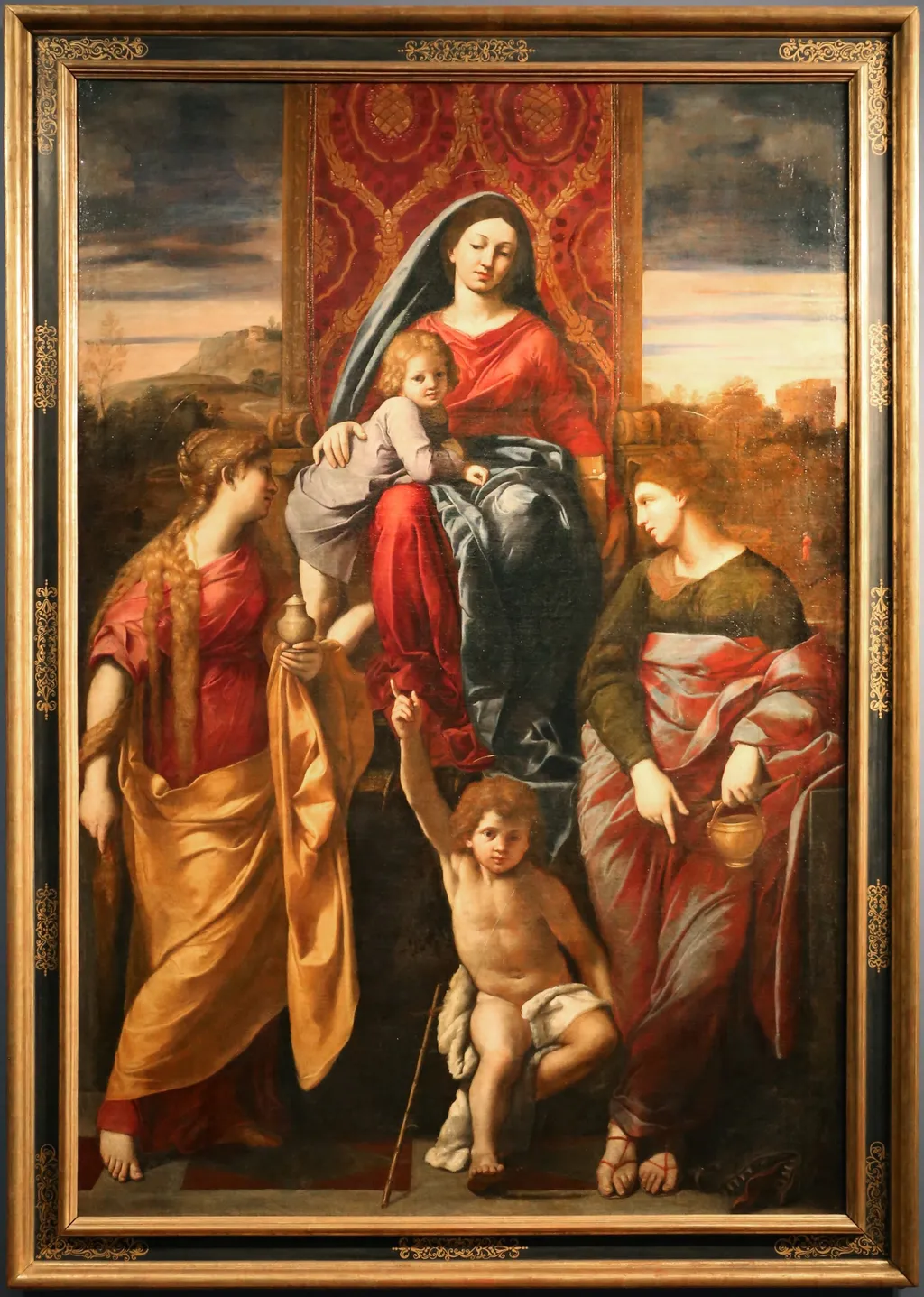
Thronende Maria mit dem Kind und den Heiligen Martha, Magdalena und Johannes dem Täufer is a paint painting by the Early Baroque Italian artist Antonio Marziale Carracci. It dates from 1614 and is held in the collection of the Gemäldegalerie Berlin.
About this work
Overview
Antonio Marziale Carracci’s 1614 oil painting, titled *Thronende Maria mit dem Kind und den Heiligen Martha, Magdalena und Johannes dem Täufer*, presents a devotional grouping of the Virgin, the infant Christ, and three saints. Executed on canvas, the work now belongs to the collection of the Gemäldegalerie in Berlin and exemplifies early‑Baroque religious imagery.
Subject & Meaning
At the centre, the Virgin Mary holds the infant Jesus, who appears to clutch a modest staff, a symbol of his future authority. Flanking them are Saint Martha, Saint Mary Magdalene, and John the Baptist, each identified by their traditional attributes—a cloth, a jar, and a modest demeanor—emphasising themes of penitence, hospitality, and prophetic witness.
Technique & Style
Carracci employs a restrained chiaroscuro, allowing light to model the figures’ faces and drapery against a darkened backdrop. The red curtain with gilt pattern frames the scene, while a distant landscape of rolling hills and a clouded sky recedes, creating depth. The careful handling of texture in the fabrics and the subtle gradations of tone convey a three‑dimensional presence.
History & Provenance
The painting was completed in 1614, during Carracci’s mature period in Bologna. It entered the Berlin Gemäldegalerie’s holdings in the early 20th century, having passed through several private collections before being acquired by the museum, where it has remained on public display.
Context
Created at a time when Counter‑Reformation commissions favored clear, emotionally resonant religious subjects, the work reflects the Carracci family’s synthesis of classical composition and naturalistic detail. Its iconography aligns with contemporary devotional practices that highlighted the intercession of saints alongside the Virgin and Child.
Artist & collection
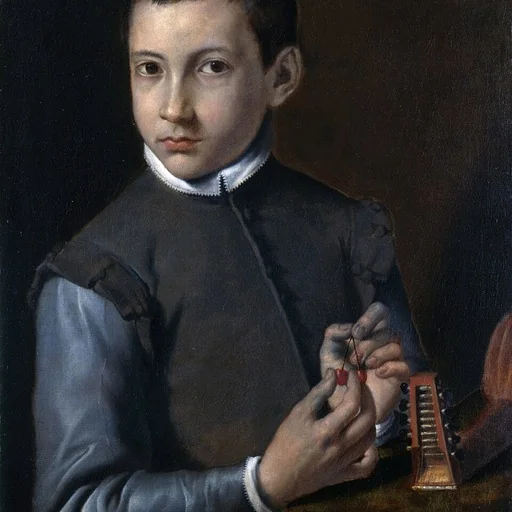
Artist
Antonio Marziale Carracci (1583–1618) was an artist, born in Venice.

 Mystic Marriage of St Catherine
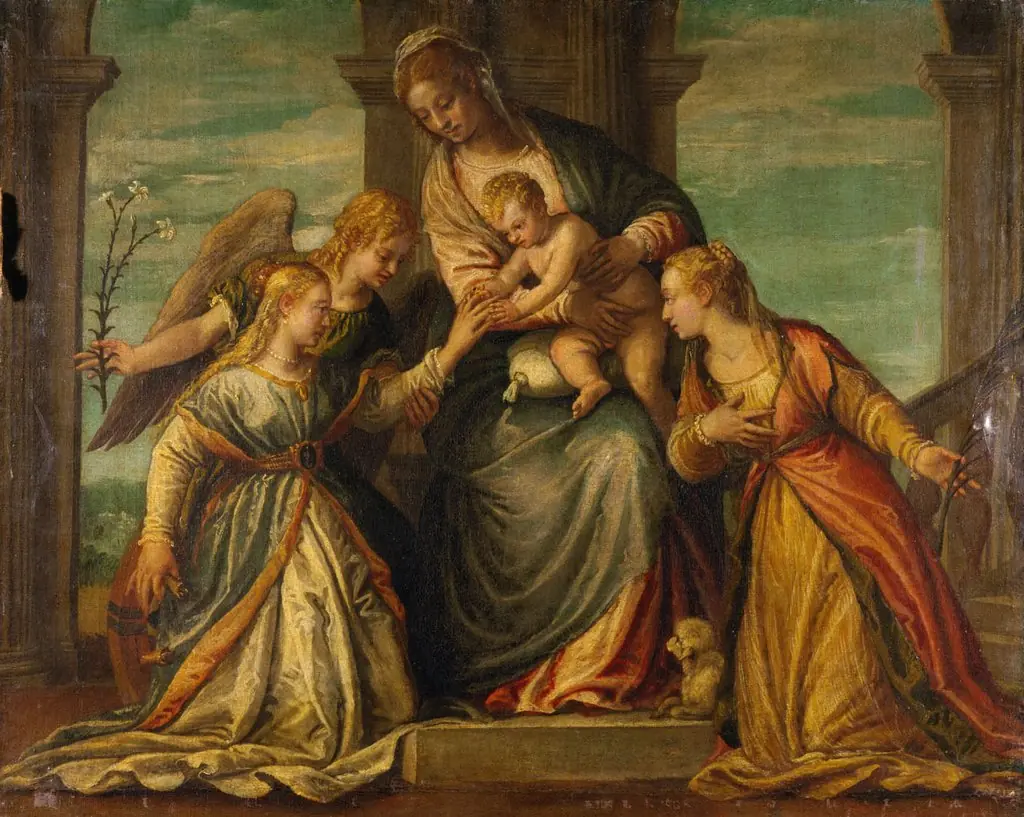 Mystic Marriage of St. Catherine
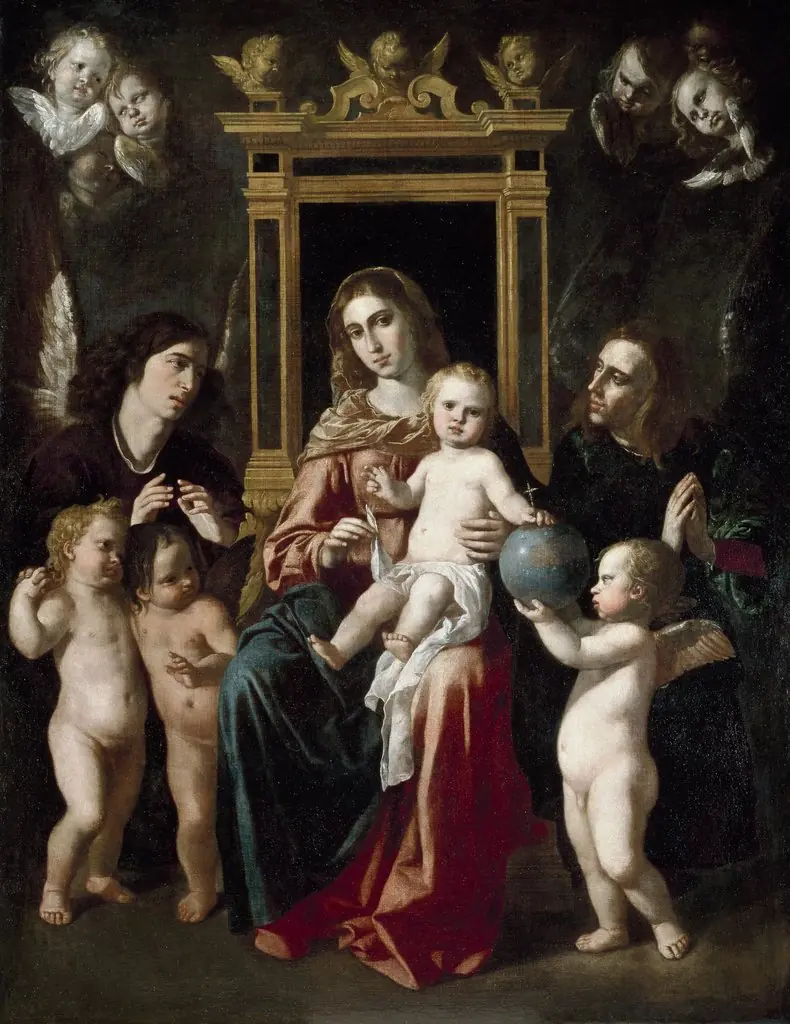 The Virgin and Child on a Throne of Angels
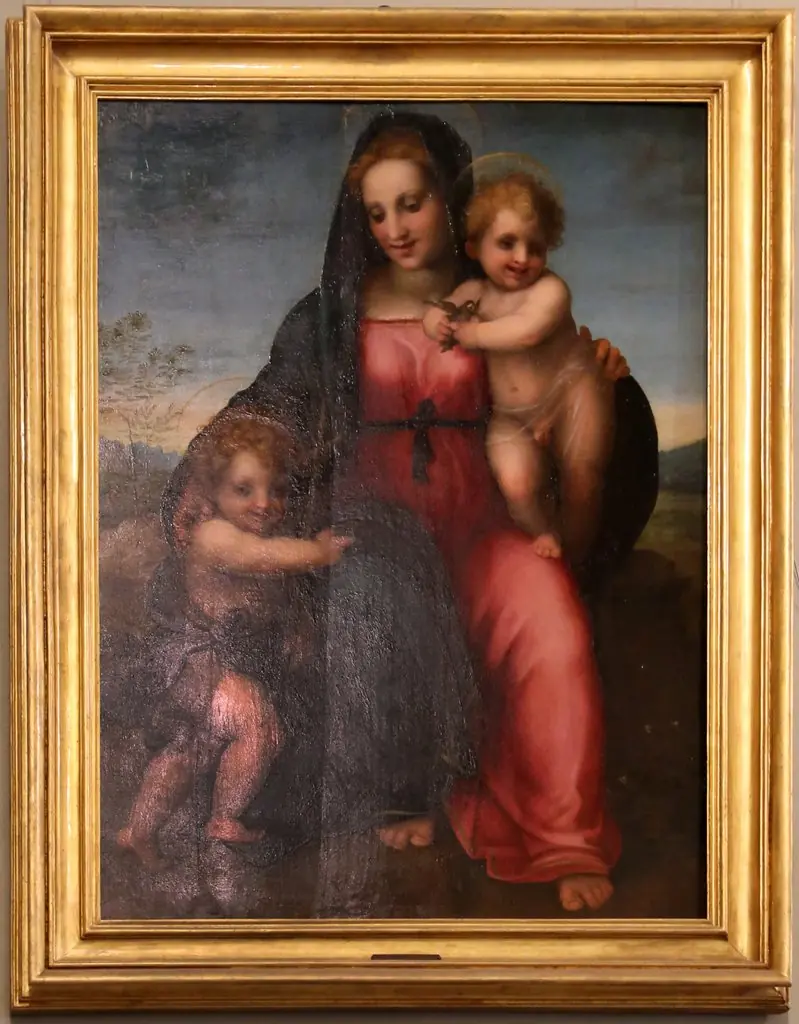 Madonna col Bambino e san Giovannino
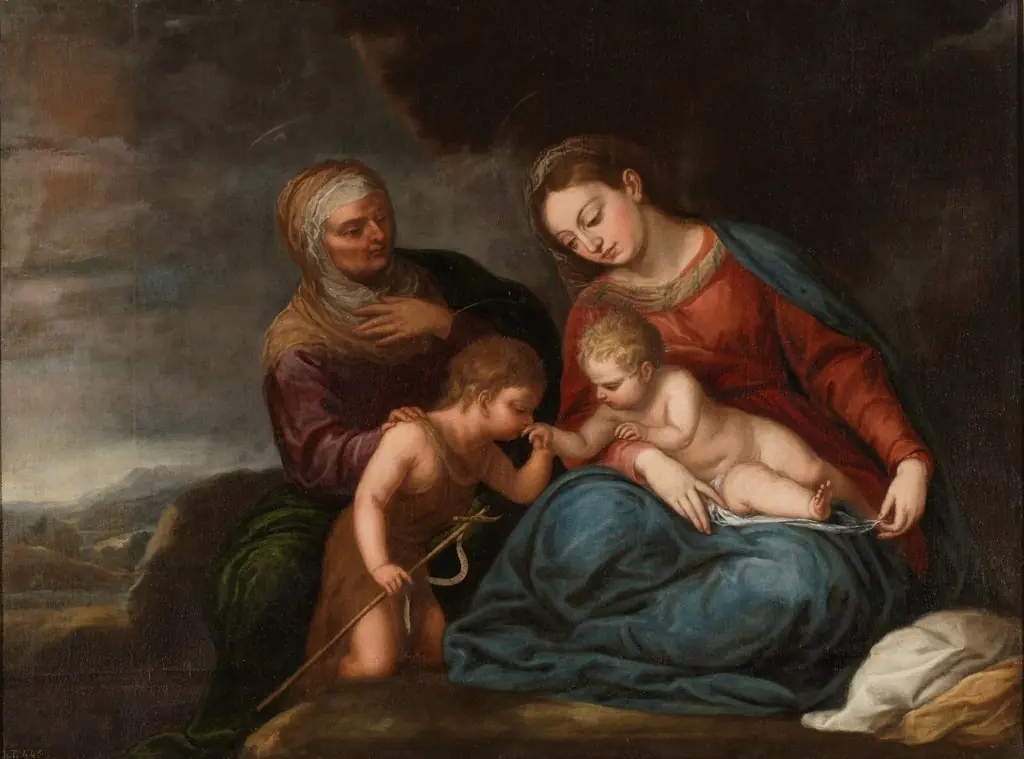 The Virgin and Child with Saints Elizabeth and John
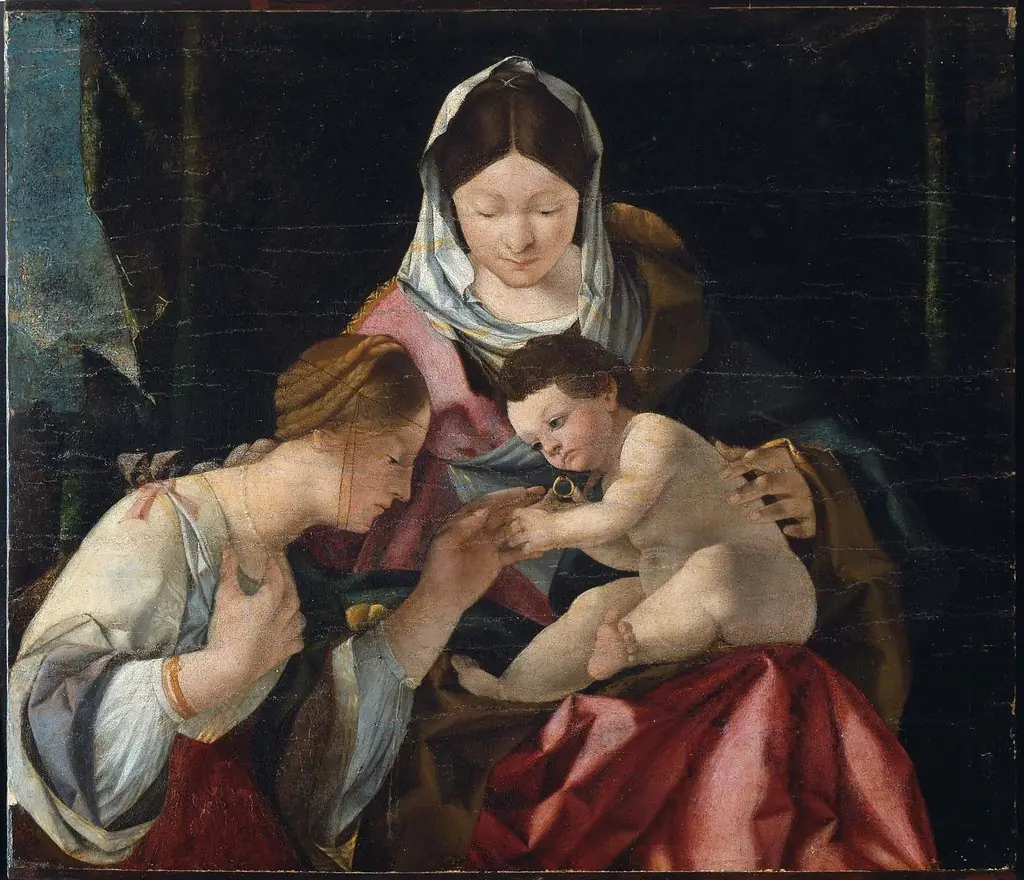 The Mystic Marriage of Saint Catherine
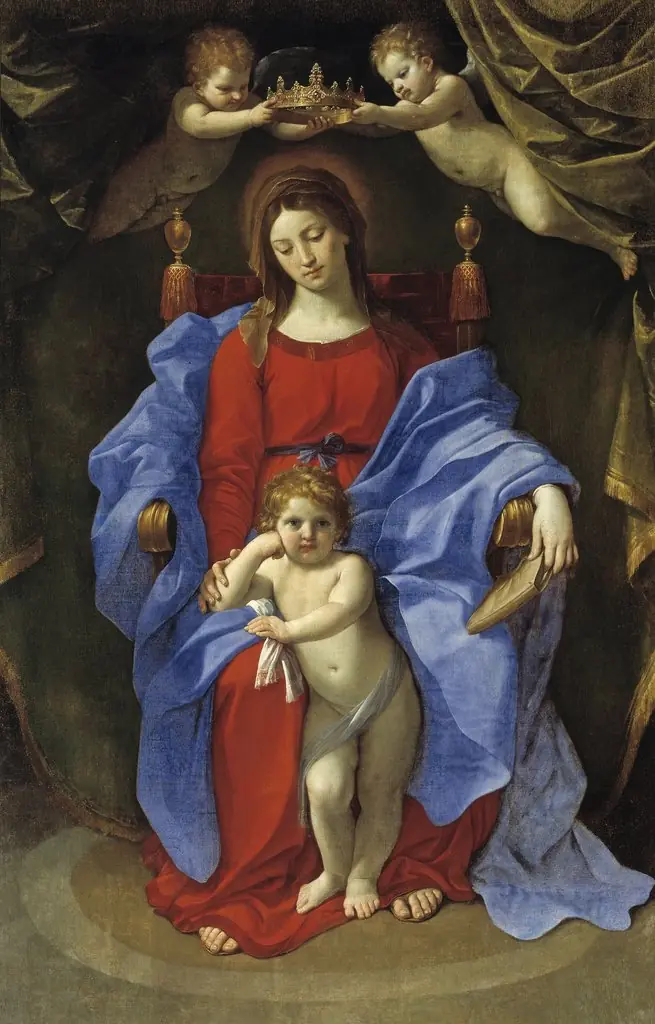 The Virgin of the Chair
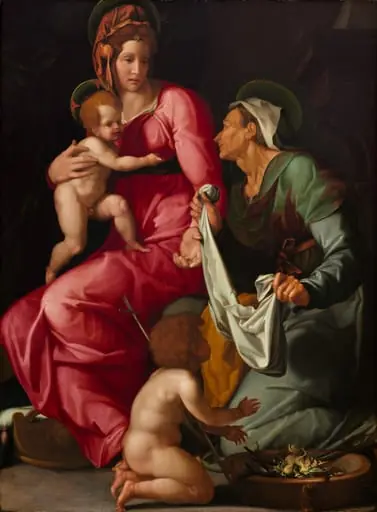 Madonna and Child with Saint Elizabeth and Saint John the Baptist
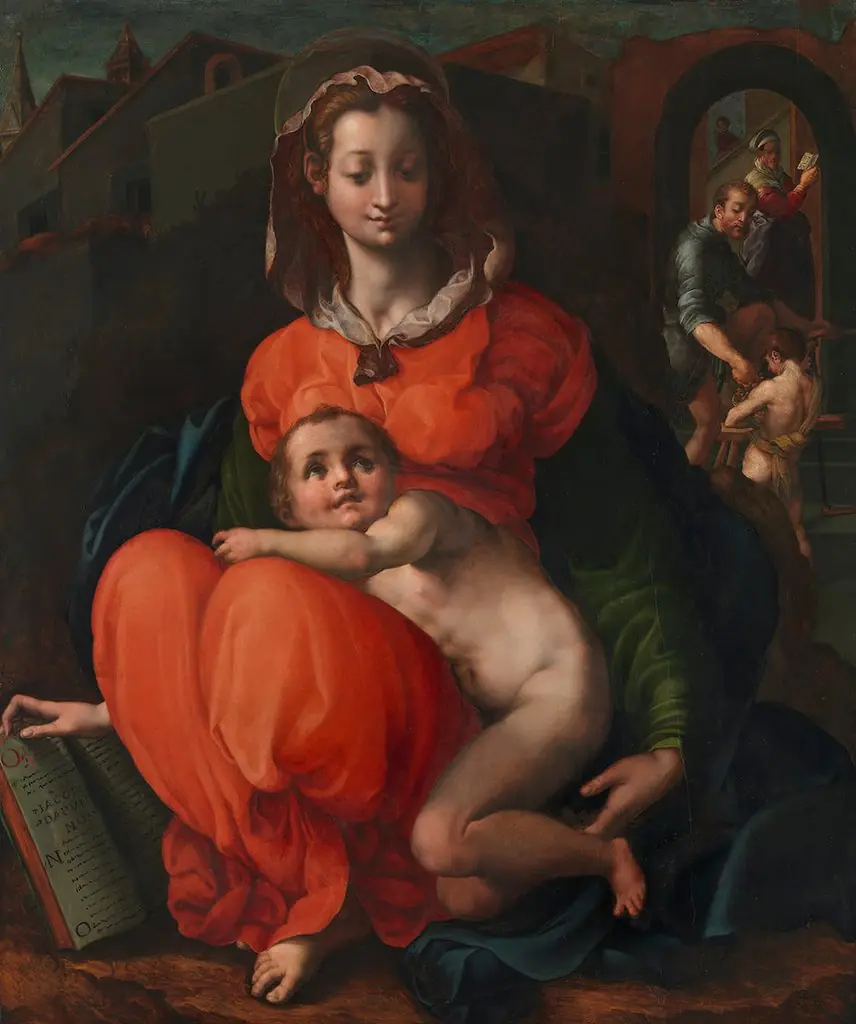 Maria mit dem Kinde (Werkstatt)
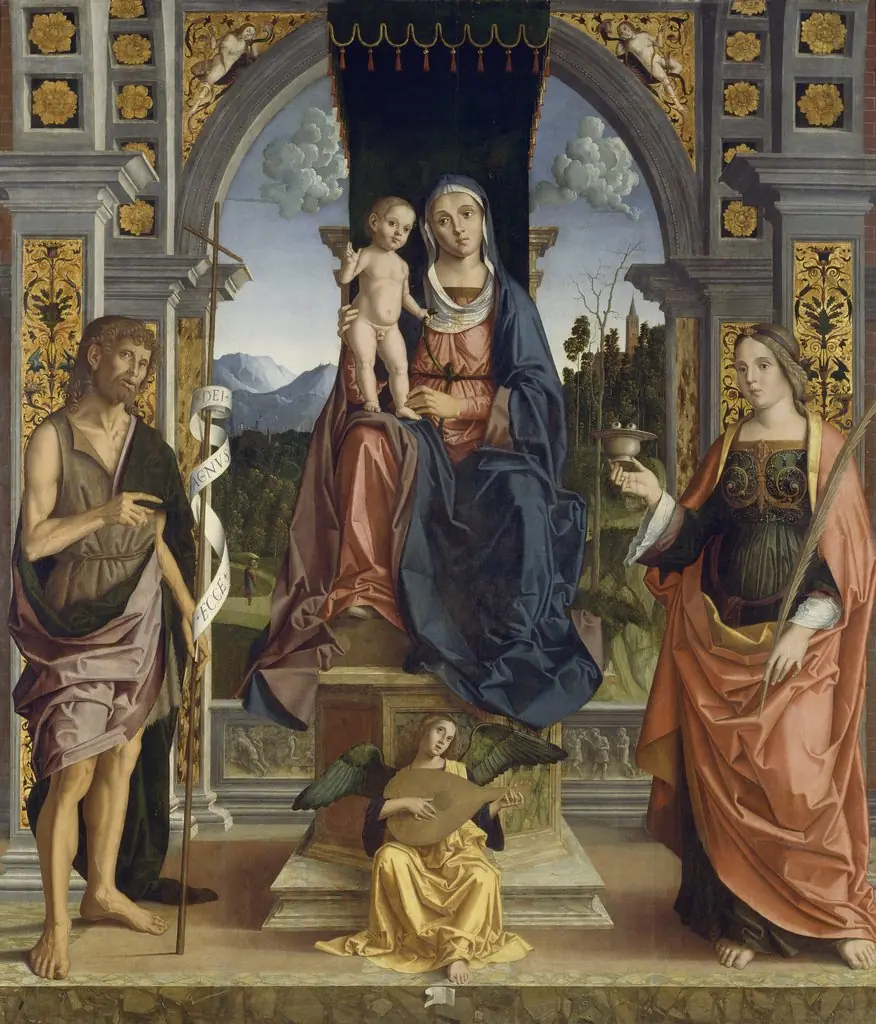 The Virgin and Child Enthroned, with Saints John the Baptist and Lucy
 Virgin and Child with Angels
 The Dream of Saint Catherine of Alexandria