Artwork
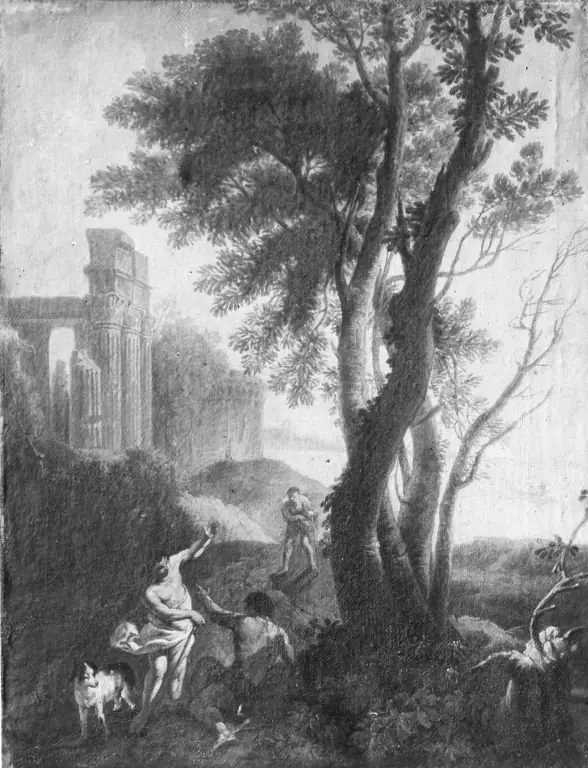
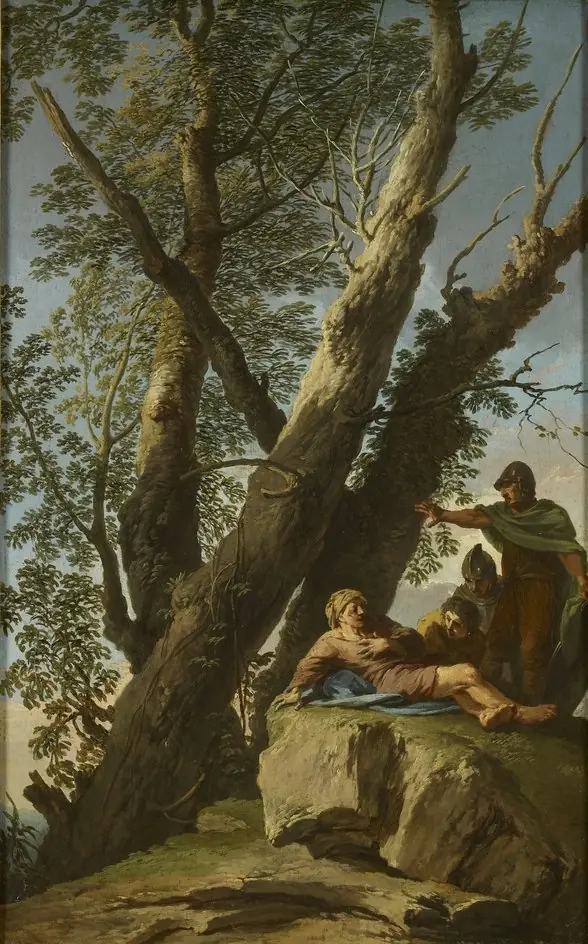
Landscape with Bandits and a Dog
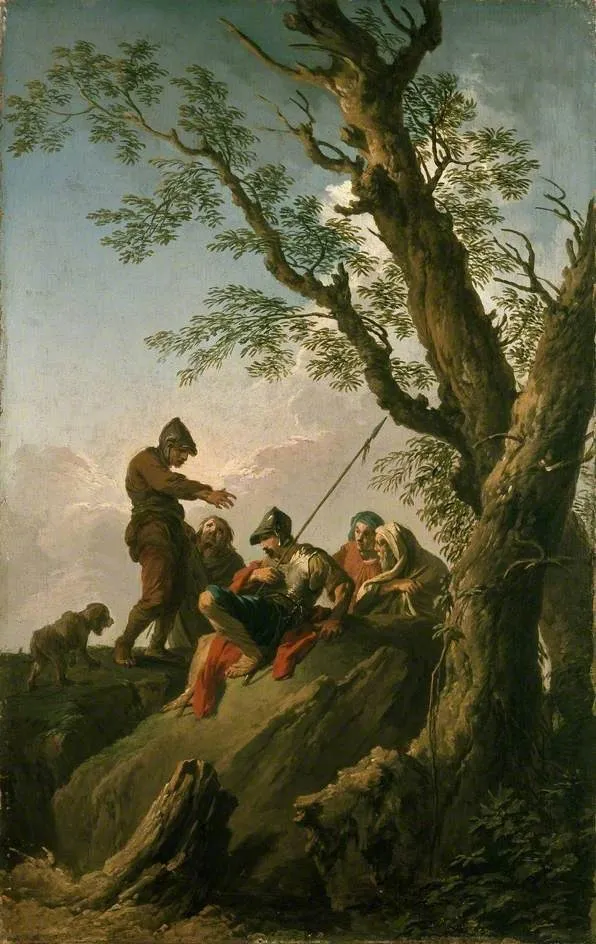
Landscape with Bandits and a Dog is an oil painting by the Rococo painting artist Andrea Locatelli. It dates from 1727 and is held in the collection of the Ashmolean Museum.
About this work
Overview
Locatelli, trained in Rome under his father and later by marine painters, specialized in atmospheric landscapes that blended naturalism with subtle narrative.
Painted in 1727 by Andrea Locatelli, this oil-on-canvas work presents a rural Italian scene populated by figures and a dog. Locatelli, trained in Rome under his father and later by marine painters, specialized in atmospheric landscapes that blended naturalism with subtle narrative. The painting’s composition and tonal harmony reflect his engagement with contemporary landscape traditions, positioning it within the broader Rococo sensibility of the early 18th century.
Subject & Meaning
A small group of figures—some seated, one standing—gather near a tree in a wooded setting, accompanied by a dog that introduces motion into the stillness. Their attire and posture suggest rural laborers or travelers, though their exact role remains ambiguous. The dog’s alert stance may imply vigilance or companionship, adding a quiet tension to the scene. Rather than depicting overt drama, the painting evokes the quiet rhythms of country life, inviting contemplation over narrative clarity.
Technique & Style
Locatelli employed loose, visible brushwork to render foliage, sky, and terrain, creating a textured surface that enhances the painting’s atmospheric depth. The palette favors muted earth tones contrasted with soft blues in the distance, guiding the eye through layers of space. Light falls naturally across the scene, suggesting late afternoon, while the arrangement of figures and foliage avoids rigid symmetry, favoring an organic, almost improvisational balance characteristic of his mature style.
History & Provenance
The painting entered the Ashmolean Museum’s collection in the 19th century, likely through the bequest or acquisition of a private collector with interest in Italian Baroque and Rococo works. Its documented history before this is sparse, though its style aligns with Locatelli’s known output from the 1720s. No significant alterations or restorations are recorded, preserving its original surface and tonal integrity.
Context
In early 18th-century Rome, landscape painting was gaining prestige beyond mere backdrop to religious or mythological scenes. Locatelli, influenced by Dutch and French precedents, helped elevate the genre by infusing it with mood and narrative subtlety. His work responded to aristocratic tastes for picturesque, evocative scenery, yet retained a grounded realism absent in more theatrical contemporaries, distinguishing him within the Roman art scene.
Legacy
Locatelli’s landscapes, including this one, contributed to the evolution of the Italian veduta tradition, influencing later artists who sought to capture nature with emotional nuance. Though less celebrated than some of his peers, his focus on atmosphere and everyday rural life provided a quiet alternative to grand historical painting. His works remain valued for their sensitivity to light and composition, offering insight into the evolving role of landscape in European art.
Artist & collection
Artist
Andrea Locatelli (19 December 1695 – 19 February 1741) was an Italian painter of landscapes (vedute).

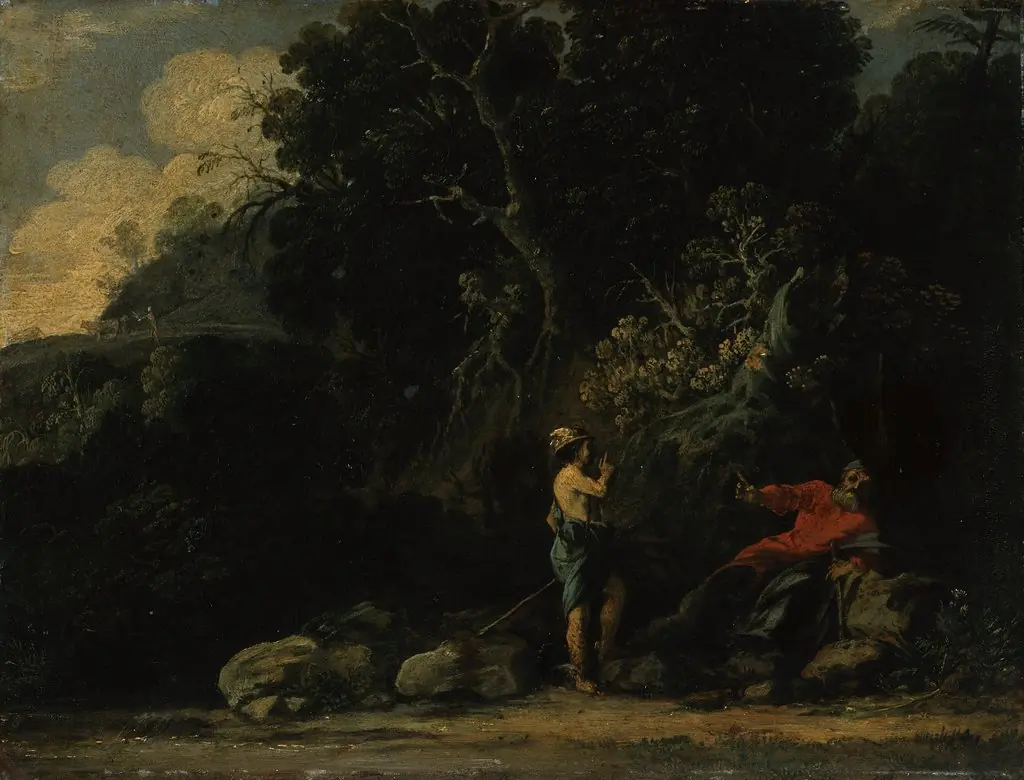 Forest Landscape with Mercury and Battus
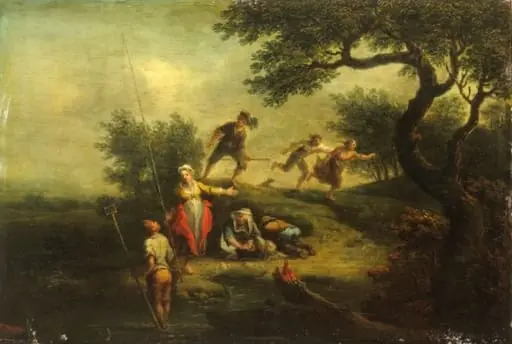 Peisaj cu pescari; pandant: Peisaj cu pescari și băiat cu flaut
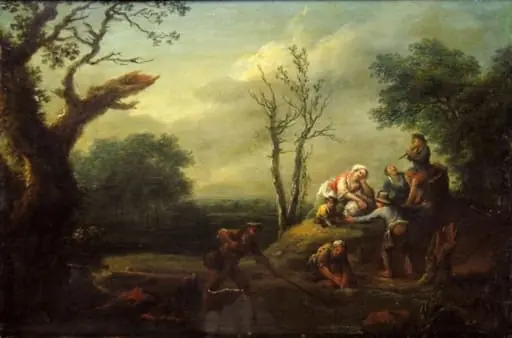 Peisaj cu pescari și băiat cu flaut; pandant: Peisaj cu pescari
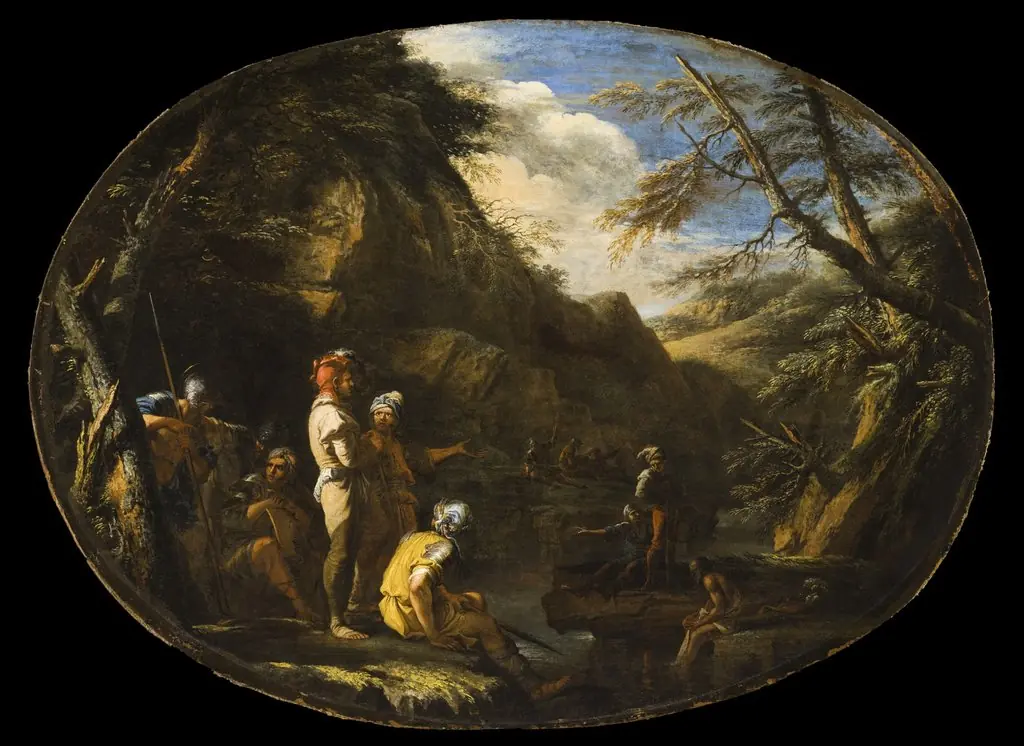 Landscape with Armed Men
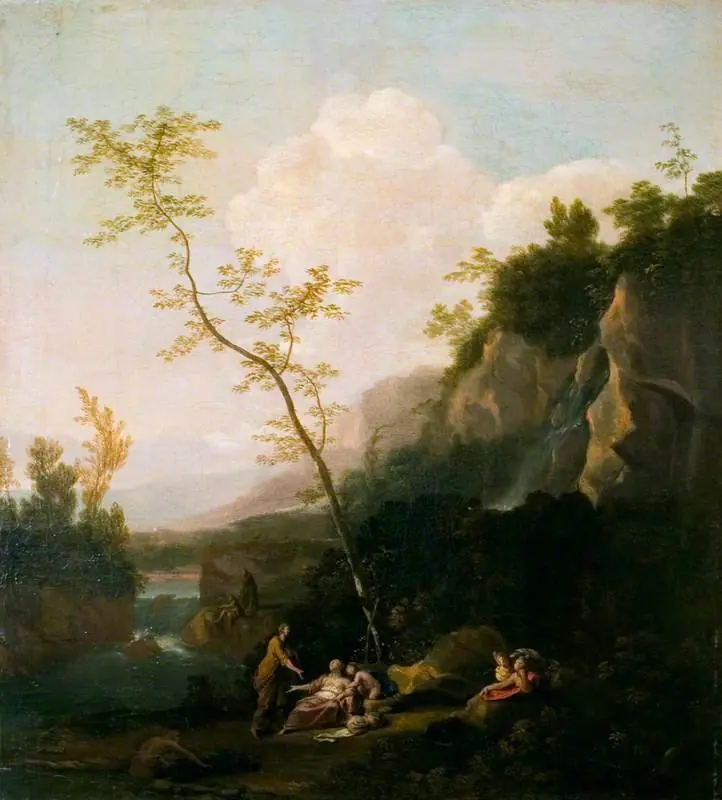 Rocky Landscape with Figures
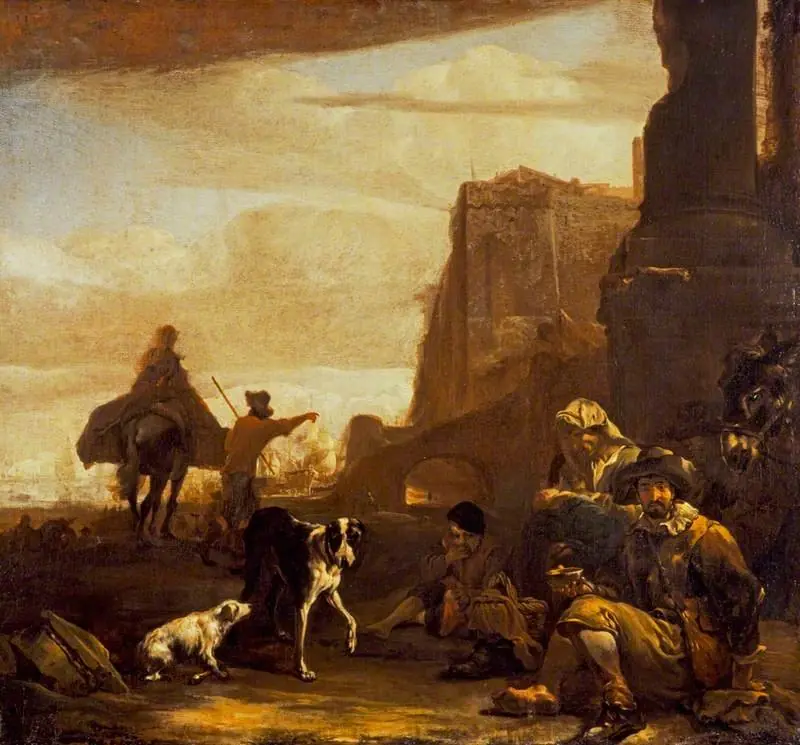 Figures near a Seaport
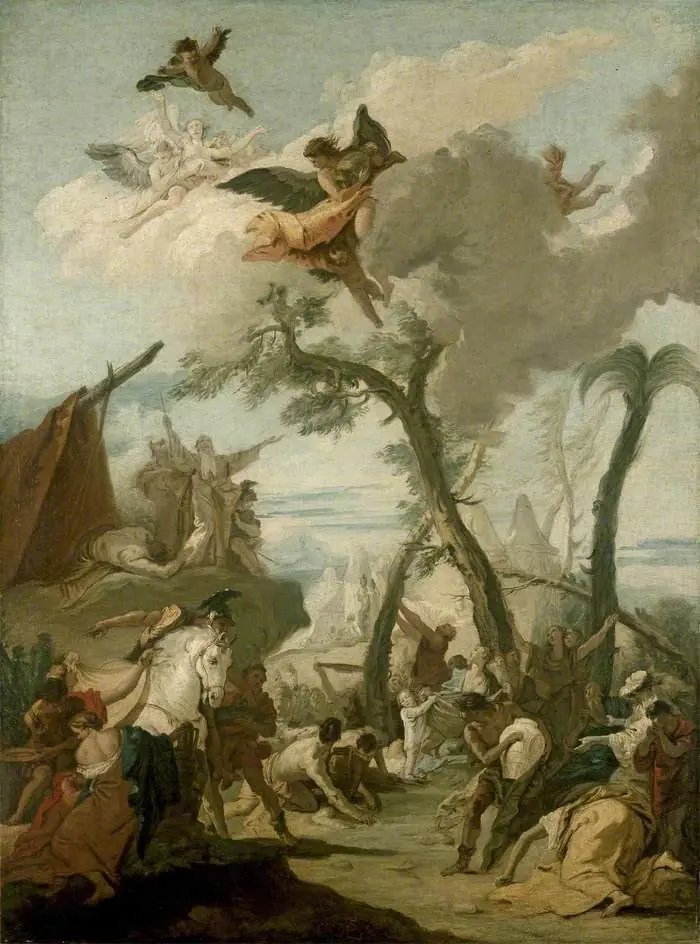 The Gathering of Manna
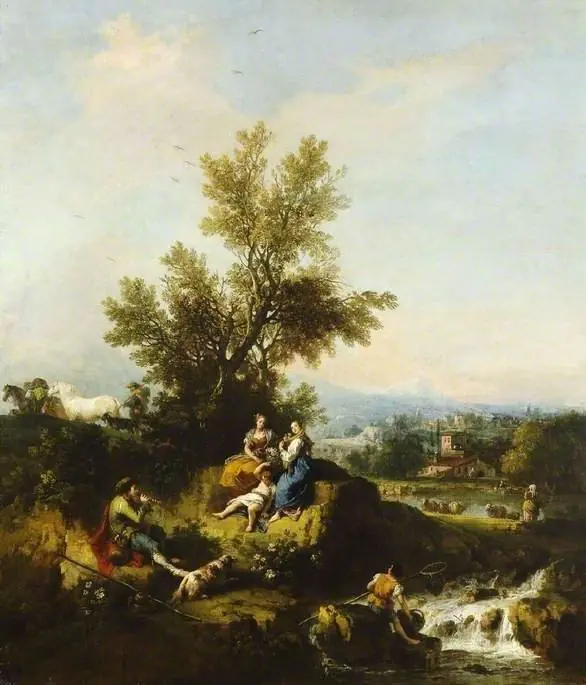 Italianate wooded river landscape with a piping shepherd, two women and a child
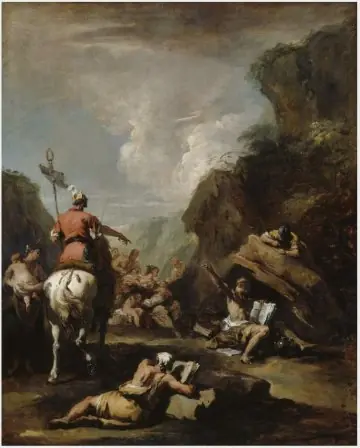 King Hieron II of Syracuse Calls on Archimedes to Fortify the City
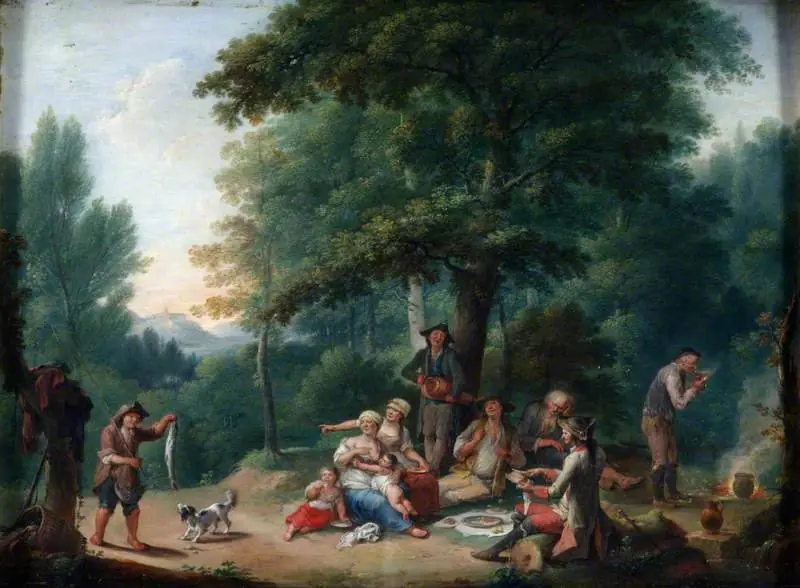 Landscape with Peasants Regaling Themselves in a Wood
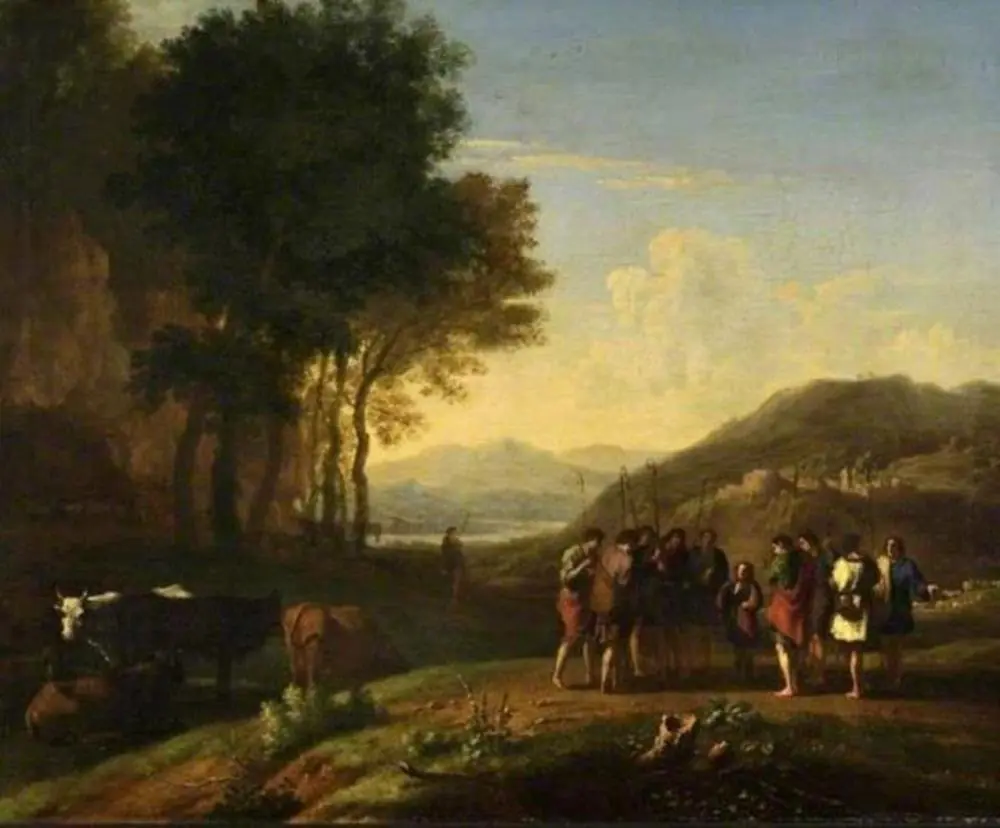 Landscape with Joseph and his brethren
 Landscape with a wounded Bandit and other Figures