Artwork
The Gathering of Manna
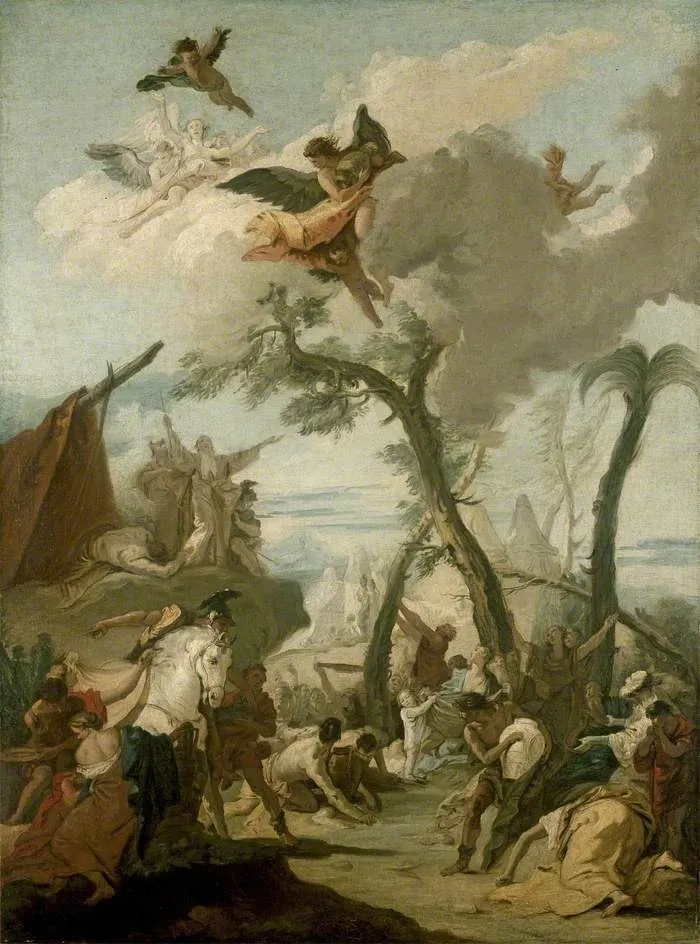
The Gathering of Manna is an oil painting by the Rococo painting artist Giovanni Battista Tiepolo. It dates from 1743 and is held in the collection of the Ashmolean Museum.
About this work
Overview
It illustrates a biblical episode from the Book of Exodus, in which the Israelites collect manna, a divine sustenance, in the desert.
Painted around 1743, The Gathering of Manna is an oil-on-canvas work by Giovanni Battista Tiepolo. It illustrates a biblical episode from the Book of Exodus, in which the Israelites collect manna, a divine sustenance, in the desert. The painting is part of the Ashmolean Museum’s collection in Oxford, where it has been held since the 19th century. Its composition emphasizes movement and communal activity, distinguishing it from more static religious narratives of the period.
Subject & Meaning
The scene depicts the Israelites gathering manna, the miraculous food sent by God during their desert journey. Figures reach toward trees laden with small, white orbs, interpreted as the manna. The atmosphere conveys gratitude and collective wonder rather than despair. Tiepolo avoids overt suffering, instead highlighting human connection and divine provision, aligning with Enlightenment-era interpretations of faith as a source of communal harmony.
Technique & Style
Tiepolo employs oil paint with fluid brushwork and a luminous palette to render light filtering through a clear sky. Chiaroscuro defines the forms of figures and foliage, lending volume and spatial depth. The composition is dynamic, with diagonals guiding the eye from foreground gestures to the distant horizon. His handling of fabric and skin suggests movement, reinforcing the sense of spontaneous, joyful activity without sacrificing anatomical precision.
History & Provenance
Commissioned for a Venetian patron, the painting entered the Ashmolean Museum’s collection in the 1840s through the bequest of a British collector. Its journey from Venice to Oxford reflects 18th- and 19th-century European tastes for Italian Old Master works. The painting remained relatively unaltered, preserving Tiepolo’s original brushwork and tonal balance, which contributed to its enduring scholarly interest.
Context
Created during Tiepolo’s mature phase, the work reflects the Venetian tradition of grand narrative painting, influenced by Titian and Veronese. While religious subjects remained central, Tiepolo infused them with theatricality and naturalism, responding to contemporary tastes for emotional immediacy. The painting’s lightness and airiness contrast with the heavier Baroque style, signaling a transition toward Rococo sensibilities in sacred art.
Legacy
The Gathering of Manna exemplifies Tiepolo’s ability to elevate biblical themes through visual poetry rather than doctrinal rigidity. It influenced later 18th-century painters seeking to reconcile spiritual subject matter with expressive, luminous technique. Though not widely reproduced, it remains a key example of how Venetian artists reimagined religious narratives with psychological nuance and atmospheric grace.
Artist & collection

Artist
Giovanni Battista Tiepolo, also known as Giambattista Tiepolo, was an Italian painter and printmaker from the Republic of Venice who painted in the Rococo style, considered an important member of the 18th-century Venetian school.

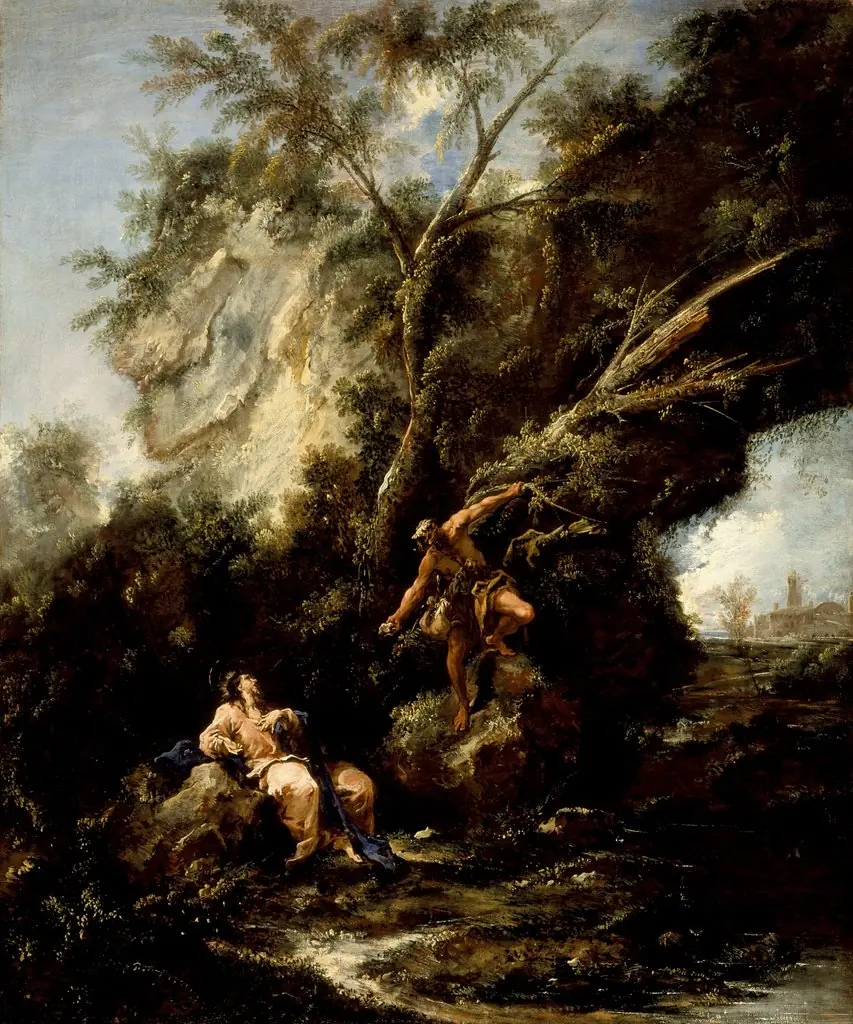 Landscape with the Temptation of Christ
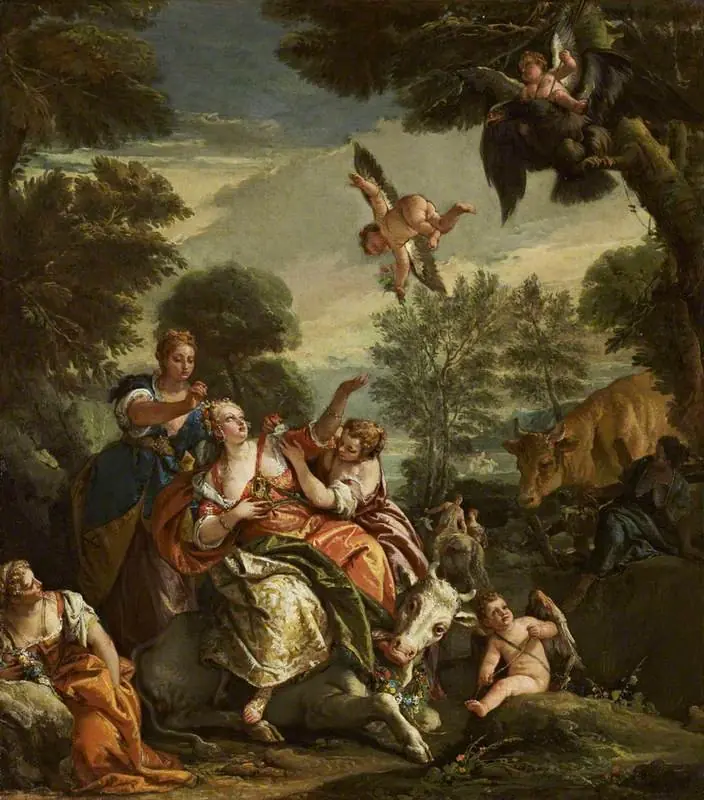 The Rape of Europa
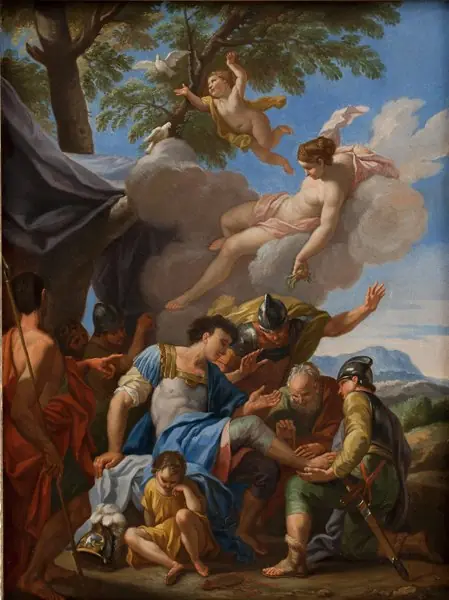 Venus Bringing Simples for the Wounded Aeneas
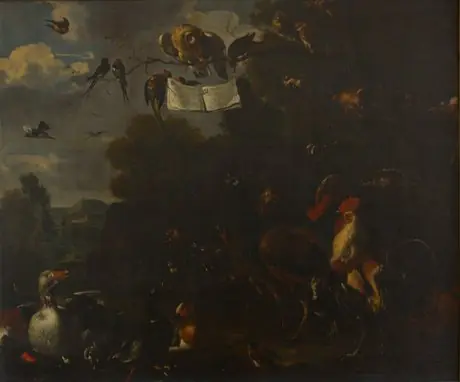 Concert of birds
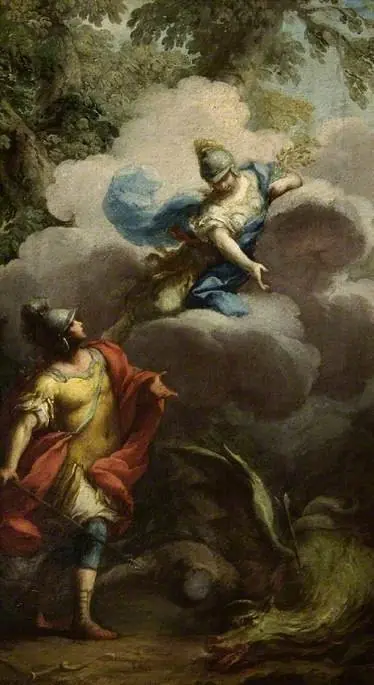 Cadmus and the Dragon
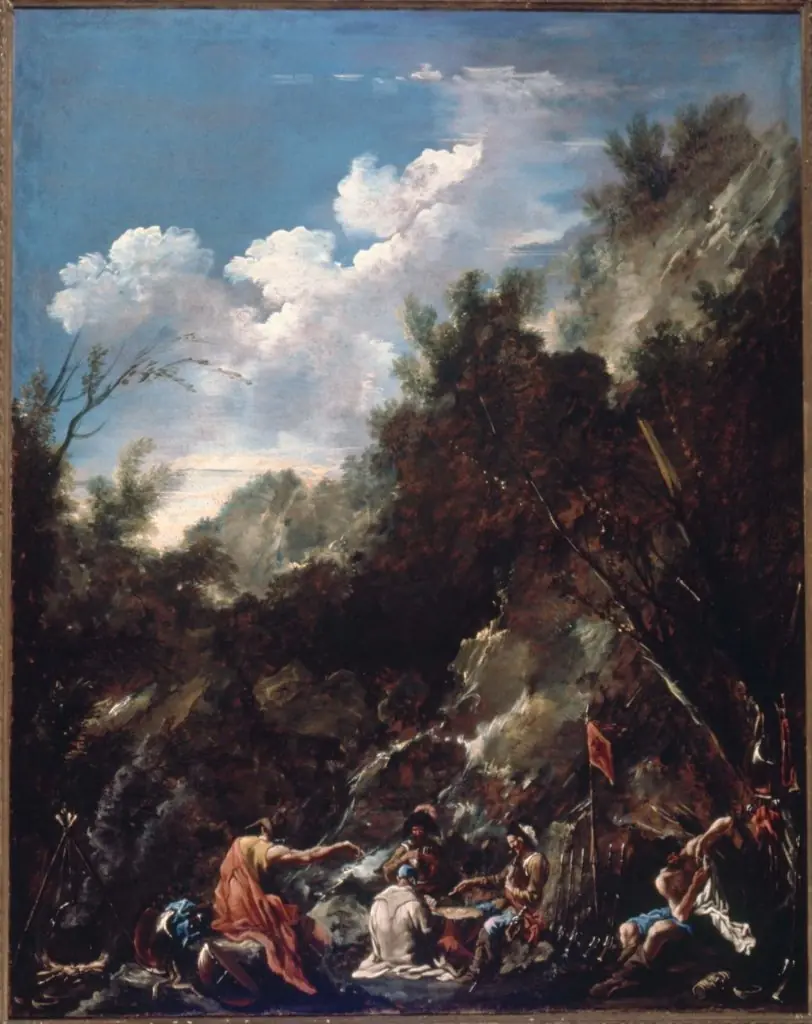 Soldiers Playing Cards in a Rocky Landscape
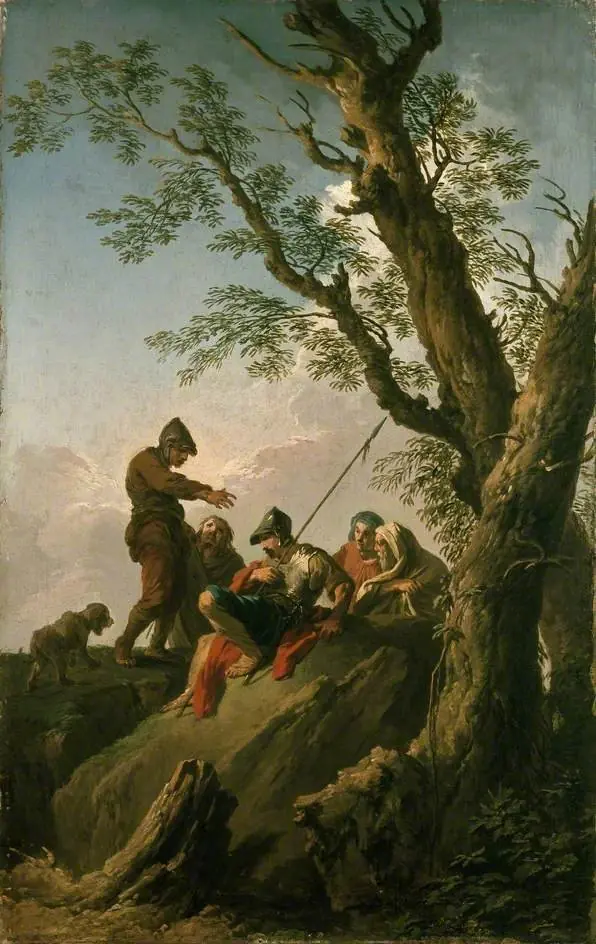 Landscape with Bandits and a Dog
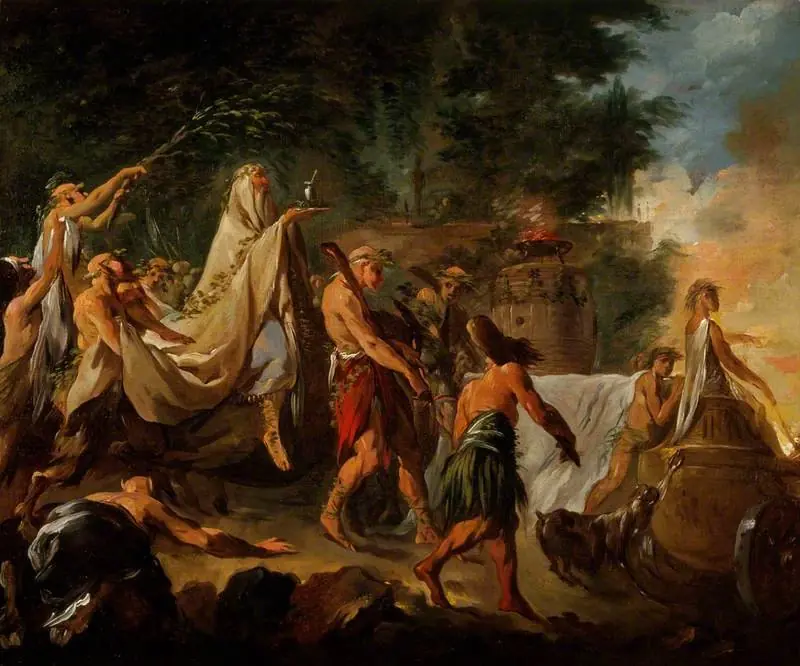 A Druids' Ceremony
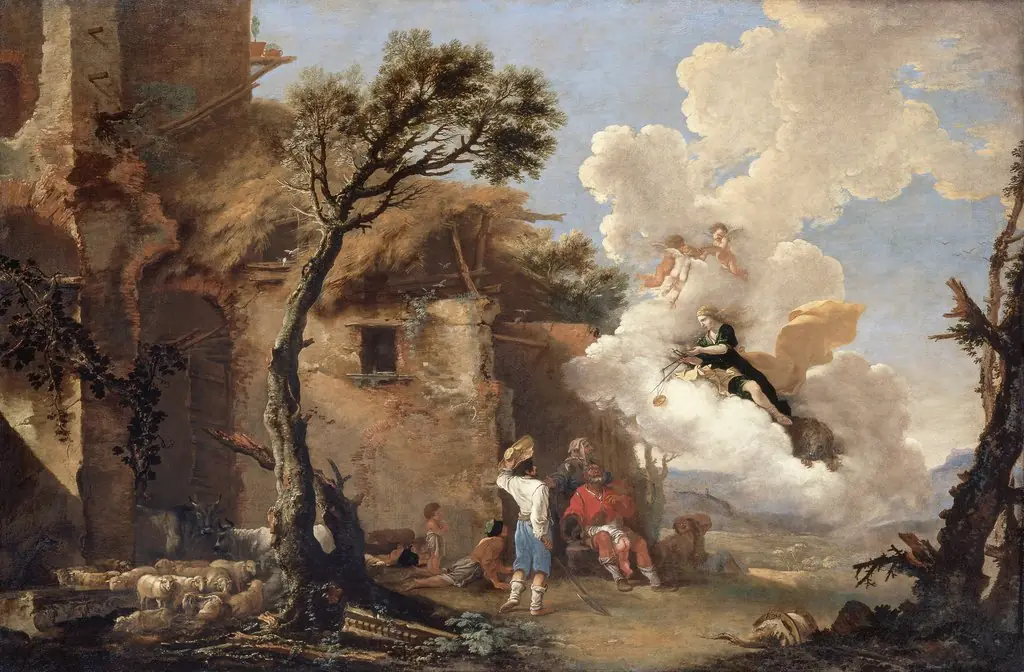 Return of Astrea
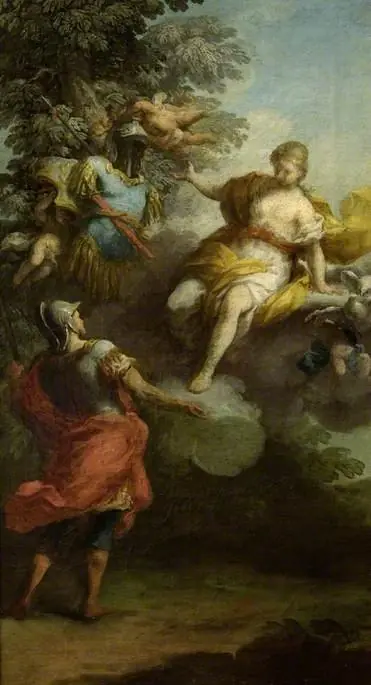 Venus giving arms to Aeneas
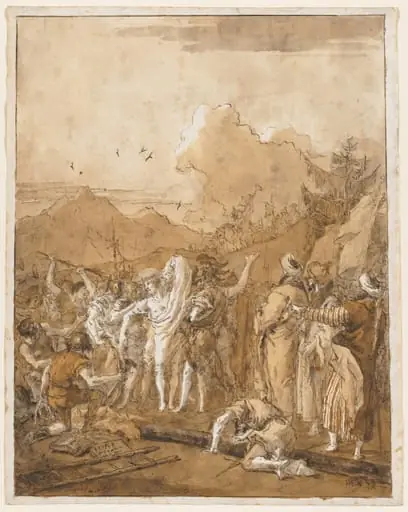 The Disrobing of Christ
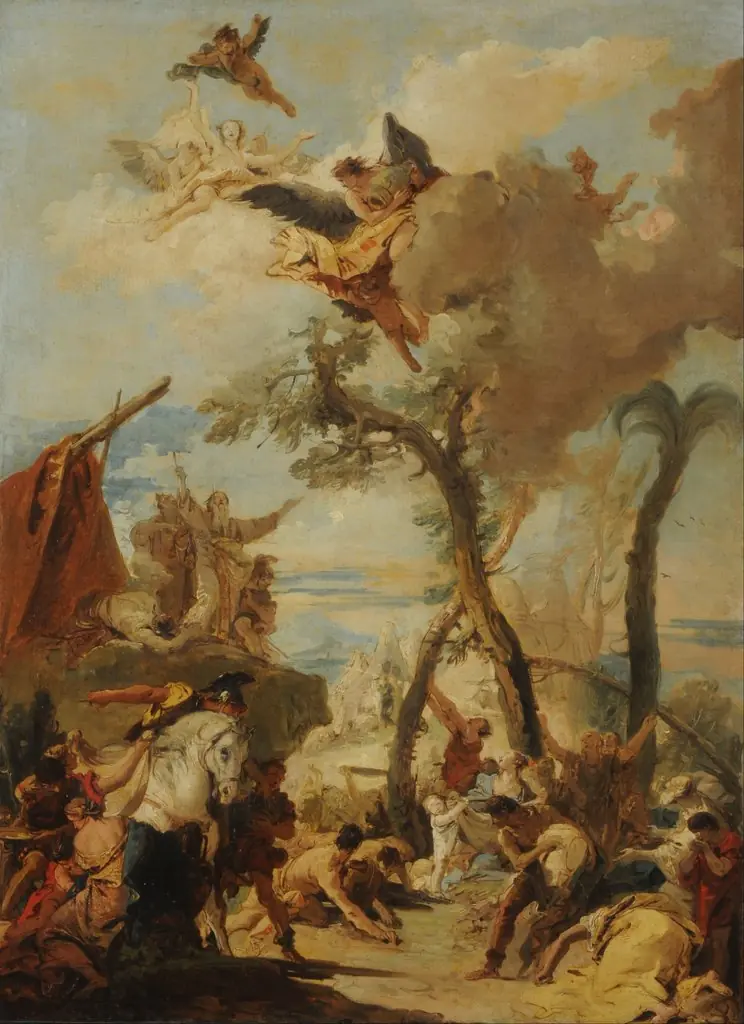 The Hebrews collecting manna in the desert