Artwork
Battle of the Sea Gods - right portion
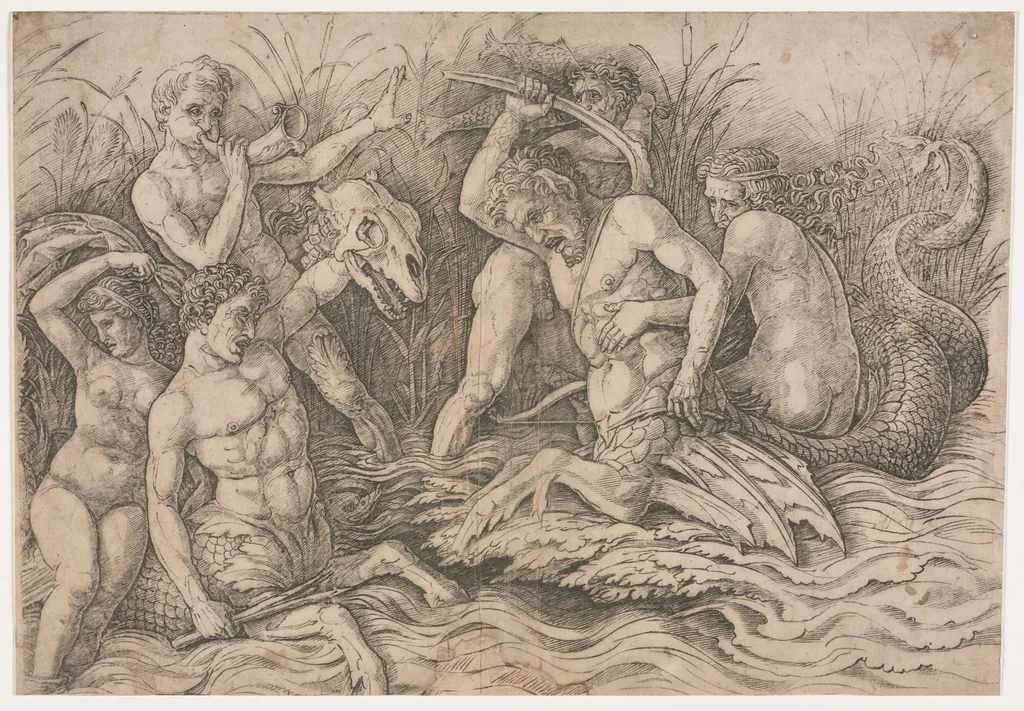
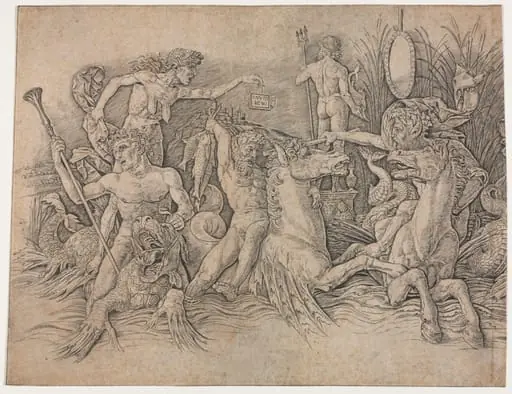
Battle of the Sea Gods - right portion is a print by the Renaissance artist Andrea Mantegna. It dates from 1486 and is held in the collection of the Cleveland Museum of Art.
About this work
Overview
This print, dated around 1486, is one segment of a larger composition by Andrea Mantegna, likely part of a series illustrating mythological marine conflicts.
This print, dated around 1486, is one segment of a larger composition by Andrea Mantegna, likely part of a series illustrating mythological marine conflicts. Produced in Venice during the height of his printmaking activity, it reflects his mastery of line and form. Though often associated with painting, Mantegna’s workshop was among the most influential in early Italian print culture, producing detailed engravings that circulated widely among collectors and artists.
Subject & Meaning
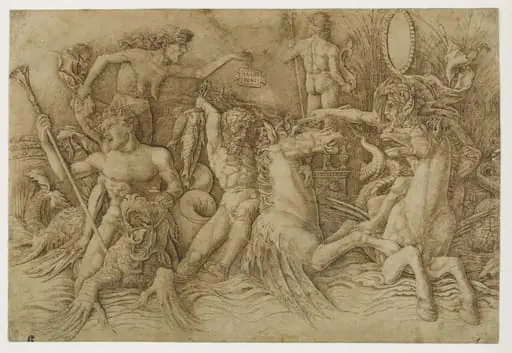
The scene portrays a mythological battle among sea deities, blending classical motifs with imaginative hybrid figures—part human, part aquatic. The figures, some with fish tails and shells, engage in violent struggle, evoking chaos and divine conflict. While no specific myth is definitively identified, the imagery draws from Greco-Roman traditions of sea gods and monsters, possibly symbolizing the untamed forces of nature or the triumph of order over primal chaos.
Technique & Style
Mantegna rendered the scene with precise, angular lines and a sculptural treatment of the figures, emphasizing muscular tension and rigid anatomy. The textures of scales, shells, and water are meticulously engraved, creating a tactile sense of surface. His use of dense cross-hatching and sharp contours enhances the metallic, almost stone-like quality of the forms, characteristic of his broader aesthetic that prioritized clarity and structural weight over atmospheric softness.
History & Provenance
The print was produced in Mantegna’s Venetian workshop during the late 1480s, a period when he was actively engaged in printmaking alongside his painting. It entered the Cleveland Museum of Art’s collection in the 20th century, following a documented lineage of private European holdings. Its survival as a single fragment suggests it was once part of a larger, now-lost series, common in early print cycles that were later separated.
Context
In late 15th-century Venice, interest in classical antiquity fueled artistic exploration of mythological themes. Mantegna, influenced by Roman sculpture and archaeology, contributed to a broader Renaissance revival of ancient narratives. His prints, circulated across Italy and beyond, helped disseminate humanist ideals and visual language, bridging scholarly antiquarianism with popular artistic taste among elite patrons.
Legacy
Mantegna’s approach to printmaking set a standard for technical precision and narrative intensity in Italian engraving. His emphasis on anatomical clarity and dramatic composition influenced generations of printmakers, including Dürer and later Northern Renaissance artists. Though fragmentary, this work remains a key example of how Renaissance artists reinterpreted classical themes through the emerging medium of print, expanding their reach beyond painting.
Artist & collection
Artist
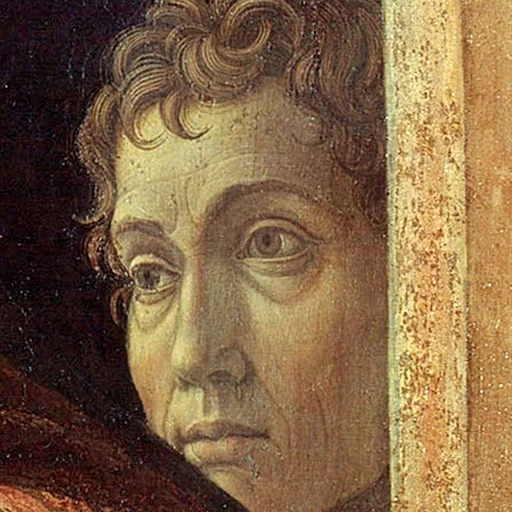
Andrea Mantegna (UK: , US: ; Italian: ; c. 1431 – September 13, 1506) was an Italian Renaissance painter, a student of Roman archaeology, and the son-in-law of Jacopo Bellini. Like other artists of the time, Mantegna…

![Battle of the Sea Gods [left half], by Andrea Mantegna](https://artifactworldgallery.com/img/andrea-mantegna--battle-of-the-sea-gods-left-half--084dd803fb0016b2-w320.webp)
![Battle of the Sea Gods [right half], by Andrea Mantegna](https://artifactworldgallery.com/img/andrea-mantegna--battle-of-the-sea-gods-right-half--7515c85934d3d1e9-w320.webp)
![Battle of the Sea Gods [left half], by Andrea Mantegna](https://artifactworldgallery.com/img/andrea-mantegna--battle-of-the-sea-gods-left-half--2510247af42f8c24-w320.webp)