Artwork
Stanislaus Sabinus von Stracza
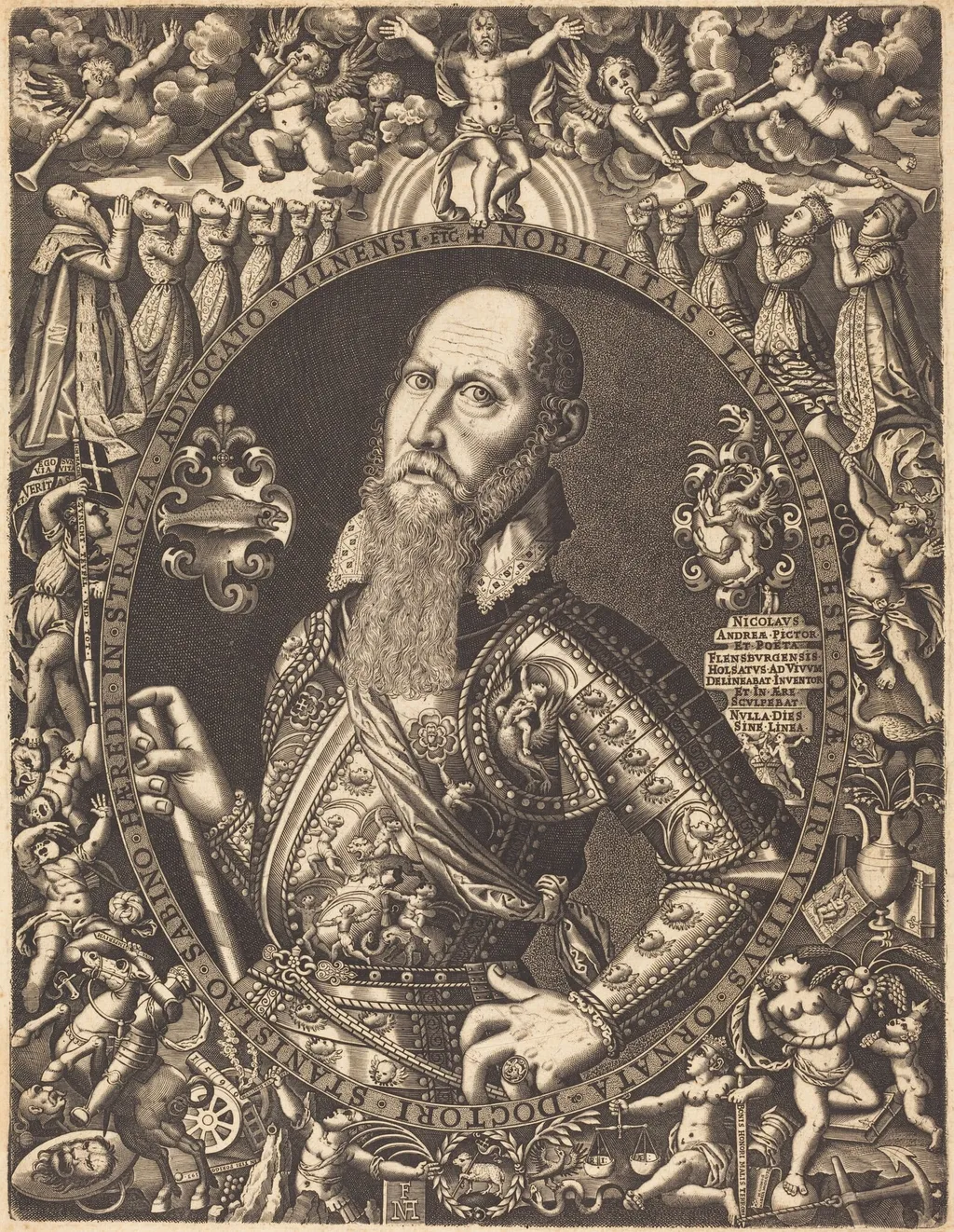
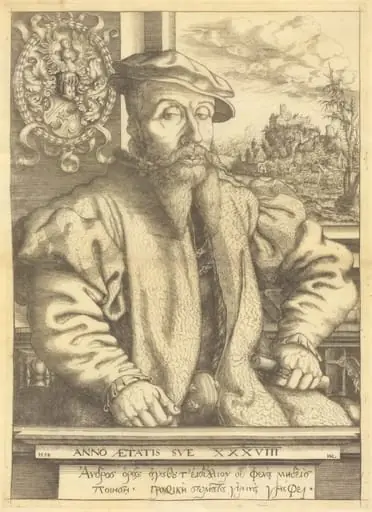
Stanislaus Sabinus von Stracza is an ink print by the Renaissance artist Nicolaus Andrea. It dates from 1590 and is held in the collection of the National Gallery of Art.
About this work
Overview
Nicolaus Andrea’s 1590 engraving, titled Stanislaus Sabinus von Stracza, presents a solitary, bearded figure dressed in a richly patterned dark robe. The central portrait is framed by an intricate border populated with numerous diminutive figures engaged in various activities, creating a densely populated visual field that occupies the entire sheet of laid paper.
Subject & Meaning
The principal subject is a solemn, bearded man whose grave expression and deep-set eyes convey authority or contemplation. Encircling him, the miniature scenes—workers with tools, musicians, and everyday tasks—suggest a narrative of societal roles or perhaps an allegorical representation of the individual’s connection to the broader community.
Technique & Style
Executed through fine-line engraving, Andrea incised delicate hatching and cross-hatching to model volume and generate subtle shadows, giving the figures a three‑dimensional presence. The precision of the incisions allows for intricate detail in the border, where each tiny figure is rendered with clarity despite the limited scale of the medium.
Context
Produced at the close of the sixteenth century, the print reflects the period’s fascination with elaborate decorative borders and the humanist interest in portraying individuals within a network of social activity. Engravings of this type were commonly used for portraiture, commemorative purposes, or as didactic images in the early modern print market.
Artist & collection


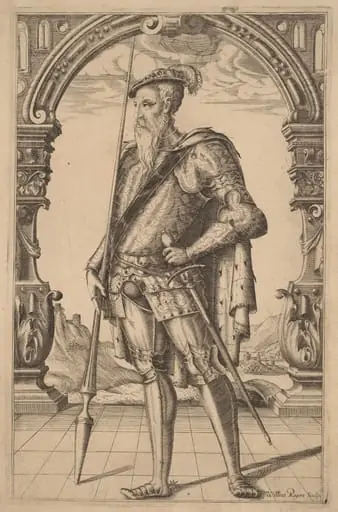 Alfonso X, King of Castile
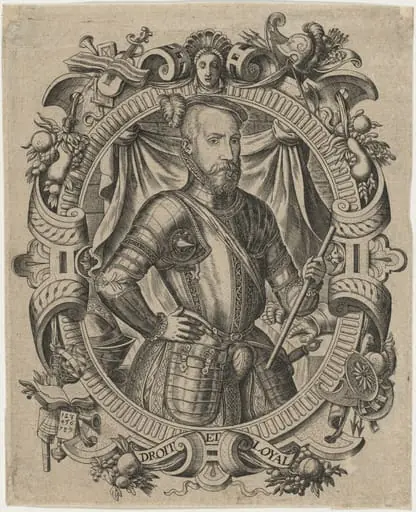 Robert Dudley, Earl of Leicester
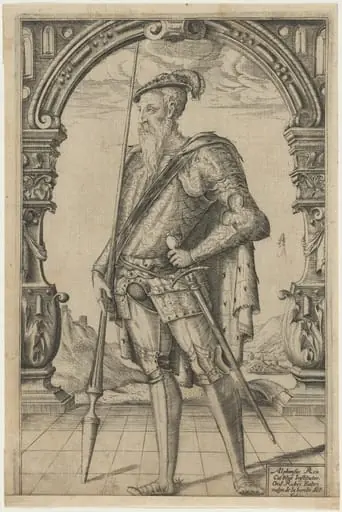 Alphonso, King of Castile
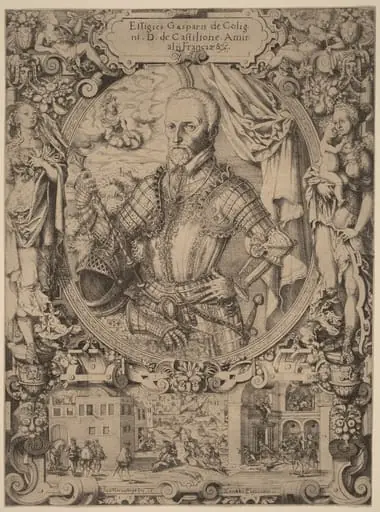 Gaspar de Coligny
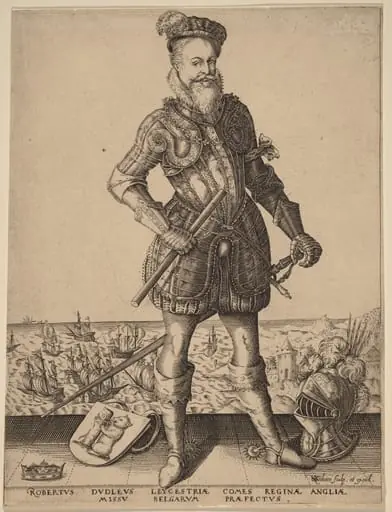 Robert Dudley, Earl of Leicester
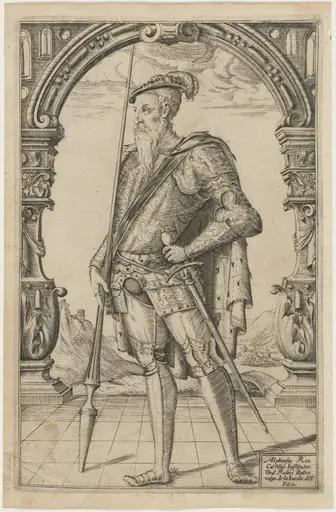 Alphonso, King of Castile
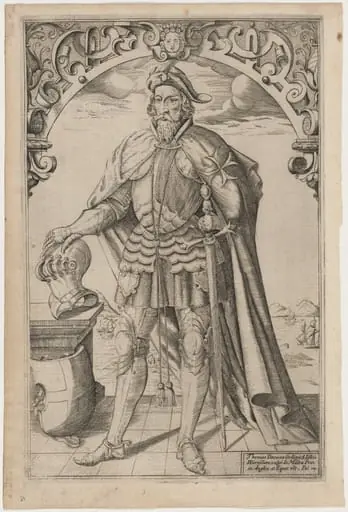 Sir Thomas Docwra, Knight of Malta
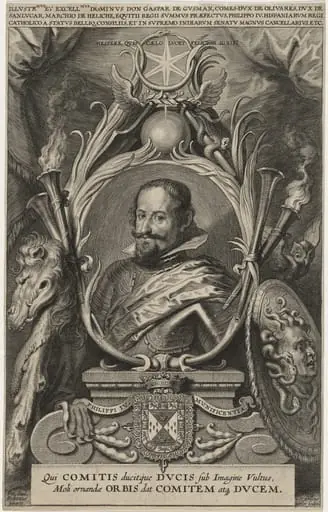 Gaspar de Guzman, Count of Olivares and Duke of San Lucas
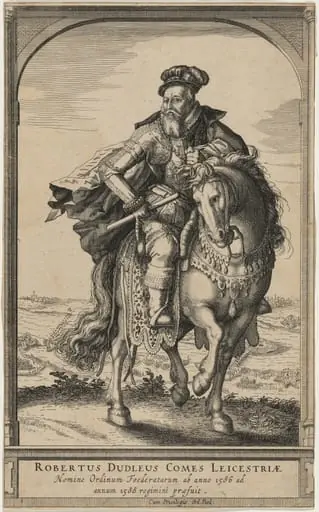 Robert Dudley, Earl of Leicester on Horseback
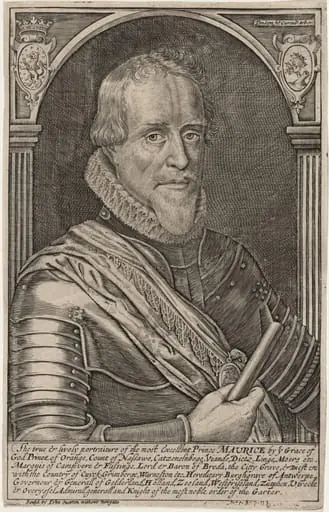 Maurice, Prince of Orange
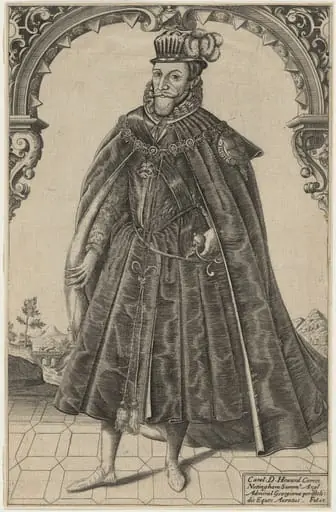 Charles Howard, First Earl of Nottingham
 Georg Roggenbach