Artwork
Ecce Homo
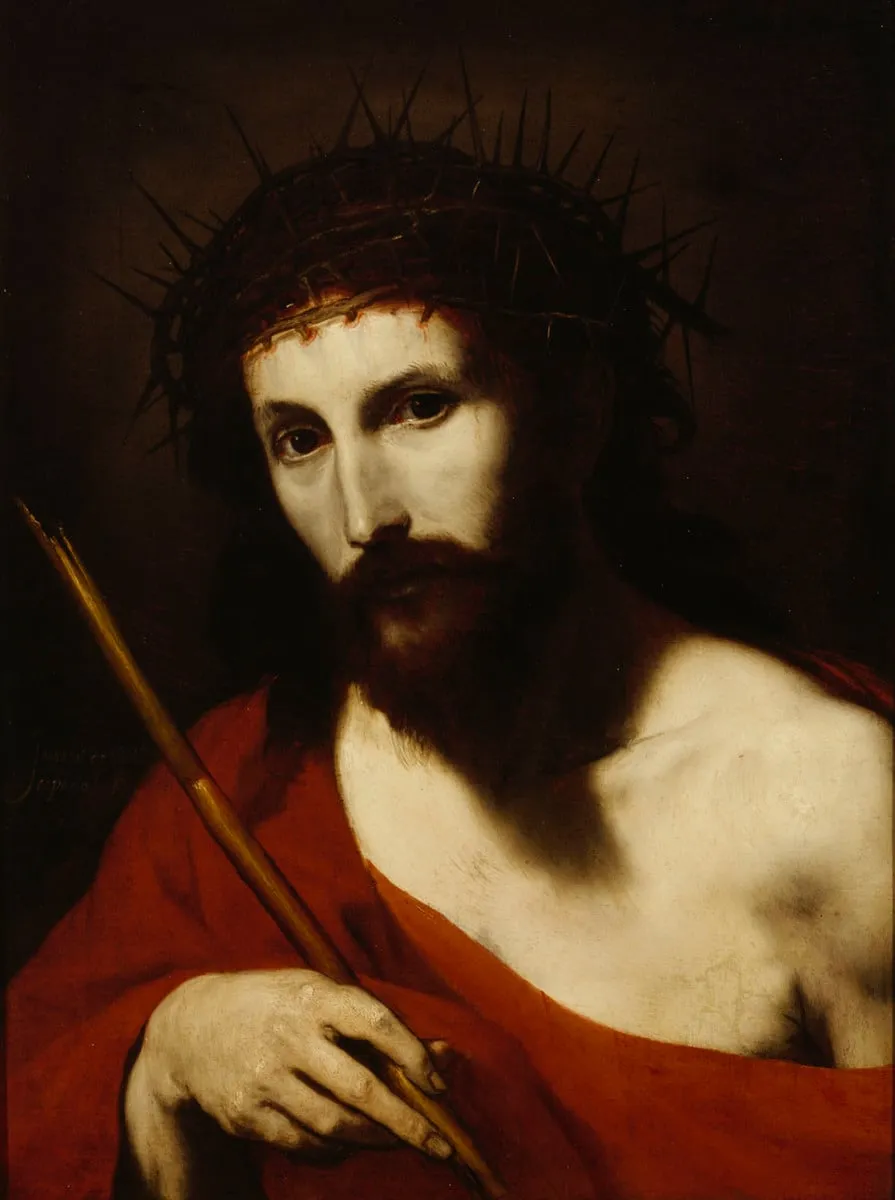
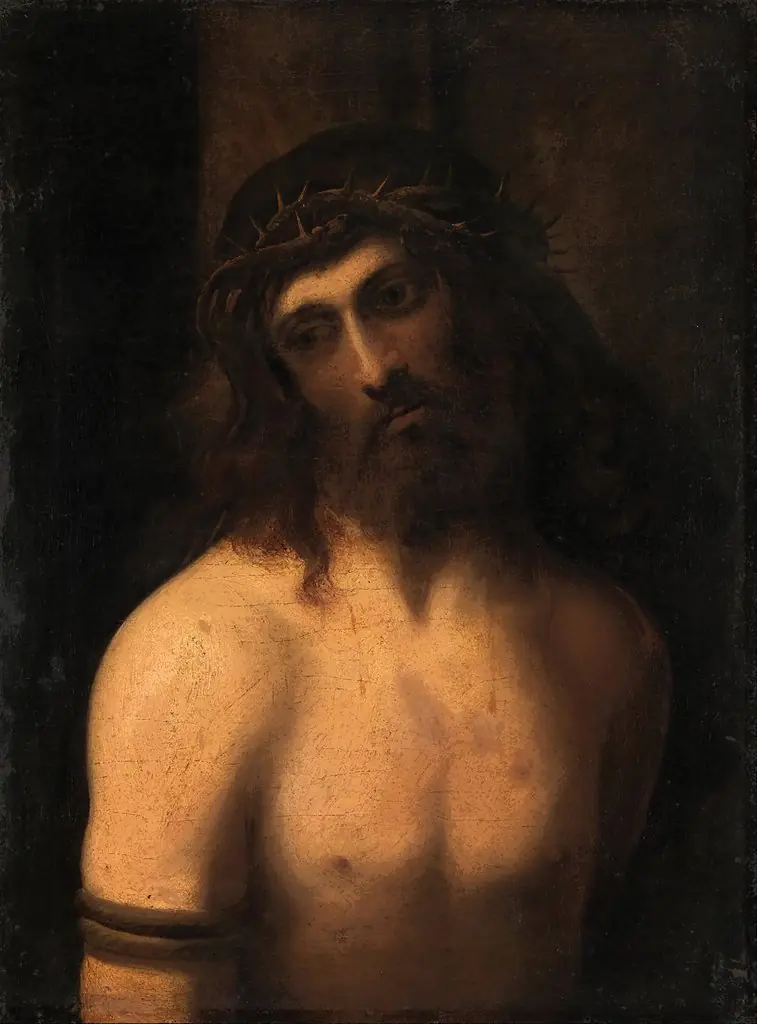
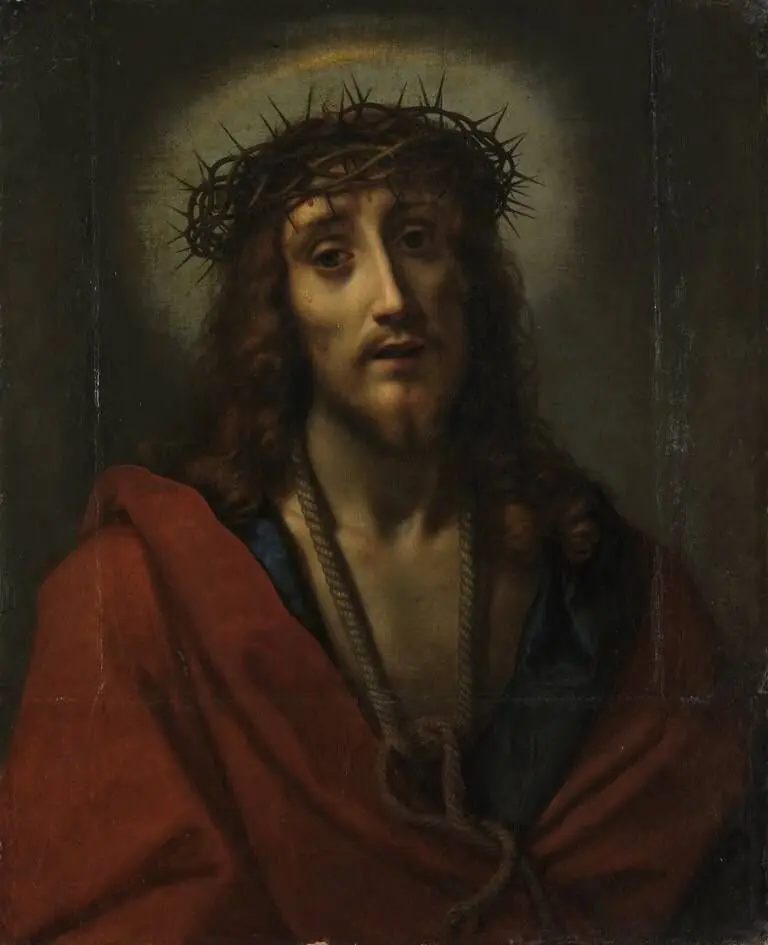
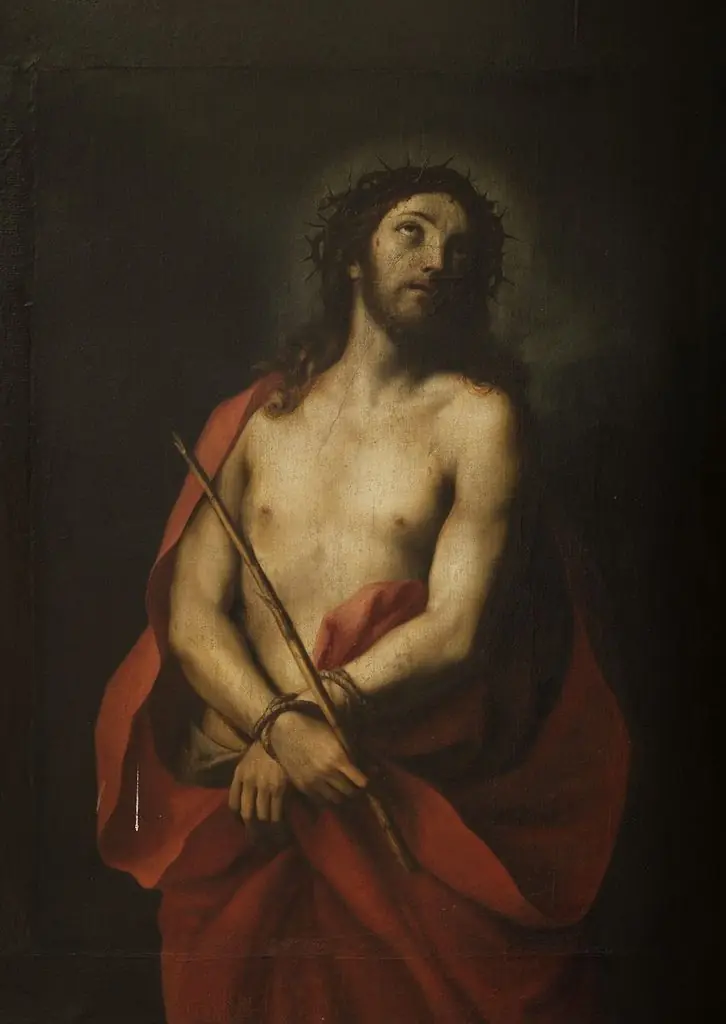
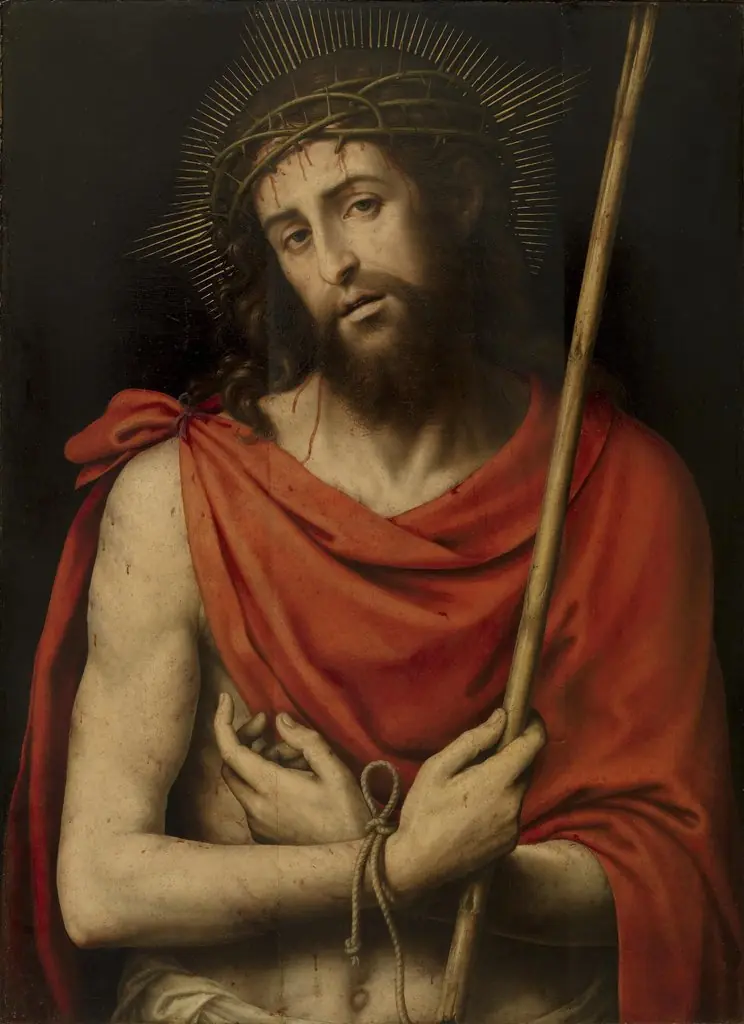
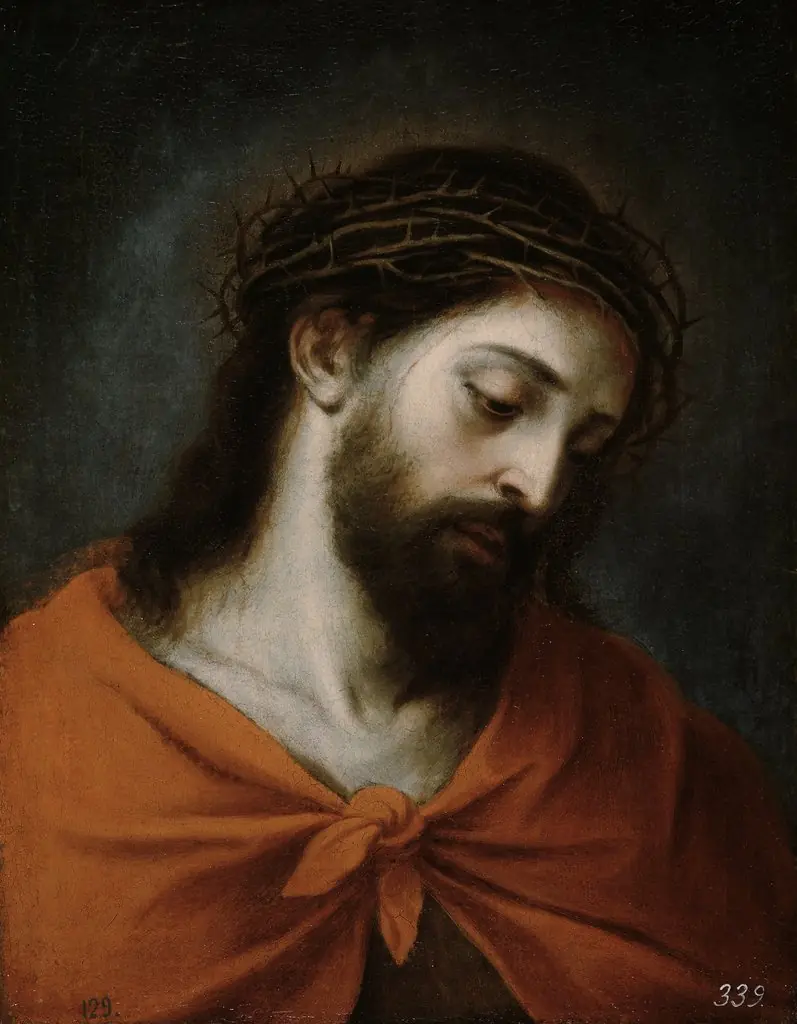
Ecce Homo is an unspecified painting by the Early Baroque Italian artist Jusepe de Ribera. It dates from 1631 and is held in the collection of the Finnish National Gallery.
About this work
Overview
The work reflects his mature style, shaped by years of engagement with Caravaggio’s legacy and the emotional intensity favored by Counter-Reformation patrons.
Jusepe de Ribera painted *Ecce Homo* circa 1631 while based in Naples, a hub of Baroque artistic activity. The work reflects his mature style, shaped by years of engagement with Caravaggio’s legacy and the emotional intensity favored by Counter-Reformation patrons. Executed in oil on canvas, the painting isolates its subject against a deep, unmodulated background, focusing attention on the physical and spiritual weight of the figure.
Subject & Meaning
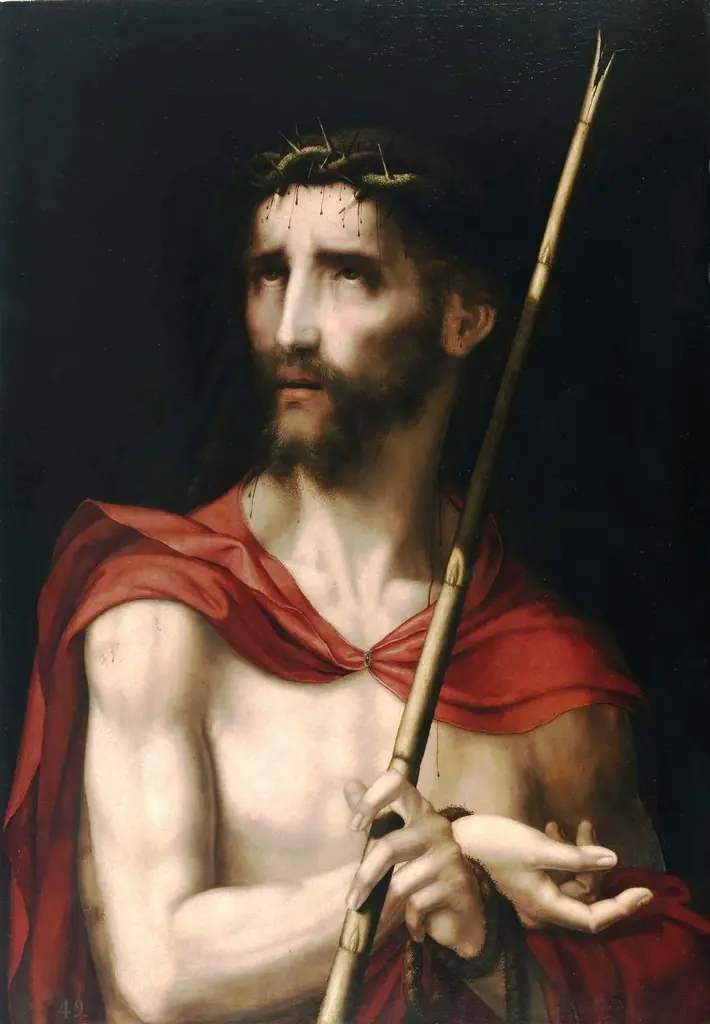
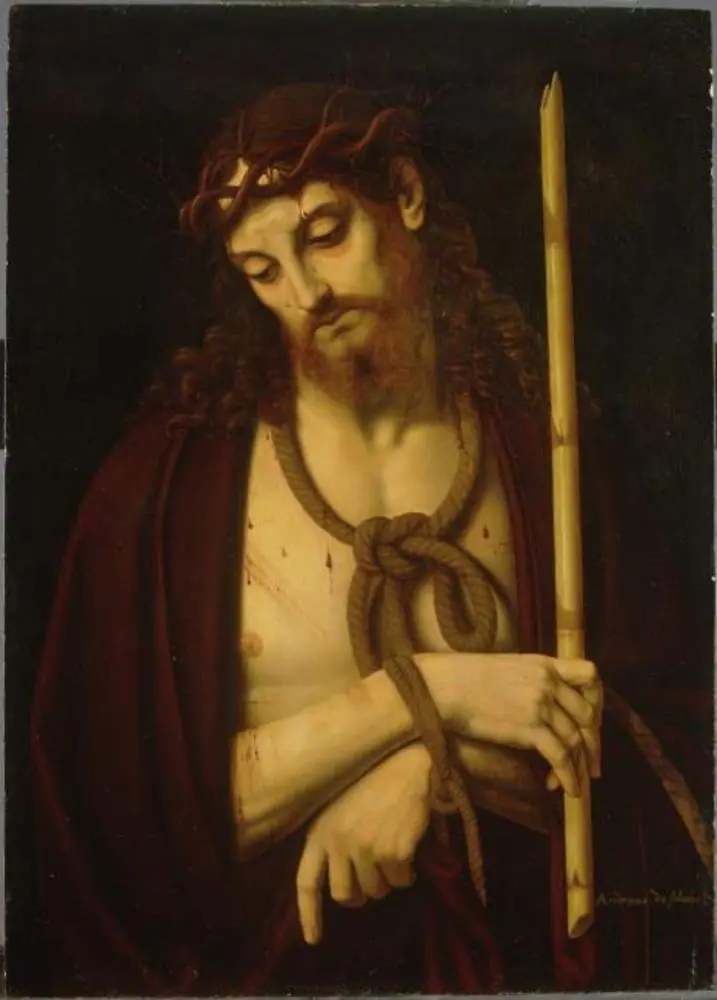
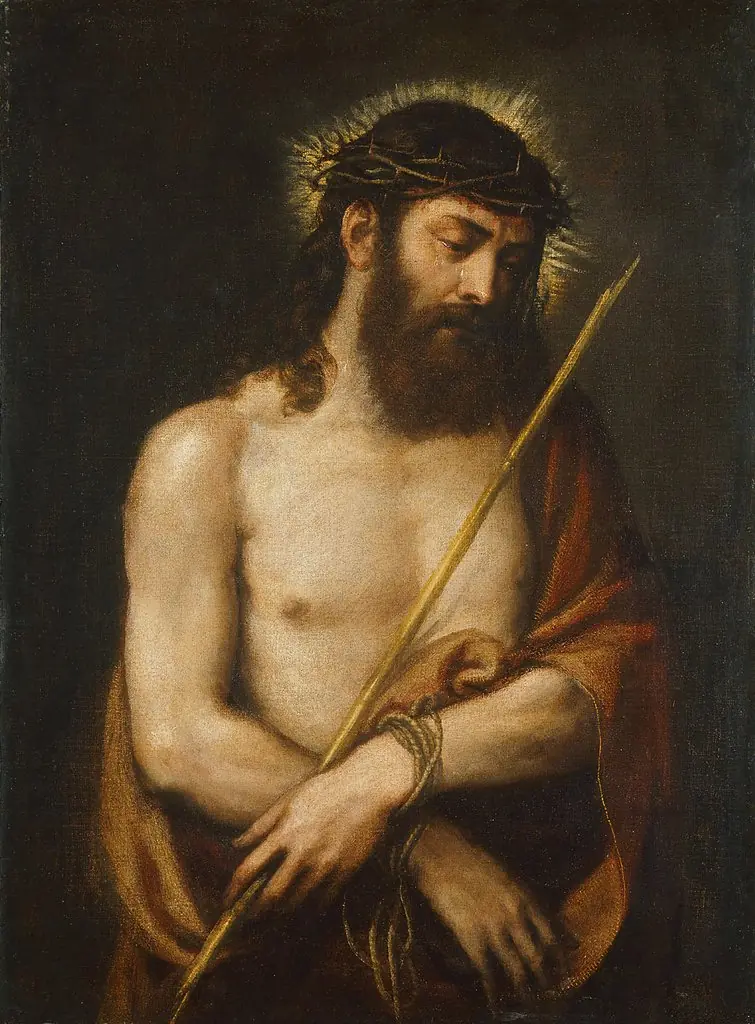
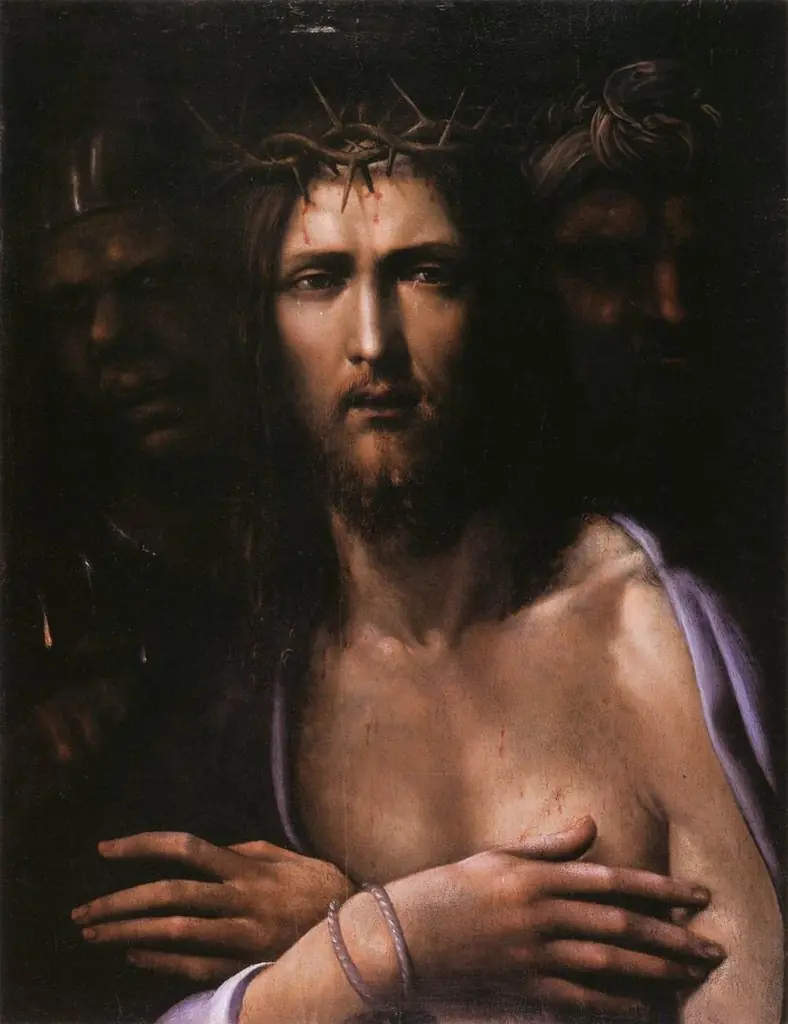
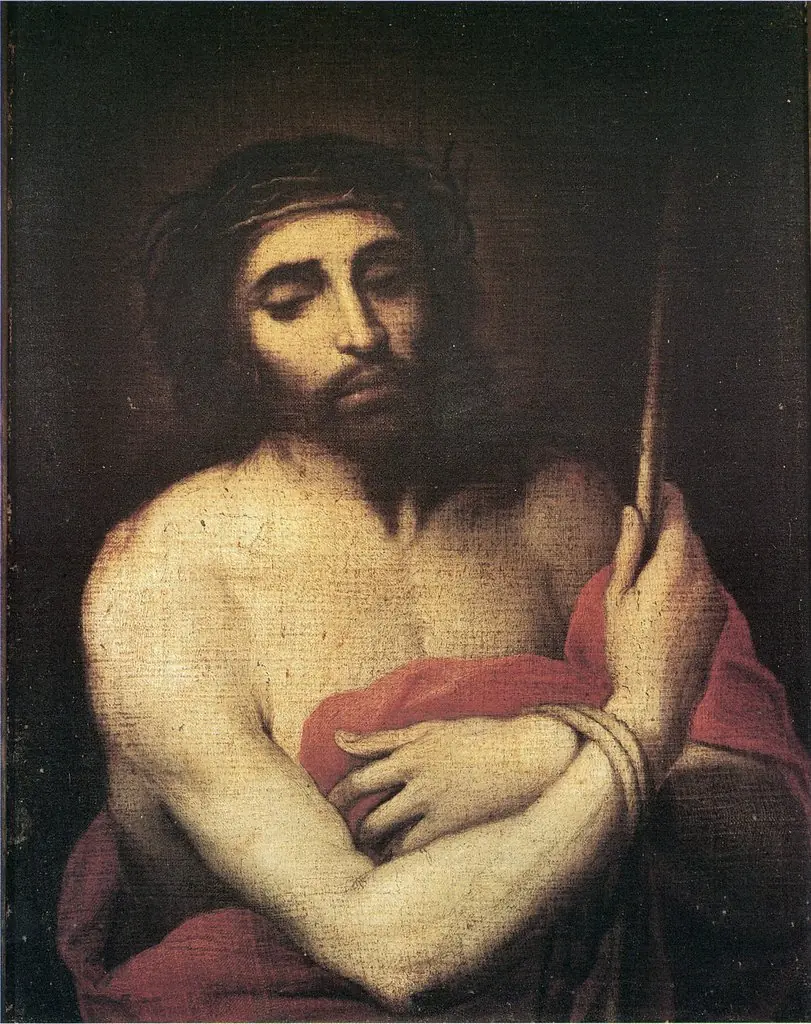
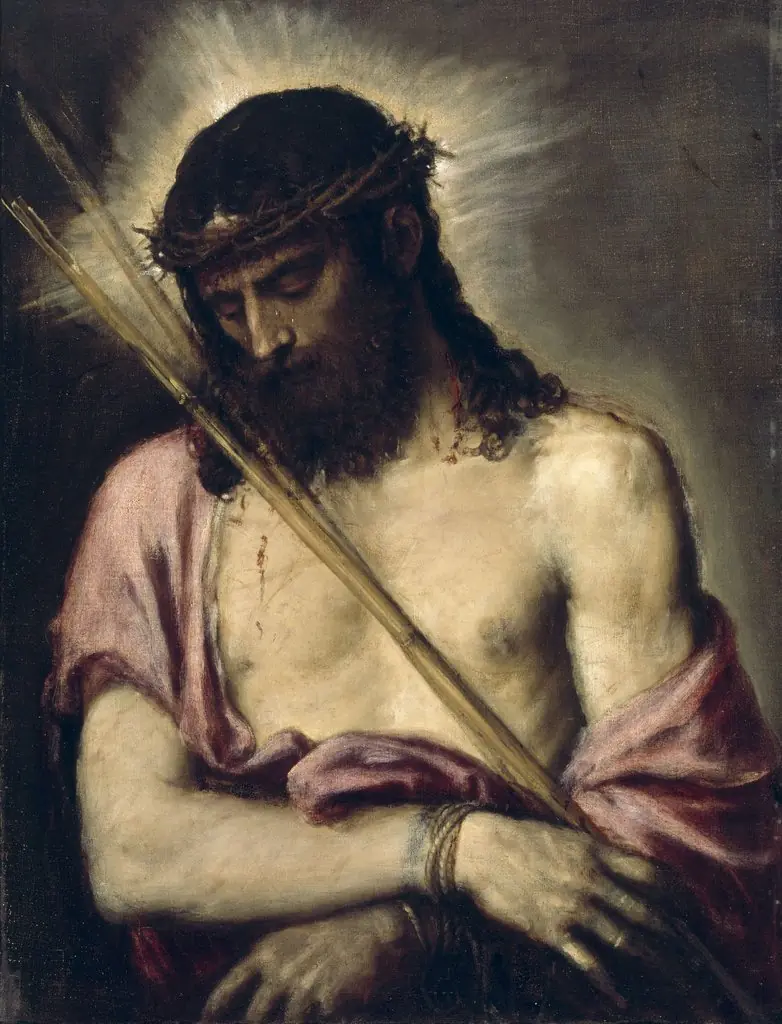
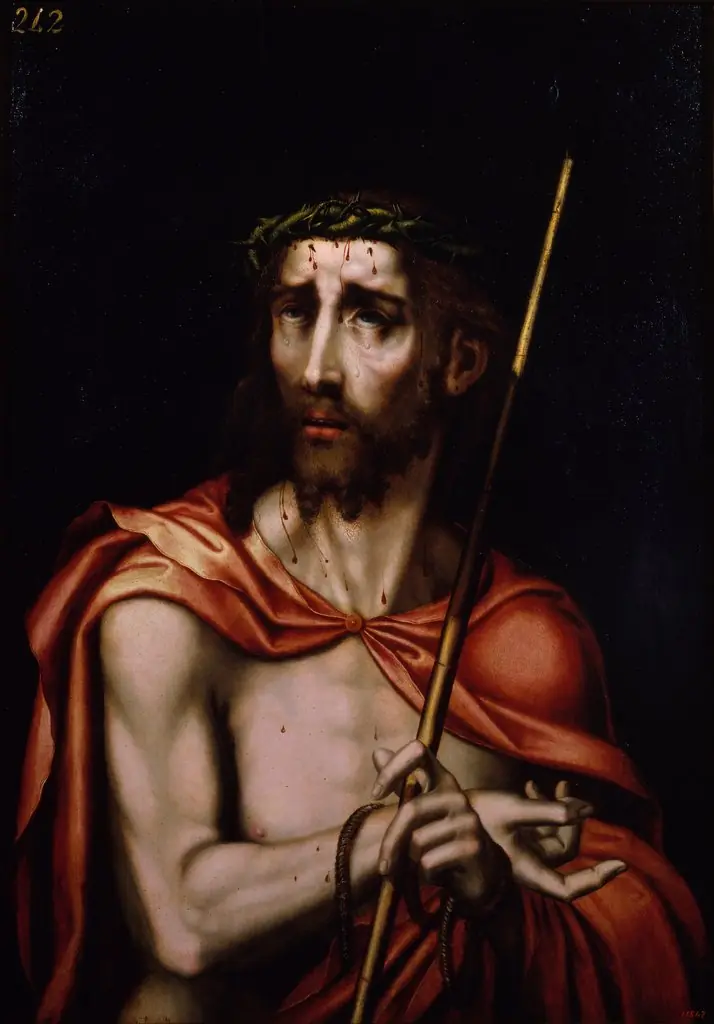
The painting captures the moment Pilate presents the scourged Christ to the crowd, as described in the Gospel of John. Christ, crowned with thorns and clad in a tattered red robe, holds a reed scepter—symbols of mockery and suffering. His direct gaze confronts the viewer, transforming the scene from a historical narrative into an intimate, personal encounter. The expression blends resignation with quiet resolve, inviting contemplation rather than spectacle.
Technique & Style
Ribera employs stark chiaroscuro to model the figure’s face and hands, enhancing their three-dimensionality and emotional gravity. The lighting falls sharply across the brow and cheekbones, while the shadows swallow the background and robe’s folds. Fine brushwork renders the thorns, skin texture, and dampness of the robe with unflinching realism. The palette is restrained, dominated by earth tones and the vivid red of the garment, heightening the figure’s isolation.
History & Provenance
Created during Ribera’s peak years in Naples, the painting likely originated as a private devotional piece for a religious confraternity or wealthy patron. It remained in southern Italy for centuries before entering a public collection. Its attribution has never been in serious doubt, supported by stylistic consistency with Ribera’s other works from the early 1630s, including his series of penitent saints and martyrdoms.
Context
In early 17th-century Naples, religious imagery was expected to evoke empathy and moral reflection. Ribera’s naturalism aligned with the Jesuit and Franciscan emphasis on Christ’s humanity. Unlike more idealized depictions elsewhere, his Christ bears the marks of physical torment, reflecting the era’s demand for visceral, accessible piety. The painting’s intimacy reflects broader trends in Counter-Reformation art prioritizing emotional immediacy over grandeur.
Legacy
Ribera’s *Ecce Homo* influenced later Spanish and Neapolitan painters who adopted his unidealized approach to sacred subjects. Its psychological depth and technical precision became a reference point for artists seeking to convey spiritual anguish through physical realism. Though not widely exhibited in its time, the work’s quiet power endured in private collections and scholarly studies, securing Ribera’s reputation as a master of somber, human-centered devotion.
Artist & collection
Artist
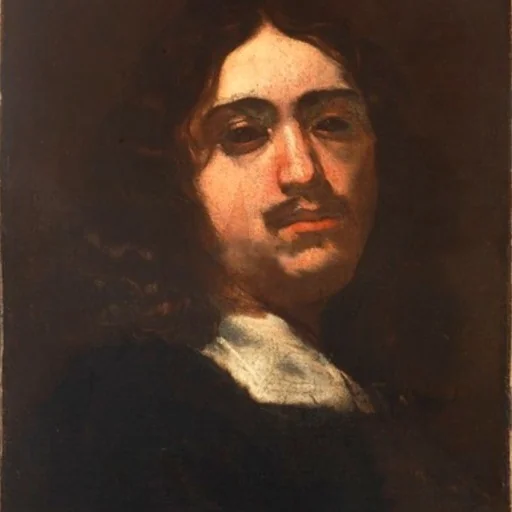
Jusepe de Ribera (Valencian: ; baptised 17 February 1591 – 3 November 1652) was a Spanish painter and printmaker.