Artwork
Peisaj de câmp cu două personaje
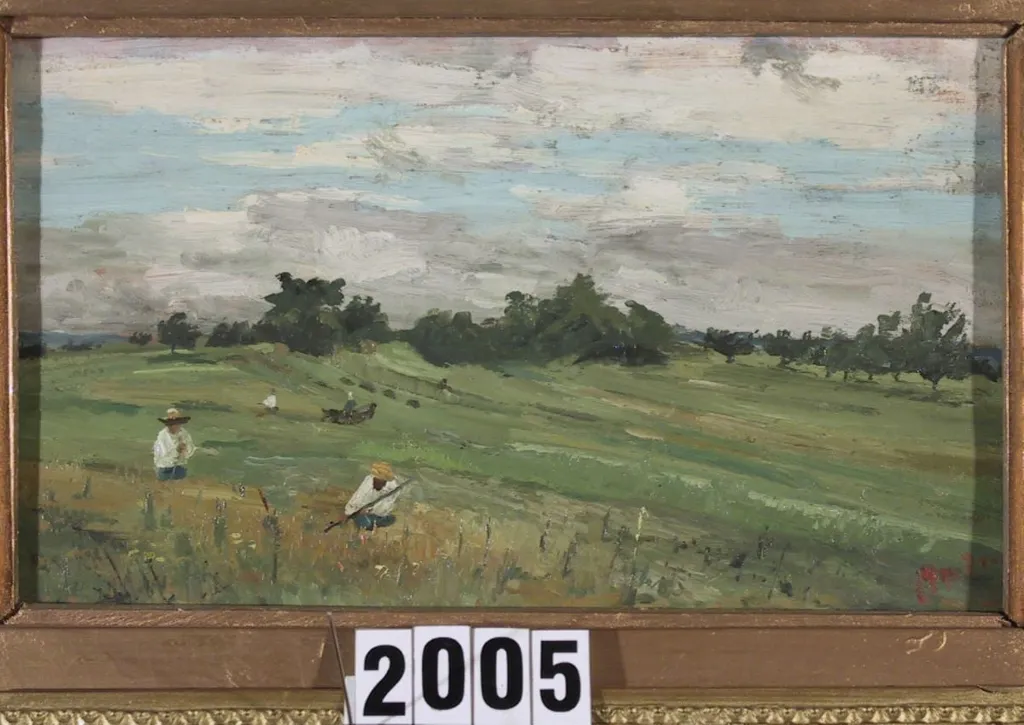
Peisaj de câmp cu două personaje is a print by Ion Andreescu. It dates from 1876 and is held in the collection of the Brukenthal National Museum.
About this work
Overview
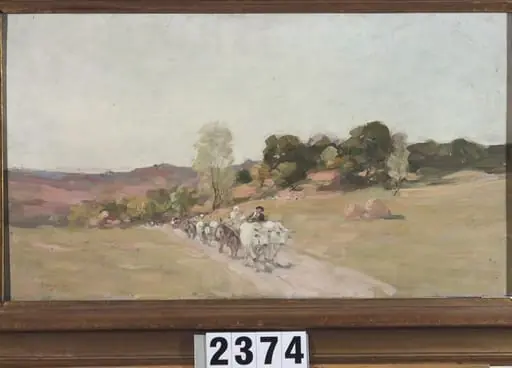
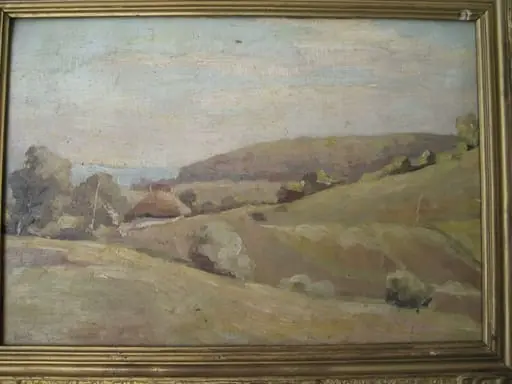
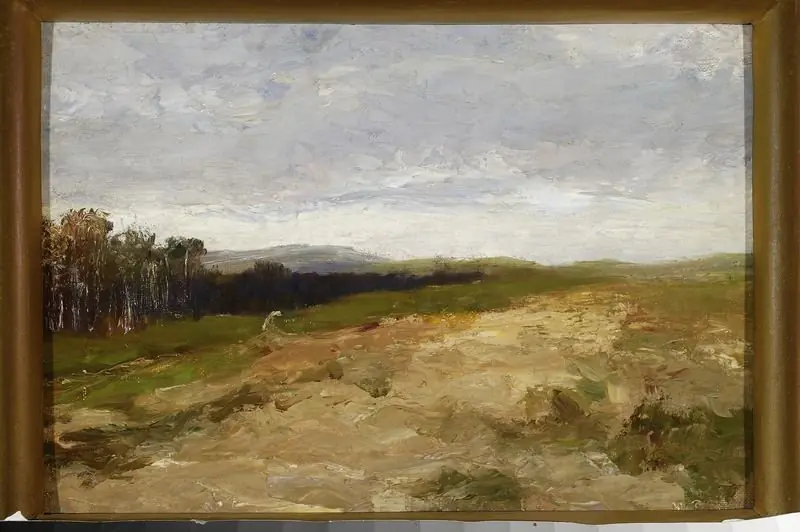
Painted around 1876 by Romanian artist Ion Andreescu, this landscape depicts two figures engaged in quiet labor within an open field. Executed in oil on canvas, the work reflects the artist’s engagement with outdoor painting practices. Its unposed atmosphere and immediate brushwork suggest it was completed en plein air, capturing a fleeting moment of rural life with sensitivity and spontaneity.
Subject & Meaning
The focus lies not in storytelling but in the quiet dignity of daily labor, framed within a natural setting that feels intimate and unaltered by artifice.
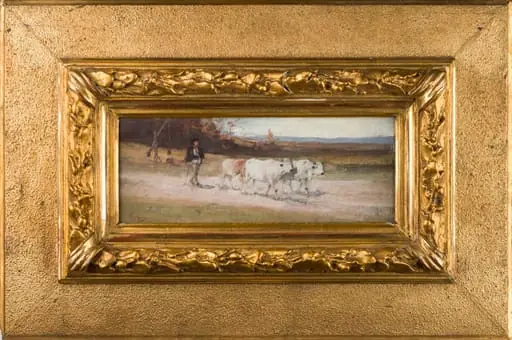
Two figures, one standing and the other bent low, are shown in a field, possibly gathering herbs or wild plants. Their actions are ordinary, unidealized, and devoid of narrative drama. The focus lies not in storytelling but in the quiet dignity of daily labor, framed within a natural setting that feels intimate and unaltered by artifice. The figures blend into the landscape rather than dominate it.
Technique & Style
Andreescu employed loose, visible brushstrokes to render the rolling terrain and shifting light. Greens, yellows, and whites are applied with a sense of urgency, suggesting direct observation. The sky is rendered in soft, blended clouds, while the grasses suggest movement through rapid, directional strokes. The palette, though bright, has mellowed over time, enhancing the work’s sense of age and authenticity.
History & Provenance
Created during Andreescu’s most active period, this painting emerged from a time when Romanian artists were increasingly turning to local landscapes and peasant life as subjects. It was likely painted in the countryside near Bucharest, where the artist frequently worked. The piece remained in private hands until entering a public collection in the 20th century, preserving its original condition.
Context
In the 1870s, Romanian art was shifting from academic traditions toward realism and naturalism, influenced by French plein-air practices. Andreescu, among the first in his country to adopt this approach, sought to capture the essence of rural Romania without romanticizing it. This work aligns with broader European trends that valued direct observation over studio idealization.
Legacy
The painting stands as an early example of Romanian plein-air painting, influencing later generations who sought to depict national landscapes with honesty and immediacy. Though not widely exhibited during Andreescu’s lifetime, it is now recognized as a foundational work in the development of modern Romanian art, valued for its quiet realism and technical sensitivity.
Artist & collection