Artwork
Femeie în fotoliu
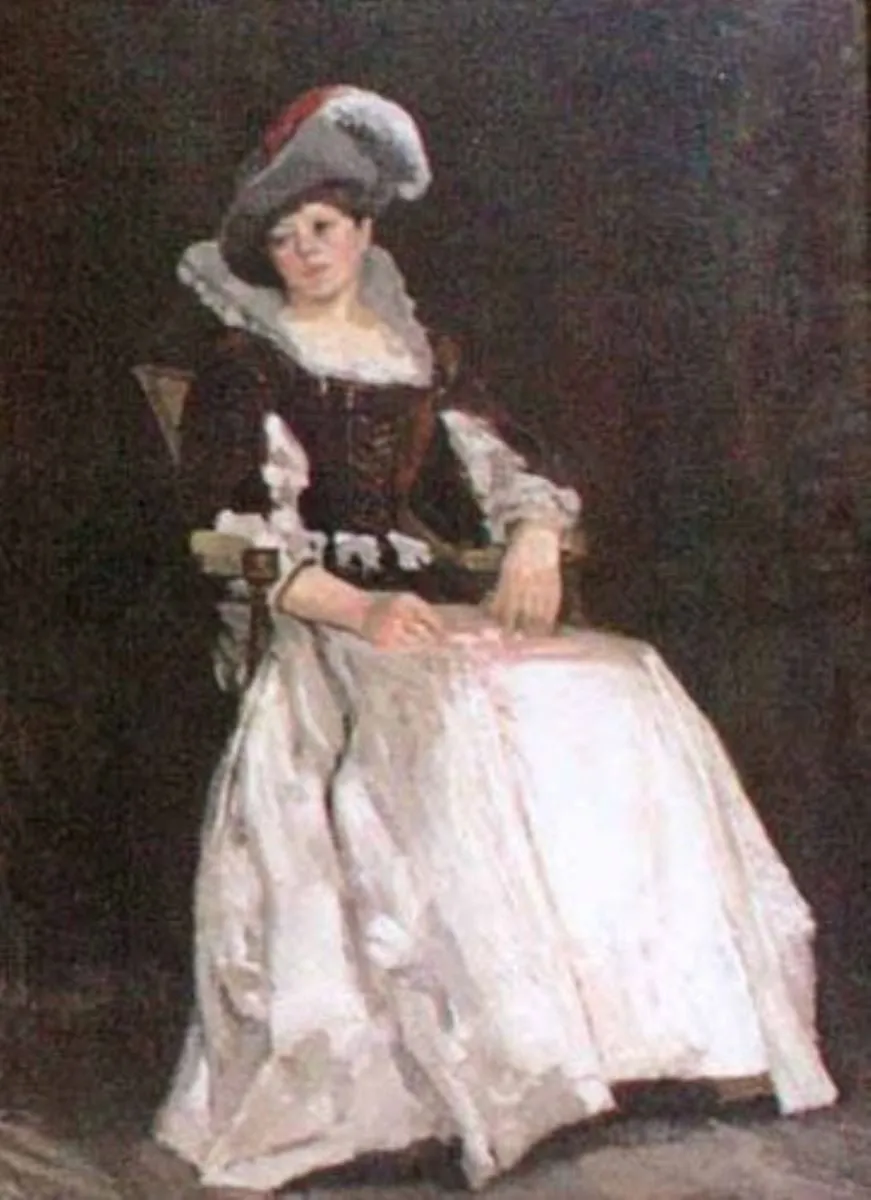
Femeie în fotoliu is an unspecified painting by the Impressionist artist Ion Andreescu. It dates from 1881 and is held in the collection of the National Museum of Art of Romania.
About this work
You see a woman sitting in a wooden chair. Her dress is dark blue with white dots. She looks calm and relaxed. The light hits her face gently.
This is a quiet painting from 1881 in Romania. The artist used soft brush strokes to show light and shadow. It feels both real and dreamy at the same time.
Look up Andreescu, Ion next.
Overview
"Femeie în fotoliu" is an oil painting executed by Romanian artist Ion Andreescu in 1881. The work presents a solitary female figure seated on a wooden chair, rendered with a restrained palette and a calm atmosphere. It exemplifies Andreescu’s early period, when he was developing a personal approach to genre scenes within the broader context of 19th‑century Romanian art.
Subject & Meaning
The composition centers on a woman dressed in a dark blue garment patterned with white dots, seated comfortably in a simple chair. Her posture and the gentle illumination of her face convey a sense of quiet repose, inviting contemplation of everyday domestic life. The painting does not narrate a specific story but emphasizes mood and the inner tranquility of the sitter.
Technique & Style
Andreescu employs soft, blended brushwork to model light and shadow, allowing the illumination to fall delicately across the woman's features and the surrounding space. The handling of color is subtle, with muted tones that enhance the dreamy quality of the scene while maintaining a realistic representation of texture, particularly in the fabric and wooden chair.
History & Provenance
Created in 1881, the painting belongs to the period when Andreescu was active in Bucharest and participating in local exhibitions. Although detailed records of its early ownership are scarce, the work has been documented in Romanian museum collections and scholarly catalogues, confirming its attribution to Andreescu and its place within his oeuvre.
Artist & collection


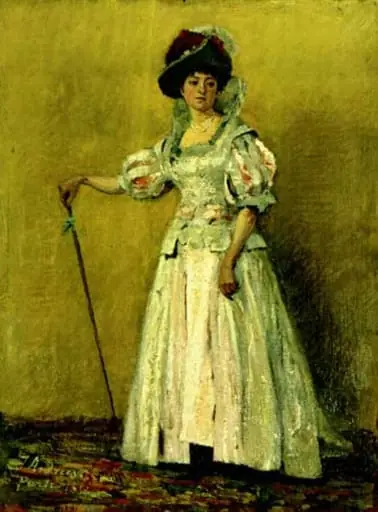 Portret de femeie în costum de epocă
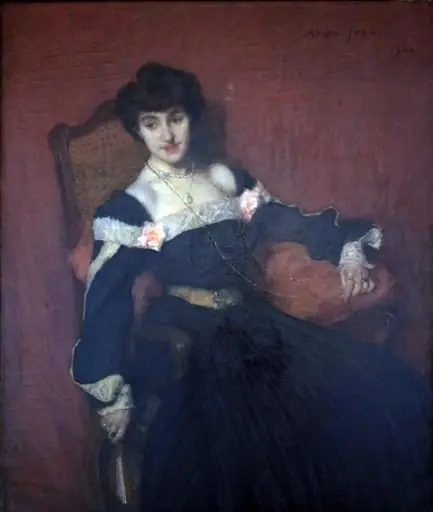 Portretul Doamnei Grant
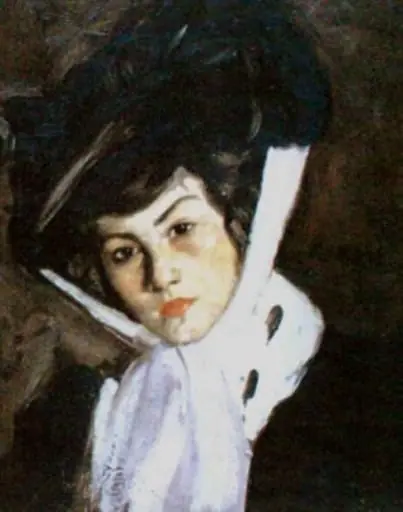 Portret de femeie
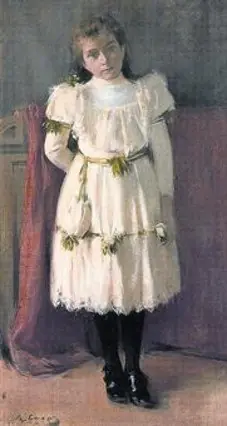 Retrat de la nena Sardà
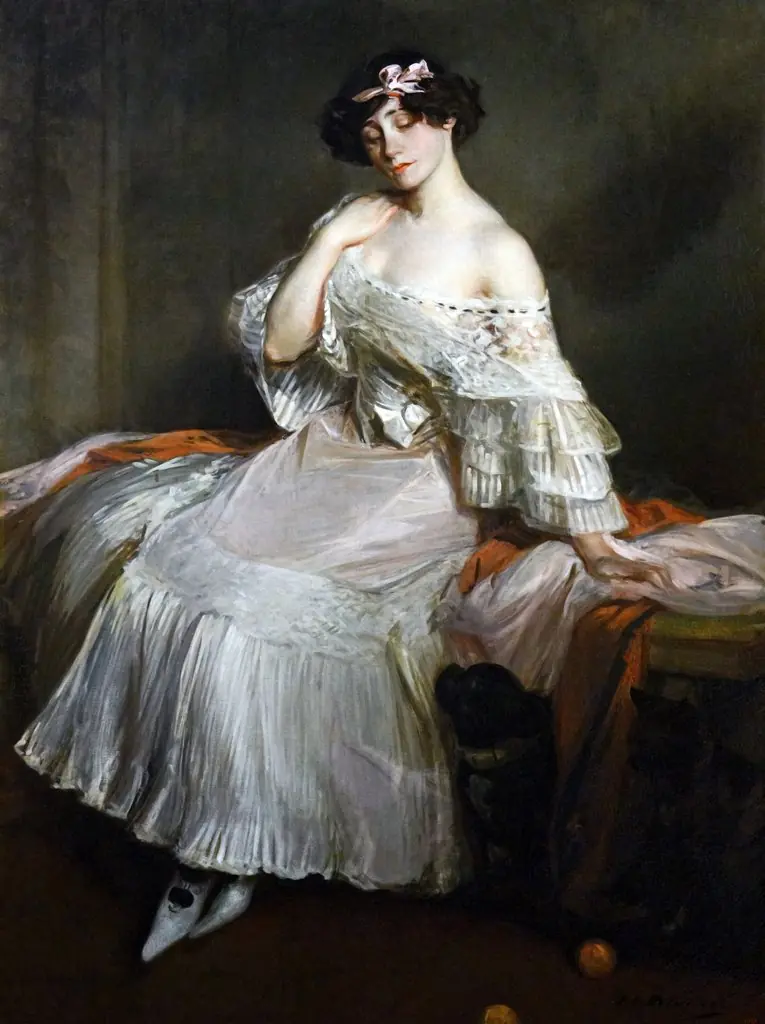 Portrait of the Novelist Colette
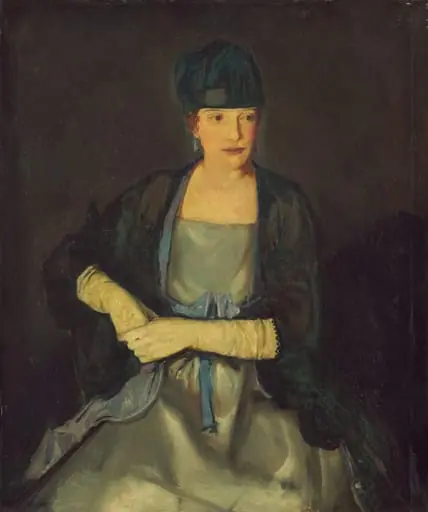 Maud Murray Dale (Mrs. Chester Dale)
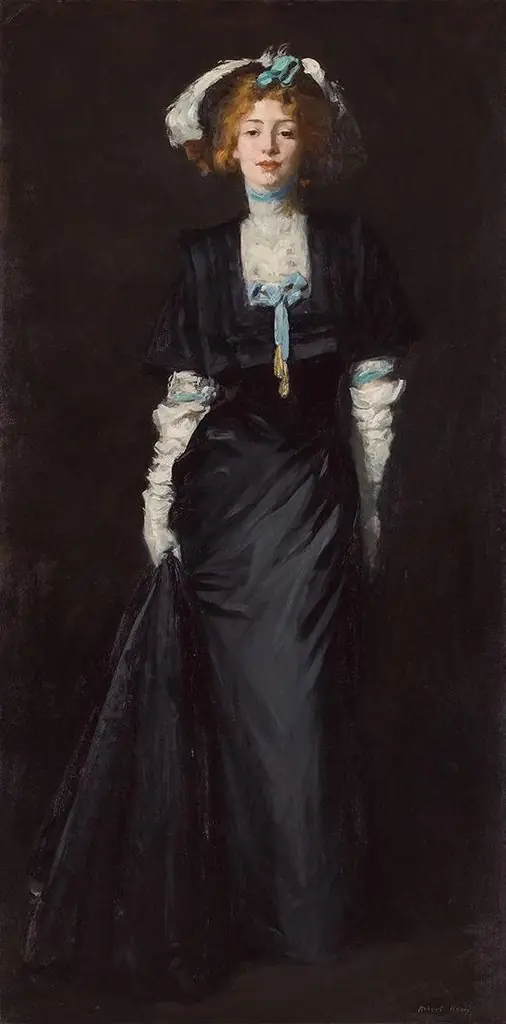 Jessica Penn in Black with White Plumes
 Portret de femeie
 Portrait of Marta Vidal Puig
 Silk and lace
 Bătrână pe fotoliu
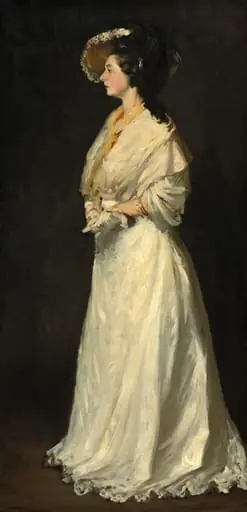 Young Woman in White