Artwork
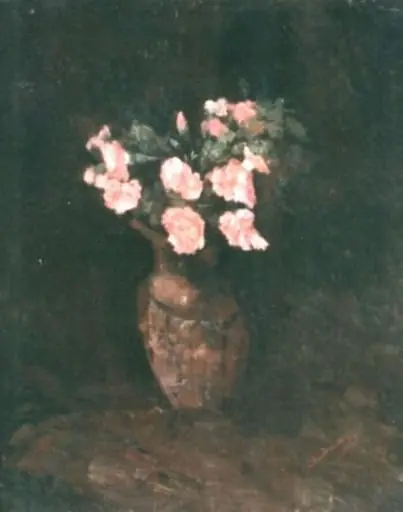
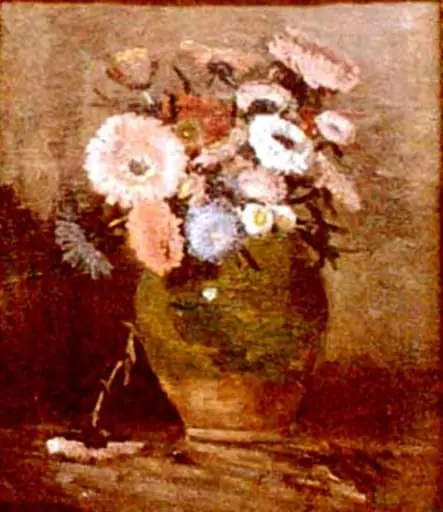
Ulcică cu flori de câmp
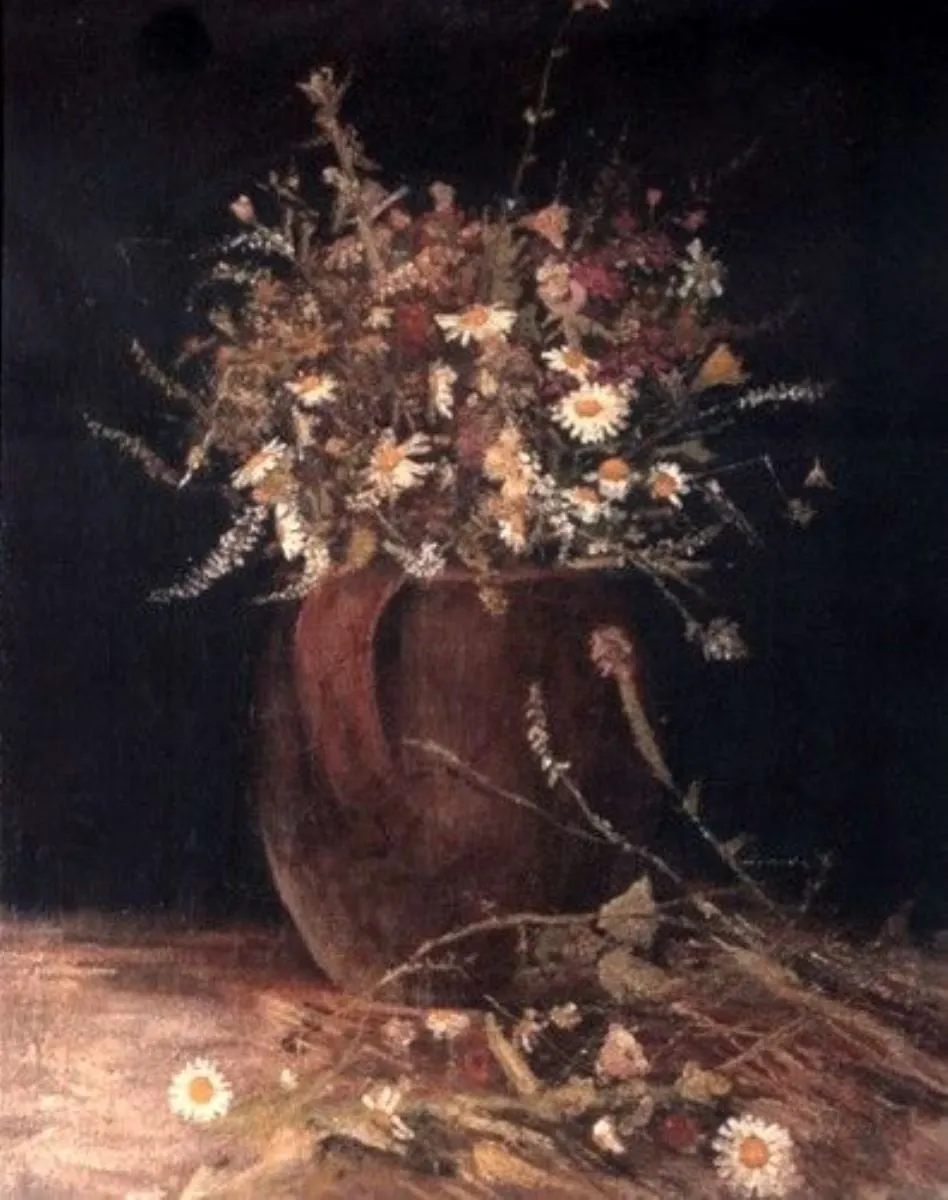
Ulcică cu flori de câmp is an unspecified painting by Ion Andreescu. It dates from 1850 and is held in the collection of the Colecție particulară - București.
About this work
Overview
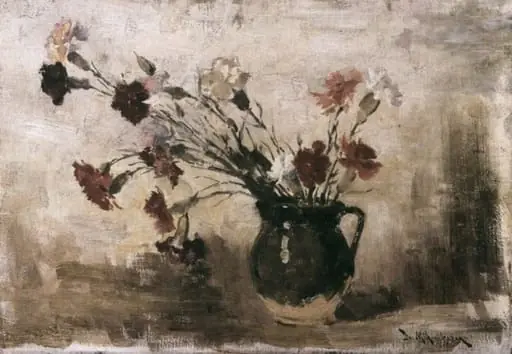
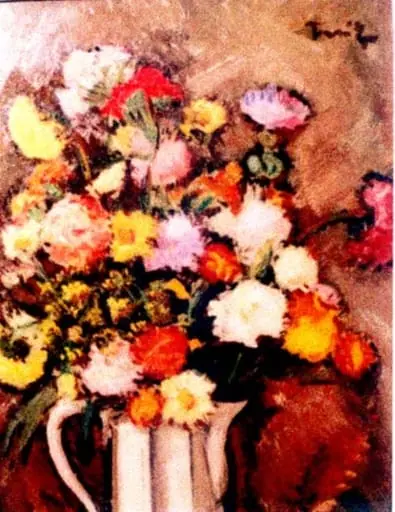
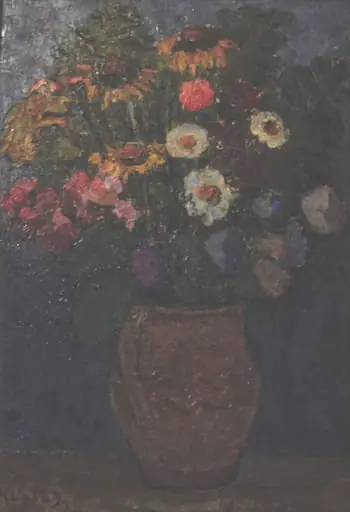
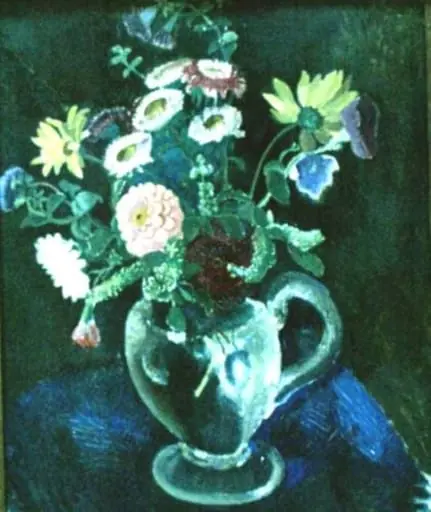
It depicts a simple clay vessel holding a gathering of wildflowers, arranged naturally with some blooms spilling onto the surface beneath.
Ulcică cu flori de câmp is a still-life painting by Romanian artist Ion Andreescu, dated around 1850. It depicts a simple clay vessel holding a gathering of wildflowers, arranged naturally with some blooms spilling onto the surface beneath. Rendered against a dark background, the composition emphasizes the quiet presence of everyday rural objects, reflecting a sensitivity to humble, domestic beauty.
Subject & Meaning
The painting centers on a modest arrangement of wildflowers—predominantly white with yellow centers, accented by faint pink and purple hues—gathered from the countryside. These flowers, gathered without formal order, suggest a personal, intimate moment of collection. The work conveys no grand narrative but instead honors the quiet dignity of nature found in ordinary life, resonating with rural Romanian traditions of floral decoration.
Technique & Style
Andreescu employs a restrained palette and soft modeling to render the flowers and earthen pot with subtle texture. The dark background enhances the luminosity of the blooms, creating a gentle contrast that draws attention to their form and color. Brushwork is unobtrusive, favoring naturalism over ornamentation, and the composition avoids symmetry, allowing the arrangement to feel spontaneous and grounded in observation.
History & Provenance
The painting has been held since its creation in the collection of the Museum of Ethnography, where it remains part of a broader archive of Romanian folk and artistic expression. Its preservation suggests early recognition of its cultural value, though little documentation exists about its initial reception or ownership prior to its museum acquisition.
Context
Created during a period of growing national consciousness in Romania, the painting reflects a broader cultural turn toward valuing indigenous subjects and rural life. While academic art favored historical or mythological themes, Andreescu’s focus on domestic still-life aligned with emerging Romantic ideals that celebrated the authenticity of the everyday and the natural world.
Legacy
Ulcică cu flori de câmp stands as an early example of Romanian still-life painting that prioritizes emotional resonance over technical flourish. Its quiet realism influenced later generations of artists seeking to depict local life with sincerity. The work continues to be studied for its understated harmony and its role in shaping a distinctly Romanian visual language outside academic traditions.
Artist & collection