Artwork
The Visitation
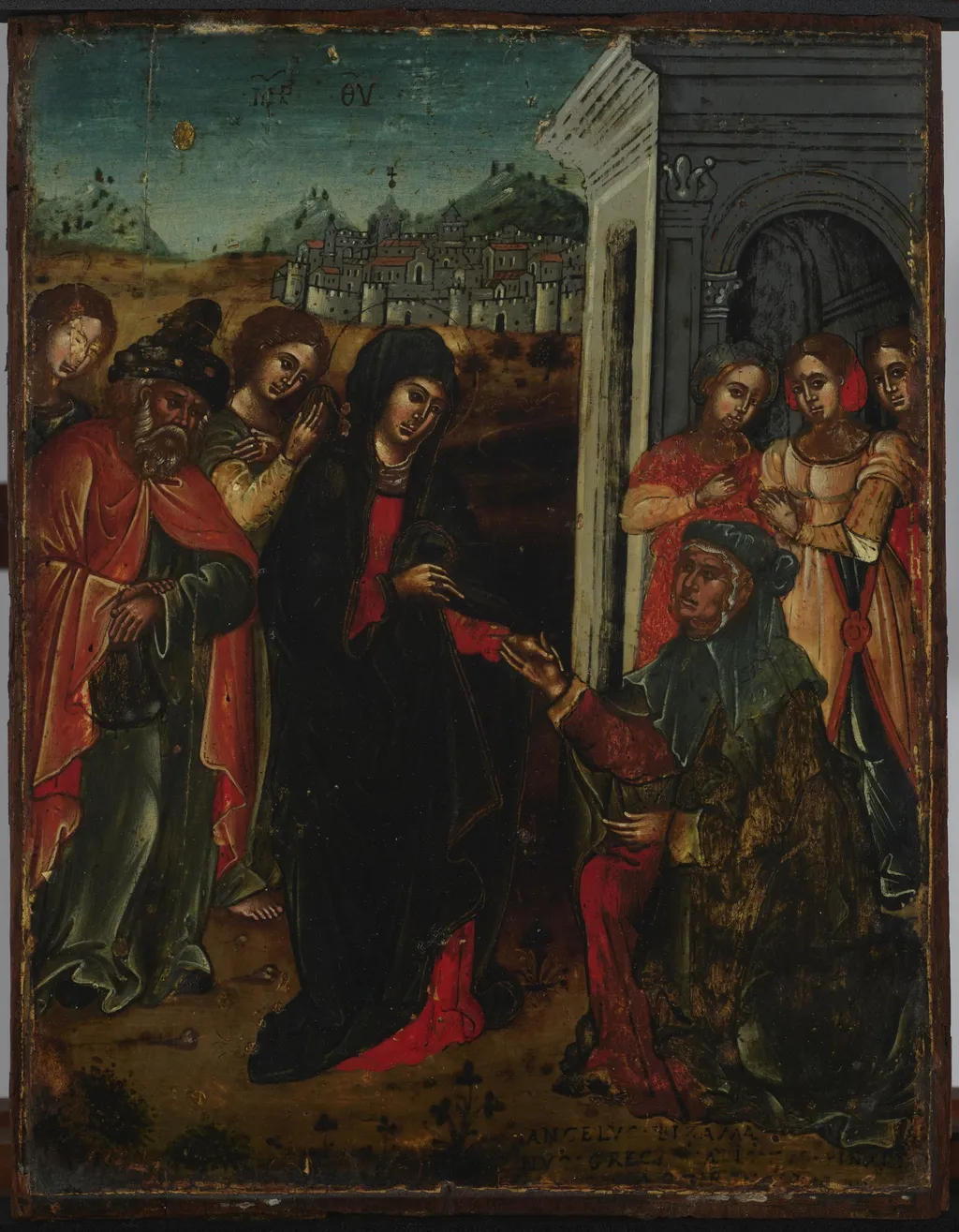
The Visitation is a tempera painting by the Byzantine icon painting artist Angelos Pitzamanos. It dates from 1517 and is held in the collection of the Walters Art Museum.
About this work
Overview
The Visitation is a tempera painting created in 1517 by Angelos Pitzamanos, a Greek Renaissance artist working in Southern Italy. The work blends Byzantine iconographic traditions with Italian influences, reflecting the artist’s diverse training.
Subject & Meaning
The painting depicts a biblical scene: Mary’s visit to her cousin Elizabeth, with Zechariah present. Mary, in a black robe and red dress, stands centrally, her right hand extended toward the kneeling Zechariah, amidst a gathered group.
Technique & Style
Pitzamanos employed tempera to achieve depth and texture, utilizing a vibrant palette of reds, greens, and blues. The dynamic composition centers on Mary, with figures and a distant townscape of buildings and hills creating visual layers.
History & Provenance
The Visitation is part of the Walters Art Museum’s collection. Pitzamanos’s style in this work reflects his training under Andreas Pavias in Crete and subsequent exposure to Italian Renaissance styles in Southern Italy.
Context
This painting exemplifies the artistic crossroads of the Greek Renaissance, where Byzantine heritage merged with Italian Renaissance techniques, characteristic of artists working in Southern Italy during this period.
Artist & collection
Artist
Angelos Pitzamanos (Greek: Άγγελος Πιτζαμάνος; 1467–1535) was a Greek Renaissance painter.

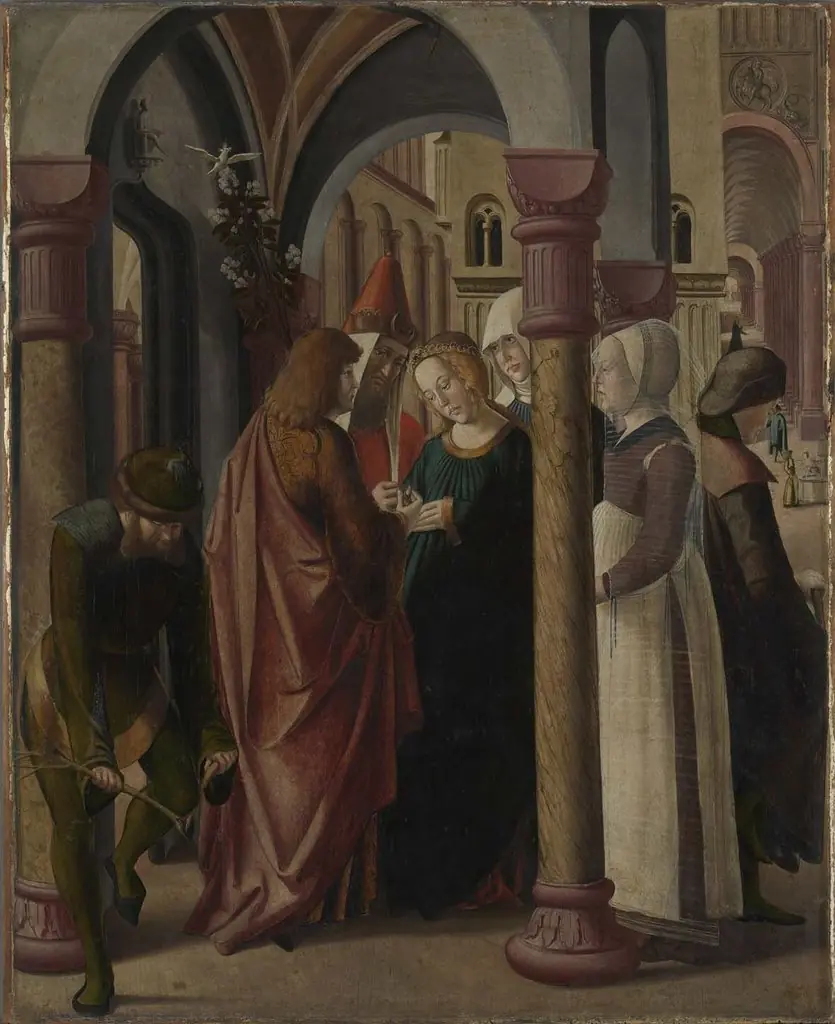 Marienaltar: Vermählung Mariae
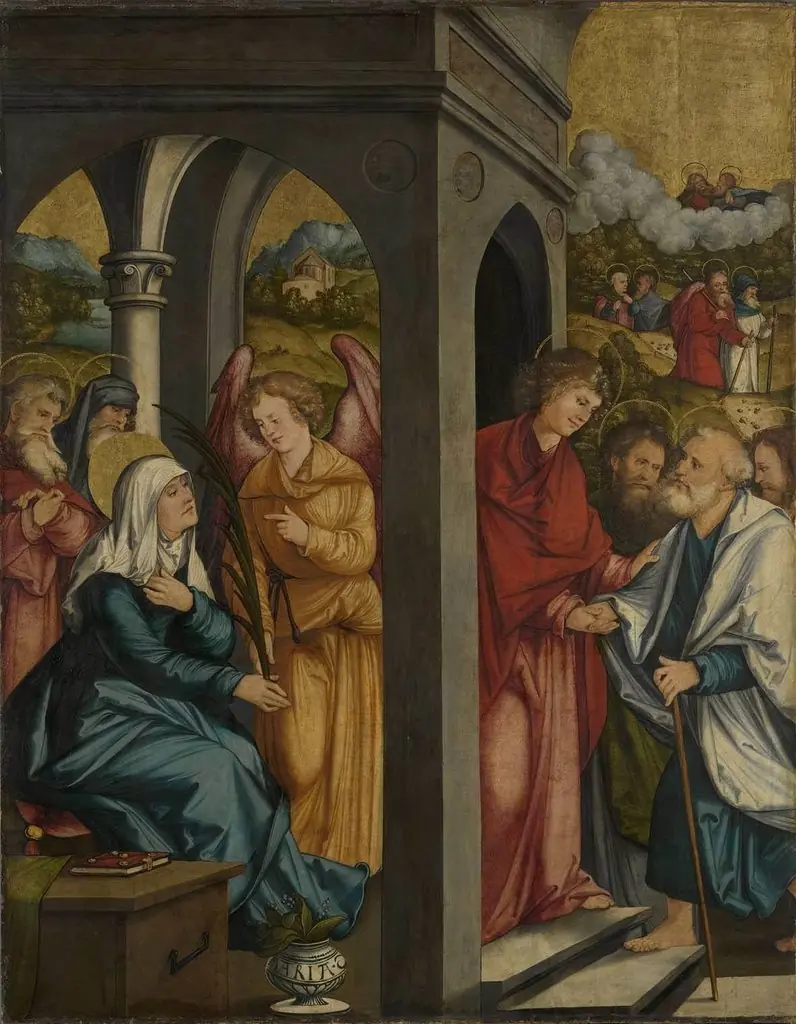 Christgartner Altar: Ein Engel reicht Maria die Palme
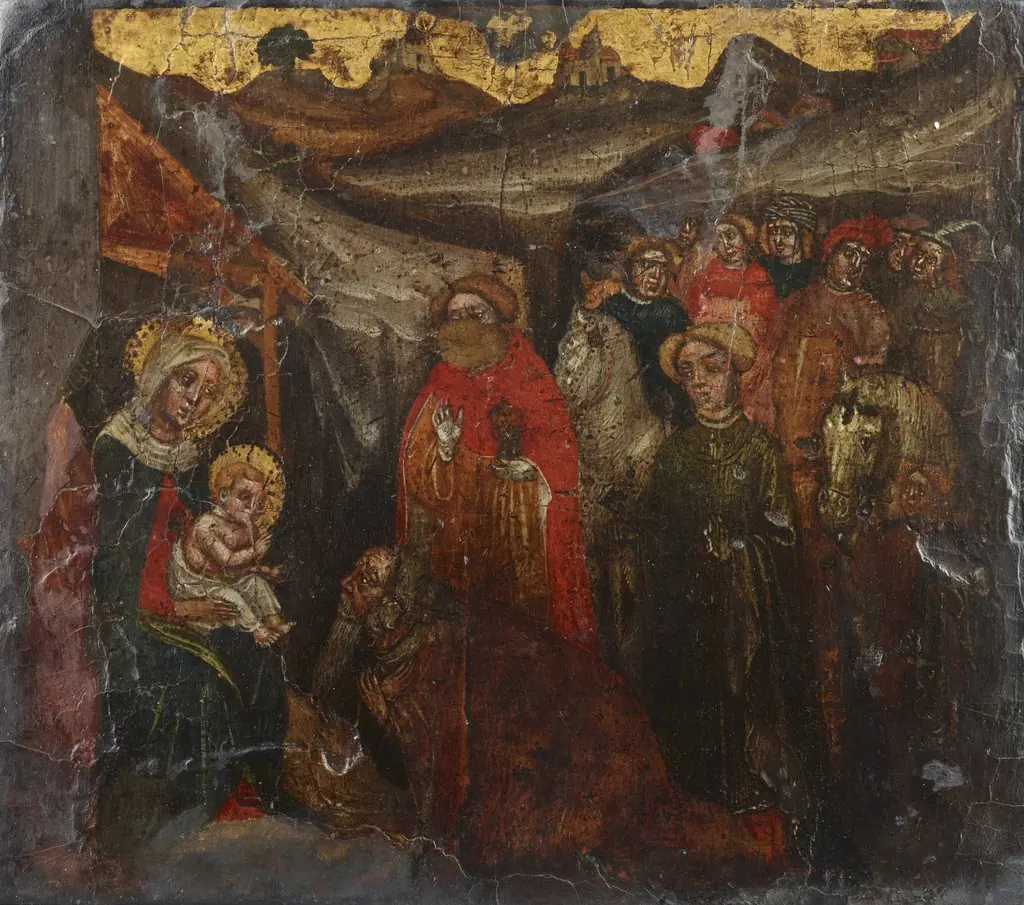 Adoration of the Magi
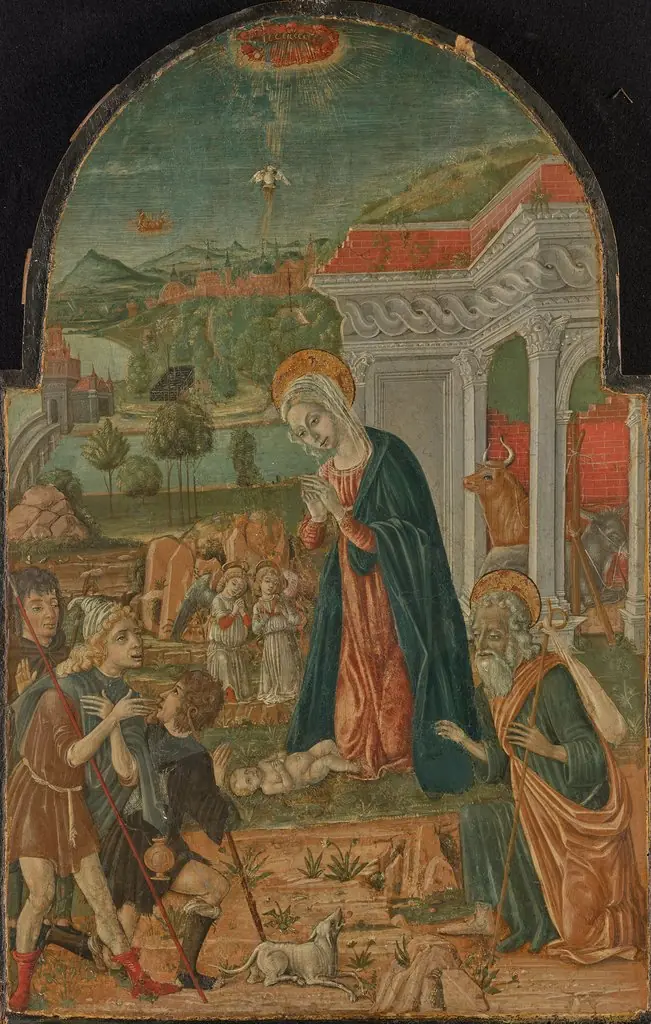 The adoration of the Shepherds
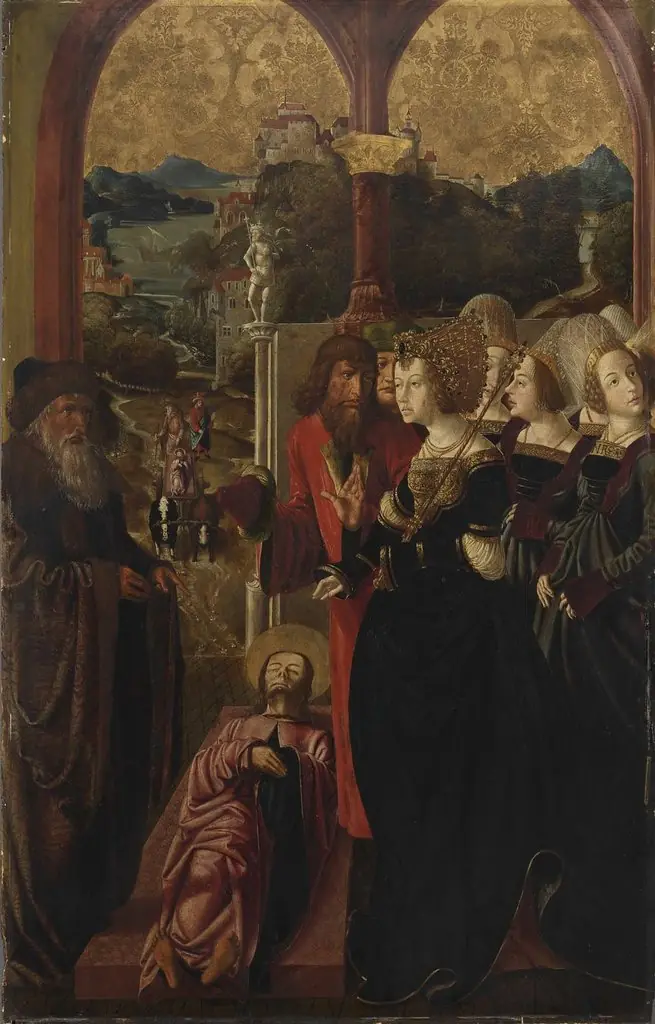 Jakobus-Stephanus-Altar: Der Leichnam des Jakobus wird vor Königin Lupa gebracht
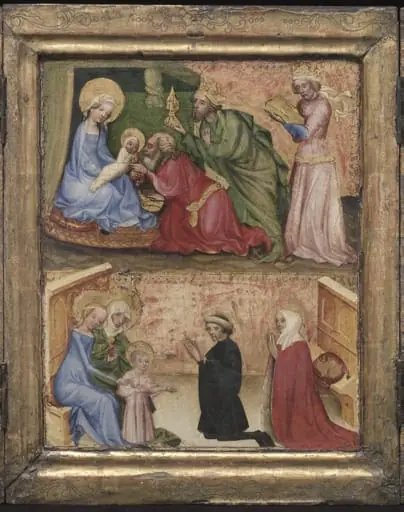 The Adoration of the Magi
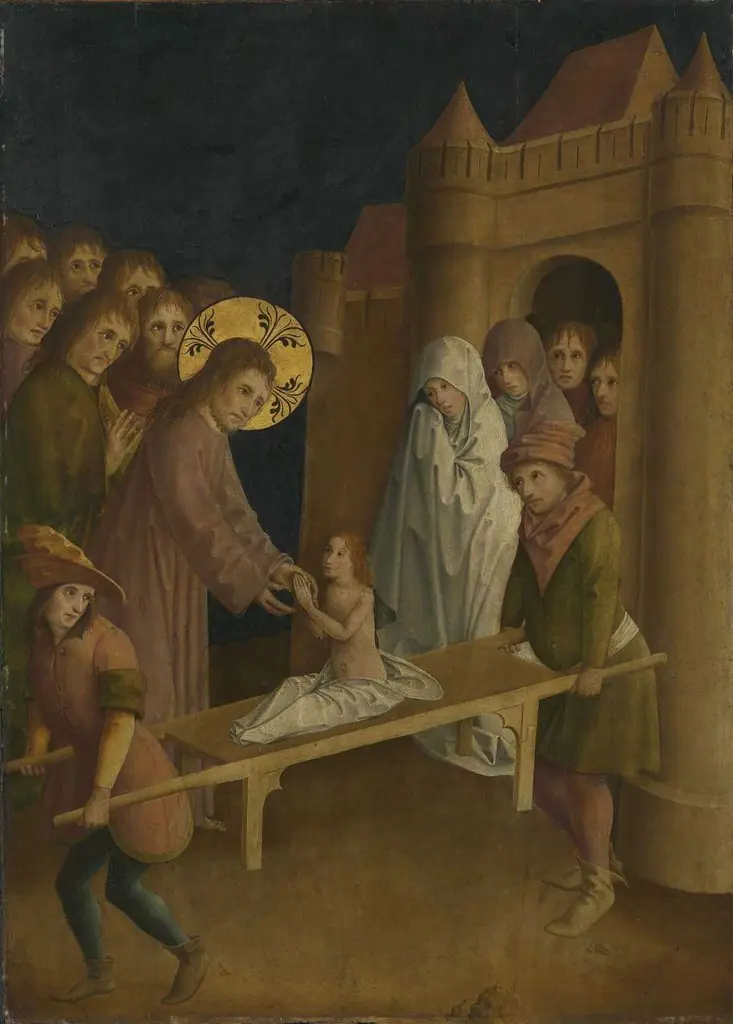 Die Erweckung des Jünglings von Nain
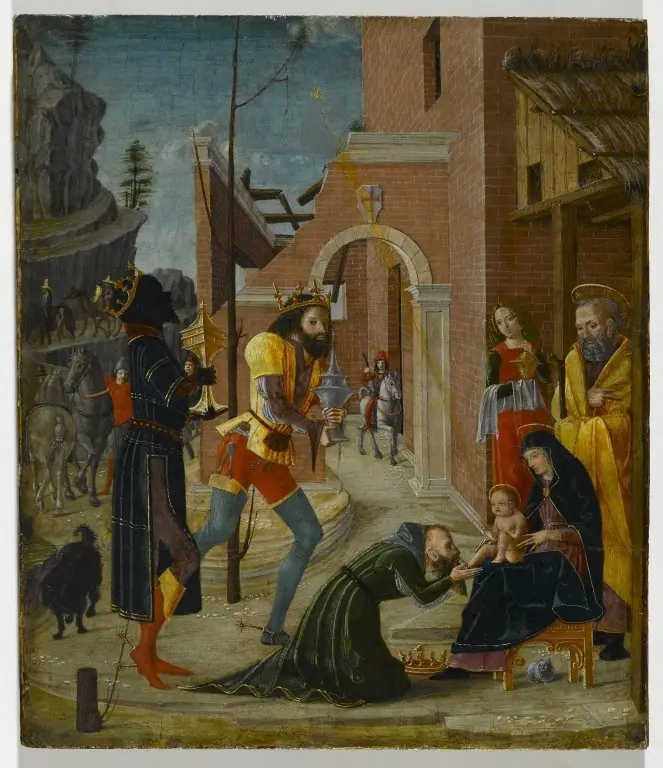 The Adoration of the Magi
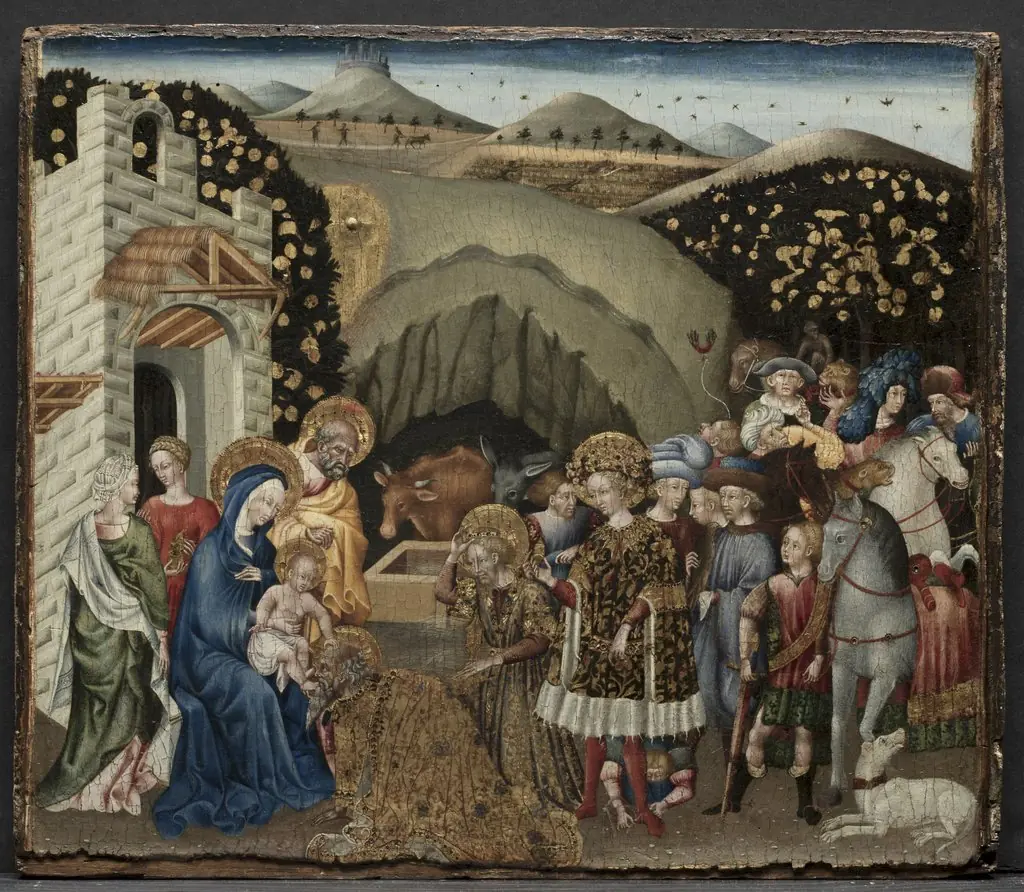 The Adoration of the Magi
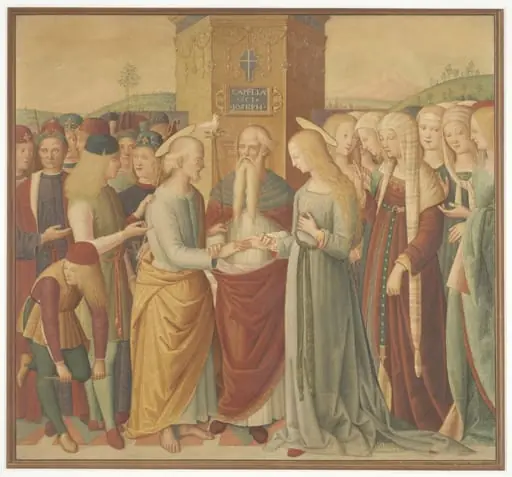 Copy after the painting Marriage of the Virgin by Perugino in S. Girolamo, Spello.