Artwork
The Fishing Fleet Going Out. Study from North Norway
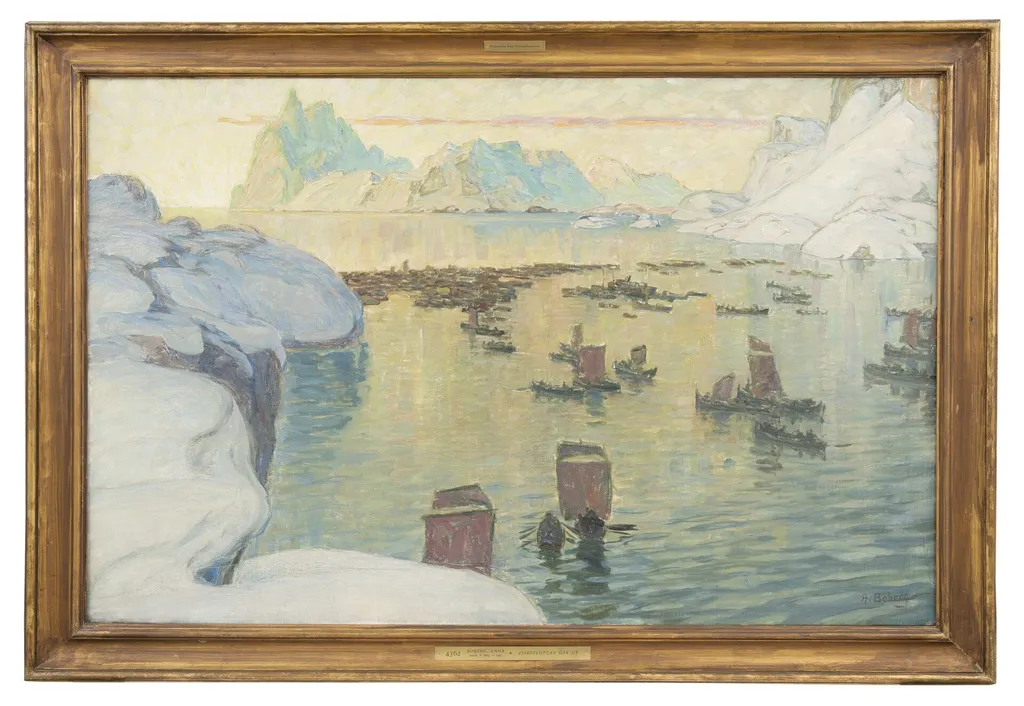
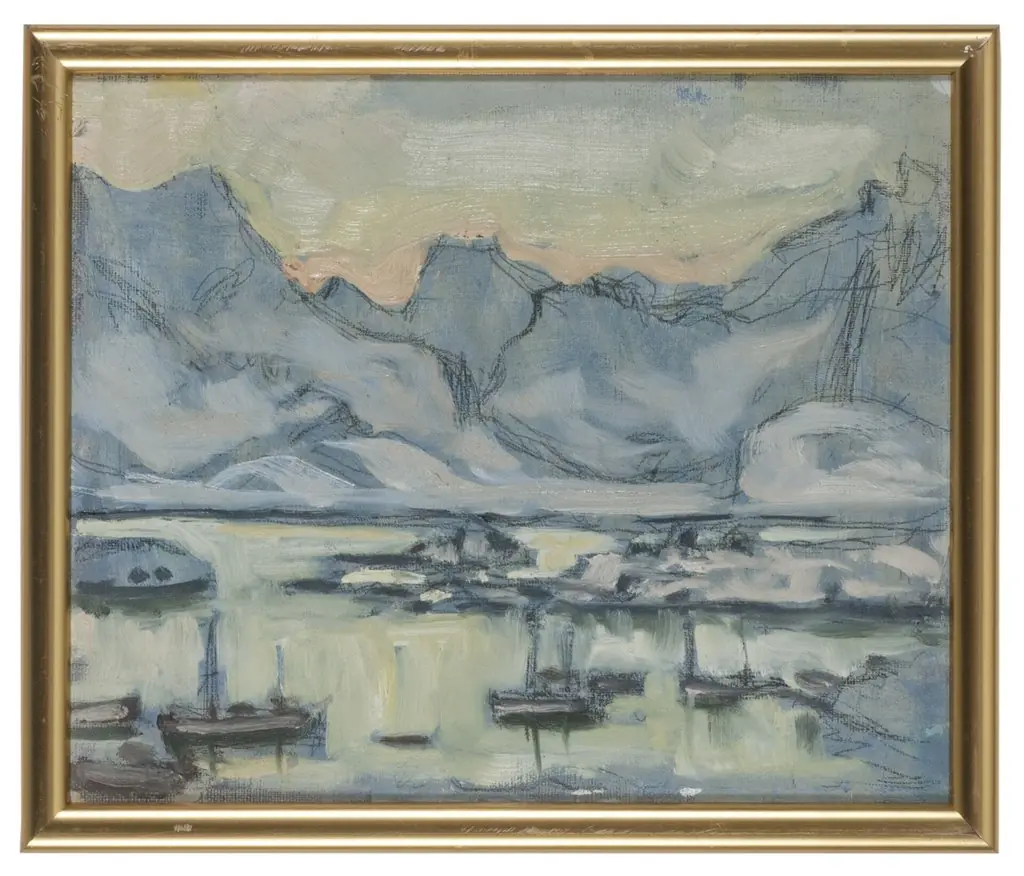
The Fishing Fleet Going Out. Study from North Norway is an oil painting by Anna Boberg. It dates from 1909 and is held in the collection of the Nationalmuseum. Painted around 1909, *The Fishing Fleet Going Out.
About this work
Overview
It captures a moment in the Lofoten archipelago, where a group of small fishing vessels departs across calm waters.
Painted around 1909, *The Fishing Fleet Going Out. Study from North Norway* is an oil-on-canvas work by Swedish artist Anna Boberg. It captures a moment in the Lofoten archipelago, where a group of small fishing vessels departs across calm waters. Though Boberg had no formal art education, her engagement with visual culture spanned multiple disciplines, including ceramics and textile design, informing her sensitive approach to natural forms and light.
Subject & Meaning
The painting portrays a fleet of fishing boats moving in unison toward the open sea, framed by rugged coastal cliffs and distant mountains. The scene reflects the daily rhythm of life in northern Norway, where fishing was both livelihood and ritual. The absence of human figures emphasizes the quiet endurance of the landscape and its inhabitants, suggesting harmony between human activity and the elemental forces of sea and rock.
Technique & Style
Boberg employed a restrained palette of blues, grays, and muted earth tones to convey the cool, overcast atmosphere of the Arctic coast. Brushwork is precise yet unobtrusive, with careful attention to the texture of wooden hulls and the ripple of water. The composition is tightly structured, guiding the viewer’s eye along the line of boats toward the horizon, reinforcing a sense of orderly motion and spatial depth without dramatic contrast.
History & Provenance
Created during a period when Boberg traveled extensively in northern Norway, the painting is one of several studies made from direct observation. It was likely produced as part of a broader series documenting regional life and topography. While the painting’s early ownership is undocumented, it remains associated with Swedish artistic circles of the early 20th century, reflecting Boberg’s role in bridging applied and fine arts traditions.
Context
At the turn of the 20th century, Scandinavian artists increasingly turned to rural and coastal subjects as industrialization reshaped urban life. Boberg’s work aligns with this trend, yet her focus on quiet, unromanticized scenes distinguishes her from more dramatic Nordic landscape painters. Her background in design influenced her sensitivity to pattern and composition, grounding her paintings in observation rather than idealization.
Legacy
Though less widely known than her architect husband, Anna Boberg’s contributions to Swedish visual culture extended beyond painting into craft and design. Her northern studies, including this work, offer a quiet counterpoint to the grander narratives of the era, preserving the subtle rhythms of coastal life. Today, they are valued for their understated realism and their testament to the interdisciplinary spirit of early modern Scandinavian art.
Artist & collection
Artist
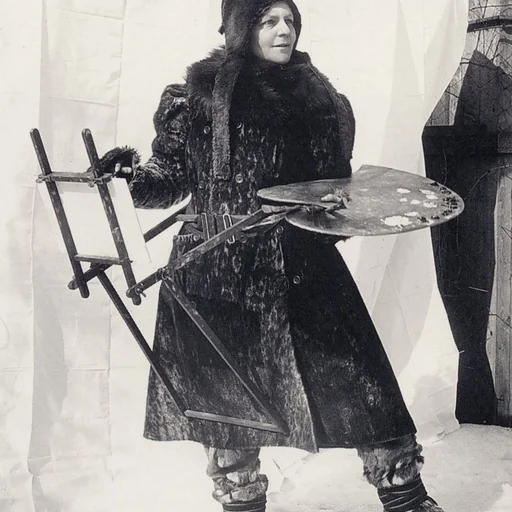
Anna Katarina Boberg, née Scholander, (3 December 1864 – 27 January 1935) was a Swedish artist married to prominent architect Ferdinand Boberg.

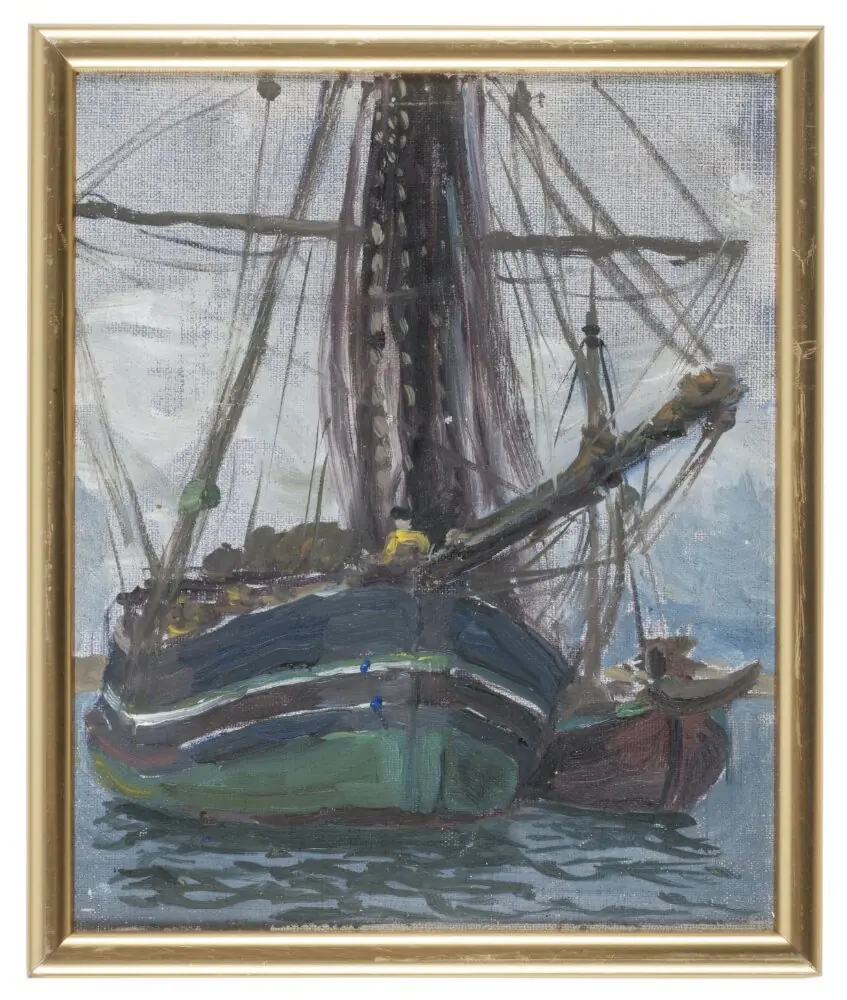 Fog Rising from the Sea. Study from Lofoten
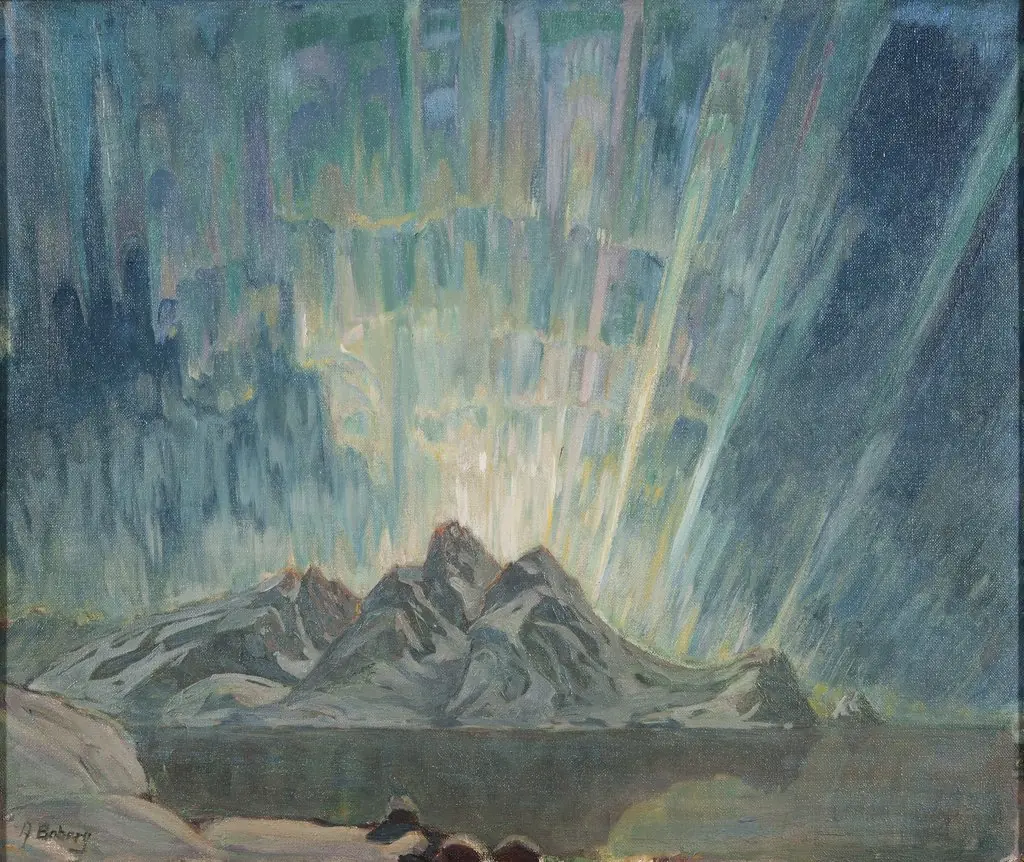 Northern Lights. Study from North Norway
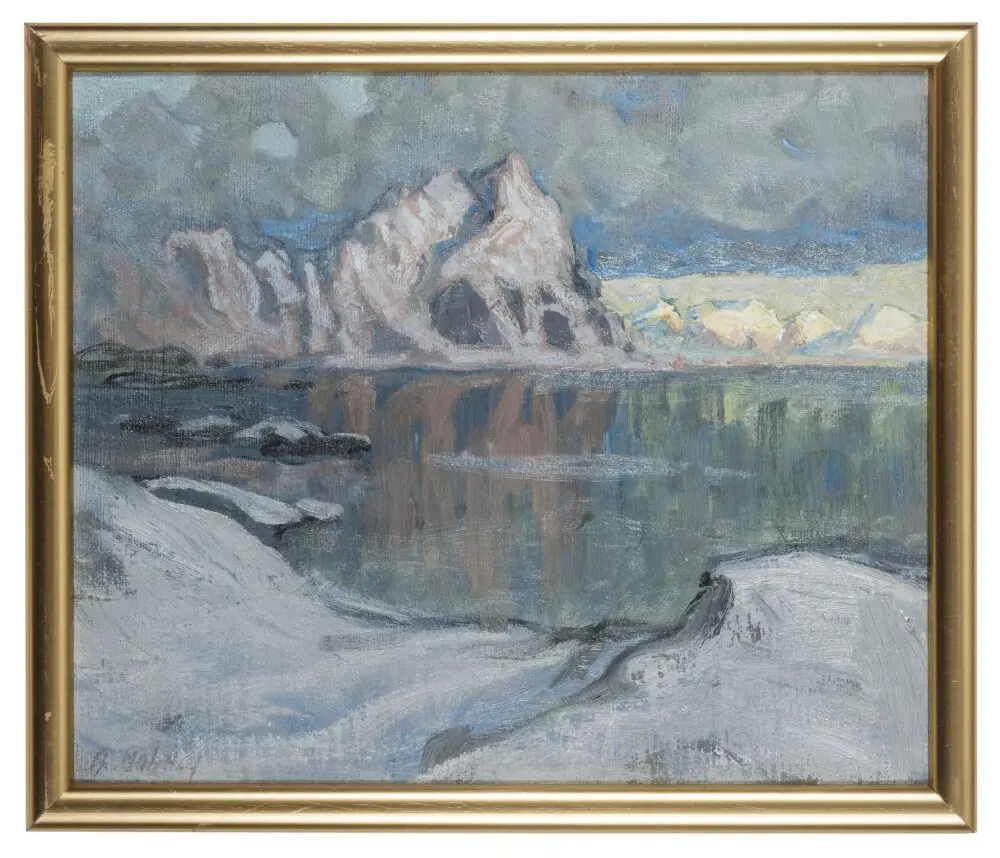 Boats between the Mountains. Study from Lofoten
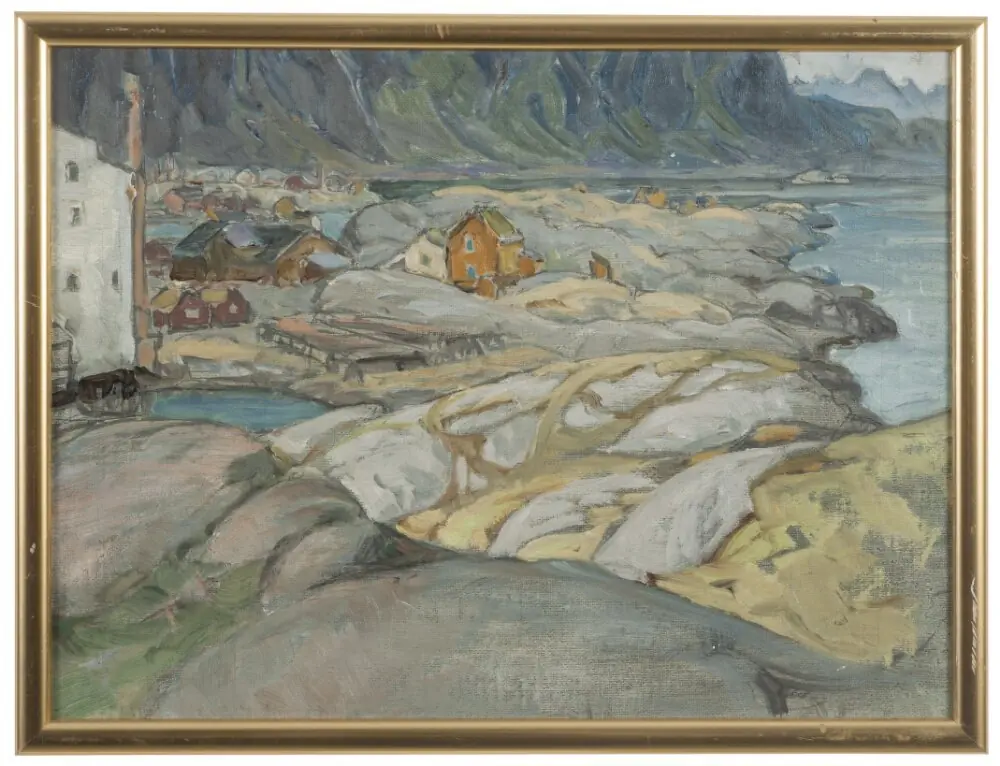 The Village at the Foot of the Mountain. Study from Lofoten
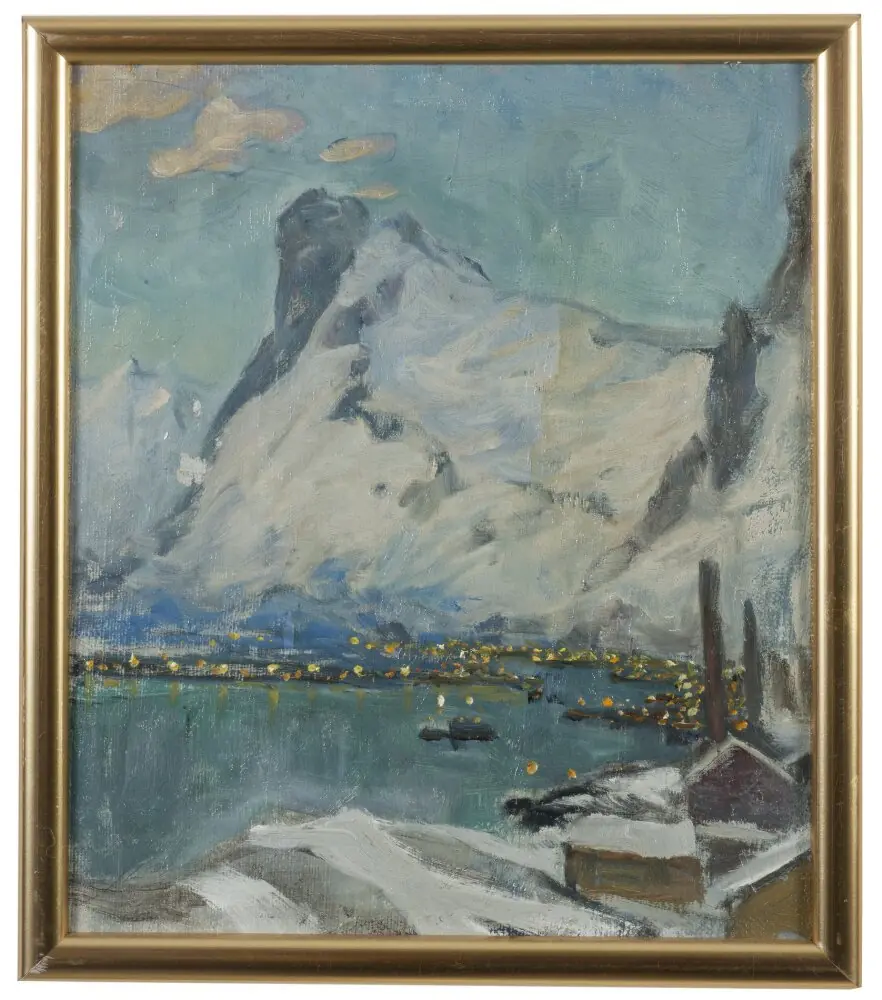 Lofoten in the Evening Light. Study
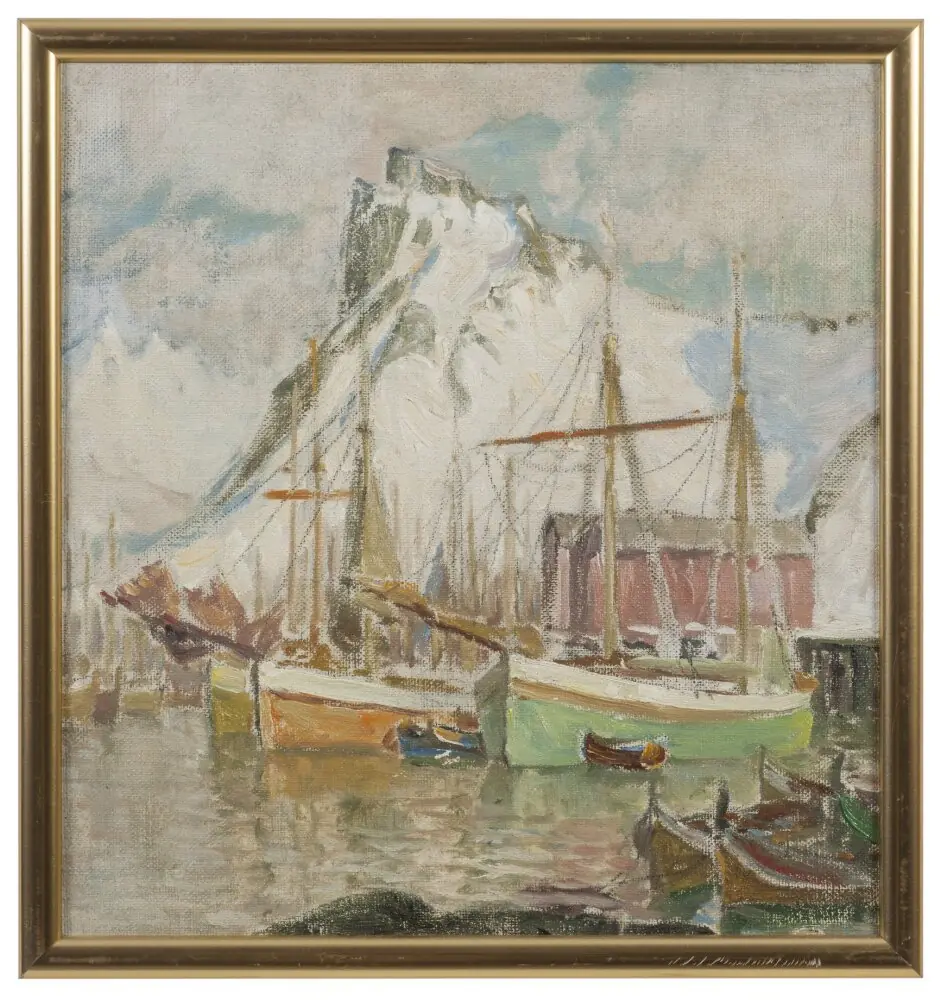 In the Harbour, Svolvaer. Study from Lofoten
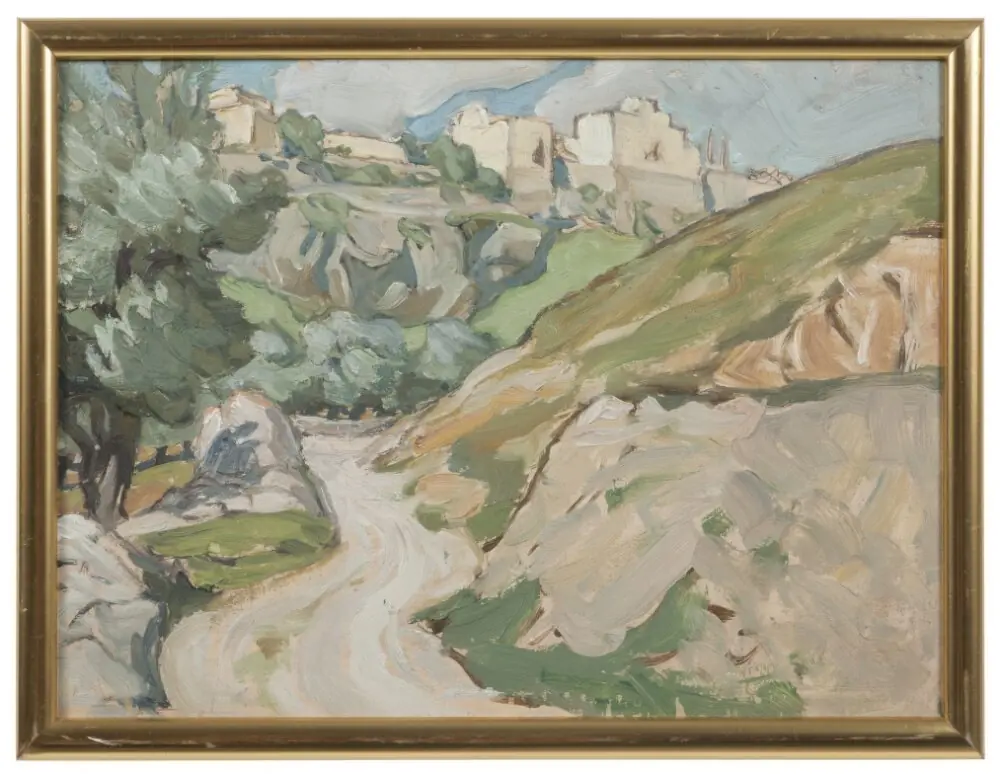 The Road to Jerusalem. Study
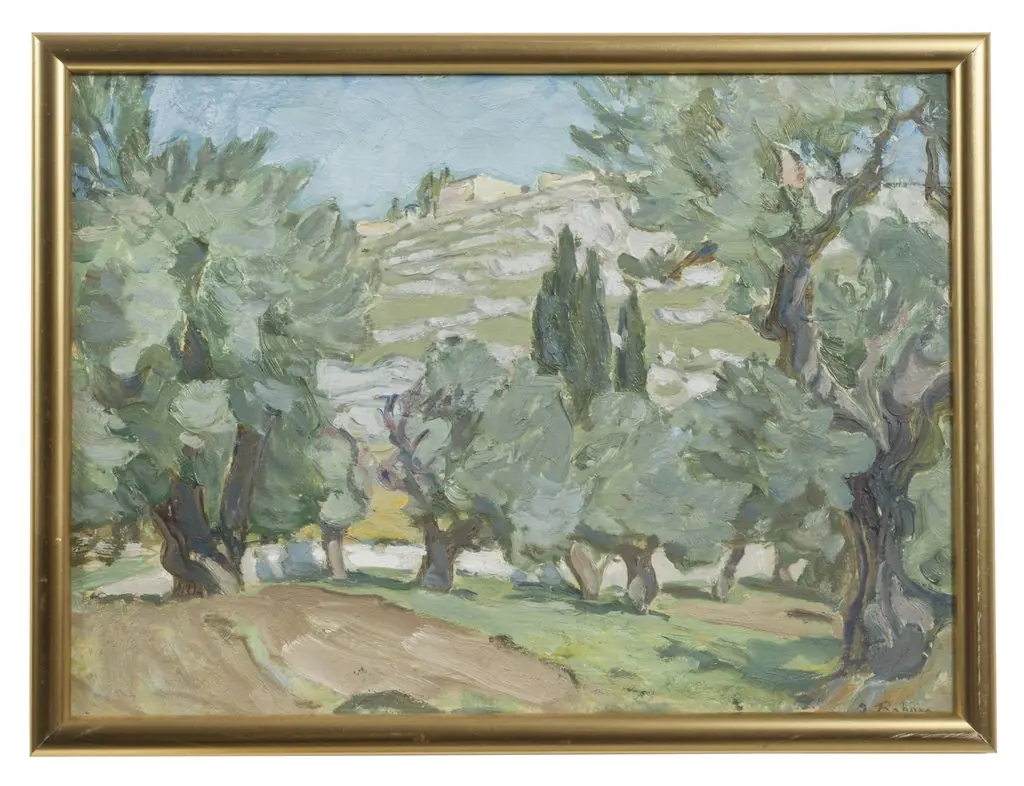 Study from Jerusalem