Artwork
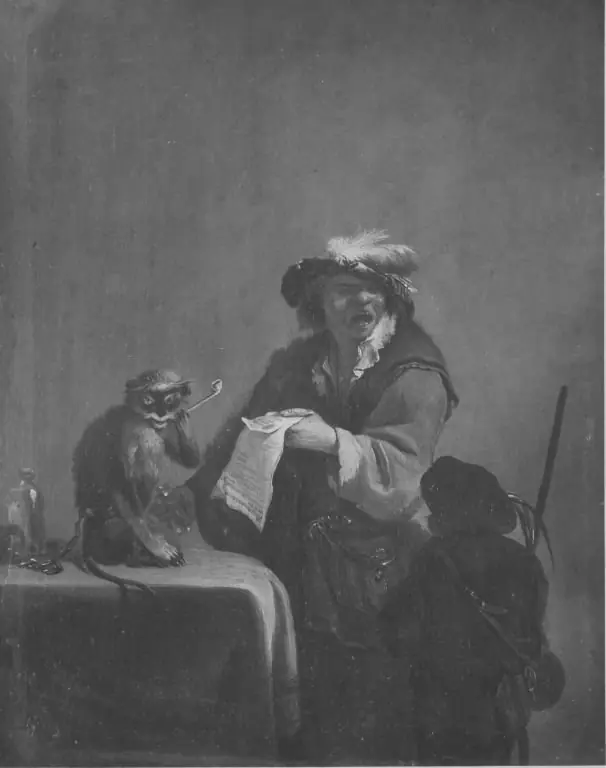
Man with a Monkey
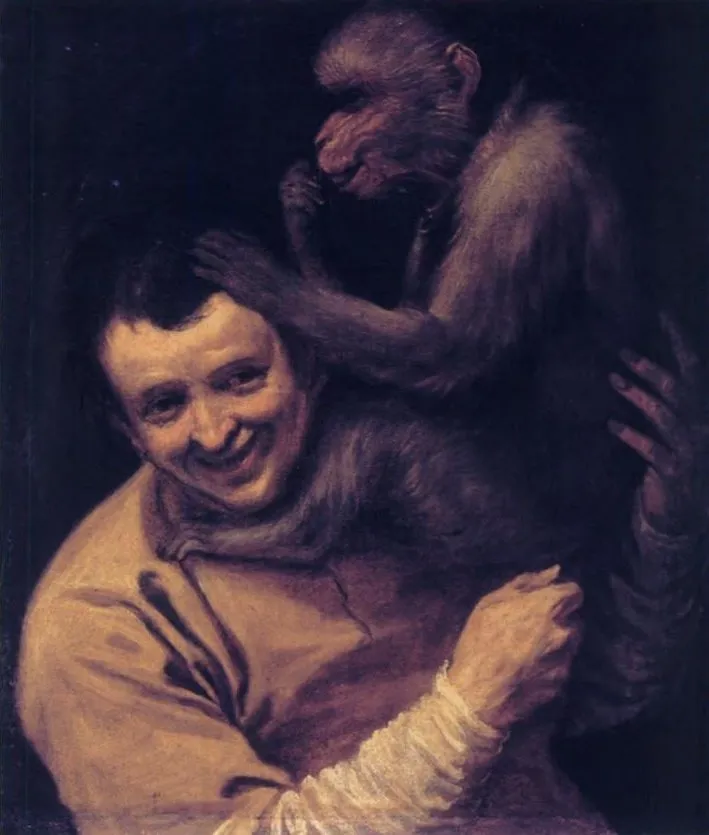
Man with a Monkey is an unspecified painting by the Early Baroque Italian artist Annibale Carracci. It dates from 1550 and is held in the collection of the Uffizi Gallery.
About this work
Overview
The composition isolates the figures against a dark, undefined background, emphasizing their physical presence and emotional interplay.
Painted around 1550 by Annibale Carracci, this small-scale work captures a quiet moment between a man and a monkey. Though often associated with the early Baroque period, the painting predates the full emergence of that style, reflecting Carracci’s early experimentation with naturalism. The composition isolates the figures against a dark, undefined background, emphasizing their physical presence and emotional interplay.
Subject & Meaning
The painting presents a man and a monkey in close physical contact, their expressions contrasting: the man’s focused stillness against the monkey’s alert curiosity. Such pairings were not uncommon in Renaissance and early Baroque art, often symbolizing human-animal kinship or the tension between reason and instinct. Here, no overt allegory is evident; the focus remains on the subtle, unspoken bond between the two.
Technique & Style
Carracci employs soft modeling and muted tones to render the figures with tactile realism. The dark background enhances the three-dimensionality of the forms, while the brushwork remains restrained, avoiding theatricality. The monkey’s fur and the man’s linen shirt are rendered with careful attention to texture, reflecting Carracci’s commitment to observed detail over idealized form.
History & Provenance
The painting entered the Uffizi Gallery’s collection in the 18th century, likely as part of the Medici holdings. Its early date and modest scale suggest it was not a major commission but rather a study or private work. Despite its size, it reflects Carracci’s developing approach to figure painting, which later informed his monumental frescoes in Rome.
Context
In mid-16th century Italy, artists were increasingly turning from Mannerist stylization toward direct observation of nature. Carracci, alongside his family members, was instrumental in this shift. Works like this one, though not grand in scope, demonstrate a growing interest in everyday subjects rendered with psychological nuance and physical authenticity.
Legacy
Though less known than Carracci’s large-scale religious works, this painting exemplifies his foundational role in reorienting Italian painting toward naturalism. Its quiet intimacy influenced later genre scenes and animal studies, contributing to a broader movement that valued empirical observation over conventional symbolism in early Baroque art.
Artist & collection
Artist
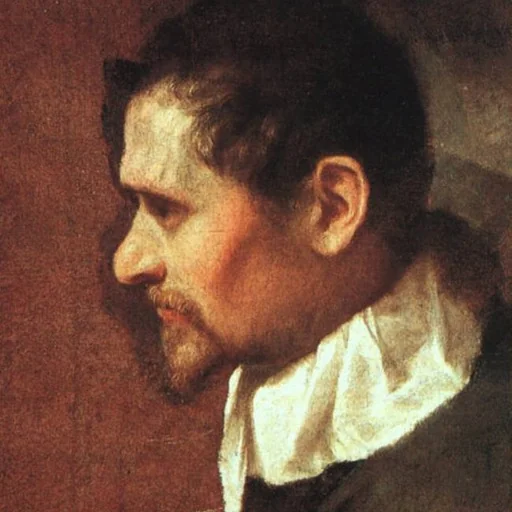
Annibale Carracci ( kə-RAH-chee, UK also kə-RATCH-ee, Italian: ; November 3, 1560 – July 15, 1609) was an Italian painter and instructor, active in Bologna and later in Rome.