Artwork
Saint Bartholomew
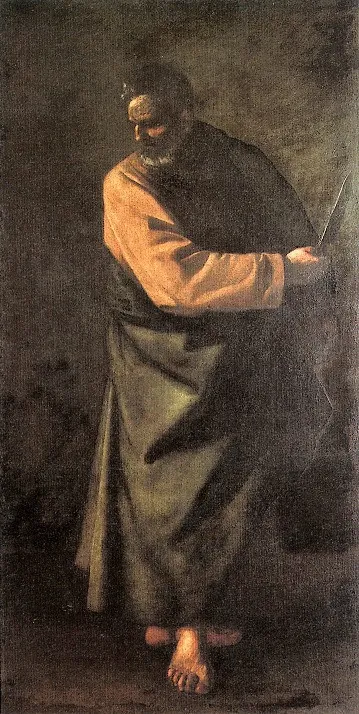
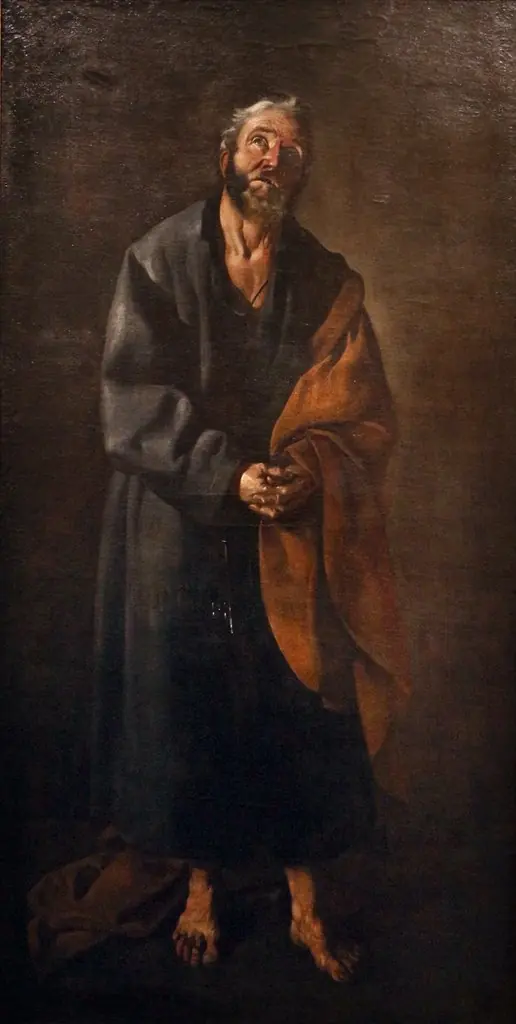
Saint Bartholomew is an oil painting by the Early Baroque Italian artist Francisco de Zurbarán. It dates from 1633 and is held in the collection of the National Museum of Ancient Art.
About this work
Overview
It exemplifies Zurbarán’s disciplined approach to religious subjects, emphasizing stillness and introspection over theatricality.
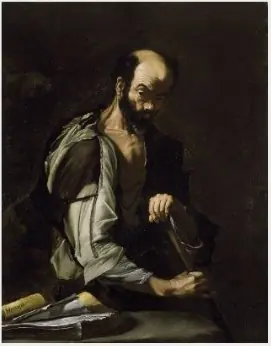
Painted in 1633 by Francisco de Zurbarán, this oil on canvas portrays Saint Bartholomew, one of Christ’s twelve apostles. The work is part of the collection at the National Museum of Ancient Art in Lisbon. It exemplifies Zurbarán’s disciplined approach to religious subjects, emphasizing stillness and introspection over theatricality. The composition isolates the figure against a deep, unbroken background, focusing attention entirely on the saint’s presence.
Subject & Meaning
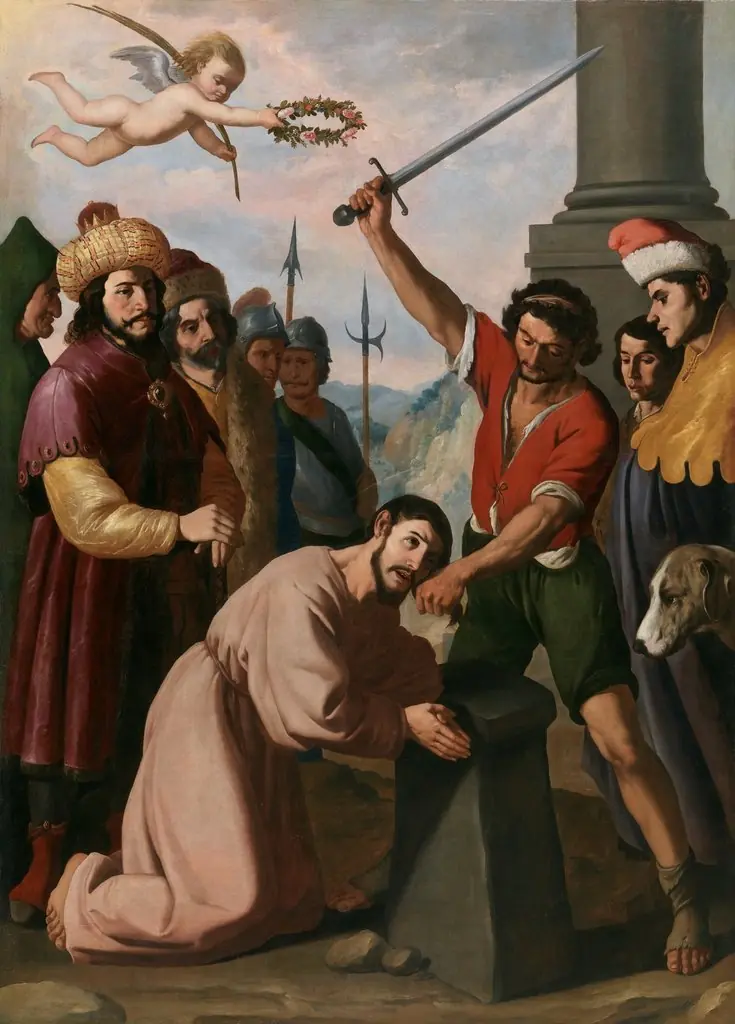
The painting depicts Saint Bartholomew moments before his martyrdom, traditionally said to involve flaying. He holds the instrument of his fate—a knife—without agitation, his head bowed in solemn acceptance. His bare feet and simple attire suggest humility and detachment from worldly concerns. The quiet intensity of his expression invites contemplation of sacrifice, faith, and inner resolve rather than outward suffering.
Technique & Style
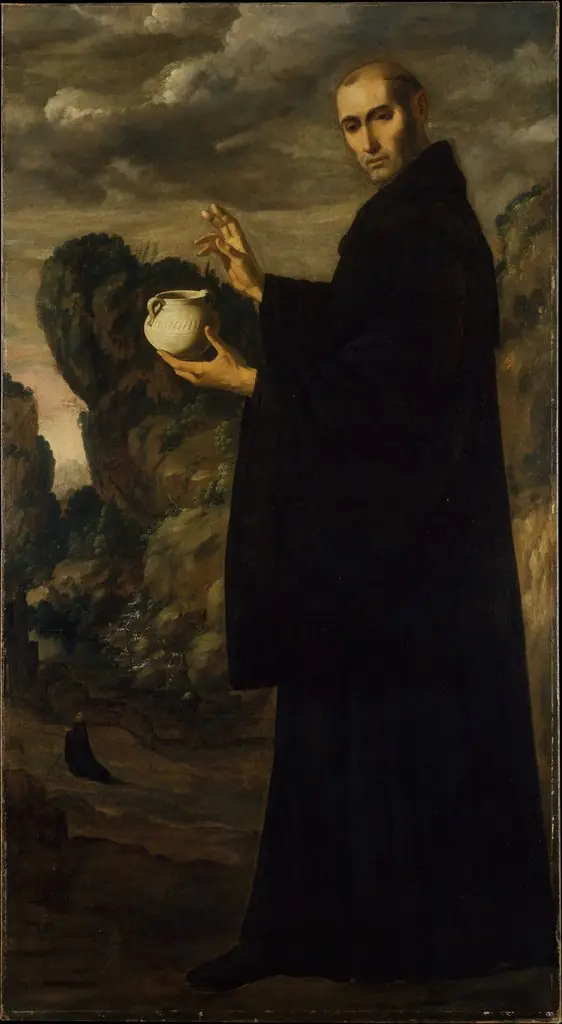
Zurbarán employs chiaroscuro with restrained precision, using deep shadows to model the saint’s form and subtle highlights to define the skin of his hands and face. The dark, heavy folds of the robe are rendered with minimal brushwork, creating texture through tone rather than detail. The background recedes into near-absence, enhancing the figure’s isolation and sculptural presence. The palette is limited to earth tones, reinforcing the painting’s austerity.
History & Provenance
Commissioned during Zurbarán’s most productive period, the painting likely originated in a Spanish monastery or convent. It entered the Portuguese royal collection in the 18th century and was later transferred to the National Museum of Ancient Art. Its preservation reflects its continued reverence, though little documentation exists about its early display or specific devotional use beyond its general association with monastic meditation.
Context
Created during Spain’s Counter-Reformation, the painting aligns with the Church’s emphasis on personal piety and the veneration of martyrs. Zurbarán’s style, influenced by Caravaggio but stripped of Italian drama, resonated with Spanish religious orders seeking images of quiet devotion. This work reflects a broader trend in Spanish art: the elevation of solitary, contemplative saints as models of spiritual endurance.
Legacy
Saint Bartholomew remains a key example of Zurbarán’s mature style and his influence on Spanish religious painting. Later artists admired his ability to convey spiritual gravity through minimal means. The painting’s enduring presence in a major European collection underscores its role as a quiet but powerful representation of faith, distinct from the more ornate traditions of the period.
Artist & collection
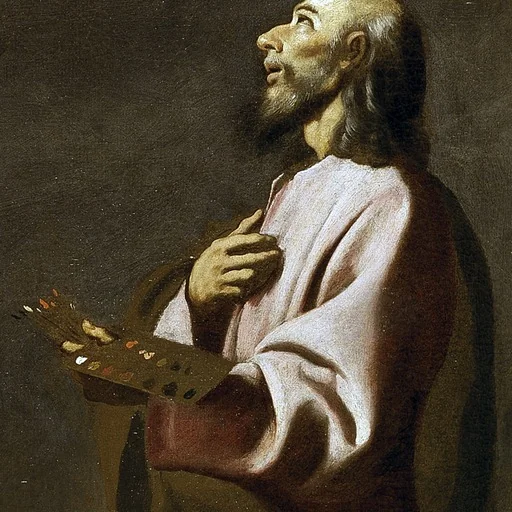
Artist
Francisco de Zurbarán was a Spanish Baroque painter. He is known primarily for his religious paintings depicting monks, nuns, and martyrs, and for his still-lifes. Zurbarán gained the nickname "Spanish Caravaggio",…