Artwork
Rest on the Flight into Egypt
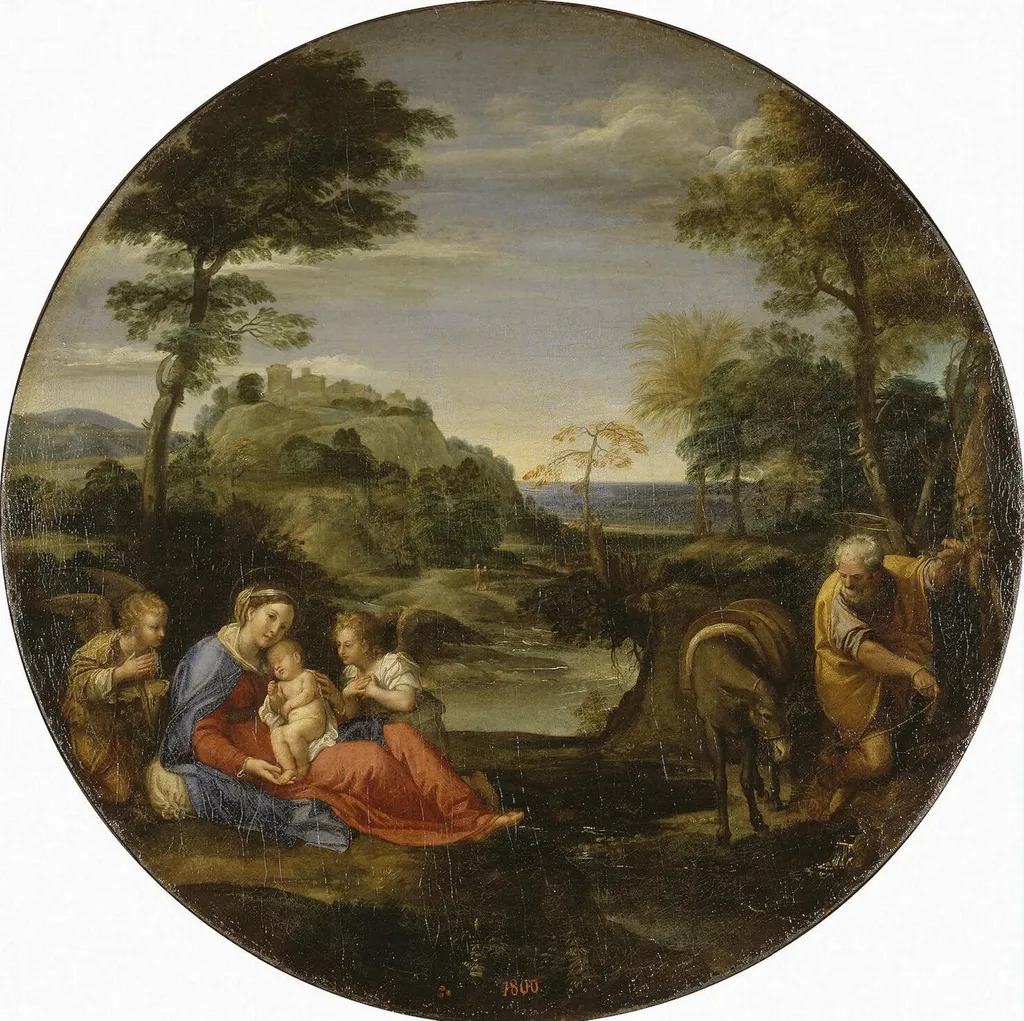
Rest on the Flight into Egypt is an oil painting by the Early Baroque Italian artist Annibale Carracci. It dates from 1604 and is held in the collection of the Hermitage Museum.
About this work
Overview
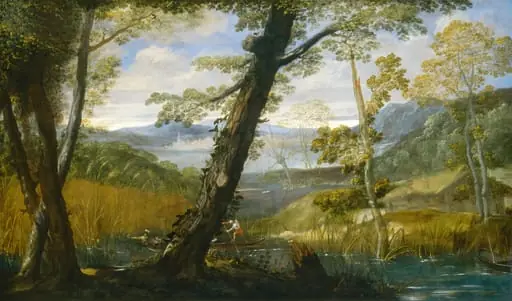
Annibale Carracci’s oil on canvas, dated around 1604, portrays a tranquil episode from the biblical Flight into Egypt. The composition centers on the Virgin Mary seated with the infant Jesus, while Joseph stands nearby, and an angel kneels in reverence. A distant landscape of hills, trees and water extends behind the figures, lending a serene backdrop to the intimate scene.
Subject & Meaning
The work captures a moment of respite during the Holy Family’s exile, emphasizing maternal tenderness and protective guardianship. Mary’s gentle hold of the child and Joseph’s attentive stance convey familial devotion, while the angel’s presence underscores divine guidance. The quiet atmosphere invites contemplation of faith, refuge, and the human aspects of the biblical narrative.
Technique & Style
Carracci employs chiaroscuro to model the figures, allowing light to emerge from surrounding shadows and impart a three‑dimensional quality.
Carracci employs chiaroscuro to model the figures, allowing light to emerge from surrounding shadows and impart a three‑dimensional quality. The palette balances warm flesh tones with cooler atmospheric hues in the background, creating depth. The brushwork combines the naturalism of the Bolognese school with a compositional clarity that guides the viewer’s eye across the intimate group and the distant scenery.
History & Provenance
Originally part of the collection of Jacques Stella, the painting traveled from Italy to Paris. By 1672 it appeared in the holdings of Abbot Deno de La Nu and later bore the insignia of the La Mera family alongside that of François de Poigli on its reverse. Acquired by Pierre Crozat in 1772, it entered the Russian imperial collection of Catherine the Great and now resides in the Hermitage Museum, displayed in the Italy gallery of the New Hermitage Palace.
Context
Created during Carracci’s early mature period, the painting reflects the Counter‑Reformation’s emphasis on accessible religious imagery. Its intimate scale and domestic setting align with contemporary devotional works intended for private contemplation, while the balanced composition and restrained emotion illustrate Carracci’s synthesis of classical ideals with emerging Baroque sensibilities.
Artist & collection
Artist
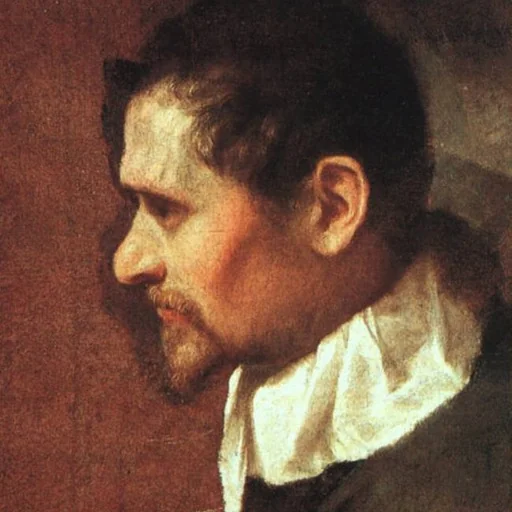
Annibale Carracci ( kə-RAH-chee, UK also kə-RATCH-ee, Italian: ; November 3, 1560 – July 15, 1609) was an Italian painter and instructor, active in Bologna and later in Rome.

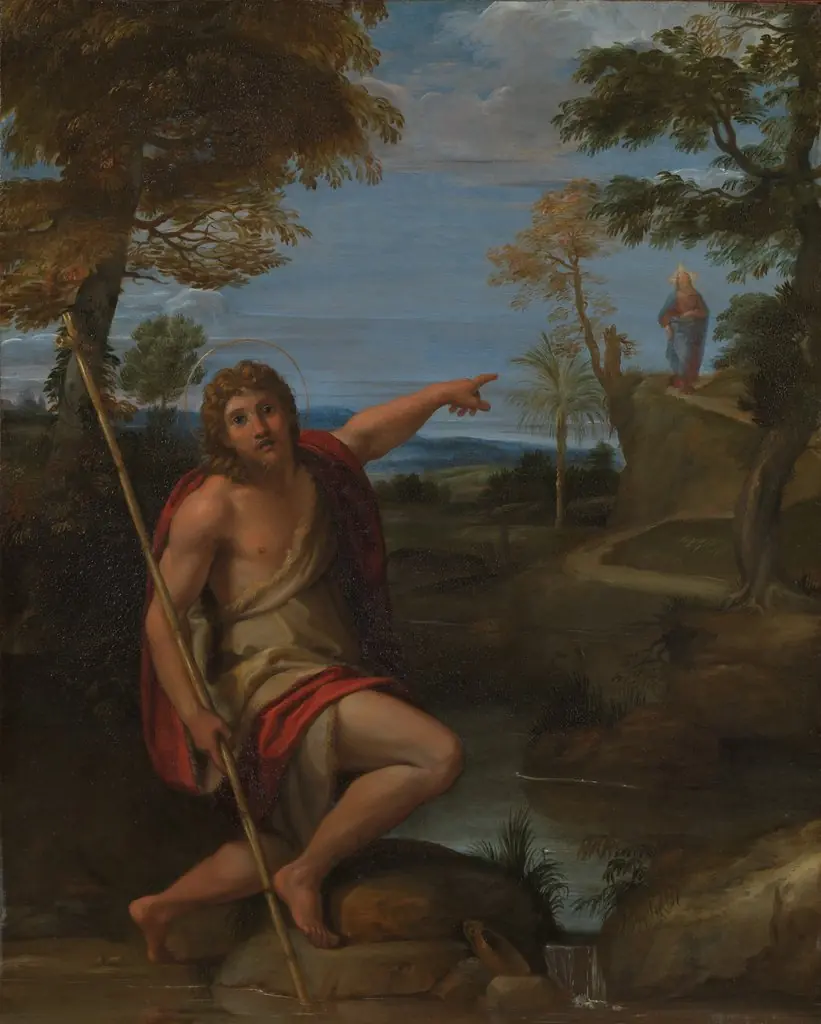
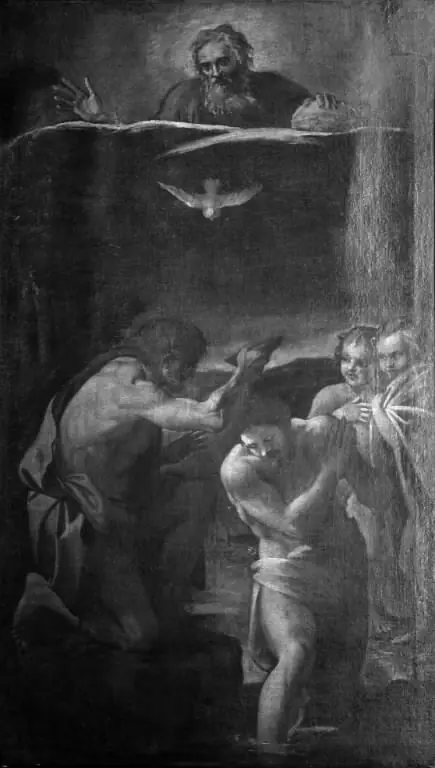
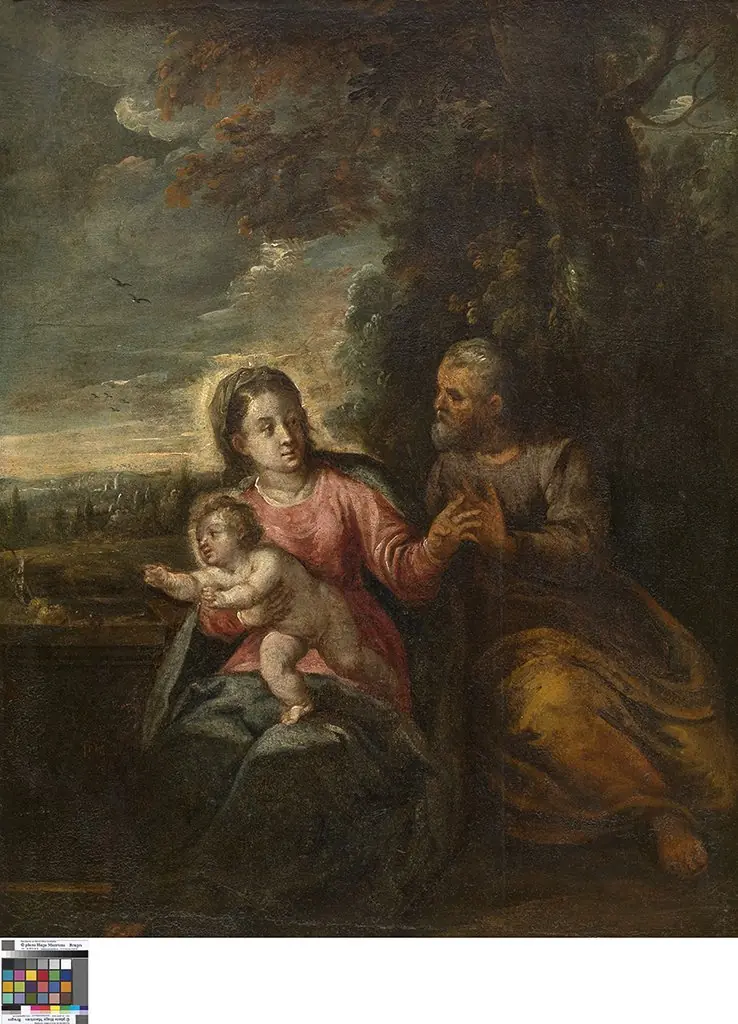 Rest on the Flight into Egypt
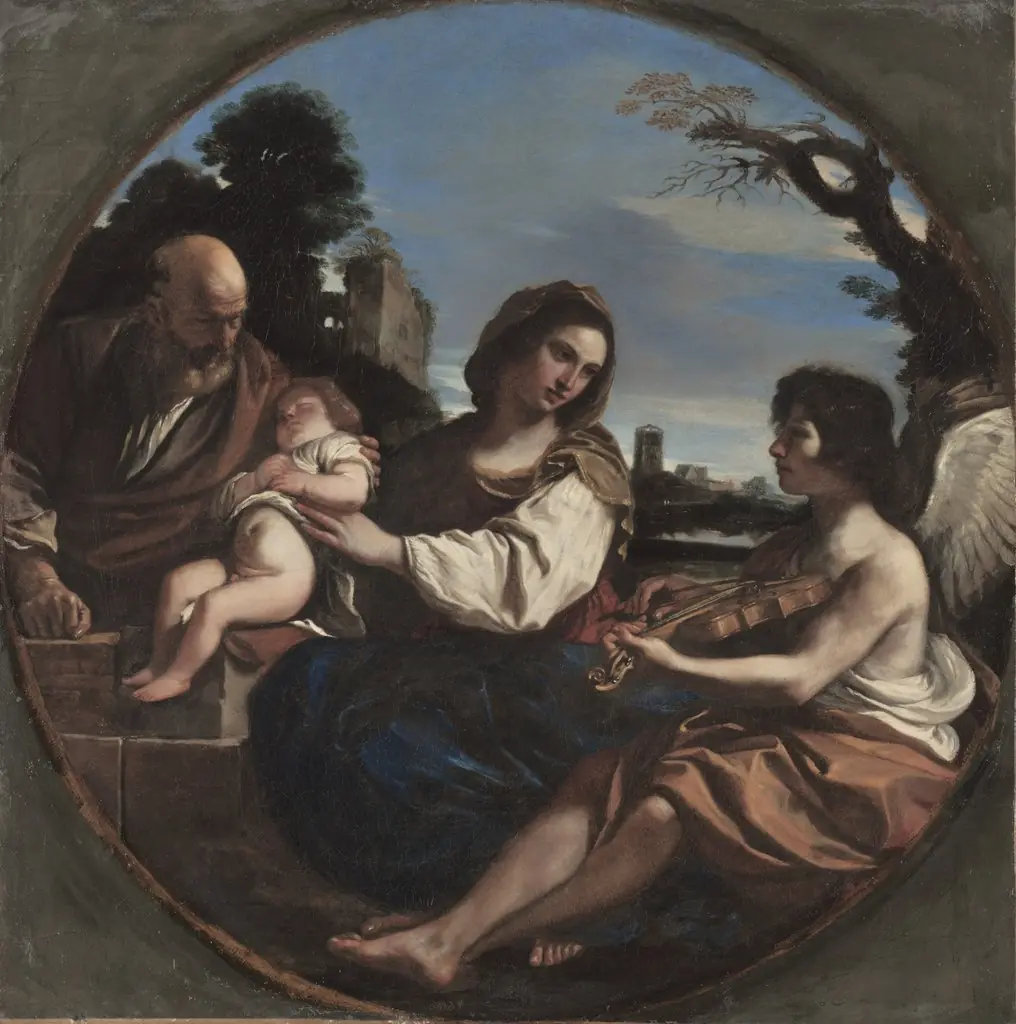 Rest on the Flight into Egypt
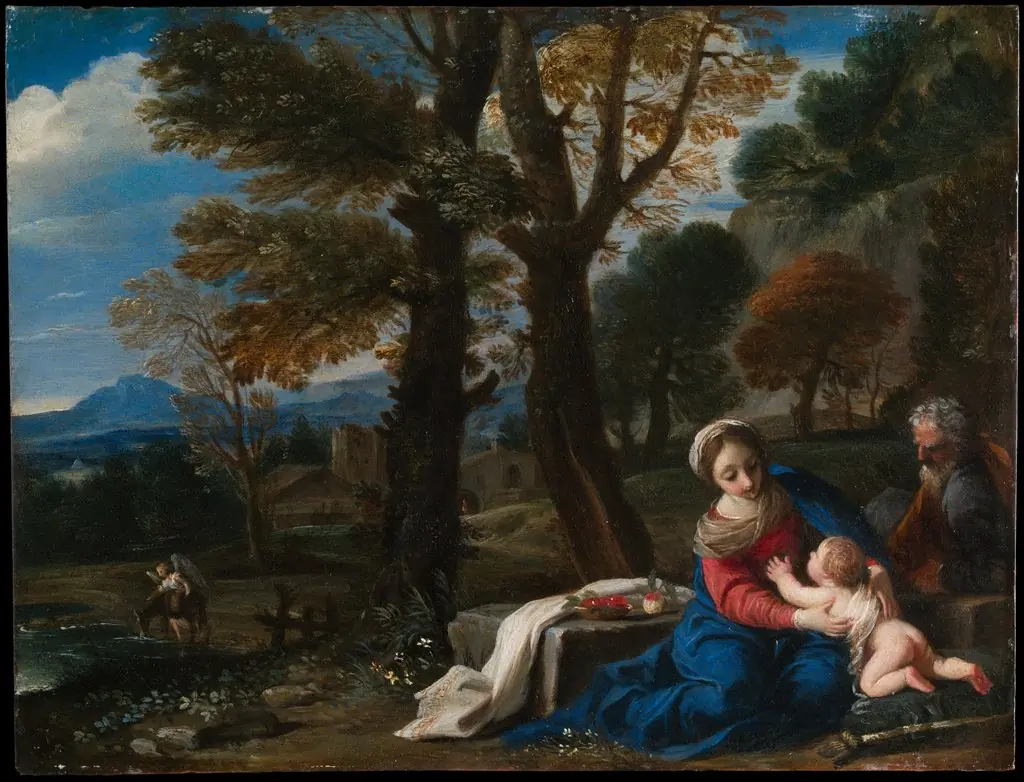 Rest on the Flight into Egypt
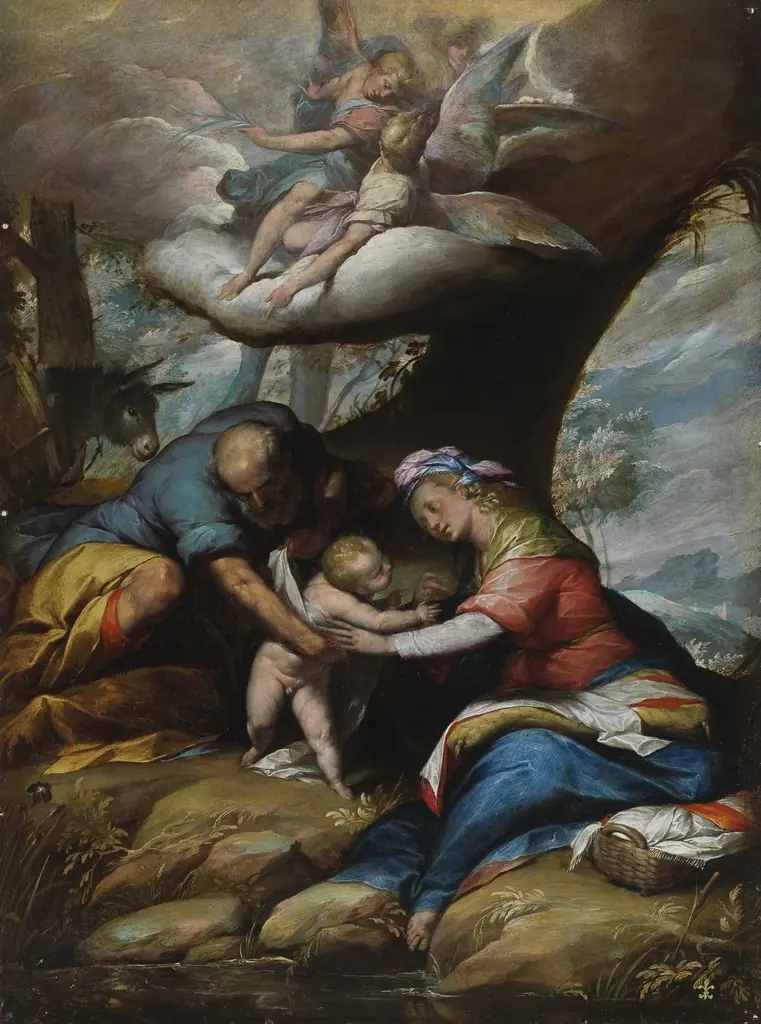 Rest on the Flight into Egypt
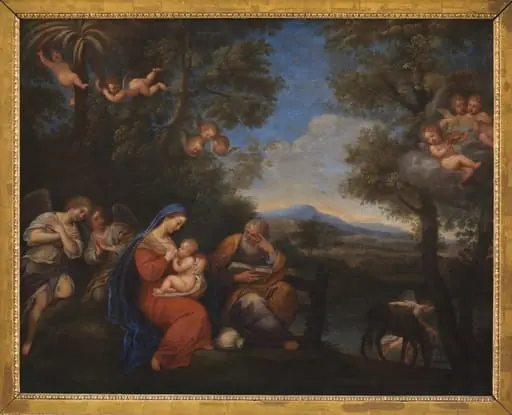 The Rest on the Flight into Egypt
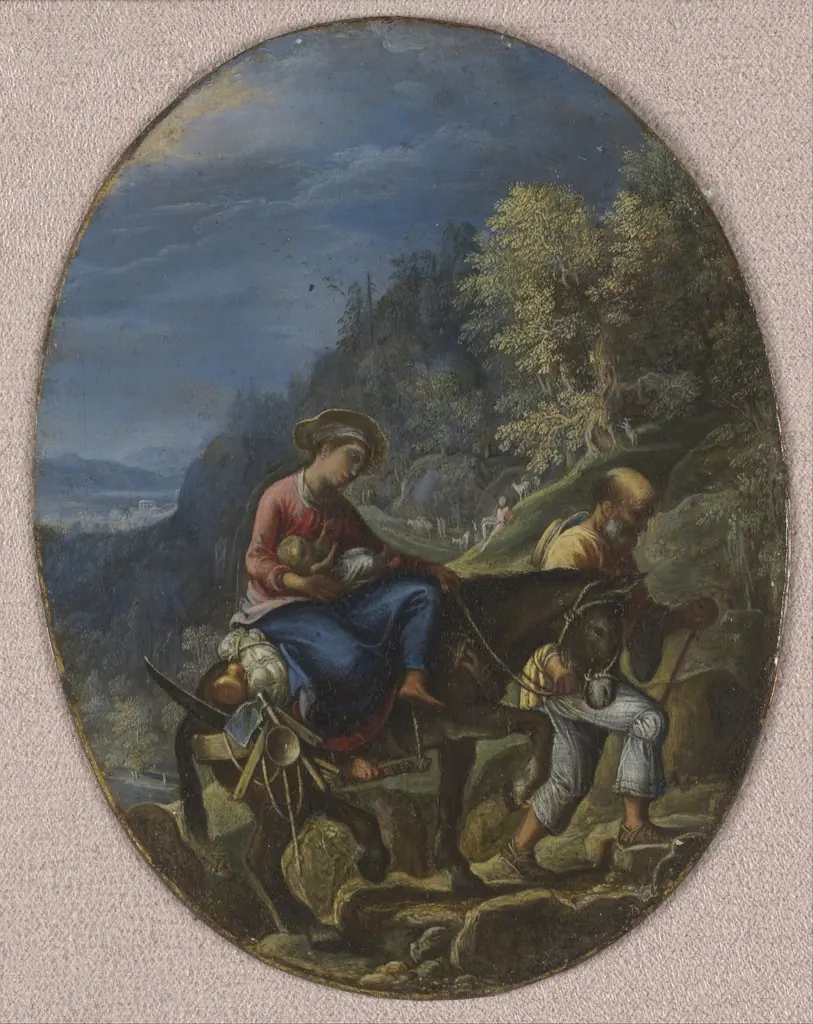 The Flight into Egypt
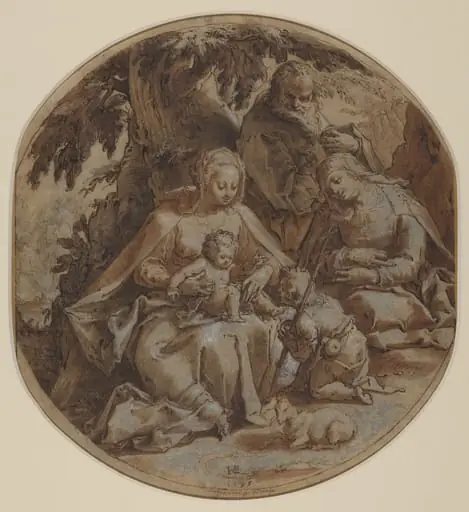 The Holy Family with Saint Elizabeth and Saint John the Baptist
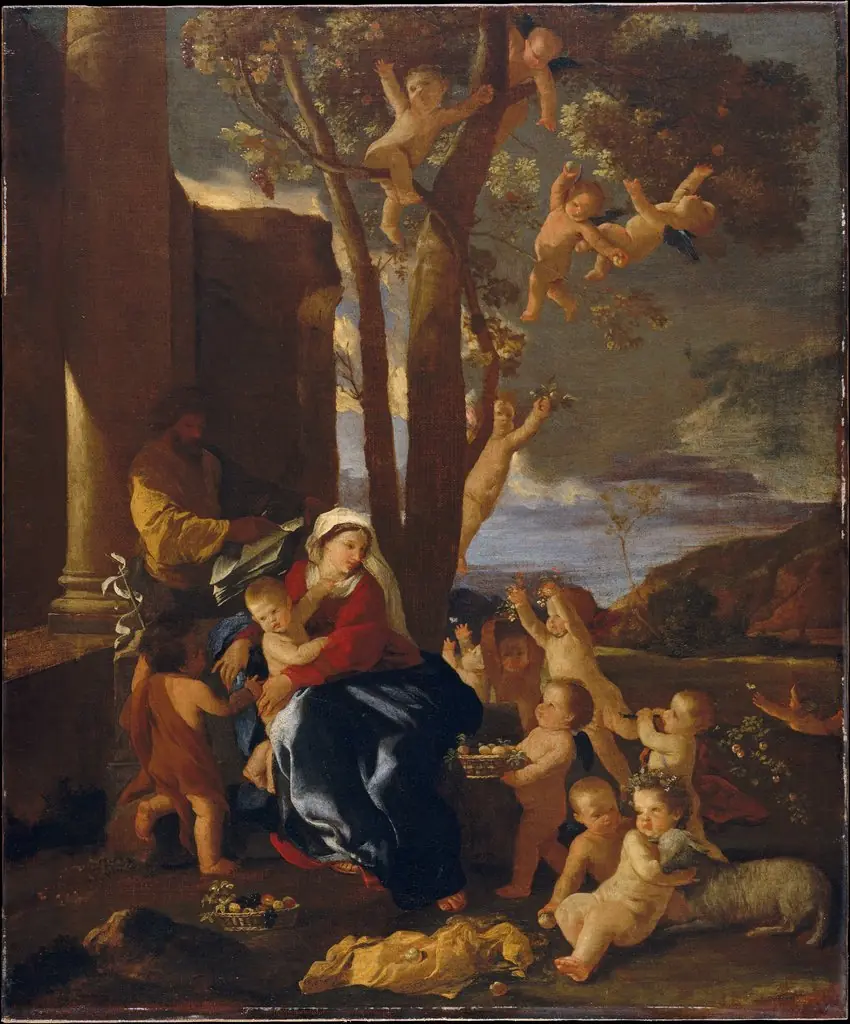 The Rest on the Flight into Egypt
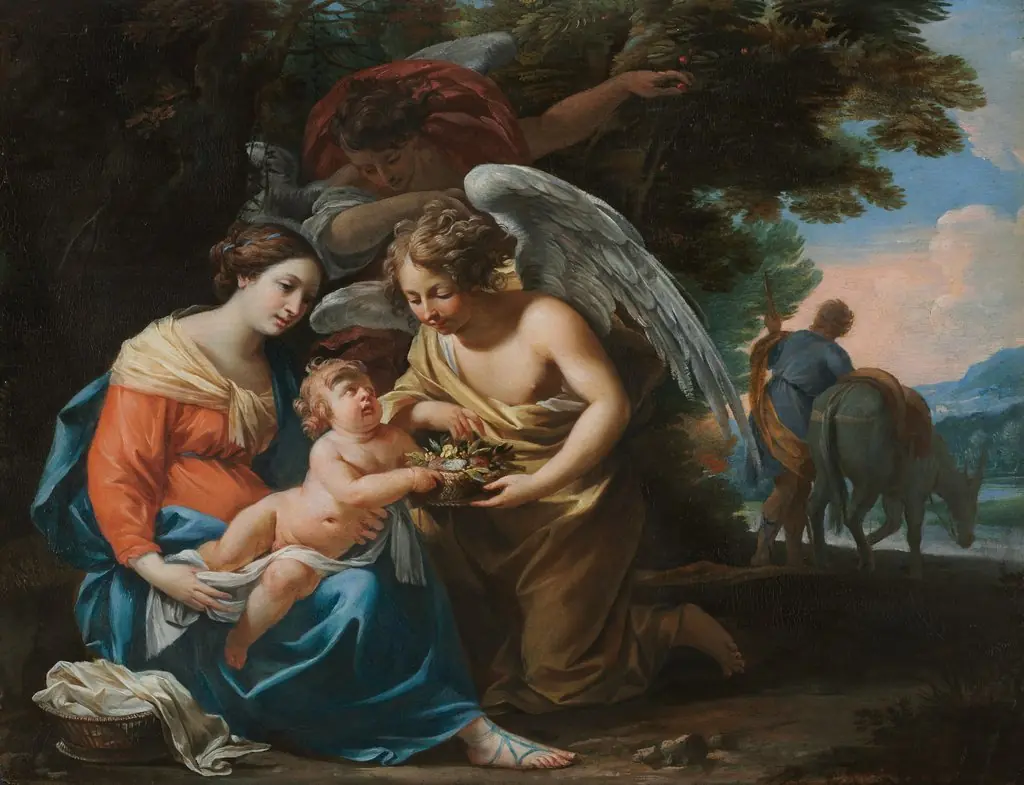 Rest on the Flight into Egypt
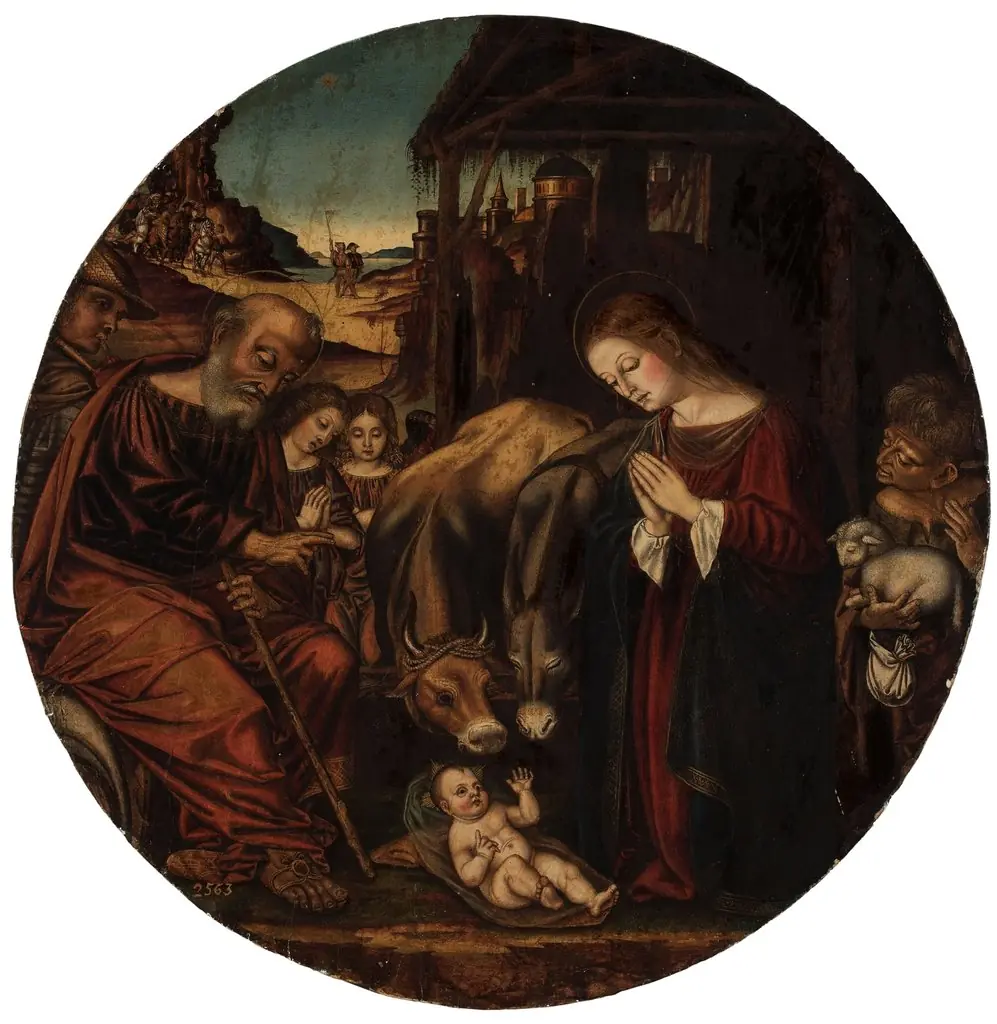 La Natividad
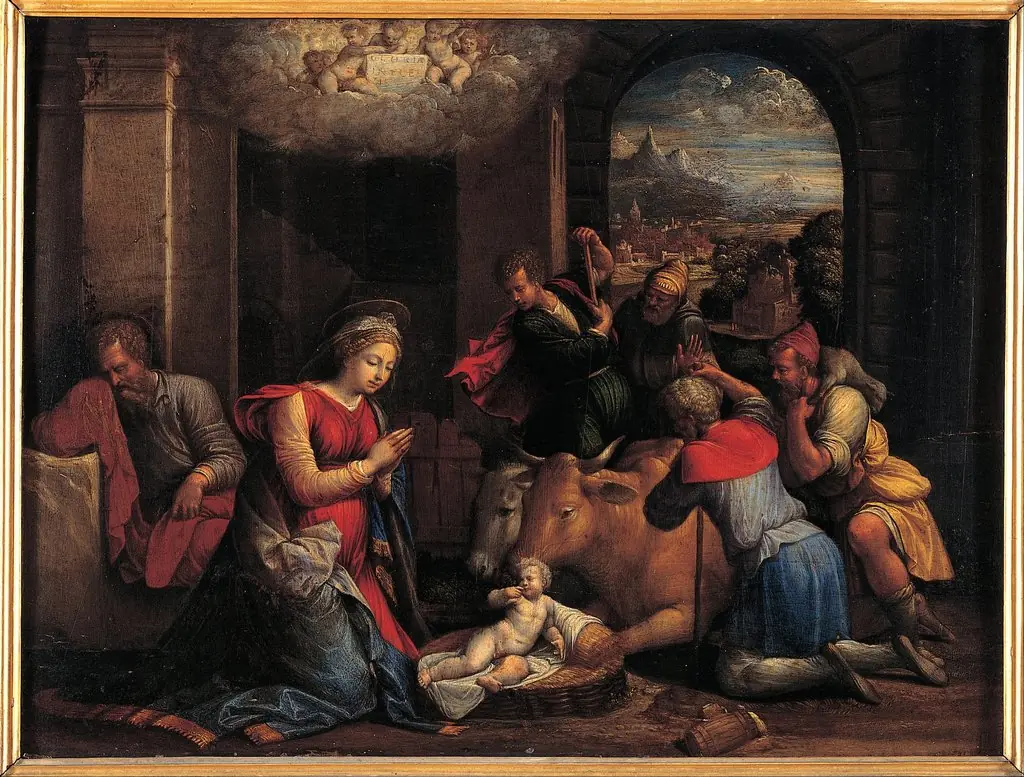 Adoration of the Shepherds
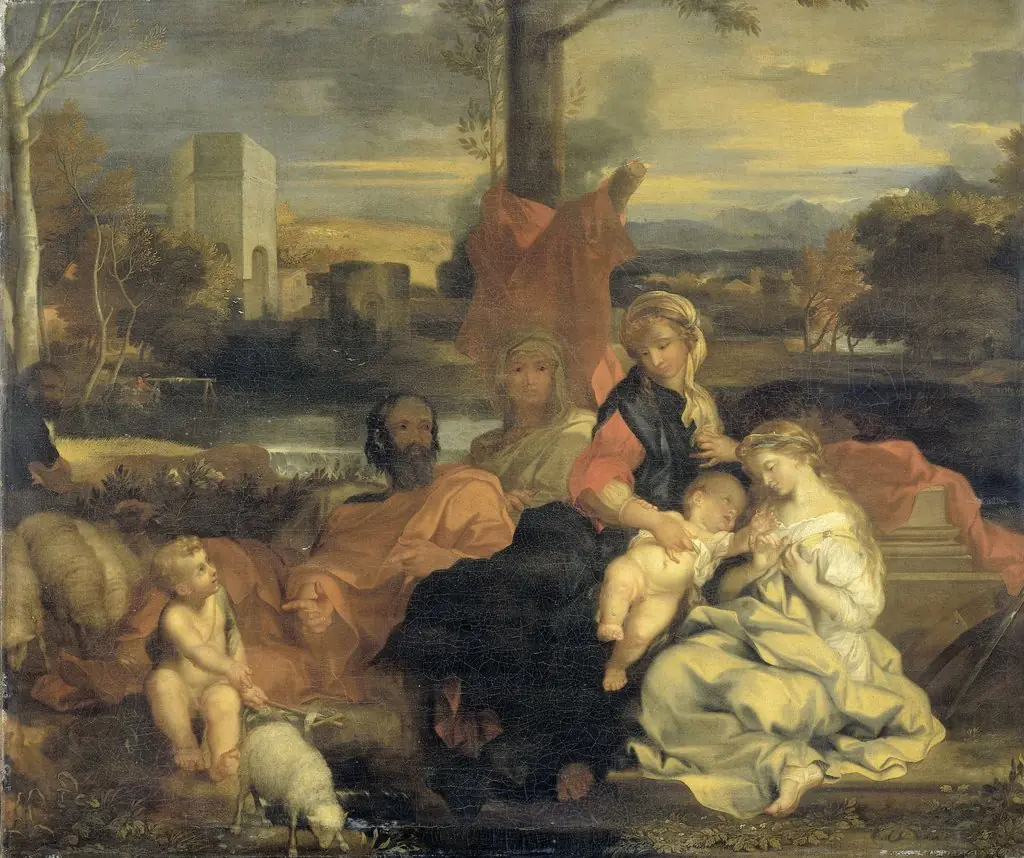 The Mystic Marriage of St Catherine