Artwork
Peisaj cu copaci și personaje
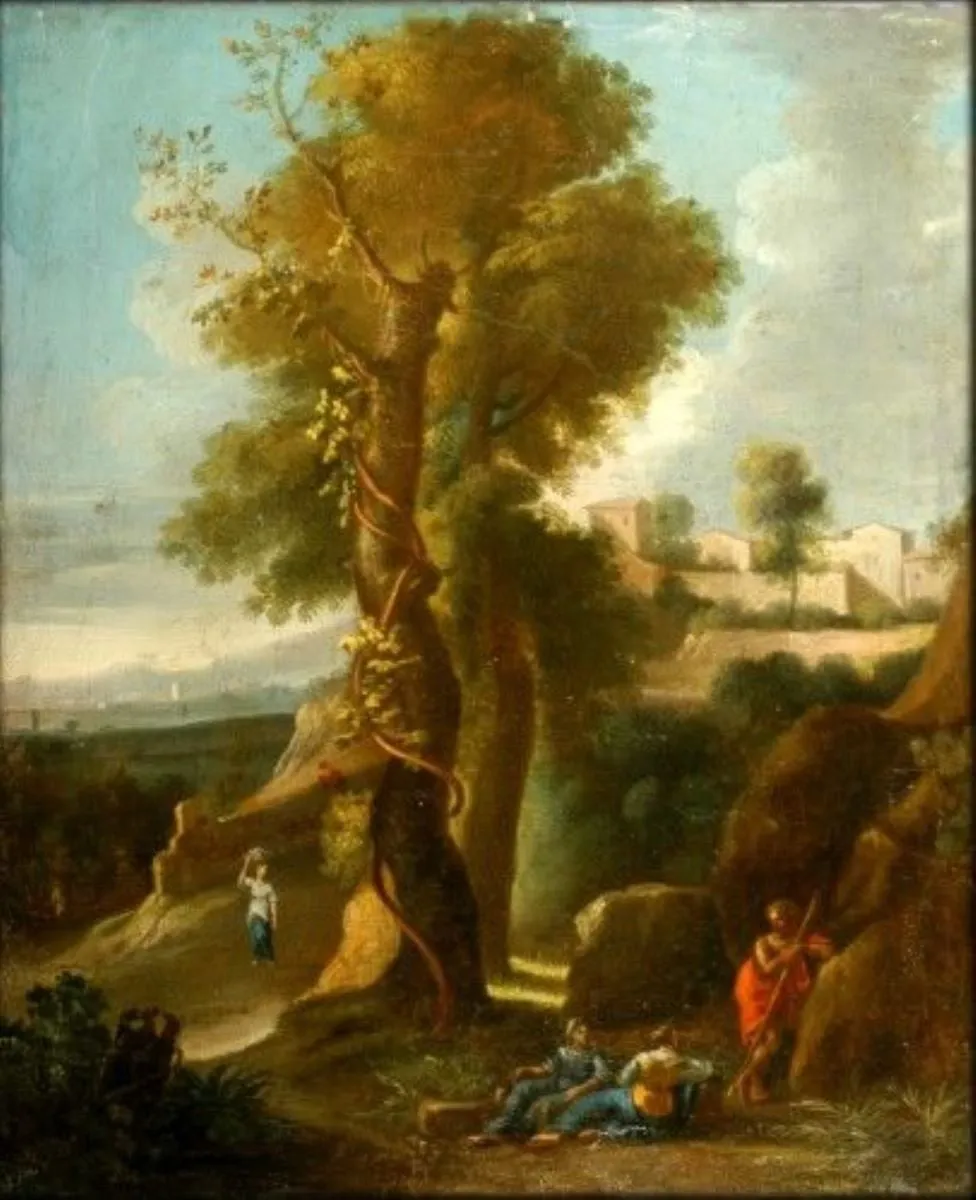
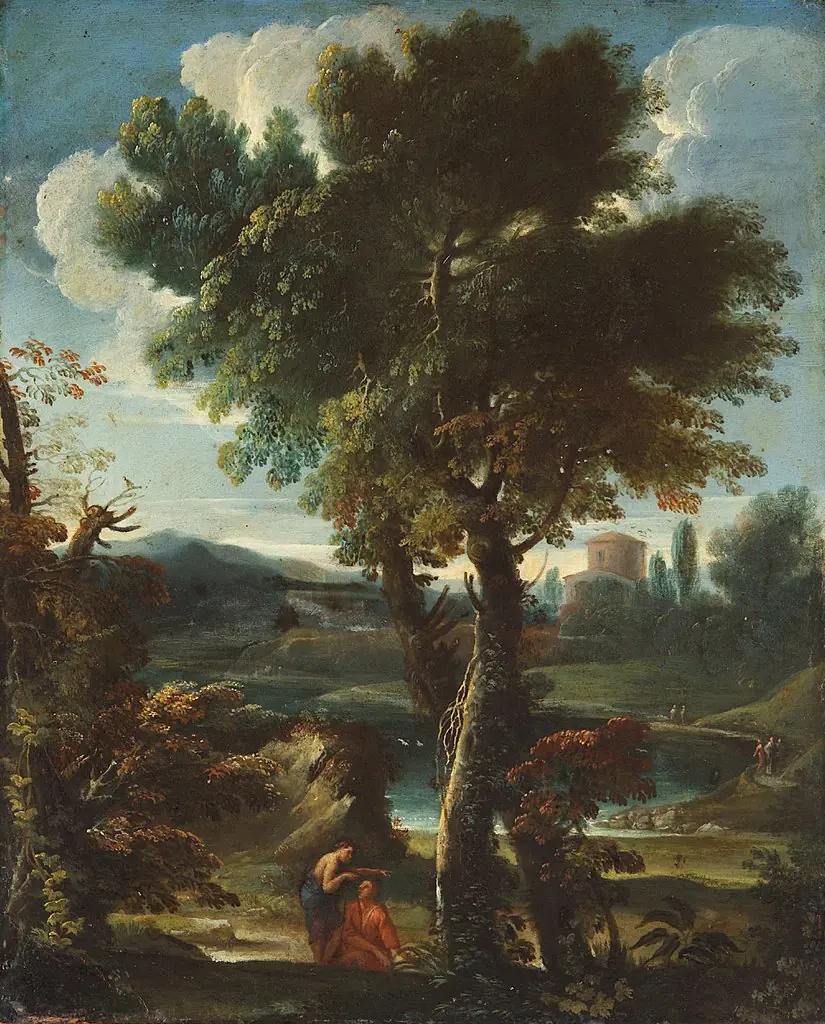
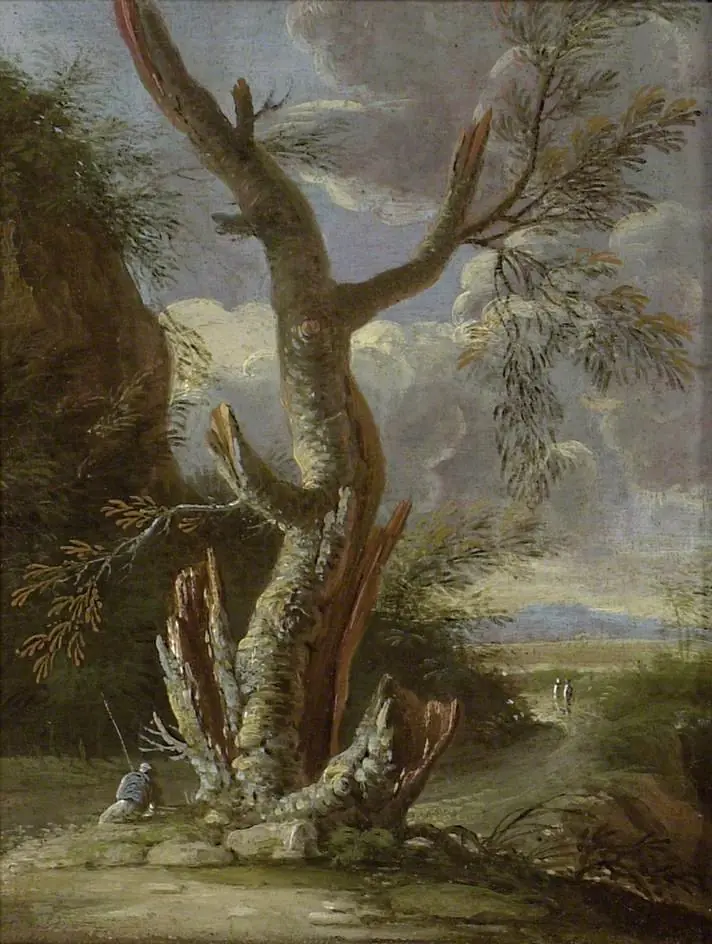
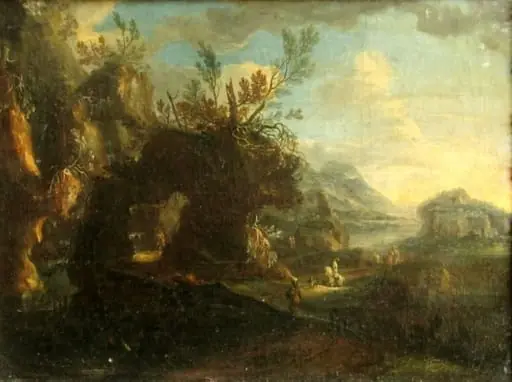
Peisaj cu copaci și personaje is an unspecified painting by the Baroque artist anonim italian. It dates from 1750 and is held in the collection of the Țării Crișurilor Museum. This anonymous Italian painting, dated around 1750, depicts a rural landscape dominated by a large, gnarled tree.
About this work
Overview
This anonymous Italian painting, dated around 1750, depicts a rural landscape dominated by a large, gnarled tree. Figures are minimally rendered and scattered beneath its branches, suggesting quiet human activity amid nature. The work is part of the collection at the Museum of Ethnography, where it is preserved as an example of 18th-century landscape representation with subtle narrative elements.
Subject & Meaning
The scale and placement imply a relationship between nature and human transience, though no specific story is evident.
The composition centers on a massive tree, its form overwhelming the human figures below. One person lies prone, another stands in a red garment, while two more move toward the horizon. The scale and placement imply a relationship between nature and human transience, though no specific story is evident. The scene evokes contemplation rather than action, emphasizing solitude within the natural world.
Technique & Style
The artist employs chiaroscuro to model the tree’s trunk and foliage, creating a sense of volume and texture through stark contrasts between deep shadows and soft highlights. The sky is rendered in muted tones, allowing the tree to emerge as the dominant form. Figures are simplified and distant, reinforcing their insignificance against the landscape’s grandeur. Brushwork is restrained, favoring atmospheric effect over detail.
History & Provenance
The painting’s origins remain undocumented, with no record of its commission or early ownership. It entered the Museum of Ethnography’s collection without known provenance prior to its current cataloging. Its anonymous authorship and stylistic alignment with regional Italian traditions suggest it may have been produced by a local painter working outside academic circles.
Context
Created during a period when landscape painting was gaining traction beyond religious or mythological themes, this work reflects a growing interest in rural scenes and natural forms. Unlike grand Baroque landscapes, it avoids theatricality, instead offering a quiet, intimate view of the countryside. Its presence in an ethnographic museum hints at its value as a cultural artifact rather than a fine art specimen.
Legacy
Though not widely exhibited or studied, the painting contributes to understanding how non-academic artists interpreted nature in 18th-century Italy. Its emphasis on mood over narrative and the symbolic weight given to the tree align with broader folk traditions in visual storytelling. It remains a quiet testament to the everyday perception of landscape before industrialization transformed the countryside.
Artist & collection





 Washerwomen and Woodcutters
 Landschaft mit Hirten
 Rest on the Flight into Egypt
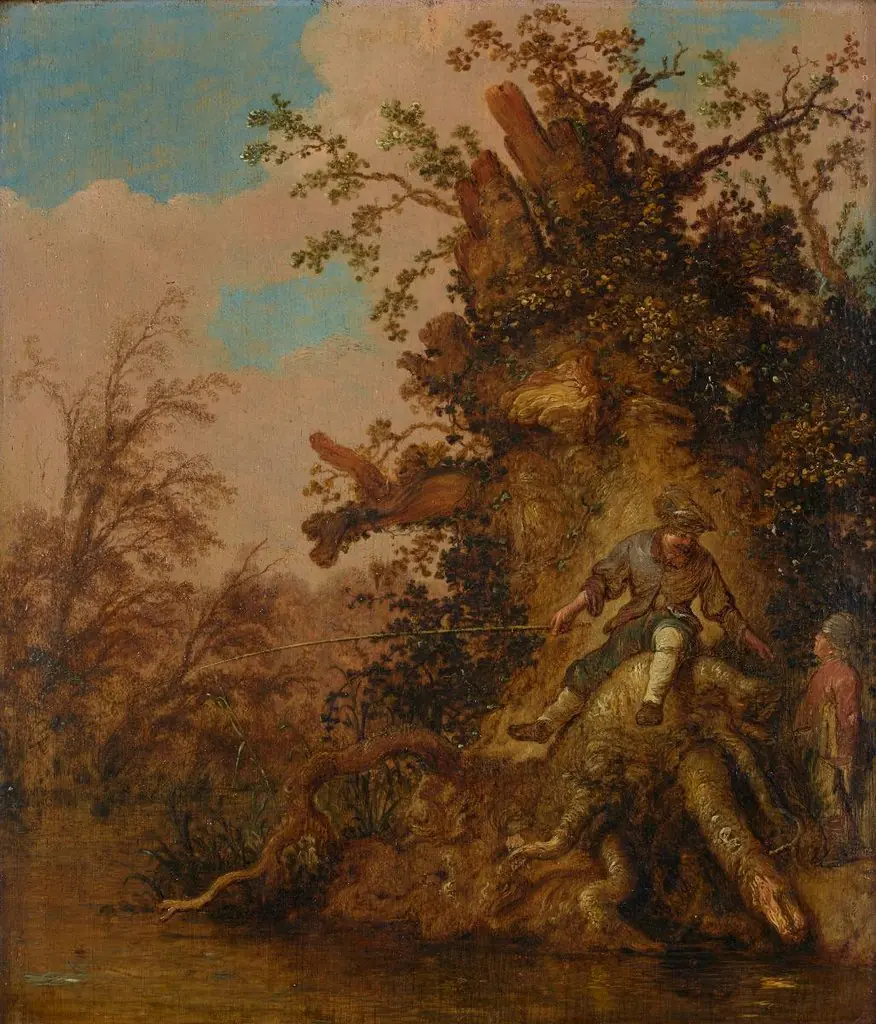 Landschaft mit Fischer
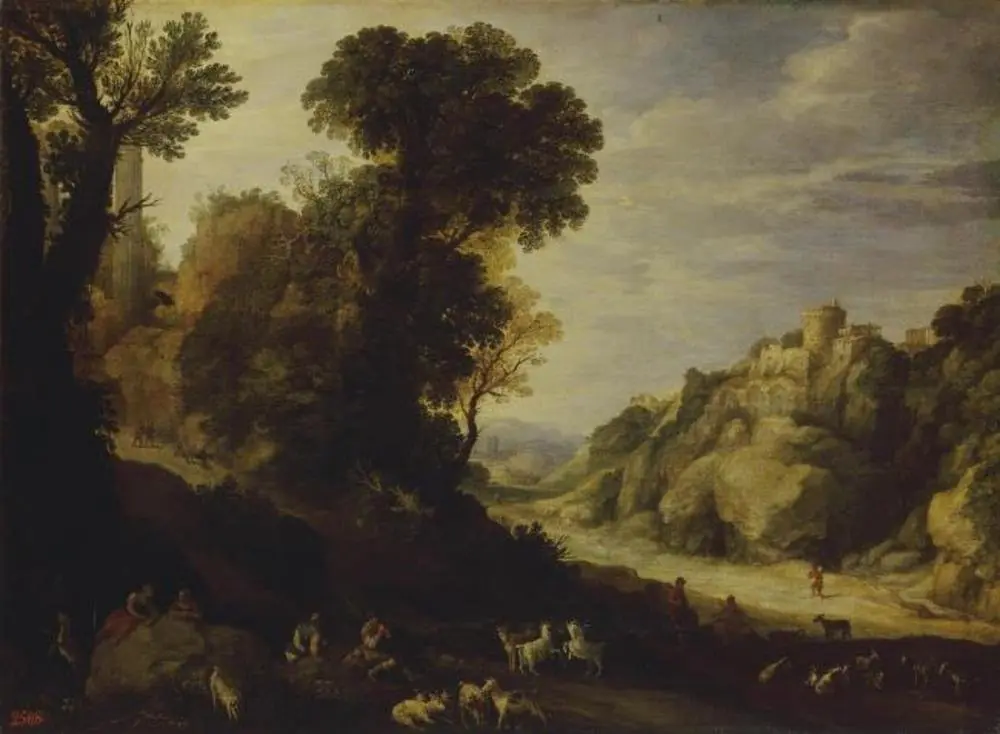 Mountainous Landscape
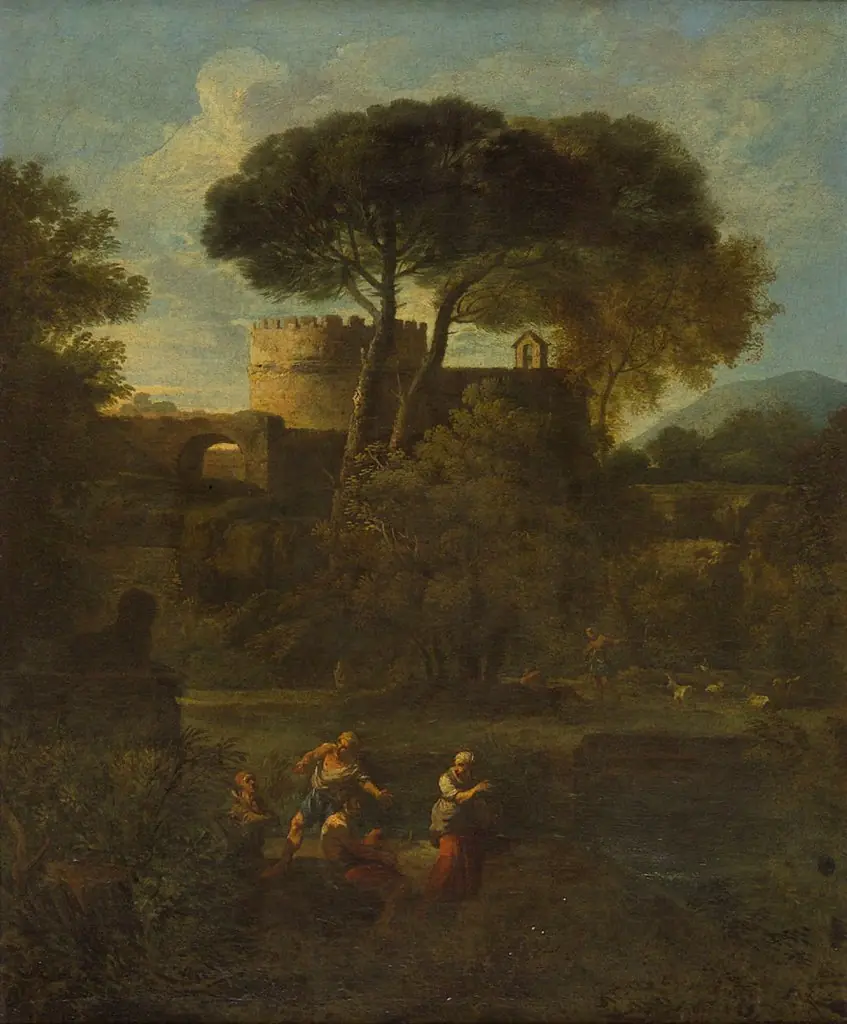 Grabmal der Cecilia Metella
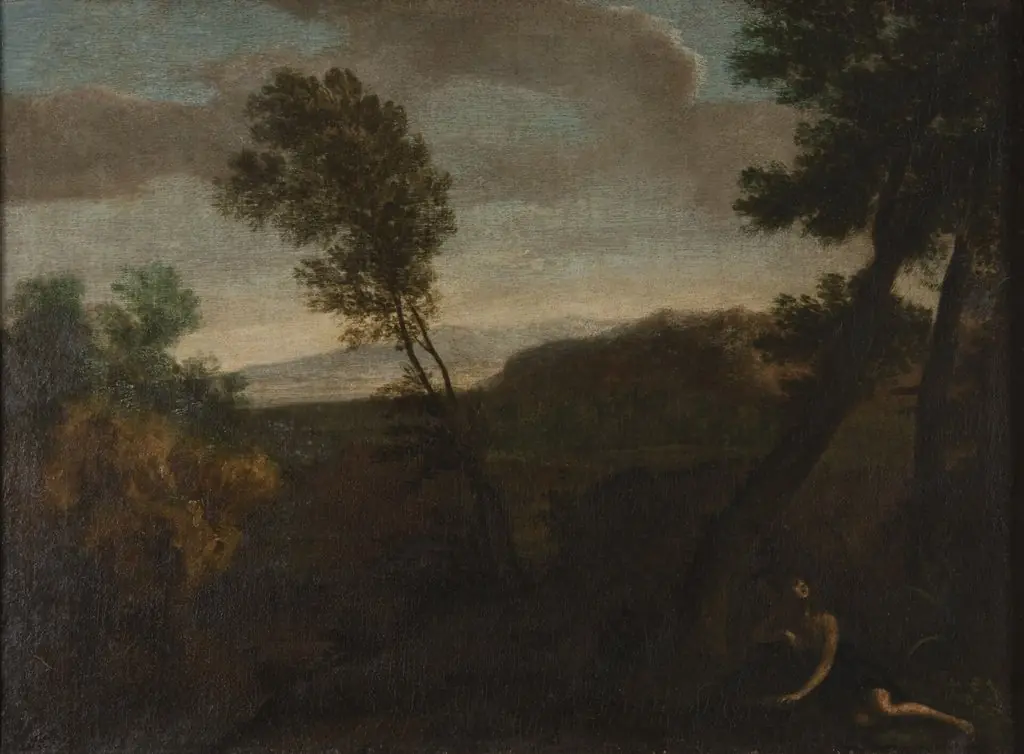 Landskap med Maria Magdalena
 Italian Mountain Landscape with Shepherds
 Italian forest landscape with bathers
 Landscape with a cleft Tree
 Landscape with Tobias and the Angel
 Peisaj de munte